Why Are Chinese Cars So Cheap? The Real Reasons Behind Low EV Prices
Quick Answer: Chinese cars are significantly cheaper due to a combination of lower manufacturing costs, government subsidies for EVs, massive scale production, reduced labor expenses, and fierce domestic competition driving prices down. Leading brands like BYD, NIO, and XPeng have revolutionized the automotive industry by proving that affordability doesn’t mean compromising on quality or innovation.
The automotive world has witnessed a seismic shift over the past decade. Chinese electric vehicles, once dismissed as budget alternatives, have evolved into serious contenders that offer remarkable value at prices that leave Western manufacturers scrambling. But the question lingers: why are Chinese cars so cheap? Is it corners being cut? Inferior materials? Or is there something more profound happening in the Chinese automotive ecosystem?
The truth is far more nuanced and fascinating than a simple cost-cutting narrative. The affordability of Chinese vehicles represents a convergence of economic, governmental, industrial, and competitive factors that have created a perfect storm of low pricing and high innovation.
The Manufacturing Cost Advantage
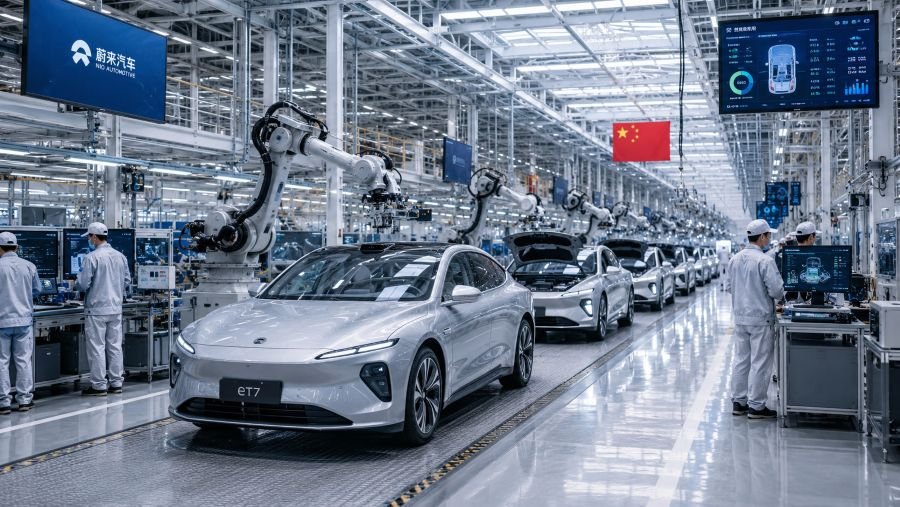
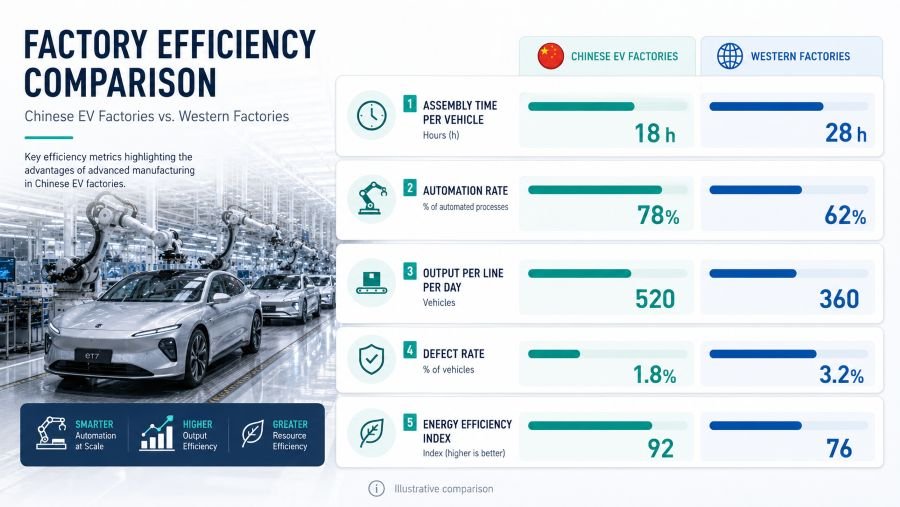
The foundation of Chinese car affordability begins on the factory floor. Manufacturing costs in China are substantially lower than in Western countries, but this isn’t simply about paying workers less—though labor costs are indeed a factor. The real advantage lies in systematic efficiency.
Vertical Integration and Supply Chain Efficiency
BYD, one of the world’s largest EV manufacturers, demonstrates this principle perfectly. The company manufactures approximately 60-70% of its vehicle components in-house, from batteries to semiconductor chips. This vertical integration eliminates middlemen, reduces transportation costs, and allows for unprecedented quality control.
Compare this to Tesla or traditional Western automakers, who rely on complex global supply chains with multiple suppliers, each adding their margin. When BYD produces its own batteries—and they’re the world’s largest battery manufacturer—they don’t pay external supplier premiums. This single factor can reduce battery costs by 20-30%, and batteries represent 30-40% of an EV’s cost.
Labor Costs and Automation Strategy
While Chinese labor is less expensive than in the US or Europe, the cost difference has narrowed significantly in recent years. What truly matters is the ratio of automation to labor. Chinese manufacturers invest heavily in robotic production lines, but they also employ workers for tasks that would be automated in Western factories—not because they’re cutting corners, but because the economics work differently.
A worker in Shanghai costs a manufacturer roughly $8-12 per hour, compared to $40-50 in Germany or $50-60 in the US. This differential allows Chinese firms to employ slightly more workers while maintaining lower overall labor costs, resulting in more granular quality control without inflating prices.
Government Subsidies and Policy Support
One of the most significant factors driving cheap Chinese cars is systematic government support for electric vehicle adoption. China’s government has made electrification a national priority, backed by concrete financial incentives.
Direct Purchase Incentives
From 2013 to 2023, Chinese consumers could receive substantial subsidies when purchasing electric vehicles. While these rebates have been reduced, they fundamentally shaped the market and allowed manufacturers to invest in R&D and scale production without relying solely on sales revenue for profitability.
The subsidy structure created a massive addressable market for Chinese EV makers, allowing companies like BYD to sell over 1.57 million vehicles in 2023—giving them enormous scale advantages. Production at scale is where costs genuinely decrease.
Industrial Policy and Research Funding
Beyond direct purchase subsidies, the Chinese government funds research institutions, battery development programs, and manufacturing infrastructure. Companies developing innovative battery technologies receive research grants. This reduces the R&D burden on individual manufacturers and accelerates technological advancement across the industry.
The Power of Scale and Volume Production
There’s an immutable economic law in manufacturing: per-unit costs decrease dramatically with volume. Chinese companies have achieved volumes that dwarf their Western competitors.
Unit Cost Reduction
BYD’s battery production capacity exceeds 500 GWh annually. This staggering volume means:
- Bulk purchasing: Raw materials like lithium, cobalt, and nickel are purchased at vastly lower unit costs
- Production efficiency: Factory throughput optimized over millions of units creates economies of scale
- Technology leverage: R&D costs are spread across millions of vehicles rather than hundreds of thousands
- Component cost reduction: Suppliers gain efficiency and reduce prices for volume purchasers
A battery pack that costs a smaller manufacturer $200 per kWh might cost BYD $100-120 per kWh due to scale. Over a 60 kWh battery pack, that’s a $4,800-$6,000 per-vehicle savings—a massive advantage.
Platform Sharing and Modular Design
Chinese manufacturers employ sophisticated platform strategies where multiple models share common architectures, powertrains, and components. NIO, for instance, uses a modular battery system where the same platform supports sedan, SUV, and coupe variants. This reduces development costs and manufacturing complexity, further lowering per-unit expenses.
Competitive Intensity and Market Dynamics
China’s domestic automotive market is extraordinarily competitive. Over 150 EV manufacturers operate in China, though the market is consolidating around leading players. This competition creates relentless downward pricing pressure.
Competition-Driven Innovation
When multiple companies pursue the same market with similar technology, prices inevitably decline. Chinese manufacturers can’t compete on brand heritage or heritage (their advantage is innovation and value). Consequently, they compete ferociously on:
- Price competitiveness
- Range per dollar spent
- Technology features at lower price points
- Charging infrastructure investment
- Battery innovation
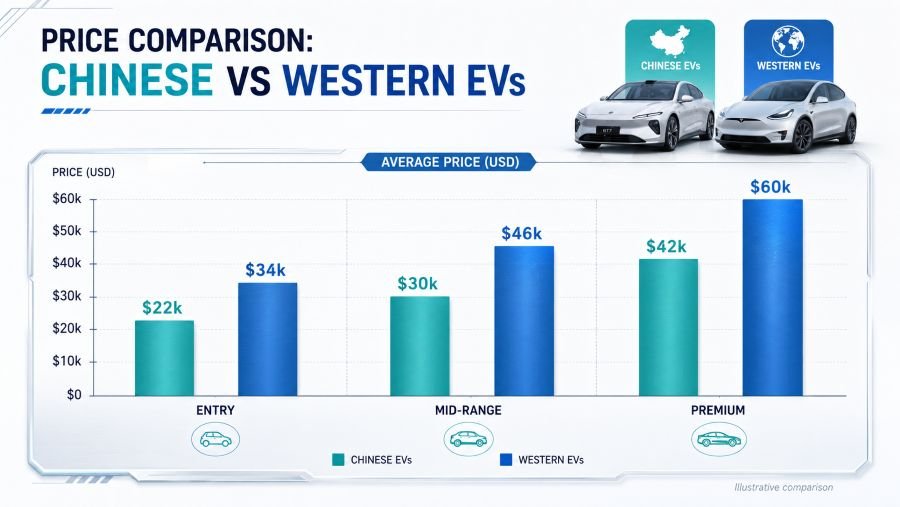
This competitive pressure benefits consumers immensely. A vehicle that costs $45,000 in the US might sell for $28,000 in China for essentially identical specifications. Manufacturers accept lower margins because volume compensation makes the business viable.
Export Price Competitiveness
As Chinese manufacturers entered export markets, they maintained competitive pricing to establish market share. BYD’s Yuan Plus (called Atto 3 in export markets), for example, retails for approximately $30,000-$38,000 globally—roughly 40-50% cheaper than comparable Tesla or BMW EVs, yet with competitive specifications and features.
| Model Comparison | Price (USD) | Battery Capacity | Range (Miles) | 0-60 Time |
|---|---|---|---|---|
| BYD Yuan Plus | $32,500 | 60-80 kWh | 260-340 | 7.9-8.5s |
| Tesla Model Y | $43,990 | 60-80 kWh | 260-330 | 6.1-7.0s |
| BMW iX1 | $52,450 | 60-71 kWh | 260-300 | 7.4-8.6s |
| XPeng G6 | $35,000 | 75-101 kWh | 340-450 | 6.0-7.5s |
Battery Technology Leadership
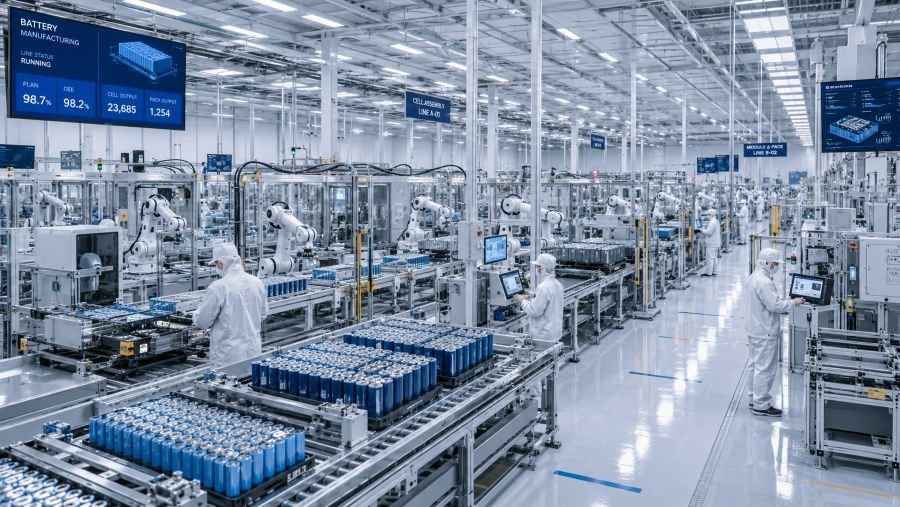
Chinese manufacturers have achieved dominance in battery production, and batteries are the most expensive component of modern EVs. Controlling battery production confers an enormous cost advantage.
CATL and BYD Battery Dominance
Contemporary Amperex Technology Co., Limited (CATL) and BYD Battery control approximately 60% of global EV battery production. This dominance means:
- Proprietary technology: Exclusive access to latest innovations without licensing external patents
- Raw material access: Priority purchasing of scarce materials like lithium and cobalt
- Cost reduction: Continuous manufacturing improvements compound into substantial savings
- Supply security: Chinese manufacturers never face battery supply shortages affecting other producers
Battery manufacturing breakthroughs from Chinese companies have also driven industry-wide cost reductions. CATL’s sodium-ion batteries, for instance, promise sub-$100/kWh costs—potentially revolutionizing affordable EV production.
Less Expensive Market Segments
A crucial factor in cheap Chinese cars is the dominance of smaller, more affordable vehicle categories. While Western markets emphasize luxury vehicles with high margins, Chinese manufacturers focus intensively on sub-$30,000 segments where the profit-per-vehicle is lower but volume is enormous.
Small SUV and Sedan Focus
Chinese EV manufacturers dominate the compact SUV and sedan categories because:
- Lower material costs for smaller vehicles
- Reduced battery requirements (lower capacity = lower cost)
- Massive domestic market demand in these segments
- Easier to achieve regulatory compliance with smaller vehicles
- Greater acceptance of smaller dimensions in cities with parking constraints
While Tesla focuses on the Model Y and Model 3 at $40,000+, BYD sells millions of Seagull, Yuan Plus, and Qin models at $15,000-$28,000. This segmentation strategy fundamentally differs from Western manufacturers’ luxury focus.
Reduced Marketing and Distribution Costs
Chinese EV manufacturers operate with significantly lower marketing expenses compared to Western brands. They invest heavily in digital marketing and social media rather than expensive traditional advertising campaigns, celebrity endorsements, or extensive dealer networks.
Direct-to-Consumer Models
NIO operates experience centers rather than traditional dealerships, reducing real estate and salesperson overhead. XPeng similarly minimizes dealer infrastructure. These alternative distribution models reduce costs that would otherwise inflate vehicle prices.
Online sales channels eliminate dealer commissions entirely. A consumer buying a BYD or XPeng directly online incurs no dealer markup—a significant advantage absent in traditional automotive markets.
Currency and Economic Advantages
The Chinese yuan’s historical undervaluation relative to the US dollar created natural pricing advantages. Export pricing translated to substantially lower costs for international buyers compared to equivalent vehicles manufactured in dollar-denominated economies.
Additionally, China’s lower overall cost of living and business operations—including utilities, facility costs, and regulatory compliance expenses—compounds these advantages across manufacturing operations.
Quality Concerns: Fact vs. Fiction
An important clarification: cheap doesn’t mean bad quality. Chinese EV manufacturers have invested billions in R&D and quality assurance. Several metrics validate this:
Reliability and Safety Standards
Recent ANCAP crash tests show Chinese EVs achieving 5-star ratings. BYD, NIO, and XPeng vehicles meet or exceed international safety standards. Quality defect rates have declined consistently as manufacturers have matured.
Warranties for Chinese vehicles increasingly match Western standards—BYD offers 8-year/120,000-mile battery warranties, comparable to Tesla’s offerings. Reliability metrics from independent reviewers show Chinese EVs performing comparably to established brands.
Battery Technology Quality
Chinese batteries power Tesla vehicles (CATL batteries), Volkswagen EVs, and numerous other global manufacturers. If battery quality were questionable, these partnerships wouldn’t exist. Chinese battery technology is literally powering the global EV transition.
The Price-to-Performance Equation
Chinese EV manufacturers have inverted the traditional automotive economics. Instead of “cheap = inferior,” they’ve created a new equation: efficient manufacturing + scale production + minimal marketing overhead = exceptional value for consumers.
A $30,000 Chinese EV might offer better technology, longer range, and faster charging than a $50,000 traditional Western vehicle manufactured using outdated efficiency principles.
Global Market Implications
Chinese automotive competitiveness has profound implications for global markets. Established manufacturers face pressure to reduce costs, increase efficiency, and innovate more rapidly. This benefits consumers worldwide through competitive pricing and accelerated EV adoption.
Trade dynamics have also shifted. European and American tariffs on Chinese vehicles reflect genuine competitive threats—not from inferior products, but from superior value propositions that could disrupt established market shares.
Future Price Trajectories
As Chinese EV manufacturers expand into export markets, several scenarios emerge:
- Price sustainability: Current pricing levels may persist as competition intensifies, benefiting global consumers
- Margin compression: Established manufacturers may be forced to reduce profit margins, passing savings to consumers
- Market disruption: Entire vehicle categories in developed markets could shift toward Chinese manufacturers
- Technological acceleration: Competition accelerates innovation in autonomous driving, battery technology, and design
Frequently Asked Questions
Yes. Chinese EV manufacturers have achieved reliability ratings comparable to Western brands. BYD, NIO, and XPeng vehicles demonstrate consistent performance and meet international safety standards. Warranty coverage is competitive, and quality assurance has improved substantially over recent years. However, as with any manufacturer, individual model quality varies—research specific models before purchasing.
Regulatory barriers and trade protectionism limit Chinese vehicle distribution. The US imposes 27.5% tariffs on Chinese vehicles, and Europe has implemented tariffs exceeding 25%. Additionally, certification requirements vary by country, requiring expensive modifications and testing. Some markets prioritize protecting domestic manufacturers, limiting competition.
Modern Chinese EVs frequently offer superior range compared to Western equivalents at similar prices. The XPeng G6, for example, achieves 450+ mile range at $35,000, while comparable Western EVs offer 300-350 miles at $45,000-$55,000. Chinese battery technology innovations have enabled competitive or superior range capabilities.
In China, parts and repairs are extremely affordable—often 40-60% cheaper than Western vehicles. In export markets, costs vary by region and manufacturer. Established brands like BYD and NIO are developing service networks in key markets. As Chinese brands expand globally, parts availability and service infrastructure will improve, though early adoption requires patience.
They already have. Chinese manufacturers produced more than 50% of global EVs in 2023. As trade barriers ease and service networks expand, market disruption will intensify. Traditional automotive companies face existential pressure to match Chinese efficiency and pricing. This transition benefits consumers through competitive pricing and accelerates global electrification timelines.