Chinese Connected Cars and US Security Rules: What Buyers Should Know
The automotive industry stands at the intersection of technology and geopolitics. As Chinese manufacturers produce increasingly sophisticated connected vehicles—equipped with 5G connectivity, artificial intelligence, advanced sensors, and cloud-based services—government regulators worldwide are asking critical questions about data security, privacy, and national safety. The United States has taken an aggressive stance, implementing restrictions that effectively block many Chinese connected vehicles from the domestic market. But what exactly are these regulations, what risks do they address, and what does this mean for buyers globally?
This comprehensive guide unpacks the regulatory landscape, explains the cybersecurity concerns driving policy decisions, explores what data connected cars collect, and examines the implications for automotive consumers. Whether you’re considering purchasing a Chinese vehicle abroad or simply curious about the geopolitics reshaping the automotive industry, understanding these security rules is essential.
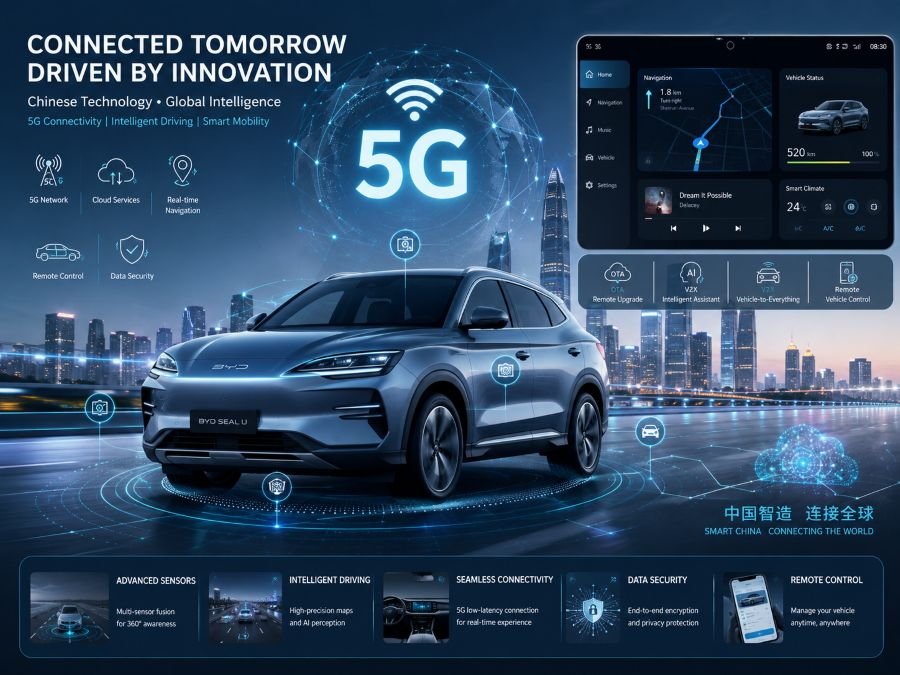
The debate surrounding Chinese connected vehicles reflects broader tensions in the global automotive and technology sectors. While these vehicles represent genuine innovation—offering consumers advanced features, affordability, and sophisticated software ecosystems—legitimate concerns about data security and geopolitical implications have prompted regulatory responses. Understanding these dynamics helps buyers make informed decisions and grasps why the automotive landscape looks dramatically different across geographic borders.
Understanding Chinese Connected Vehicles: What Makes Them Different?
Modern Chinese vehicles, particularly from manufacturers like BYD, NIO, Li Auto, and XPeng, represent a quantum leap in automotive connectivity. Unlike traditional vehicles that operated largely independently, connected cars integrate seamlessly with smartphones, cloud services, and broader digital ecosystems. These vehicles continuously communicate with manufacturer servers, transmit driving data, receive over-the-air software updates, and leverage artificial intelligence for predictive maintenance and enhanced driving assistance.
The “connected” aspect extends far beyond navigation and entertainment. These vehicles collect comprehensive operational data—acceleration patterns, braking behavior, route history, fuel efficiency metrics, battery performance (for EVs), and sensor readings from dozens of vehicle systems. This data transmission occurs continuously, generating petabytes of information flowing to manufacturer data centers. Additionally, advanced Chinese vehicles incorporate biometric sensors (detecting driver drowsiness, stress levels, heart rate), voice recognition systems that understand natural language in multiple dialects, and facial recognition technology for enhanced security and personalization.

The technological sophistication is genuinely impressive. Chinese manufacturers have invested heavily in artificial intelligence, developing in-vehicle systems that learn driver preferences, predict maintenance needs weeks before failures occur, and enable increasingly autonomous driving capabilities. Voice assistants understand context, respond to natural questions, and integrate with home automation systems. However, this technological sophistication creates corresponding security vulnerabilities—more connectivity means more potential entry points for cyberattacks; more data collection means greater privacy exposure.
The US Government Security Concerns: Why Restrictions Exist
The United States federal government has implemented restrictions on Chinese connected vehicles based on several overlapping national security concerns. These concerns aren’t purely theoretical—they reflect specific vulnerabilities and documented risks identified by national security agencies.
Data Collection and Surveillance Risks
The primary concern centers on comprehensive data collection. A connected Chinese vehicle operating in the US generates continuous streams of sensitive information: precise GPS locations, driving patterns revealing daily routines, frequently visited destinations, acceleration/braking patterns that could indicate driver behavior, camera feeds potentially capturing surrounding environments, voice recordings of driver conversations, and in some cases, biometric data. This information, aggregated across millions of vehicles, could theoretically reveal movement patterns of critical infrastructure workers, military personnel, government officials, or other sensitive populations.
While manufacturers claim data collection serves legitimate purposes—vehicle optimization, service improvement, research and development—the regulatory concern is whether this data could be accessed, weaponized, or shared with Chinese government entities. US officials worry that complying with Chinese data laws (which require domestic companies to make data available to authorities under certain conditions) could force manufacturers to surrender American driver information to foreign governments.
Cybersecurity Vulnerabilities and Vehicle Control
A second major concern involves potential cyberattacks exploiting vehicle vulnerabilities. If adversaries gain unauthorized access to connected vehicle systems, they could theoretically manipulate critical functions: disabling brakes, forcing acceleration, steering the vehicle unexpectedly, or disabling safety systems. While such attacks remain largely hypothetical, security researchers have demonstrated that modern vehicles—including some Chinese models—contain software vulnerabilities that malicious actors could potentially exploit remotely.
The risk scales with vehicle proliferation. If millions of Chinese connected vehicles operated throughout American cities, highways, and infrastructure, a sophisticated cyberattack could theoretically affect multiple vehicles simultaneously. Such an attack targeting vehicles operated by first responders, medical personnel, or near critical infrastructure could have severe consequences.

Infrastructure Disruption Potential
A third concern involves potential infrastructure disruption. Connected vehicles communicate with traffic management systems, share data with navigation platforms, and increasingly interact with smart city infrastructure. If an adversary controlled or compromised thousands of connected vehicles, they could theoretically disrupt traffic flows, cause widespread congestion, or interfere with emergency response systems by flooding networks with false data or overwhelming communication channels.
The Regulatory Landscape: Current US Restrictions
US policy regarding Chinese connected vehicles operates through several regulatory mechanisms. The Biden administration directed the NHTSA (National Highway Traffic Safety Administration) to begin rule-making processes restricting foreign vehicles incorporating advanced connectivity features deemed security risks. Simultaneously, CFIUS (Committee on Foreign Investment in the United States) has blocked certain investments and partnerships involving Chinese automotive technology companies seeking US market presence.
These restrictions target vehicles incorporating:
- Advanced vehicle-to-everything (V2X) connectivity enabling vehicles to communicate with infrastructure, other vehicles, and external networks
- Level 3 or higher autonomous driving systems that make independent decisions about vehicle control
- Real-time telemetry transmission continuously sending operational data to manufacturer servers
- Software components developed by or dependent on Chinese technology providers in critical vehicle systems
- Biometric sensors collecting personal physiological data from drivers and passengers
The restrictions effectively prevent Chinese manufacturers from selling most connected vehicles in the US market. However, enforcement remains inconsistent. Some Chinese-manufactured vehicles destined for other markets have entered the US through gray market imports. Additionally, some Chinese manufacturers have developed US-market variants with connectivity features stripped or modified to comply with anticipated regulations.
⚠️ Important Note: The regulatory landscape is rapidly evolving. Rules that exist today may change as administrations shift, technology advances, and diplomatic relationships evolve. Buyers should verify current regulations in their jurisdiction before making vehicle purchase decisions, as restrictions affecting Chinese connected vehicles can change with relatively brief notice.
What Data Do Connected Vehicles Actually Collect?
Understanding the specific data collected by connected vehicles is crucial for informed decision-making. Modern Chinese connected vehicles gather information across multiple categories, each with distinct privacy and security implications.
| Data Category | Specific Information | Privacy Concern Level | Typical Use |
|---|---|---|---|
| Location Data | GPS coordinates, addresses visited, route history, departure/arrival times | 🔴 Very High | Navigation, location-based services, traffic optimization |
| Driving Behavior | Acceleration patterns, braking intensity, speed data, lane changes, collision avoidance activations | 🟠 High | Insurance research, safety improvements, driving assistance optimization |
| Vehicle Diagnostics | Engine/battery health, fuel consumption, emission data, maintenance needs | 🟡 Medium | Predictive maintenance, warranty claims, performance optimization |
| Biometric Data | Driver drowsiness detection, facial recognition, heartbeat/stress levels, voice recordings | 🔴 Very High | Safety enhancement, personalization, driver authentication |
| Camera/Sensor Feeds | Road environment images, pedestrians, vehicles, traffic signs, surrounding infrastructure | 🔴 Very High | Autonomous driving development, insurance documentation |
| Passenger Information | Number of occupants, seating positions, conversation recordings, cabin camera feeds | 🔴 Very High | Autonomous vehicle development, safety research |
| Connected Device Data | Smartphone pairing information, personal contact lists, messaging app access | 🔴 Very High | Integration services, personalization |
The aggregated data picture becomes concerning when considering scale and duration. A vehicle operating continuously collects this data across years, creating a comprehensive profile of driver behavior, preferences, routines, and relationships. When aggregated across millions of vehicles, patterns emerge revealing aggregate population behavior, infrastructure vulnerabilities, and potentially sensitive information about specific individuals or groups.

Most Chinese manufacturers argue that data collection serves legitimate purposes. They note that this information helps optimize performance, improve safety features, enhance the driving experience, and develop better autonomous driving systems. Vehicle-generated data indeed enables innovations that benefit consumers—predictive maintenance that prevents breakdowns, safety features that prevent accidents, and personalized features that enhance convenience. The regulatory tension arises not from data collection itself, but from questions about who controls that data, how it’s protected, and whether foreign governments can access it.
Implications for Global Buyers: The Unequal Market
The regulatory restrictions create a genuinely unequal automotive marketplace. Buyers in the United States face significantly limited options compared to counterparts in other regions. While Americans can purchase limited Chinese vehicles with connectivity features disabled, buyers in Europe, Asia, Latin America, and the Middle East enjoy full access to complete Chinese automotive technology, including all connectivity, autonomous features, and data services.
This creates market fragmentation where the same vehicle model operates differently depending on geographic location. A BYD vehicle sold in Singapore or Mexico includes full connectivity features, advanced autonomous capabilities, and comprehensive data services. The identical model sold in the US (if available at all) might have connectivity stripped, autonomous features limited, and data transmission disabled. This fragmentation raises manufacturing costs, complicates supply chains, and creates consumer confusion.
For global buyers, this geographic inequality means assessing regulatory status in your specific location before purchasing. A Chinese connected vehicle perfectly legal in your country might be prohibited if imported to the US. Conversely, Chinese vehicles freely available in most international markets remain restricted domestically despite their global acceptance.
💡 Pro Tip: If considering a Chinese connected vehicle, verify current regulatory status in your jurisdiction and any planned future relocations. Restrictions can change, and a vehicle purchased legally today might face compliance issues tomorrow if regulations tighten or your location changes.
Cybersecurity Standards: Are Chinese Vehicles Secure?
A critical question underlying regulatory concerns involves the actual security posture of Chinese connected vehicles. Are these vehicles inherently less secure than American or European alternatives, or does the concern reflect geopolitical bias rather than technical vulnerability?
The evidence presents a mixed picture. Chinese manufacturers like BYD and XPeng have invested heavily in cybersecurity, implementing encryption protocols, intrusion detection systems, and regular security audits. Some Chinese vehicles have achieved ISO 26262 functional safety certifications—the same standards demanded of Western manufacturers. Independent security researchers have found vulnerabilities in Chinese vehicles, but also vulnerabilities in American and European vehicles. No vehicle platform is immune to cybersecurity risks.
However, the regulatory concern extends beyond technical security to structural concerns about government access. Western manufacturers operate under regulatory frameworks limiting government access to data absent legal process (warrant requirements, due process protections). Chinese companies operate under a different legal framework where government entities can compel data access without equivalent due process protections. This structural difference—not necessarily inferior technical security—drives regulatory concerns.
Additionally, some Chinese vehicles incorporate components or software from third-party providers with potentially weaker security standards. Supply chain vulnerabilities exist across the industry, but concerns about Chinese supply chains reflect both legitimate security considerations and geopolitical tensions.
The Global Perspective: How Other Regions Are Responding
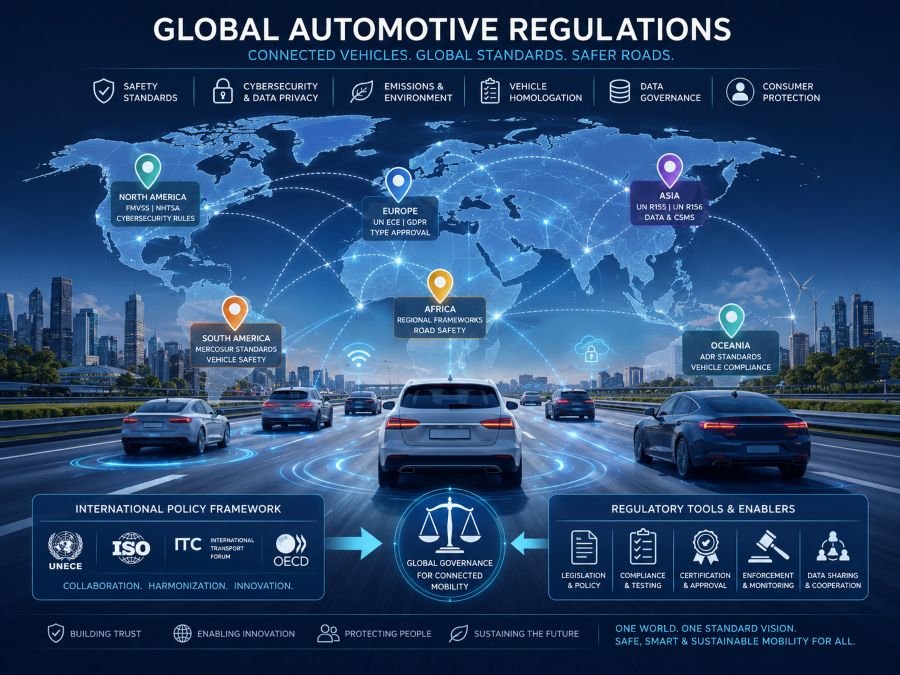
The US approach to restricting Chinese connected vehicles is relatively aggressive compared to most international responses. The European Union has begun discussing similar regulations but hasn’t implemented comparable restrictions. EU regulators emphasize cybersecurity standards over country-of-origin restrictions—any vehicle, regardless of manufacturer, must meet specified security benchmarks. This approach differs from US strategy, which targets Chinese manufacturers specifically.
Asian markets, particularly China and Southeast Asia, embrace Chinese connected vehicles enthusiastically. These vehicles represent available technology providing genuine consumer benefits—affordability, advanced features, strong performance. Regulatory concerns about data access resonate less in contexts where regional data residency isn’t considered problematic and where Chinese technology integration aligns with existing infrastructure and policy priorities.
Latin American and Middle Eastern markets occupy middle ground, welcoming Chinese vehicles while gradually implementing cybersecurity standards. Most have adopted pragmatic approaches: allow Chinese vehicles while establishing data protection frameworks requiring companies to secure data appropriately, regardless of manufacturer origin.
What Does This Mean for Vehicle Buyers?
Understanding these regulations and security considerations helps buyers make informed decisions across several dimensions:
If You’re Buying in the United States
Most advanced Chinese connected vehicles remain unavailable. Some Chinese EV manufacturers (like BYD) manufacture vehicles in US facilities or partner with American companies to navigate restrictions. These vehicles typically have connectivity features restricted compared to international versions. If you prioritize budget and electric range, some US-market Chinese options exist, but you won’t access the full feature set available internationally.
If You’re Buying Outside the US
You have access to the full range of Chinese connected vehicle technology. Assess your comfort with data collection and transmission practices. Most Chinese manufacturers maintain transparent privacy policies (though privacy standards differ from Western norms), and manufacturers are increasingly implementing data localization—storing data within your region rather than transmitting internationally. If you value advanced features, affordability, and cutting-edge technology, Chinese vehicles offer compelling options. If you prioritize data minimization and extensive privacy controls, vehicles from traditional manufacturers might better align with your values.
For Any Buyer Globally
Evaluate data privacy policies before purchasing any connected vehicle. Request information about data retention periods, third-party sharing practices, government access procedures, and your ability to disable connectivity features. Ask manufacturers about cybersecurity certifications, incident disclosure practices, and update procedures. These questions apply equally to Chinese, American, European, and Japanese vehicles—the key is informed decision-making based on your personal priorities.
The Future: Where Policy and Technology Are Heading
The landscape surrounding Chinese connected vehicles continues evolving. Several trends suggest future directions. Increasing international standardization efforts aim to establish shared cybersecurity benchmarks rather than country-specific restrictions. If successful, these standards could enable Chinese vehicles to compete globally by demonstrating compliance with universal security requirements rather than facing blanket geographic bans.
Simultaneously, Chinese manufacturers are investing heavily in developing vehicles specifically for international markets with localized connectivity features. Rather than shipping identical vehicles globally, manufacturers like BYD develop market-specific variants—vehicles sold in Europe emphasize GDPR compliance, American vehicles potentially focus on meeting emerging US regulations, and vehicles in Asia incorporate full connectivity features that consumers in those markets value.
Technology will likely shift regulatory emphasis. As autonomous vehicle technology matures and vehicle-to-infrastructure communication becomes more critical for traffic management and safety, the stakes for cybersecurity increase. Simultaneously, public awareness of data privacy issues continues growing, potentially creating consumer demand for transparency and control over connected vehicle data collection.
Geopolitical factors will significantly influence policy evolution. US-China relations, trade policies, and relative technological capabilities will shape whether restrictions tighten, ease, or evolve toward more nuanced regulatory approaches. A potential mid-ground involves regulatory reciprocity—US restrictions on Chinese vehicles in exchange for Chinese restrictions on American vehicle operations in China, effectively partitioning the global market but reducing direct restrictions on consumer choice.
FAQ: Chinese Connected Vehicles and Security
What is the US ban on Chinese connected cars?
The US government has restricted the sale of Chinese connected vehicles due to national security concerns. The ban primarily targets vehicles with advanced connectivity features—5G, data collection, and autonomous driving systems—that could potentially transmit sensitive information to Chinese servers or be compromised by foreign actors. Different restrictions apply to different vehicle categories, and the regulatory landscape continues evolving.
Why is the US concerned about Chinese connected cars?
The US worries that Chinese connected vehicles could collect sensitive data (location, driving habits, biometric information) and transmit it to Chinese government entities or corporations. Additionally, cybersecurity vulnerabilities in these vehicles could be exploited for surveillance, vehicle sabotage, or disruption of critical transportation infrastructure. The structural framework requiring data access by Chinese government entities amplifies these concerns.
What data do Chinese connected cars collect?
Modern Chinese connected vehicles collect extensive data including GPS location, driving patterns, acceleration/braking data, vehicle diagnostics, camera feeds, voice commands, biometric data, and passenger information. This data is typically stored on company servers and used for service optimization, research, and autonomous vehicle development. The aggregated data across millions of vehicles could theoretically reveal sensitive patterns.
Can I buy a Chinese connected car in the US?
Most advanced Chinese connected cars are prohibited from sale in the US market due to regulatory bans. However, some Chinese manufacturers like BYD produce vehicles in US facilities or partnership with American companies, with connectivity features restricted. Some gray market imports exist, though legal status is uncertain. Availability continues evolving as regulations change.
Are Chinese cars outside the US affected by these restrictions?
No, restrictions are primarily US-based. Chinese connected vehicles operate normally in other markets (Europe, Asia, Latin America) with full connectivity features. However, individual countries may implement their own security regulations. Buyers in non-US markets enjoy unrestricted access to complete Chinese automotive technology and full connectivity features.
Conclusion: Navigating the Complex Landscape
Chinese connected vehicles represent genuine technological innovation, delivering advanced features, competitive pricing, and impressive capability. Simultaneously, legitimate cybersecurity and data privacy concerns underpin regulatory responses across multiple countries. Understanding both perspectives—acknowledging real technological benefits while respecting authentic security considerations—is essential for navigating this complex landscape.
The US restrictions on Chinese connected vehicles don’t reflect inherent vehicle inferiority but rather represent policy responses to geopolitical tensions, structural differences in data governance frameworks, and legitimate (if debatable) national security concerns. These restrictions create unequal market conditions where American consumers face more limited choices than counterparts in most other countries.
For potential buyers, the key is informed decision-making based on your specific location, risk tolerance, and priorities. If you’re comfortable with connected vehicle technology and the data collection it entails, Chinese vehicles offer excellent value and advanced features. If you prioritize data minimization and privacy, you might prefer traditional manufacturers with different approaches to connectivity and data governance.
Regardless of choice, the regulatory tension surrounding Chinese connected vehicles reflects broader questions about technology governance, data sovereignty, and global competition. As autonomous vehicles and intelligent transportation systems become increasingly critical to modern mobility, how governments balance innovation, security, and consumer choice will shape the automotive industry for decades to come.