Chinese EVs Made in Mexico: Which Qualify for US Clean Vehicle Credits?
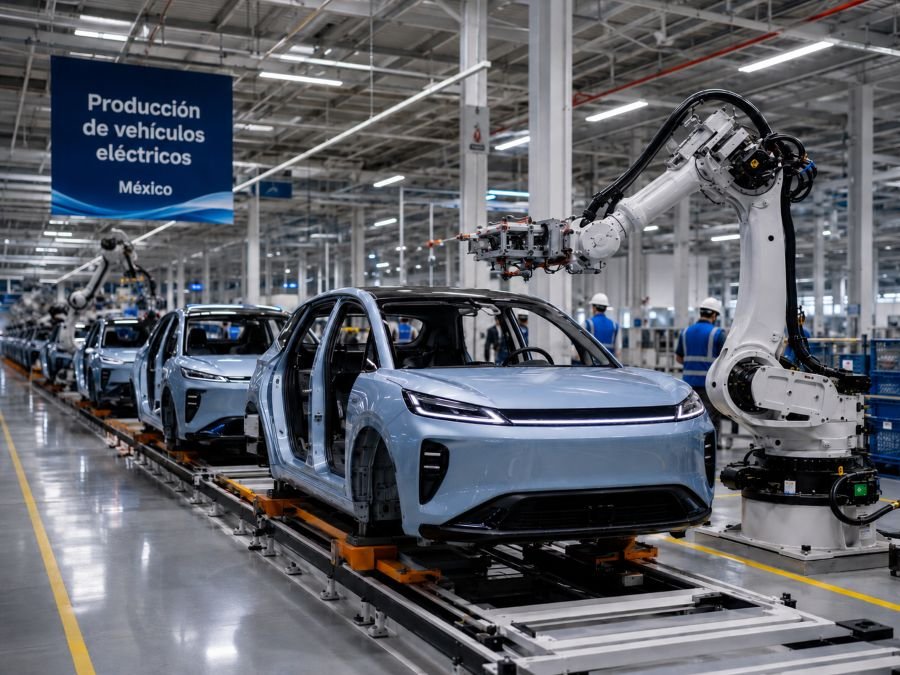
The intersection of Chinese electric vehicle manufacturing and North American tax incentives represents one of the most significant developments in the global automotive industry. As geopolitical tensions and tariff barriers reshape trade patterns, Chinese automakers are strategically establishing manufacturing facilities in Mexico—a location that could unlock billions in US clean vehicle tax credits under the Inflation Reduction Act (IRA).
But here’s the critical question: which Chinese EVs made in Mexico will actually qualify for the coveted $7,500 US federal tax credit? This comprehensive guide breaks down exactly which models are eligible, which are on the horizon, and what requirements manufacturers must meet to access this lucrative incentive program.
The US Clean Vehicle Tax Credit: Understanding the $7,500 Incentive
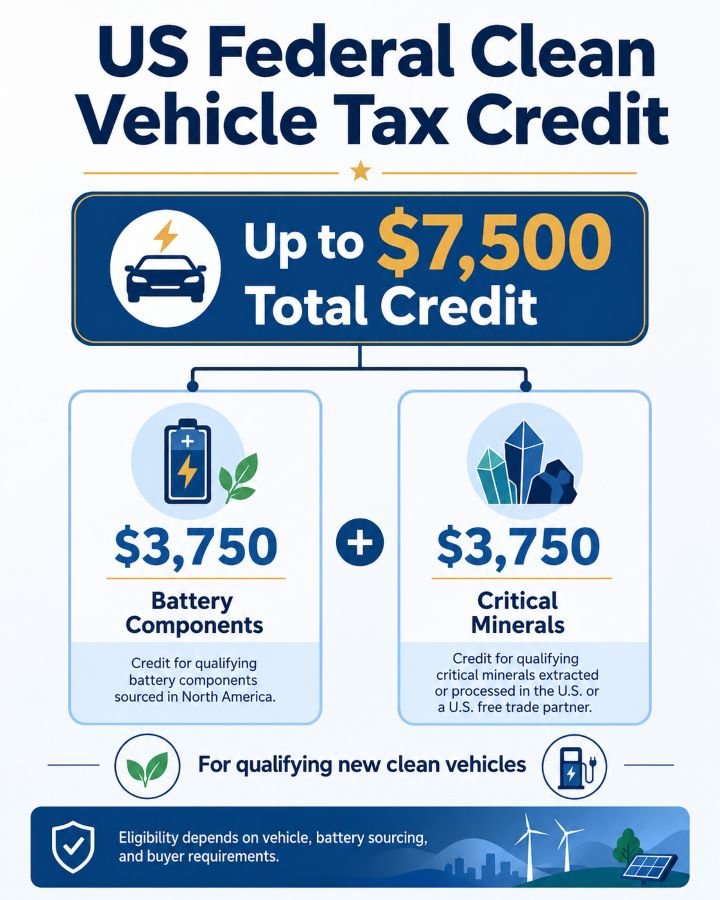
The Inflation Reduction Act, signed into law in August 2022, fundamentally transformed the American electric vehicle market by introducing the clean vehicle tax credit—a federal incentive offering up to $7,500 to consumers who purchase qualifying new electric vehicles manufactured in North America. This wasn’t merely a tax break; it represented a strategic industrial policy designed to build a domestic EV supply chain and reduce American dependence on foreign battery manufacturing.
The credit structure operates in two tiers: up to $3,750 for battery components manufactured or assembled in North America, and up to $3,750 for battery minerals sourced or processed in the Western Hemisphere. To claim the full $7,500, a vehicle must satisfy both components while meeting additional requirements regarding final assembly location and price ceilings. For sedans, the price cap stands at $55,000; for SUVs and pickup trucks, it reaches $80,000.
Why Mexico Matters for Chinese EV Manufacturers
Mexico occupies a unique position in the North American manufacturing landscape. As a member of the United States-Mexico-Canada Agreement (USMCA), vehicles manufactured in Mexico can be classified as North American-made, making them potentially eligible for the clean vehicle tax credit. This presents an enormous opportunity for Chinese automakers facing US tariff barriers and trade restrictions on Chinese-assembled vehicles.
The Strategic Advantage of Mexico’s Location
Chinese manufacturers recognize that establishing factories in Mexico serves multiple objectives simultaneously. First, it provides tariff-advantaged access to the US market under USMCA rules. Second, it circumvents trade barriers specifically targeting Chinese manufacturers. Third, Mexico offers competitive labor costs compared to North American factories while maintaining trade treaty status. Fourth, proximity to the US market reduces logistics complexity and costs.
Several Chinese automakers have announced concrete plans to build manufacturing facilities in Mexico. BYD, the world’s largest EV manufacturer, has confirmed investments in Mexican production capacity. Geely-Volvo, though a Swedish-branded entity with Chinese backing through Geely Holding, operates North American manufacturing. JAC, the Anhui-based EV specialist, continues evaluating Mexican expansion options.
Chinese EVs Made in Mexico: Current Status and Future Prospects
BYD: Mexico’s Next Manufacturing Frontier
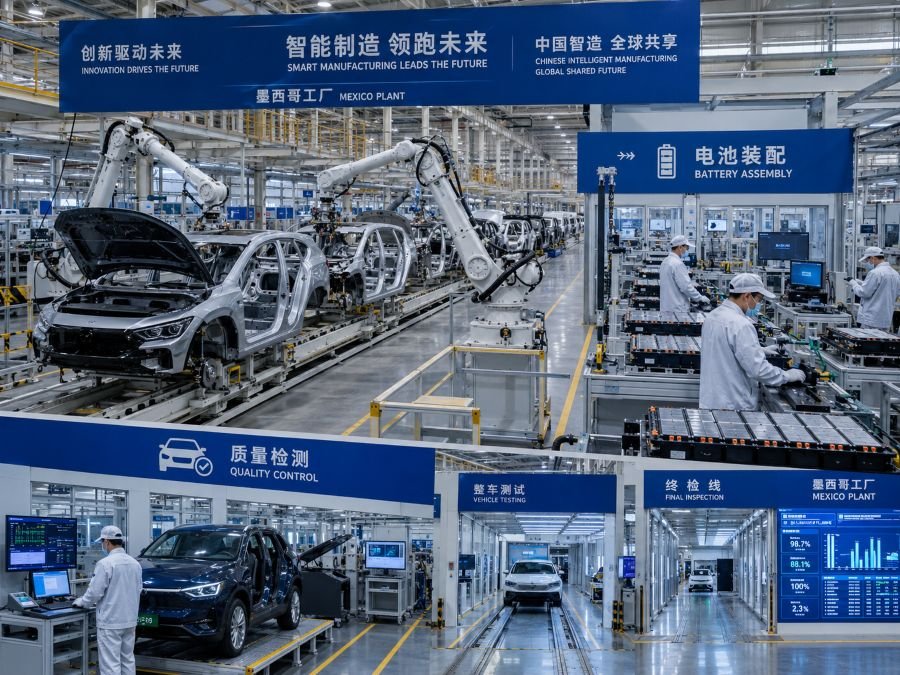
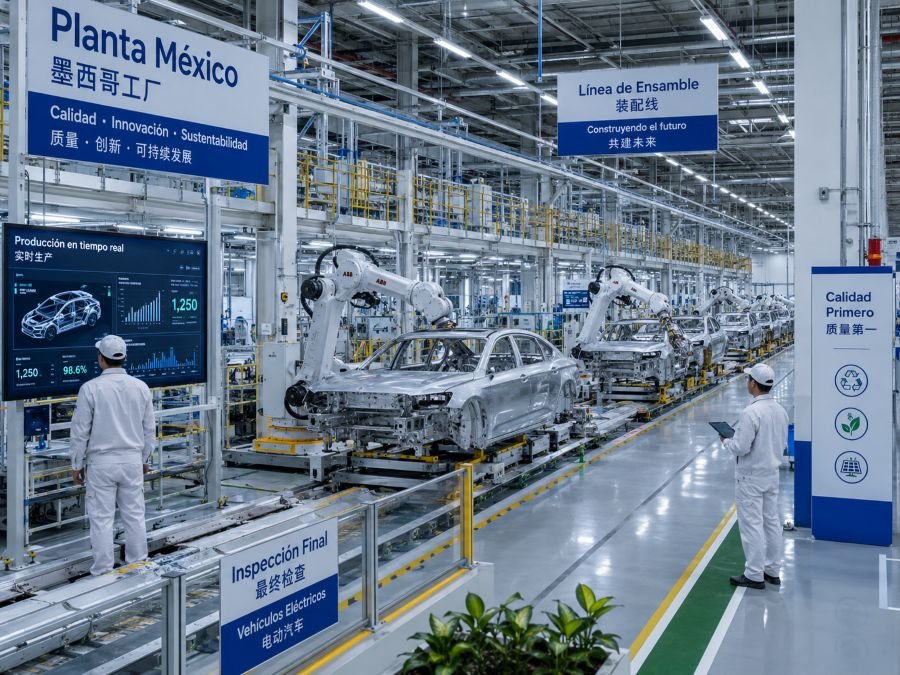
BYD has emerged as the most aggressive Chinese automaker in pursuing Mexican manufacturing. The company announced investments to establish a production facility in Mexico, marking its entry into North American vehicle manufacturing. This facility, once operational, would produce battery electric vehicles designed to serve the Mexican, Central American, and potentially North American markets.
Critically, BYD has not yet confirmed which specific models will be assembled in Mexico or when production will commence. However, analysts expect that once the Mexico facility reaches operational capacity, BYD will introduce models specifically engineered to meet US market requirements and comply with clean vehicle tax credit regulations. The Yuan Plus, BYD’s popular compact SUV, and the Song family of vehicles represent candidates for Mexican production.
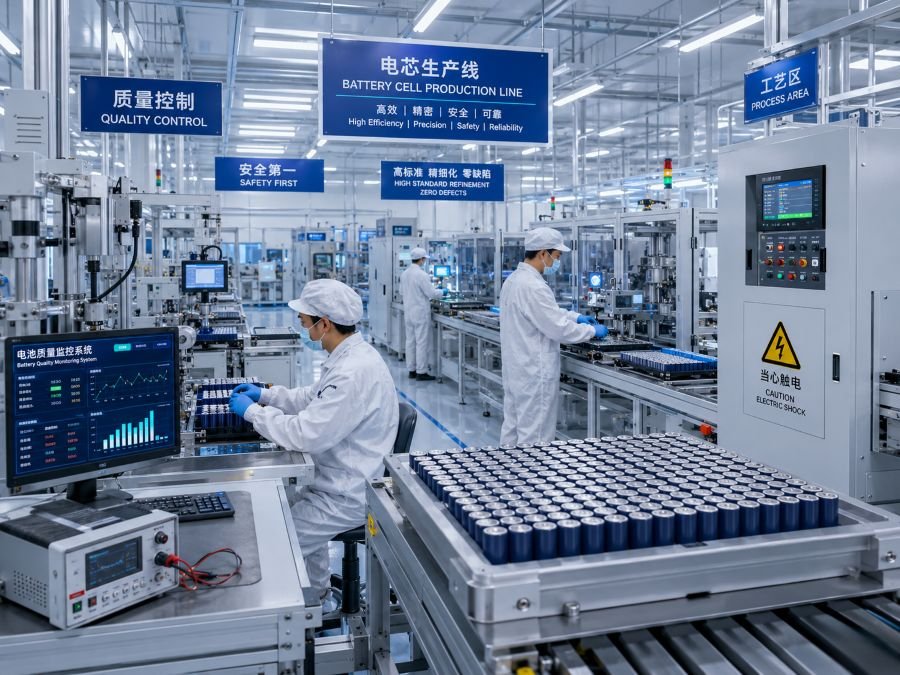
BYD’s Mexico manufacturing strategy differs fundamentally from its Chinese operations. Rather than leveraging Chinese supply chains, Mexican production would utilize localized component sourcing to maximize battery component and mineral content credits under the IRA. Battery assembly, the most critical component for credit eligibility, could be localized in Mexico or source from North American suppliers.
Geely-Volvo: Leveraging Existing North American Infrastructure
Geely Holding owns a controlling stake in Volvo Cars, and Volvo operates manufacturing facilities in Belgium and the United States. While Volvo doesn’t currently produce Chinese EVs under the Geely brand, the corporate relationship provides infrastructure for potential future expansion. The Volvo EX90, though assembled in Europe, meets certain US market requirements and represents the type of premium electric vehicle that could qualify for the clean vehicle credit if future versions achieve North American assembly status.
Geely’s independent brand remains virtually unknown in the US market, but the company has expressed interest in North American manufacturing. Any future Geely-branded models produced in Mexico would require extensive engineering modifications to meet US market standards, EPA compliance requirements, and crash test standards. The timeline for such models entering the market remains uncertain, likely extending into 2027 or beyond.
JAC Motors: Cautious Entry Strategy
JAC (Anhui Jianghuai Automobile Co., Ltd.) represents a smaller player in the global EV landscape compared to BYD, but the company manufactures reliable, affordable electric vehicles. JAC has not announced concrete Mexican manufacturing plans, though the company continues evaluating international expansion opportunities. Given JAC’s cost-competitive positioning and popularity in developing markets, Mexican production could eventually enable the company to offer affordable EVs to North American consumers while accessing clean vehicle tax credits.
JAC’s path to the North American market faces steeper challenges than BYD’s. The company lacks brand recognition in the US, would require significant capital investment for manufacturing infrastructure, and would need to undertake comprehensive vehicle engineering modifications to meet American safety and emissions standards. While not impossible, JAC’s Mexico manufacturing timeline likely extends well beyond 2027.
💡 Pro Tip: Monitor announcements from Chinese manufacturers regarding Mexican manufacturing partnerships or facility completions. The transition from announcement to production-ready vehicles typically requires 18-36 months, providing ample time for consumers to evaluate options before models reach market.
Eligibility Requirements: What Chinese EVs Must Meet
Simply manufacturing in Mexico doesn’t guarantee clean vehicle tax credit eligibility. The IRA establishes specific requirements that vehicles must satisfy across multiple dimensions. Understanding these requirements clarifies which future Chinese EV models will genuinely qualify for the incentive and which face obstacles.
| Requirement Category | Specific Criteria | Impact on Chinese Makers |
|---|---|---|
| Final Assembly Location | North America (US, Canada, or Mexico) | Mexico facility satisfies requirement if established |
| Battery Components | Percentage manufactured/assembled in North America; gradually increases 50% (2025) → 100% (2029) | Chinese makers must source or localize battery production in North America |
| Critical Minerals | Percentage of minerals must originate from FTA countries or be recycled; increases 50% (2025) → 100% (2029) | Most challenging requirement; currently difficult to source from Western Hemisphere |
| Vehicle Price Caps | Sedans: $55,000 MSRP; SUVs/Trucks: $80,000 MSRP | BYD’s mass-market models likely qualify; premium segments may exceed caps |
| Vehicle Type | New battery electric vehicles, plug-in hybrids, fuel cell vehicles | Chinese EV models generally qualify; BYD’s PHEV technology may complicate criteria |
The most formidable challenge for Chinese manufacturers involves the critical minerals requirement. The IRA specifies that battery minerals including lithium, cobalt, nickel, and manganese must derive from free trade agreement nations or recycling sources. The Americas include Chile, Argentina, Peru, and Colombia for lithium; however, cobalt sourcing from the Western Hemisphere remains extremely limited.
Chinese manufacturers have long-standing relationships with mining operations in Africa, Southeast Asia, and Australia—regions excluded from the Western Hemisphere requirement. Transitioning supply chains to rely on American, Latin American, or recycled minerals requires significant capital investment and supply chain restructuring. BYD’s LFP (lithium iron phosphate) battery chemistry, which reduces reliance on cobalt and nickel, provides a potential pathway to compliance. However, LFP batteries currently occupy a lower energy density position compared to NCA (nickel-cobalt-aluminum) and NMC (nickel-manganese-cobalt) chemistries, which may impact vehicle performance or range expectations in the North American market.
Timeline: When Will Chinese EVs Made in Mexico Actually Arrive?
Creating a realistic timeline for Chinese EV availability in the US market through Mexican manufacturing requires understanding industrial development timelines. From announcement to first production vehicles, manufacturers typically require 24-36 months, assuming construction begins immediately following final permits and approvals.
BYD’s Mexico facility announcements suggest possible production commencement in 2025-2026, with volume production scaling throughout 2026-2027. Models reaching US market availability would likely appear in 2027-2028, following EPA compliance testing, crash testing, and regulatory approvals. Early availability would probably target high-volume segments where BYD has proven competence: compact SUVs and sedans in the $25,000-$45,000 price range.
Geely’s Mexico expansion timeline remains even more uncertain, potentially extending into 2028-2029 for first models. JAC’s North American entry through Mexican manufacturing appears unlikely before 2029-2030, if at all in the medium term.
Critical Factors Affecting Timeline
Several variables could accelerate or delay these timelines. Positive factors include US political support for North American manufacturing, successful completion of manufacturing facility construction, and successful supply chain localization. Negative factors include tariff policy changes, ongoing geopolitical tensions between the US and China, labor disputes at manufacturing facilities, and supply chain disruptions affecting battery component availability.
⚠️ Important Note: Congressional legislation could modify or eliminate the clean vehicle tax credit at any time. While the Inflation Reduction Act currently authorizes credits through 2032, future legislative changes could alter eligibility requirements, credit amounts, or price caps. Consumers and businesses should verify current eligibility criteria at the time of purchase rather than assuming conditions remain constant.
FAQ: Chinese EVs Made in Mexico and US Tax Credits
What Chinese EVs made in Mexico qualify for US clean vehicle credits?
Currently, no Chinese EV models are manufactured in Mexico and qualify for US credits, as Chinese manufacturers have not yet completed factory construction. However, BYD has announced plans to establish Mexican manufacturing, which could enable future BYD models to qualify once produced. Other manufacturers including Geely and JAC have not confirmed concrete Mexican manufacturing timelines.
How much is the US clean vehicle tax credit?
The maximum credit reaches $7,500 for new battery electric vehicles meeting all eligibility requirements. The credit comprises two components: up to $3,750 for battery components manufactured or assembled in North America, and up to $3,750 for critical minerals sourced from free trade agreement countries or recycled sources. Consumers may claim less than the full amount if their vehicle meets partial requirements or if their income exceeds established thresholds.
What requirements must Chinese EVs meet to qualify for US credits?
Vehicles must be manufactured with final assembly in North America (US, Canada, or Mexico), contain specified percentages of battery components manufactured in North America (increasing from 50% to 100% through 2029), source required percentages of critical minerals from Western Hemisphere free trade partners (also increasing to 100% by 2029), maintain MSRP below $55,000 for sedans or $80,000 for SUVs/trucks, and be new battery electric vehicles, plug-in hybrids, or fuel cell vehicles.
Will BYD’s Mexico manufacturing facility produce cars for the US market?
BYD has not explicitly confirmed that models produced in Mexico will target the US market initially. The company has indicated Mexican production would serve the Mexican and Central American markets. However, once facility operations stabilize, exporting qualifying vehicles to the US market would align with BYD’s global growth strategy. The timeline for US market entry remains uncertain, likely extending into 2027-2028 at earliest.
Are Geely and JAC models made in Mexico eligible for US credits?
Currently, neither Geely nor JAC have announced confirmed Mexican manufacturing facilities. Any future models manufactured in Mexico by these companies would require meeting identical eligibility requirements as BYD models. Without committed factory investments and confirmed timelines, these manufacturers remain 2-4+ years away from potential US market entry through Mexican production.
The Future of Chinese EVs in North America Through Mexico
The convergence of Chinese EV manufacturing expertise, Mexican geopolitical positioning, and the US clean vehicle tax credit structure creates unprecedented opportunities for market transformation. Over the next 3-5 years, expect significant expansion of Chinese EV manufacturing capacity in Mexico, particularly from BYD. This expansion will likely trigger two concurrent market dynamics: first, increased availability of affordable Chinese EVs to American consumers at lower price points than domestically-manufactured alternatives; second, accelerated supply chain localization as Chinese manufacturers establish battery assembly operations and source battery components from North American suppliers.
The clean vehicle tax credit will prove instrumental in shaping purchasing decisions, potentially enabling BYD models priced in the $25,000-$40,000 range to compete effectively against Tesla’s mass-market offerings and traditional automakers’ EV entries. Consumers purchasing these vehicles could realize net costs 15-20% lower than comparable US-assembled alternatives through credit application.
However, substantial uncertainty persists regarding regulatory evolution. The IRA currently permits unlimited credit availability through 2032, but Congressional action could modify, reduce, or eliminate this incentive. Additionally, US-China trade tensions and evolving tariff policies could impact the business case for Mexican manufacturing investment. Chinese manufacturers must weigh the long-term viability of North American operations against uncertain regulatory environments and potentially temporary geopolitical windows of opportunity.
Conclusion: Preparing for Chinese EV Availability
Chinese electric vehicles manufactured in Mexico represent a transformative development for the North American automotive market, promising consumers access to affordable, technologically advanced EVs with federal tax credit eligibility. While no Chinese EV models currently reach US consumers through Mexican manufacturing, the industry trajectory suggests material availability beginning in 2027-2028.
For consumers considering EV purchases, maintaining awareness of Chinese manufacturer announcements, monitoring manufacturing facility progress, and understanding clean vehicle tax credit eligibility requirements will prove essential for optimizing purchasing decisions. The next 18-24 months will likely feature significant announcements regarding facility construction commencement, production timeline confirmations, and specific model announcements for North American market introduction.
BYD’s Mexico expansion strategy appears most advanced, suggesting that BYD models will likely pioneer Chinese EV availability in the North American market through Mexican manufacturing. Prospective buyers should monitor BYD’s announced timelines, anticipated entry-level model specifications, and actual factory production commencement dates. The potential for $7,500 federal tax credits on affordable, quality-assured BYD electric vehicles could fundamentally reshape North American EV market competition and consumer purchasing dynamics.