Why Chinese Cars Aren’t Sold in the US: The Real Reasons Explained
You’ve probably noticed that Chinese vehicles are virtually invisible on American roads. While brands like BYD, NIO, and Li Auto dominate markets across Asia and Europe, they remain almost completely absent from the United States. This isn’t a coincidence—it’s the result of a complex web of trade policies, regulatory barriers, and strategic decisions that have kept Chinese automakers out of the world’s largest single automotive market.
The reasons go far beyond simple tariffs. From government protectionism to safety certification requirements, from battery supply chain concerns to political tensions, the barriers facing Chinese car manufacturers in America are substantial and multifaceted. Understanding these obstacles reveals not just why Chinese cars aren’t here today, but whether they’ll ever arrive in significant numbers.
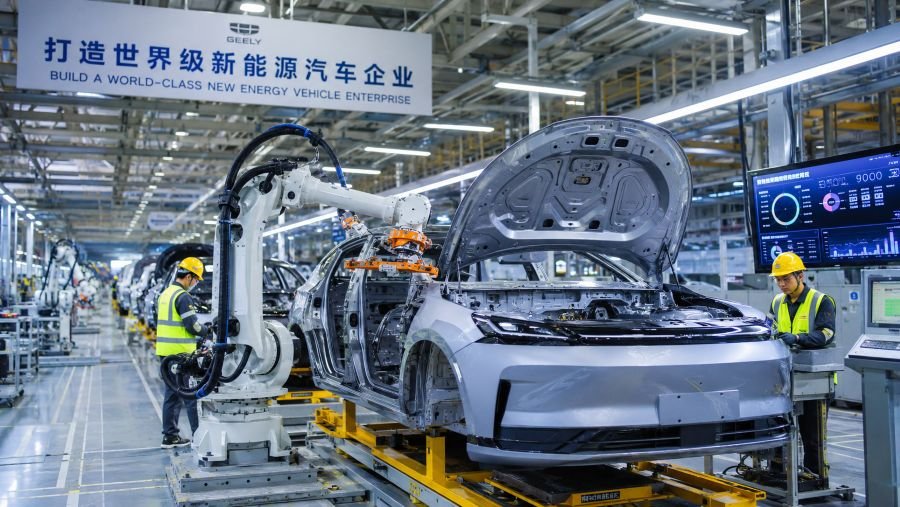
The question of why Chinese cars don’t exist on American roads is one that puzzles many automotive enthusiasts and consumers. After all, Chinese automakers have proven they can manufacture high-quality vehicles, develop cutting-edge electric technology, and design stylish models that appeal to global audiences. So what’s really preventing them from competing in the US market?
The Tariff Wall: America’s First Line of Defense
The most immediate and obvious barrier Chinese vehicles face is the tariff structure imposed by the United States government. While the standard tariff on passenger vehicles imported into the US is 2.5 percent, this seemingly modest rate masks a much more complex reality for Chinese manufacturers. The government has implemented various additional duties, safeguard tariffs, and country-specific measures that specifically target Chinese automotive products, particularly electric vehicles.
In recent years, the US government has escalated its approach to Chinese vehicles. When the Biden administration took office, it signaled a hardline stance on Chinese imports as part of a broader “America First” trade strategy. This resulted in additional tariffs being placed on Chinese electric vehicles, with some estimates suggesting combined tariff rates could exceed 25 percent when accounting for all applicable duties. For context, this makes a Chinese-manufactured vehicle significantly more expensive to import than competitors from traditional automotive nations like Germany, Japan, or South Korea.
To understand the impact, consider a Chinese EV that costs $25,000 to manufacture and export. With tariffs approaching 25 percent, the import cost alone climbs to $31,250 before the importer even marks it up for dealer profit, transportation within the US, or advertising. This pricing becomes uncompetitive against established brands like Tesla, which manufactures domestically, or legacy automakers like Ford and GM, which benefit from established dealer networks and consumer trust despite potentially higher production costs.
Safety Standards and Regulatory Certification
Beyond tariffs, the second massive hurdle Chinese automakers must overcome is the US safety and emissions regulatory framework. The United States maintains some of the world’s strictest automotive standards, administered by the National Highway Traffic Safety Administration (NHTSA) and the Environmental Protection Agency (EPA). These agencies don’t simply accept safety certifications from other countries—every vehicle model imported for sale in the US must be tested and certified to meet American standards.
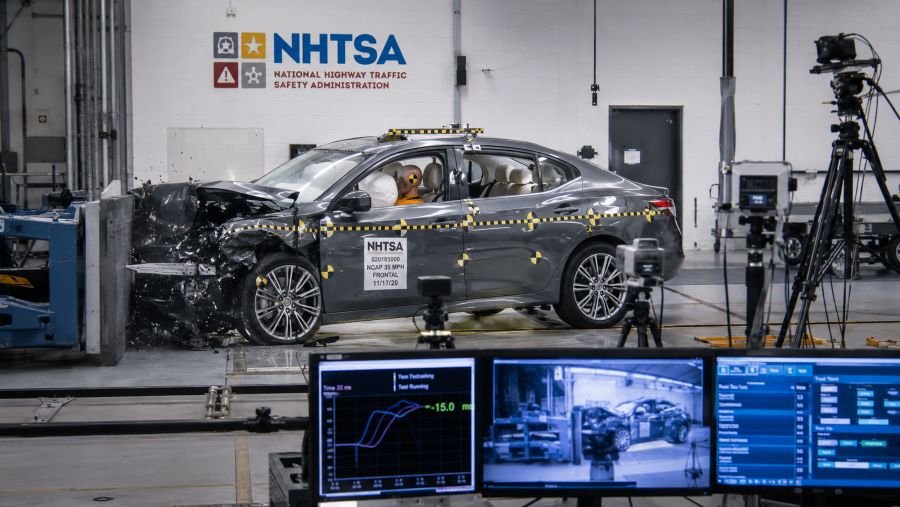
This presents a chicken-and-egg problem for Chinese manufacturers. To justify the investment in developing vehicles that meet US standards, a company needs confidence that the US market will be accessible. Yet the regulatory barriers themselves are so substantial that they require significant upfront investment without guaranteed market access. A single vehicle model might require hundreds of millions of dollars in engineering modifications and testing to meet American crash test requirements, emissions standards, and vehicle stability regulations.
The Crash Test Reality
US crash testing is notably more comprehensive than testing in other major markets. NHTSA conducts frontal crash tests, side-impact tests, rollover resistance tests, and increasingly, crash avoidance system evaluations. A vehicle designed for Chinese consumers, who drive on different road types and at different speeds, may need substantial structural redesign to pass American crash tests. Chinese vehicles may also have different safety philosophies—some Chinese manufacturers prioritize lighter materials for efficiency, which sometimes conflicts with American crash test performance.
Additionally, the EPA’s emissions standards have become increasingly stringent, with upcoming standards requiring manufacturers to essentially design electric drivetrains or highly advanced hybrid systems to meet fleet-wide emissions requirements. While Chinese companies excel at EV technology, bringing these systems into compliance with EPA requirements adds complexity and cost.
Brand Recognition and Consumer Trust Challenges
Even if Chinese automakers could overcome tariffs and regulations tomorrow, they would face substantial marketing and consumer trust challenges. Most American consumers are not familiar with Chinese vehicle brands. BYD might be the world’s largest EV manufacturer by volume, but drive around any American suburb and you’ll struggle to find consumers who’ve heard of the company.
This lack of brand recognition translates to a significant disadvantage. American consumers tend to gravitate toward established brands with long track records of reliability and service availability. When purchasing a vehicle—an asset that will be used for a decade or more and require maintenance and repairs—consumers value brand heritage and the availability of certified service technicians. Chinese brands lack this established infrastructure.
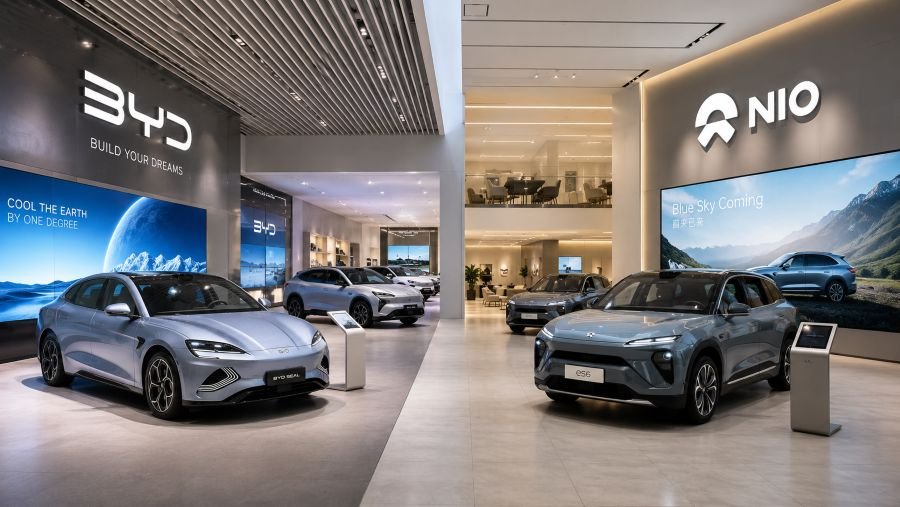
Building brand recognition would require enormous advertising investments, establishment of dealer networks, creation of service centers, and years of building reputation for quality. Established competitors like Tesla, Toyota, and GM have spent decades—in some cases over a century—building their brand equity. A Chinese startup would need to rapidly overcome this disadvantage while simultaneously competing on price and features.
The Dealer Network Obstacle
America’s automotive distribution system depends heavily on an established dealer network. Unlike some markets where manufacturers sell directly to consumers, the US has franchised dealer networks that are sometimes easier to establish but require significant capital investment and create ongoing relationships that must be managed. Chinese companies would need to either acquire existing dealerships or establish entirely new dealer networks, which would require finding qualified operators willing to invest in a largely unknown brand.
Trade Policy and Protectionism
It would be naive to ignore the political dimension of Chinese vehicle exclusion. The United States government has explicitly stated that protecting domestic automotive manufacturing is a priority. This protection takes multiple forms, from tariffs to non-tariff barriers that make it difficult for foreign vehicles—particularly from China—to compete.
The “Buy American” provisions in various government programs, combined with consumer preference for domestic vehicles (which politicians actively encourage), create an environment where Chinese cars would face headwinds beyond mere market competition. Trade negotiations between the US and China have repeatedly featured automotive issues, with American negotiators demanding Chinese market access for American vehicles while defending restricted access to the American market.
⚠️ Important Context: US automotive policy reflects genuine concerns about manufacturing job preservation, supply chain resilience, and economic security. These aren’t purely protectionist measures but reflect policy decisions balancing free trade with domestic economic interests. However, they unquestionably create barriers that Chinese manufacturers cannot currently overcome.
Battery Supply Chain and National Security Concerns
China dominates the global battery supply chain for electric vehicles, controlling most of the world’s lithium processing and battery cell manufacturing. This dominance creates a national security concern for the US government. If Chinese vehicles were permitted widespread entry into the American market, the US would become dependent on Chinese supply chains for battery technology—the critical component determining EV performance and cost.
American policymakers view battery manufacturing as strategically critical, comparable to semiconductor production. The Inflation Reduction Act explicitly provides subsidies and tax credits for electric vehicles manufactured in North America with batteries containing minerals processed in allied nations, specifically designed to reduce American dependence on Chinese battery technology. This policy framework actively discourages Chinese vehicle imports.
The US government and American automakers argue that ensuring domestic battery manufacturing capacity is essential for economic independence and national security. Whether one agrees with this reasoning or views it as protectionism, it remains a significant policy barrier that Chinese manufacturers cannot easily overcome.
Market Timing and Manufacturing Scale Challenges
Another rarely discussed factor is manufacturing scale and timing. Chinese automakers became large, competitive manufacturers relatively recently—primarily within the last 10-15 years. During the 1990s and 2000s when global automotive consolidation occurred, Chinese companies were not yet participants at the scale necessary to establish meaningful US operations. By the time Chinese manufacturers achieved the scale and capability to potentially enter the US market, the political environment had shifted decisively against Chinese imports across multiple sectors.
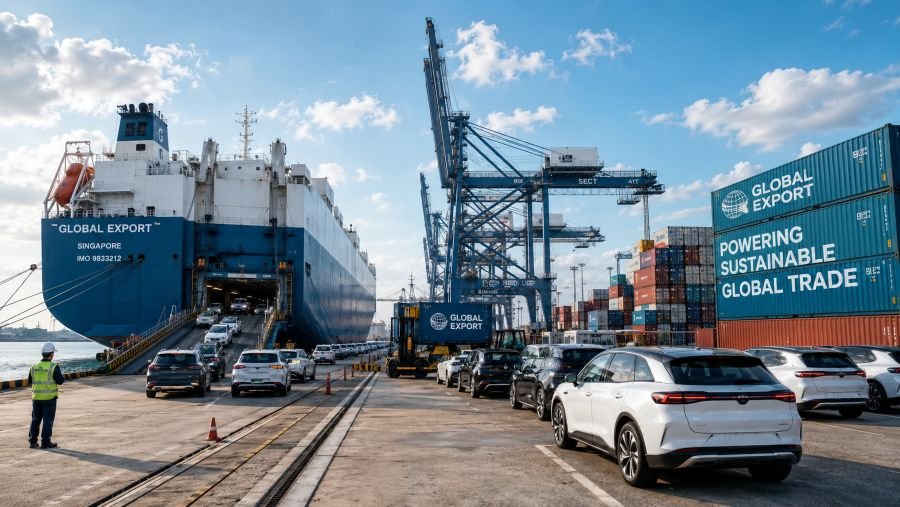
Entering the US market would require Chinese companies to establish manufacturing facilities on American soil. Simply exporting vehicles from China would face the full weight of tariffs and regulatory challenges. Building American factories requires navigating environmental regulations, labor requirements, and state-level incentive negotiations—challenges that exist even for established automotive companies.
Some Chinese companies have explored US investments. BYD, for instance, operates a battery manufacturing facility in Nevada. However, these initiatives have faced skepticism and political opposition. The idea of a major Chinese automaker building vehicle manufacturing plants in the US would likely face Congressional scrutiny and public controversy.
A Comparative Look: How Other Markets Treat Chinese Cars
The contrast between US restrictions and the global market makes the American exclusion more apparent. In Europe, Chinese vehicles are competing successfully. BYD, NIO, XPeng, and Li Auto all have European operations or plans. These companies faced European regulations no less rigorous than American ones, yet they invested the resources necessary to comply and now compete effectively.
| Market | Chinese Vehicle Presence | Key Barriers/Enablers |
|---|---|---|
| United States | Nearly Zero | High tariffs, regulations, political barriers, trade tensions |
| Europe | Growing (BYD, NIO, XPeng) | Strict regulations but market open to competition, customer interest in EVs |
| Australia | Emerging (BYD, MG) | Trade disputes but growing consumer acceptance of Chinese brands |
| Mexico | Expanding | Lower regulatory barriers, manufacturing hub potential |
| Southeast Asia | Substantial (MG, BYD, Chery) | Geographic proximity, lower import costs, brand familiarity |
In Australia, Chinese brands like BYD and MG are competing effectively despite being newcomers to the market. Their success demonstrates that Chinese manufacturers can overcome quality and safety skepticism when given market access. Yet Australia has stronger trade ties with China and fewer political barriers to Chinese imports compared to the United States.
💡 Pro Insight: Chinese automakers are responding to US market closure by strengthening positions elsewhere. BYD expanded significantly in Europe and Southeast Asia while establishing manufacturing facilities in India and Mexico. These are effectively alternative routes to eventual North American presence through Mexican manufacturing and export.
The Possibility of Future US Market Entry
Is there any realistic scenario where Chinese vehicles could be sold in the United States? While currently seeming unlikely, the situation isn’t entirely immobile. Several paths exist, though each faces significant hurdles:
Manufacturing in Mexico or Canada
Chinese companies could potentially bypass tariff barriers by establishing manufacturing operations in Mexico or Canada. Under the United States-Mexico-Canada Agreement (USMCA), vehicles manufactured in member countries face lower tariff rates. BYD has already announced plans for battery manufacturing in Mexico, and expanded manufacturing operations could eventually include vehicle assembly. However, this approach would still require regulatory compliance and would face political opposition even with Mexican manufacturing.
Premium Market Entry Through Partnerships
A Chinese manufacturer could theoretically partner with an established American or American-allied company to establish credibility. This happened historically when Japanese companies first entered the American market through partnerships and technical cooperation. However, modern American automakers face skepticism about Chinese partnerships and would face political pressure to avoid such arrangements.
Changing Political Environment
Over a longer time horizon, changing trade relationships or political priorities could alter the barriers. If future administrations deprioritize protection of domestic automotive manufacturing, if trade relationships with China normalize, or if Chinese companies establish manufacturing facilities creating American jobs, the political environment might shift. This remains speculative and is probably a decade-plus away if it happens at all.
FAQ: Chinese Cars and the US Market
Why don’t Chinese cars sell in the United States?
Chinese vehicles face multiple interconnected barriers: tariff walls designed to protect domestic manufacturers (25%+ on some EVs), stringent safety and emissions certification requirements, brand recognition challenges, dealer network gaps, and explicit US trade policies limiting Chinese imports as a national security measure related to battery supply chains.
Will Chinese cars ever be sold in America?
While not impossible, significant barriers must be overcome. Chinese companies could eventually establish manufacturing in North America (particularly Mexico), invest billions in brand building, and work with changed political conditions. This would likely require 5-10+ years of preparation and substantial capital investment. Some experts believe it’s inevitable eventually; others view it as unlikely given current trends.
What tariff rates apply to Chinese vehicles?
Standard passenger vehicle import tariffs are 2.5%, but Chinese vehicles face additional duties. Combined tariff rates on Chinese electric vehicles have exceeded 25% in recent policy implementations. These rates make imported Chinese vehicles significantly more expensive than domestically manufactured competitors.
Are Chinese cars actually good quality?
Modern Chinese vehicles have achieved high quality standards. BYD, NIO, and XPeng all produce vehicles that compete successfully in international markets and receive positive reviews. The quality concerns that existed 10-15 years ago have largely been addressed. The barrier isn’t vehicle quality but rather regulatory, tariff, and political factors.
What would happen if Chinese cars were allowed into the US market?
American consumers would likely have access to cheaper, feature-rich vehicles, particularly in the EV segment. Chinese manufacturers could offer competitive pricing. However, concerns about job losses in domestic automotive manufacturing and increased dependence on Chinese supply chains were key reasons policymakers implemented restrictive policies.
Is there any way around these barriers?
Yes—Chinese companies could establish manufacturing facilities in Mexico or Canada under trade agreements, potentially bypassing tariffs. They could also partner with American companies, though political pressure would complicate this. Alternatively, changed trade relationships or political priorities could alter the regulatory environment.
The Bigger Picture: Protectionism vs. Free Trade
The exclusion of Chinese vehicles from the American market is fundamentally a policy choice. It’s not the result of Chinese vehicles being unsafe, unreliable, or undesirable. Rather, it reflects deliberate decisions to protect domestic automotive manufacturing jobs and to reduce American dependence on Chinese supply chains.
Whether one views this as legitimate economic protection or problematic protectionism often depends on one’s perspective. American automotive workers and the communities that depend on auto manufacturing might view these barriers as essential to their livelihoods. Consumers who want lower-cost vehicles with advanced technology might view them as restrictions on choice and artificially high prices. Policymakers must balance these competing interests.
What remains clear is that the current situation—a world where Chinese vehicles are unavailable in the United States despite being available in most other developed markets—is not inevitable. It’s the result of specific policy choices that could theoretically change. Whether they will depends on how trade relationships evolve, how political priorities shift, and whether American companies can maintain competitive advantage in electric vehicle technology despite Chinese leadership in battery manufacturing.
Conclusion: The Closed Door Remains Shut
Chinese automobiles remain absent from American roads not because of fundamental quality issues or consumer disinterest, but because of a combination of strategic policy decisions, tariff barriers, regulatory obstacles, and political considerations. Each of these barriers alone might be surmountable, but collectively they create a nearly insurmountable challenge for any Chinese automaker seeking to enter the US market.
As the global automotive landscape transforms around electric vehicles and autonomous driving technology—areas where Chinese companies are among the world’s leaders—the exclusion of Chinese competitors from the American market represents a significant policy divergence. Whether this continues indefinitely or eventually shifts will likely be determined by factors beyond the control of automakers themselves, resting instead in the hands of trade negotiators, politicians, and the broader evolution of US-China relations.
For now, American consumers remain unable to purchase the world’s best-selling electric vehicle (BYD’s Yuan Plus), experience the technology-rich experience of NIO’s offerings, or consider the value proposition of XPeng’s intelligent vehicles. This isn’t a reflection of market forces or consumer preference—it’s the result of policy barriers that keep one of the world’s most innovative automotive sectors off American roads.