Are Chinese Cars Worth Buying in 2026? Honest Buyer Guide
Chinese cars have changed faster than almost any other part of the global automotive industry. A decade ago, many buyers associated Chinese vehicles with low prices, weak brand recognition, and uncertain quality. In 2026, that view is outdated. Brands such as BYD, MG, Geely, NIO, XPeng, Zeekr, GWM Ora, Omoda, Jaecoo, and Leapmotor are now competing with serious technology, strong EV platforms, long warranties, advanced safety systems, and increasingly mature export strategies.
So, are Chinese cars worth buying in 2026? The honest answer is yes for many buyers, but not automatically for everyone. Chinese cars can offer outstanding value, especially in electric and plug-in hybrid segments. However, buyers still need to check service support, resale value, software quality, insurance costs, local warranty coverage, and long-term parts availability before making a decision.
Watch: Are Chinese Cars Worth Buying in 2026?
The Short Answer: Are Chinese Cars Worth Buying in 2026?
Chinese cars are worth buying in 2026 if you want strong value, advanced technology, generous equipment, and modern electric or hybrid powertrains at competitive prices. The best Chinese brands now produce cars that can compete seriously with European, Japanese, Korean, and American rivals. In some EV categories, Chinese brands are not simply catching up; they are leading on battery integration, software, charging hardware, and price-to-feature ratio.
However, the right answer depends on your location and ownership priorities. A Chinese car can be an excellent purchase in a market where the brand has a strong dealer network, trained technicians, warranty support, spare parts supply, and established resale demand. The same model can be a riskier purchase in a country where the brand is new, service points are limited, or insurers and used-car buyers are still unfamiliar with it.
How Chinese Cars Improved So Quickly
The rapid rise of Chinese car brands did not happen by accident. China became the world’s most important EV manufacturing base through a combination of battery investment, software development, large-scale domestic demand, supply-chain depth, and fast product cycles. Chinese manufacturers learned quickly because their home market is extremely competitive. Brands that do not improve fast are quickly punished by buyers.
This pressure created a new generation of companies that move faster than many traditional automakers. Chinese brands often update interiors, screens, battery packs, driver assistance systems, and connected features more quickly than legacy manufacturers. In EVs, this speed matters because software, charging behaviour, route planning, battery management, and over-the-air updates can be as important as mechanical engineering.
Another major reason is vertical integration. BYD, for example, is not only a carmaker but also a battery and technology company. Its Blade Battery technology is designed around safety, durability, and packaging efficiency, and BYD’s own UK material highlights its performance in nail penetration testing, a severe battery safety test. This kind of in-house capability helps Chinese brands control cost and technology more tightly than some competitors.
Quality and Build Standards in 2026
The old idea that Chinese cars are poorly built is no longer accurate for the leading brands. Modern Chinese vehicles use advanced manufacturing processes, global suppliers, high-strength structures, improved paint quality, better cabin materials, and more sophisticated quality control. Premium brands such as NIO, Zeekr, and XPeng can feel genuinely upscale, while mainstream brands such as BYD and MG offer strong build quality for the price.
That said, quality is not equal across every brand. Some Chinese cars feel polished and mature, while others may still show weaker software localization, confusing menus, average ride tuning, or inconsistent dealer experience. This is why buyers should avoid judging the entire Chinese car industry as one group. A well-reviewed BYD, MG, or Zeekr may offer a very different ownership experience from a smaller new brand with limited international support.
Chinese Cars and EV Technology
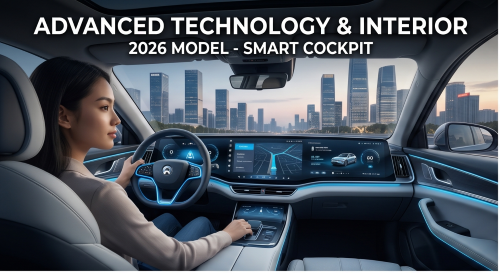
Technology is where Chinese cars are often most convincing. Many Chinese EVs come with large displays, smartphone-style interfaces, connected apps, fast charging capability, heat pumps, advanced driver assistance, 360-degree cameras, voice controls, and high equipment levels as standard. In many Western cars, similar features are optional or reserved for expensive trims.
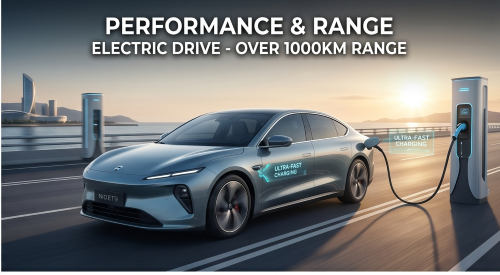
Electric vehicle technology is especially important. Chinese companies have become highly competitive in batteries, power electronics, EV platforms, and charging efficiency. BYD has major battery scale, XPeng focuses heavily on software and driver assistance, NIO promotes battery swapping and premium services, while Geely-backed brands benefit from global platform experience through Volvo, Polestar, Lotus, Zeekr, and other group assets.
Buyers should still test the software before buying. A car can have impressive hardware but weak localization. Check navigation quality, voice control, smartphone integration, charging route planning, over-the-air update history, and whether the driver assistance systems behave naturally on local roads.
Reliability: What Buyers Should Know
Reliability is the most difficult area to judge because many Chinese brands are still new in export markets. Some brands have strong domestic track records and growing international experience, but long-term data in Europe, the UK, Australia, the Middle East, and other regions is still developing. This does not mean the cars are unreliable; it means buyers should be realistic about how much long-term evidence is available.
The strongest Chinese brands are improving quickly, and many use proven suppliers for electronics, braking systems, safety components, and driver assistance hardware. Battery warranties are also usually generous, commonly around eight years depending on the market and brand. Still, reliability is not only about the vehicle itself. It also depends on software support, dealer diagnostics, spare parts, repair procedures, and how quickly problems are resolved.
Price and Value: The Biggest Advantage
Price remains one of the strongest reasons to buy a Chinese car. Chinese brands often deliver more equipment for the money than established rivals. A buyer may get a panoramic roof, large infotainment system, advanced safety package, electric seats, long battery warranty, fast charging, and premium-looking interior materials at a lower price than a comparable European or Japanese model.
This does not always mean the cheapest car is the best choice. Buyers should compare total ownership cost, not just the purchase price. Insurance, finance rates, depreciation, servicing, replacement tyres, software subscriptions, warranty limitations, and charging efficiency all affect the real cost of ownership.
| Buying Factor | Chinese Car Advantage | What to Check First |
|---|---|---|
| Purchase price | Often lower than similarly equipped rivals. | Compare finance terms, incentives, and final on-road price. |
| Technology | Large screens, strong connectivity, ADAS, and EV-focused features. | Test software quality, updates, language support, and route planning. |
| Warranty | Many brands offer competitive vehicle and battery warranties. | Read exclusions, battery degradation limits, and transferability. |
| Safety | Leading models now perform strongly in independent crash tests. | Check the exact model and year rating in your market. |
| Ownership support | Improving rapidly in major markets. | Confirm dealer coverage, parts supply, and approved repairers. |
| Resale value | Improving for established brands such as MG and BYD. | Check used values locally and compare against known rivals. |
Safety Performance and Crash-Test Confidence
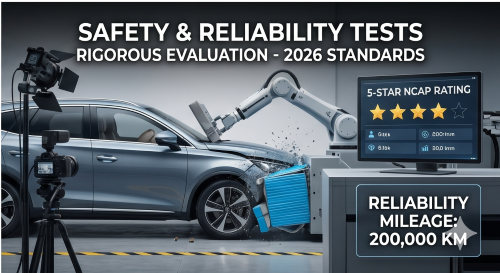
Safety is one of the areas where Chinese cars have improved most dramatically. Several modern Chinese EVs and plug-in hybrids have achieved strong independent safety ratings in Europe and other markets. This is important because it shows that leading Chinese manufacturers are no longer building cars only to meet domestic expectations; they are engineering vehicles for international crash, assistance, and safety standards.
Buyers should still check the exact version of the car they plan to buy. Safety ratings can depend on model year, market specification, standard safety equipment, and whether driver assistance systems are included in the tested version. Do not assume every trim has the same safety package.
Resale Value and Depreciation
Resale value is still one of the biggest concerns for Chinese cars in 2026. Established brands such as Toyota, Honda, Mercedes-Benz, BMW, and Lexus have decades of buyer trust behind them. Newer Chinese brands are still building that trust, and used-car markets need time to understand long-term reliability, parts availability, and demand.
The situation is improving for brands with stronger market presence. MG has longer recognition in the UK and parts of Europe. BYD is expanding quickly and gaining visibility. Geely-linked brands benefit from wider global credibility. However, depreciation can still be less predictable for newer Chinese brands, especially premium EVs with fast-changing technology.
Service Network and Parts Availability
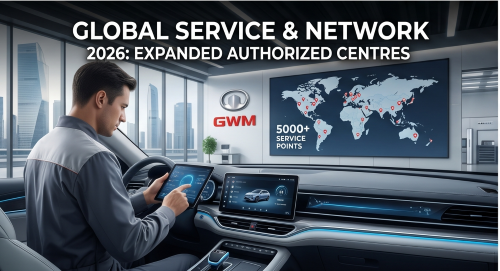
Service support can decide whether a Chinese car is a smart purchase or a frustrating one. In markets where the brand has official dealers, trained technicians, local parts warehouses, and approved repair centres, ownership can be straightforward. In markets where the brand is new or imported through a small distributor, even a good car can become difficult to support.
This is especially important for EVs. Electric cars require high-voltage training, diagnostic software, battery repair procedures, and proper safety equipment. Before buying, ask how many approved service centres are near you, whether common parts are stocked locally, how warranty claims are handled, and how long accident repairs usually take.
Best Chinese Car Brands to Consider in 2026
The best Chinese car brand depends on your market and budget, but several names stand out globally. These brands have stronger technology, visibility, or export momentum than many smaller competitors.
BYD
Best for buyers who want strong EV technology, battery expertise, practical models, and competitive pricing. BYD is one of the safest Chinese brands to consider because of its scale and growing international network.
MG
Best for value-focused buyers in markets where MG already has a strong dealer network. MG is especially important in the UK and Europe because buyers are more familiar with the badge.
Geely, Zeekr and Lynk & Co
Best for buyers who want Chinese engineering with global group experience. Geely’s ownership of Volvo and involvement with Polestar and Lotus add credibility to its wider ecosystem.
NIO and XPeng
Best for technology-focused buyers. NIO focuses on premium ownership and battery services, while XPeng is known for software, driver assistance, and smart EV features.
Potential Drawbacks of Chinese Cars
Chinese cars have improved dramatically, but they are not perfect. The biggest concerns are usually not basic quality anymore. Instead, buyers should think about long-term support, depreciation, insurance, software updates, repairability, and local dealer strength. A car can be impressive on a test drive but less appealing if the nearest service centre is far away or parts take weeks to arrive.
Brand perception also matters. Some buyers still prefer established Japanese, Korean, German, or American brands because they trust their long-term reliability and resale values. That is reasonable. Chinese brands must continue proving themselves over years, not months.
- Resale values may be less predictable for newer brands.
- Insurance costs can vary if insurers have limited data on a new model.
- Service coverage may be excellent in one country and weak in another.
- Software localization may need improvement in some models.
- Parts availability should be confirmed before buying.
- Trade policy and tariffs can affect pricing in Europe, the US, and other regions.
Who Should Buy a Chinese Car in 2026?
A Chinese car makes the most sense for buyers who prioritize value, technology, EV efficiency, standard equipment, and modern design. If you plan to keep the car for several years and you have strong local service support, a Chinese EV or hybrid can be an excellent choice.
It may be less suitable if you trade cars every two or three years, rely heavily on resale value, live far from official service support, or prefer traditional cabins with fewer screens and less software dependence. In those cases, an established Japanese, Korean, or European model may still feel safer.
| Buy a Chinese Car If… | Be More Careful If… |
|---|---|
| You want maximum equipment and EV technology for the money. | You need the strongest possible resale value after a short ownership period. |
| You have official dealers and service centres nearby. | Your region has limited parts supply or no approved repairers. |
| You plan to keep the car for five years or more. | You are buying from a new brand with little local ownership data. |
| You value modern software, screens, and connected features. | You prefer proven long-term reliability records over newer technology. |
Questions to Ask Before Buying
Before buying any Chinese car in 2026, ask practical ownership questions. These questions are more useful than simply asking whether Chinese cars are “good” or “bad.” The answer depends on the exact car, the importer, the dealer, and your local market.
- Is the brand officially sold in my country?
- How many authorized service centres are near me?
- Are common parts stocked locally?
- What is the vehicle warranty and battery warranty?
- Does the battery warranty include degradation limits?
- How much does insurance cost compared with rivals?
- What do independent reviews say about ride, software, and efficiency?
- What are used examples selling for after one to three years?
External References for Chinese Cars in 2026
For further research, buyers can review official brand technology pages such as the BYD Blade Battery overview, independent safety information from Euro NCAP, and market analysis from automotive research providers such as S&P Global Mobility. These sources help verify safety ratings, market growth, technology claims, and local model availability.
Internal Chinese Car Resources
For more buying guides, EV comparisons, insurance analysis, and Chinese car market updates, visit the Chinese Cars Asia homepage. You can also compare related topics such as Chinese EV insurance costs, BYD vs Tesla comparisons, MG electric car reviews, and Chinese car reliability guides.
Final Verdict: Are Chinese Cars Worth Buying in 2026?
Yes, Chinese cars are worth buying in 2026 for many drivers, especially those who want strong value, modern EV technology, high equipment levels, and competitive pricing. The best Chinese brands are now serious global competitors rather than budget alternatives.
But the smartest answer is conditional. Buy the right Chinese car from the right brand in the right market. Check local service support, warranty, insurance, parts availability, safety ratings, and resale value before purchasing. If those factors are strong, a Chinese car can be one of the best-value choices in 2026.
Are Chinese Cars Worth Buying in 2026 FAQ
Are Chinese cars reliable in 2026?
Leading Chinese car brands have improved reliability significantly, especially BYD, MG, Geely-backed brands, NIO, and XPeng. However, long-term data varies by market, so buyers should check owner feedback, warranty records, and service support for the exact model.
Are Chinese electric cars better value than European EVs?
Many Chinese electric cars offer better equipment and technology for the price than comparable European EVs. However, buyers should also compare insurance, depreciation, service access, and repair costs.
Which Chinese car brand is the safest choice?
BYD and MG are often safer choices for mainstream buyers because they have stronger international presence and growing dealer support. Geely-backed brands, NIO, XPeng, Zeekr, Omoda, Jaecoo, and Leapmotor may also be strong options depending on local availability.
Do Chinese cars have good safety ratings?
Several modern Chinese cars have strong independent safety ratings, including five-star results in markets such as Europe. Buyers should check the exact model, year, and market specification before relying on a rating.
What is the biggest risk when buying a Chinese car?
The biggest risks are usually resale value, service network coverage, parts availability, insurance pricing, and software localization. These vary more by country and brand than by the car’s nationality alone.
Should I buy a Chinese car or wait?
If the model you want has strong local support, good reviews, competitive insurance, and a clear warranty, buying can make sense now. If the brand is very new in your country, waiting may provide more reliability data and better service coverage.