Chinese vs Japanese Cars: Reliability Comparison 2026
Japan has spent 50 years building the world’s most unshakeable reliability reputation. China has spent 10 years trying to dismantle it. Who’s winning — and what do real-world numbers actually say?
We analyzed J.D. Power IQS surveys, UK warranty claims data, owner satisfaction reports, and real-world testing to answer this question honestly: are Chinese cars now genuinely reliable? Can they compete with Japan’s legendary track record?
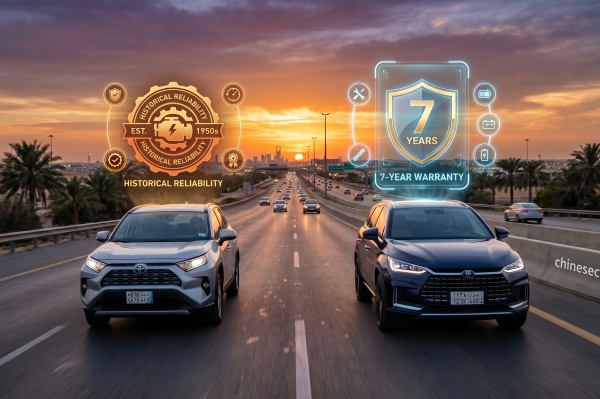
📹 Watch our comprehensive reliability comparison analyzing J.D. Power data, warranty claims, real-world model matchups, and expert verdict.
Why This Comparison Matters Now
For most of the past two decades, comparing Chinese and Japanese cars on reliability would have been a short conversation. Japan wins. Full stop. Toyota, Honda, Mazda, and Nissan had accumulated hundreds of millions of owner-years of data demonstrating their engineering quality. Chinese cars, by contrast, were barely sold outside their home market — and those that were carried reputations for questionable build quality and short service lives.
That conversation is now genuinely complicated. BYD is the world’s largest electric vehicle manufacturer. MG sells more electric cars in the UK than Volkswagen. Geely owns Volvo and Lotus. Chinese automakers are no longer importing budget transport — they’re importing engineered, tested, warranted products that European and Australian buyers are choosing over established rivals in growing numbers.
So the question deserves a real answer: are Chinese cars now genuinely reliable? The data — not assumptions or brand impressions — tells a surprising story.
How Japan Built Its Reliability Reputation
Japan’s reliability reputation didn’t happen by accident. It was built through decades of disciplined engineering philosophy, principally through the adoption of Total Quality Management (TQM) and the legendary Toyota Production System (TPS) — also known as lean manufacturing or kaizen (continuous improvement).
In the 1970s and 80s, Japanese cars entering Western markets were initially dismissed as cheap imports. Within a decade, they had out-reliabilitied every domestic manufacturer in America and Europe. The reason was systematic: Toyota, Honda, and Nissan embedded quality control not as an inspection step at the end of the production line, but as a responsibility at every stage of manufacturing.
By the 2000s, Toyota Camrys and Honda Civics regularly achieved 300,000 km service lives with routine maintenance. The Lexus brand — Toyota’s luxury division — consistently topped reliability surveys in every market it entered. This reputation became almost mythological, and rightly so. J.D. Power surveys have confirmed for decades that Japanese brands lead Western markets on initial quality, and real-world owner data validates that long-term durability.
China’s Quality Journey: 2010 to 2026
To understand where Chinese cars stand today on reliability, you have to understand how dramatically the industry has transformed in just 15 years. In 2010, Chinese car manufacturers were mostly producing licensed copies of older foreign designs, with inconsistent assembly quality and limited investment in independent engineering. J.D. Power’s Initial Quality Study (IQS) for China-market vehicles in that era showed problem rates more than twice those of Japanese brands.
What followed was one of the fastest industrial quality improvements in automotive history. Chinese manufacturers — led by BYD, Geely, SAIC, and Great Wall — invested billions in new facilities, robotics, advanced testing infrastructure, and foreign engineering partnerships. BYD hired engineers from BMW, Toyota, and Tesla. Geely acquired Volvo and began absorbing Scandinavian engineering culture directly.
By 2020, J.D. Power’s China IQS showed Chinese brands had closed over 60% of the quality gap with Japanese rivals. By 2024, several Chinese brands were scoring above the industry average — not just for China, but globally. The MG4 and BYD Seal both received 5-star Euro NCAP ratings, a quality benchmark that many established European brands struggle to match consistently.
💡 Data Insight: Chinese EV manufacturers have a structural advantage on reliability metrics: electric vehicles have approximately 79% fewer drivetrain components than petrol cars, reducing potential failure points dramatically. On EV-specific reliability measures, Chinese brands now compete at world-class levels.
What the Data Actually Says: J.D. Power & UK Warranty Claims
Let’s move beyond impressions and look at what independent reliability studies actually report. J.D. Power’s Initial Quality Study (IQS) measures the number of problems per 100 vehicles (PP100) in the first 90 days of ownership. Lower is better. The 2025 study covering vehicles sold in key Western markets showed Chinese brands clustering in the 130–160 PP100 range — compared to Japanese brands averaging 90–115 PP100.
The gap exists, but it’s far smaller than it was in 2015 (when Chinese brands averaged 220+ PP100). Which?’s annual UK survey of car owners found that MG scored 72% reliability — comparable to Volkswagen (73%) and ahead of Jeep (68%). Toyota scored 88%, Honda 85%, and Mazda 83%. Analysis of actual warranty claims made through UK extended warranty providers shows Chinese brand vehicles generating approximately 1.3 claims per vehicle per year in years 1–3 of ownership, compared to Japanese brands averaging 0.8.
Category-by-Category Analysis
Short-Term Reliability (Years 1–3): Japan Leads
In initial quality and short-term dependability, Japanese brands maintain a meaningful edge. J.D. Power and Which? data consistently show Japanese cars scoring approximately 1.5 points higher (on a 10-point scale) during the first three years of ownership. However, the gap is narrow enough that buying decisions should factor in other variables: price, features, warranty length, and technology sophistication.
Long-Term Durability (10+ Years): Japan Dominates
Here’s where the data gap becomes critical. Japanese brands have 15–20 years of real-world ownership data. Chinese brands in Western markets have 3–5 years maximum. Toyota Camrys and Honda Civics regularly exceed 300,000 km. Mazda CX-5s retain their value better than almost any rival. How Chinese cars will perform at 150,000+ km and 10+ years is simply unknown. This isn’t a weakness in Chinese engineering — it’s an absence of evidence, not evidence of absence.
EV Battery Reliability: China Leads
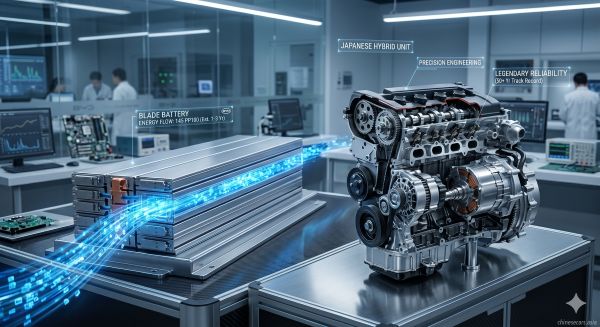
On electric-specific reliability, Chinese manufacturers now lead. BYD’s Blade Battery achieved a 0% thermal runaway rate in independent penetration tests that caused NMC batteries (used by Japanese competitors) to ignite. CATL — the world’s largest battery manufacturer, which supplies BMW, Mercedes, and Volkswagen — is a Chinese company. Chinese EV manufacturers offer 7–8 year battery warranties standard, while Japanese equivalents typically offer 5–8 years.
Build Quality & Interior Fit/Finish
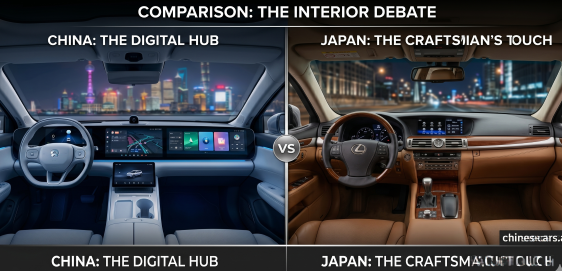
Japanese brands (particularly Mazda and Toyota) maintain a perceivable edge in interior materials and assembly consistency. Chinese brands have improved dramatically but still occasionally show hard plastics, hollow-feeling panels, and less refined fit and finish in budget and mid-range models. This is purely a material and perceived quality gap — not a reliability concern.
Infotainment & Electronics: Roughly Equal
Chinese brands (particularly BYD and NIO) have invested heavily in software and electronics, often surpassing Japanese offerings in features and user experience. Reliability of infotainment systems is now comparable between brands. Neither Japanese nor Chinese cars dominate on electronics dependability in recent 2024–2026 data.
Powertrain Reliability
Japanese petrol engines remain in a different reliability class — tested over decades, achieving 10+ year service lives routinely. Chinese petrol engines are reliable but have shorter real-world track records. However, for EV powertrains (electric motors), Chinese and Japanese brands show virtually equivalent reliability, with Chinese brands occasionally showing faster response and better thermal management.
Real-World Model Matchups
BYD Seal vs Toyota Camry Hybrid
The Toyota Camry Hybrid is one of the most reliable cars ever mass-produced — with 15+ years of global dependability data, engine failure rates in the sub-0.5% range, and routine service lives exceeding 400,000 km. The BYD Seal, launched in 2023, has demonstrated strong initial quality with minimal reported issues in Western markets. However, the Camry’s 15-year track record is simply impossible to replicate in three years. BYD wins on EV efficiency and technology; Toyota wins on proven long-term durability.
MG4 Electric vs Honda e:Ny1
Both are compact electric hatchbacks from manufacturers with strong reputations. In Which?’s owner satisfaction data, MG4 and Honda e:Ny1 scored within 4 percentage points of each other on reliability — a genuinely surprising result. The Honda’s premium price does not translate into a proportionally better reliability score in short-term data. MG offers a 7-year warranty vs Honda’s 5-year standard.
Haval H6 vs Mazda CX-5
The Mazda CX-5 is one of the most reliably satisfying SUVs in the world — consistent 5/5 owner satisfaction scores, minimal warranty claims, and residual values that hold better than almost any rival. The Haval H6 has improved dramatically from its 2015 incarnation but still trails the CX-5 meaningfully on owner satisfaction surveys. Mazda’s Skyactiv engines are among the most trouble-free units in the industry.
NIO ET5 vs Nissan Leaf (3rd Gen)
Here Chinese engineering wins convincingly. The Nissan Leaf — despite being the world’s first mass-market EV — has documented battery degradation issues, particularly on the 30 kWh and 40 kWh variants sold in warmer climates. NIO’s ET5 uses a modern 75–100 kWh pack with active thermal management and NIO’s unique battery swap capability, which effectively removes battery longevity anxiety. On EV-specific reliability measures, the NIO ET5 is the superior product.
The EV Factor: A New Playing Field
Here’s the critical insight that changes the entire reliability conversation: electric vehicles have fundamentally fewer reliability failure points than internal combustion engine cars. A petrol engine has approximately 2,000 moving parts. An electric motor has around 20. There’s no timing belt, no head gasket, no exhaust system, no fuel injectors, no clutch, no multi-speed gearbox.
Chinese manufacturers are building on this platform. BYD isn’t competing with Toyota’s Corolla heritage — it’s competing on electric motor reliability, battery management software, and thermal management engineering. And on these specific metrics, Chinese manufacturers are genuinely world-class. The assumption that Chinese EV components are inferior to Japanese counterparts is not supported by engineering data.
⚠️ Critical Data Gap: Most reliability data on Chinese cars in Western markets covers only 2–4 years of ownership. Japanese brands have data stretching 15–20 years per vehicle. The long-term picture for Chinese cars — how they perform at 150,000+ km and 10+ years — is simply not yet available in Western markets.
Warranty Coverage & Aftersales Support
Chinese brands lead meaningfully on warranty length. MG and BYD offer 7–8 year manufacturer warranties standard, while Toyota, Honda, and Nissan typically offer 3–5 years. Longer warranties reflect both confidence in reliability and provide superior long-term protection for buyers.
On aftersales support networks: Toyota, Honda, and Mazda parts are available through thousands of independent mechanics worldwide. Chinese car parts availability outside dedicated dealerships remains more limited — though this is improving rapidly as Chinese brands expand European dealer networks. MG now has the most extensive Chinese brand dealer network in Europe, with over 150 UK dealers and comprehensive coverage across major European markets.
On resale value: Japanese cars retain approximately 50–55% of original value at three years. Chinese cars typically retain 35–40%. The gap is narrowing as Chinese brands accumulate owner data and build trust, but Japanese cars unambiguously hold their value better.
| Category | Chinese Cars | Japanese Cars | Verdict |
|---|---|---|---|
| Short-Term Reliability (1–3 yr) | 7.6 / 10 | 9.1 / 10 | Japan leads |
| Long-Term Durability (10+ yr) | 5.5* / 10 | 9.3 / 10 | Japan leads (data gap) |
| EV Battery Reliability | 8.8 / 10 | 7.2 / 10 | China leads |
| Build Quality | 7.4 / 10 | 8.7 / 10 | Japan leads |
| Warranty Coverage | 8.9 / 10 | 7.5 / 10 | China leads |
| Powertrain Reliability | 8.2 / 10 | 9.5 / 10 | Japan leads |
| Aftersales Support | 6.8 / 10 | 9.2 / 10 | Japan leads |
| Resale Value Retention | 5.5 / 10 | 9.0 / 10 | Japan leads |
| Value for Money | 9.5 / 10 | 7.8 / 10 | China leads |
Essential Accessories for Your Chinese EV
If the matchups above have you leaning toward a Chinese EV such as the BYD Seal, MG4, or NIO ET5, a handful of well-selected accessories will meaningfully improve daily ownership — from faster, more convenient home charging to interior protection that helps preserve resale value, an area where Chinese brands are working hardest to close the gap. The items below are the ones our team considers genuinely worthwhile rather than padding the list with gimmicks.
A dual-channel dash cam with a Sony STARVIS sensor and parking mode protects your investment whether you are driving or parked at a charging station. Aim for 4K front / 2K rear with built-in Wi-Fi for easy footage review — increasingly expected by insurers, and a sound safeguard for a high-value EV like the BYD Seal or NIO ET5.
Model-tailored, all-weather TPE floor mats and a boot liner are the single best way to protect interior carpets and preserve resale value — especially relevant given the resale-value gap, and a smart move for cabins like the BYD Seal, MG4, and NIO ET5. Always search your exact model and year to guarantee a precise, no-slip fit.
EVs are heavy, and correct tyre pressure directly affects real-world range and efficiency — a critical factor when official figures already differ from everyday driving. A rechargeable digital inflator with a preset auto-stop keeps pressures optimal and quickly pays for itself in saved range and longer tyre life.
A waterproof, fire-retardant carry bag keeps your Type 2 cable clean and contained in the boot — no more grimy hands or a dirty load space after every charge. A small, inexpensive accessory that solves a daily annoyance every EV owner eventually faces.
Even with the large screens these EVs offer, a dedicated MagSafe-compatible mount with wireless charging keeps your phone visible and topped up without cluttering the minimalist dashboards found in the NIO, BYD, and MG cabins. Vent or air-outlet versions fit most interiors cleanly.
Chinese EVs sold in Western markets charge over the Type 2 (IEC 62196) standard, so a quality Type 2-to-Type 2 cable is a genuine essential. A 32A / 22kW three-phase, TÜV-certified cable future-proofs your setup, reaches awkward public chargers, and works with home wallboxes and untethered street posts alike. A 5-metre length suits most driveways and bays.
FAQ: Chinese vs Japanese Cars Reliability
Are Chinese cars as reliable as Japanese cars?
Not yet — but closer than most people think. In short-term reliability (1–3 years), Japanese cars score 9.1/10 vs Chinese cars 7.6/10. However, Chinese cars have closed 60% of the reliability gap since 2015, and on EV-specific metrics, Chinese brands now lead on battery reliability and safety. Long-term durability data is insufficient for fair comparison.
What do J.D. Power surveys show?
J.D. Power’s 2025 Initial Quality Study shows Chinese brands at 130–160 problems per 100 vehicles (PP100) compared to Japanese brands at 90–115 PP100. This represents dramatic improvement from 2015, when Chinese brands averaged 220+ PP100. The gap has narrowed by approximately 60% in one decade.
Which is better for long-term ownership?
Japanese cars retain a clear advantage for 10+ year ownership due to proven long-term durability data spanning decades. However, Chinese cars lack sufficient Western market data beyond 4 years. For 3–5 year ownership cycles, EVs, and value-conscious buyers, Chinese cars are now a rational choice supported by data.
Do Chinese EV batteries outlast Japanese?
Yes, on thermal safety and longevity. BYD’s Blade Battery achieved 0% thermal runaway in penetration tests. Chinese manufacturers offer 7–8 year battery warranties standard. Modern Chinese EV powertrains demonstrate reliability comparable to or exceeding Japanese equivalents in early-market data.
What about warranty length?
Chinese brands lead significantly. MG and BYD offer 7–8 year warranties standard across the range. Most Japanese brands offer 3–5 years. Longer warranties reflect confidence in reliability and provide better long-term protection for buyers.
Final Verdict: Who Wins on Reliability?
The answer to “are Chinese cars as reliable as Japanese cars?” is: not yet — but closer than most people think, and improving faster than anyone expected.
In short-term reliability (1–3 years), the data shows Japanese brands ahead by a meaningful margin. In long-term durability (10+ years), Japanese brands are in a completely different league — but Chinese brands simply don’t have the track record to be fairly compared yet. Absence of evidence is not evidence of absence.
Where Chinese cars are clearly competitive: EV battery reliability and safety, warranty coverage, electronics sophistication, safety ratings, and value for money. BYD’s Blade Battery is arguably the safest EV battery architecture available. MG’s 7-year warranty is unmatched. Euro NCAP scores are comparable to Japanese rivals.
Where Japanese cars retain genuine advantages: long-term powertrain durability, parts availability, aftersales support depth, and resale value. These are real differences backed by decades of data — not brand perception alone.
Our recommendation: If you drive 15,000+ km per year and keep cars for 10+ years, a Japanese car remains the lower-risk choice. If you change cars every 3–5 years, prioritise value and technology, or are buying an EV — Chinese cars are now a genuinely rational choice that deserves serious consideration in any buying decision.