Best China-Built Cars Sold in America Right Now
Ask the average American shopper whether they can buy a car built in China, and most will say no. That answer is understandable, because the headlines are dominated by tariffs, trade disputes and politicians vowing to keep Chinese vehicles off US roads. Yet the reality on the showroom floor is more surprising: Chinese-built cars have been quietly arriving in the United States for the better part of a decade, just not wearing Chinese badges.
In this buying guide we cut through the noise and look at the China-built cars you can actually purchase in America today. None of them comes from a Chinese brand, but every one of them rolls off an assembly line in China before crossing the Pacific. We rank the best choices, explain how to spot them, and break down what the tariff landscape means for your next purchase.
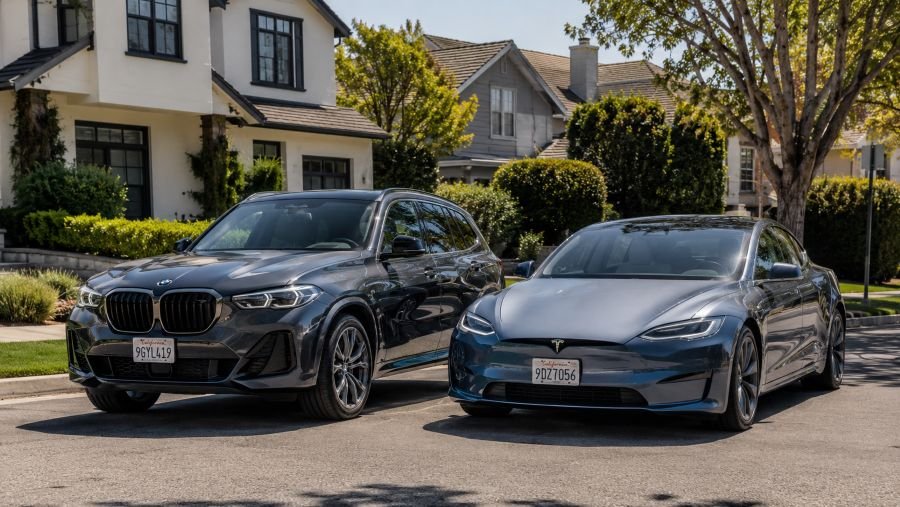
The story of Chinese manufacturing in the American car market is one of quiet expansion rather than dramatic invasion. Global automakers built factories in China to serve the world’s largest car market, and over time it simply made financial sense to ship a handful of those models back home. That is why a luxury SUV or an electric sedan you might be eyeing could already carry a “Made in China” label, even though the brand on the grille is thoroughly Western. Before we get to the rankings, it helps to understand exactly what we mean by a China-built car.
If you prefer a quick visual overview before diving into the details, the video below walks through the best China-built cars sold in America right now, covering the key models, how to spot them, and what the tariff situation means for buyers.
With that context in mind, the sections below rank each China-built model you can actually buy today, starting with the best overall choice and working through the value picks, the electric options and the honorable mentions.
The Surprising Truth: “Made in China” Doesn’t Mean “Chinese Brand”
The crucial distinction in this entire conversation is the gap between where a car is designed and badged versus where it is physically assembled. No Chinese brand such as BYD, Geely, NIO or XPeng currently sells passenger vehicles through official US dealerships. The political and tariff barriers remain too steep for that to happen at scale. However, several American and European brands have shifted production of specific models to Chinese plants, then exported them to the United States.
This is not a loophole so much as a consequence of how global the auto industry has become. When a company already operates a modern, high-volume factory in China to serve local buyers, building a few thousand extra units for export costs far less than spinning up a new line elsewhere. The result is that the China-built cars you can buy in America are, in a sense, the best of both worlds: globally recognized brands and engineering, manufactured using China’s enormous production capacity.
How to identify a China-built car
- Check the first character of the Vehicle Identification Number. China-assembled imports such as the Buick Envision, Polestar 2 and Volvo S90 usually start with the letter L.
- The Lincoln Nautilus is the famous exception: it is built in China yet carries a VIN beginning with the number 5, which has confused more than a few buyers.
- Read the door-jamb or window sticker, which lists the country of final assembly as required by law.
- Remember that domestic-parts content can be high even on imports, so a car can be Chinese-assembled while still using components from several countries.
How Many China-Built Cars Are Actually Sold in the US?
The numbers put the whole topic in perspective. China-built nameplates accounted for somewhere in the range of 74,000 to 88,000 units in 2024, which represents well under half a percent of the roughly 15.85 million vehicles sold in the United States that year. In other words, these cars are real, available and increasingly common, but they remain a niche slice of the overall market.
What is striking is how concentrated those sales are. The Lincoln Nautilus and Buick Envision together made up roughly 95 percent of all China-built vehicles sold in the US last year. Everything else, from the electric Polestar 2 to the Volvo S90 and the small handful of Lotus models, fills out the remaining few percent. That concentration is exactly why our ranking leads with those two SUVs before moving to the more specialized choices.
1. Lincoln Nautilus: The Best China-Built Car You Can Buy
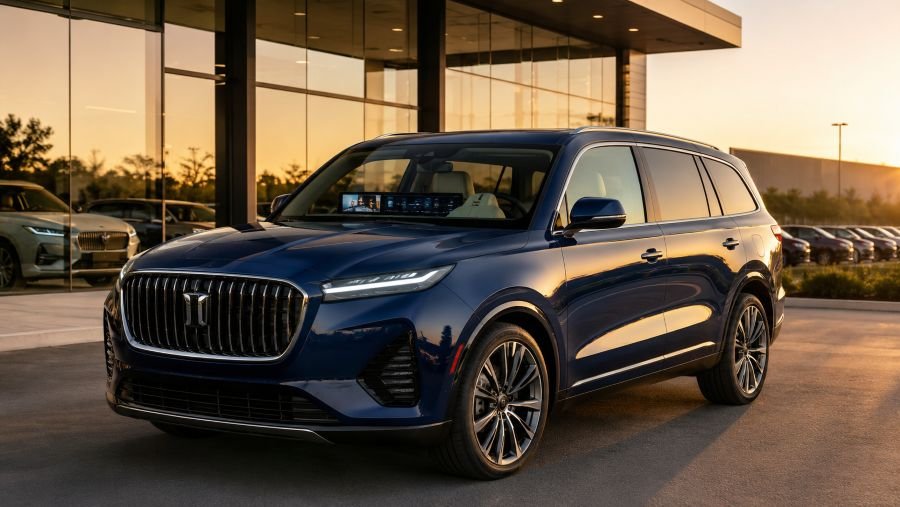
If you want the single most accomplished China-built vehicle on the American market, the Lincoln Nautilus is the clear answer. Since the 2024 model year, every Nautilus sold in the United States has been assembled in China through Ford’s joint venture there, and the move has done nothing to dent its appeal. In fact, the Nautilus has become Lincoln’s best-selling model, with the brand importing well over 30,000 examples in both 2024 and 2025.
Why the Nautilus stands out
The headline feature is the cabin. The Nautilus is built around a vast curved display that stretches nearly the full width of the dashboard, combining the instrument cluster, navigation and infotainment into one panoramic array. It feels genuinely futuristic, and reviewers who have spent time with the 2026 model describe an interior with generous leather, tasteful wood and the kind of fit and finish you would expect from a vehicle built anywhere in the world.
Under the hood, buyers choose between a 250-horsepower 2.0-liter turbocharged four-cylinder and a more efficient hybrid version rated at around 310 horsepower. Just as important is BlueCruise, Ford’s hands-free highway driving system, which in its latest form can even handle automatic lane changes. Sales dipped slightly in early 2026, but the Nautilus was still the only Lincoln to post a monthly increase in April, underlining how strong demand remains despite its origins.
2. Buick Envision: The Long-Running Value Pick
The Buick Envision has the longest track record of any China-built car in America. General Motors has been importing it through its SAIC-GM partnership since around 2016, making it a familiar and trusted presence in the compact-luxury SUV space. For years it was the only Buick to carry an import tariff, a cost that was quietly absorbed into its price, and yet annual sales have repeatedly topped 40,000 units.
That longevity matters for buyers. The Envision has had nearly a decade to mature, and it offers a comfortable, well-equipped cabin at a price that typically undercuts German rivals. It is the sensible choice on this list: less flashy than the Nautilus, but a proven commodity that has quietly satisfied tens of thousands of owners. There is, however, a catch worth knowing. GM has confirmed that the next-generation Envision will be built in the United States at its Fairfax plant in Kansas around 2028, which means the current China-built version is entering the final chapters of its story.
3. Polestar 2: The China-Built Electric Choice
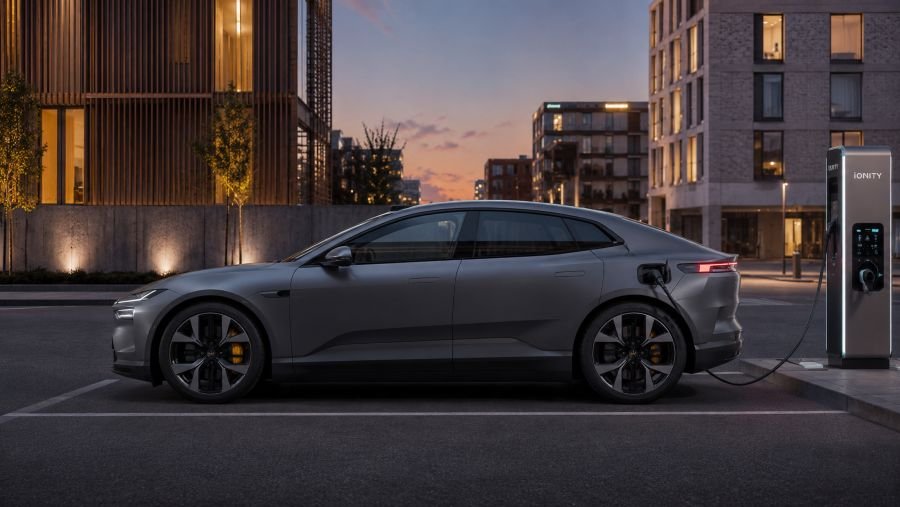
For shoppers who want to go electric, the Polestar 2 is the standout China-built option. Polestar is the electric performance brand spun out of Volvo, and both are now part of Geely’s portfolio. The Polestar 2 is assembled in Luqiao, China, and its VIN begins with the telltale letter L. It arrived as a direct alternative to the Tesla Model 3 and has carved out a loyal following thanks to its crisp Scandinavian design and genuinely engaging driving dynamics.
Performance and range
Recent Polestar 2 variants pair a sizeable battery with strong outputs. The dual-motor configuration delivers around 476 horsepower and reaches 60 mph in roughly four seconds, while the long-range setup uses an 82-kWh battery for competitive driving distance. DC fast charging can take the battery from 10 to 80 percent in under half an hour, which makes longer trips practical. The Polestar 2 leans more toward driver enjoyment than outright range leadership, and that personality is exactly why so many buyers prefer it to more clinical electric rivals.
4. Volvo S90: The Quiet Executive Sedan
The Volvo S90 is the most understated entry on this list, and that is precisely its charm. After Volvo restructured its sedan production, the S90 destined for the American market shifted to Chinese assembly, joining the small club of China-built imports with an L-prefixed VIN. It is a full-size luxury sedan in an era dominated by SUVs, which makes it a refreshing choice for buyers who still appreciate a low-slung, serene executive car.
The S90 offers Volvo’s signature calm interior, supportive seats and a strong reputation for safety. Plug-in hybrid versions add meaningful electric-only range for daily commuting while retaining the flexibility of a gasoline engine for longer journeys. In a market where the sedan segment keeps shrinking, the S90 stands out as a comfortable, China-built alternative to the usual German trio, and it tends to fly under the radar in a way that some buyers find appealing.
Honorable Mentions: Lotus and the Departing Volvo EX30
Beyond the main four, a couple of names deserve a brief spotlight. Lotus, the storied British performance marque now under Geely’s umbrella, imports its luxury electric models in extremely limited quantities. These are high-priced, low-volume machines aimed at enthusiasts rather than mainstream shoppers, but they are nonetheless China-built cars you can technically buy in America.
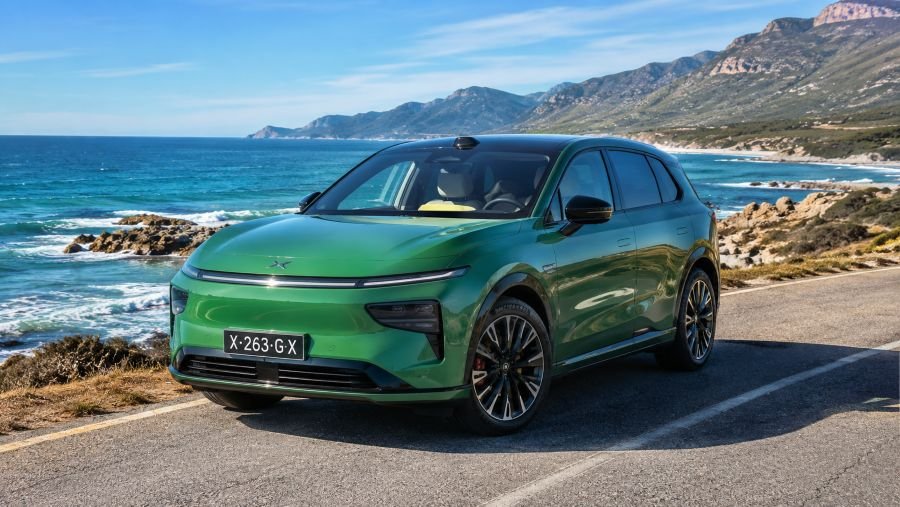
The Volvo EX30 is the cautionary tale. This small, affordable electric crossover was one of the more exciting China-built arrivals, but Volvo has announced it will end US sales of the EX30 after the 2026 model year. It is a reminder that this segment is fluid: a model that looks like a great buy today may be discontinued tomorrow as brands navigate tariffs and shift production plans.
💡 Pro Tip: If you are set on a specific China-built model, buy sooner rather than later. With GM moving the Envision to a US plant and Volvo retiring the EX30, the current generation of these vehicles represents your last chance to own them in their China-built form. Locking in a 2026 model year example protects you from future production changes.
China-Built Cars in America: Quick Comparison
To make the choice easier, the table below summarizes the key China-built models on sale, their body style, their powertrain focus and their current status. Use it as a fast reference before you head to a dealership or start browsing inventory online.
| Model | Body Style | Powertrain | Current Status |
|---|---|---|---|
| Lincoln Nautilus | Midsize luxury SUV | Turbo gas / hybrid | On sale, top seller |
| Buick Envision | Compact luxury SUV | Turbo gasoline | On sale, US-built successor by 2028 |
| Polestar 2 | Electric fastback | Full electric | On sale |
| Volvo S90 | Full-size sedan | Gas / plug-in hybrid | On sale |
| Lotus (luxury EVs) | Performance EV | Full electric | On sale, very limited |
| Volvo EX30 | Compact electric SUV | Full electric | Ending after 2026 model year |
What the Tariffs Mean for Buyers
No discussion of China-built cars would be complete without addressing the tariff elephant in the room. The United States maintains a layered tariff system on Chinese vehicles. Electric models face a punishing 100 percent import duty, while gasoline and hybrid vehicles carry additional surcharges on top of the standard rate. These barriers are the reason volumes stay so low and why no Chinese brand has launched here directly.
For consumers, the practical impact is twofold. First, the cost of these tariffs is generally baked into the sticker price, so you are not handed a surprise bill at the dealership. Second, the policy environment is volatile, which is precisely why manufacturers keep adjusting their plans. The migration of the Buick Envision to American production and the retirement of the Volvo EX30 are both direct responses to this pressure. If you are weighing a China-built car, factor in that the model’s availability could change with the next round of trade policy.
⚠️ Important Note: Tariff and trade policy on Chinese-built vehicles can shift quickly and without much warning. Production locations, pricing and even whether a model continues to be imported are all subject to change. Always confirm the country of assembly and the latest pricing directly with a dealer before you commit to a purchase.
FAQ: China-Built Cars in America
Are there any China-built cars sold in America right now?
Yes. While no Chinese-brand vehicle is officially sold in the United States, several models from American and European brands are assembled in China and imported. The most common are the Lincoln Nautilus, Buick Envision, Polestar 2 and Volvo S90, with Lotus also importing limited numbers of luxury electric models.
How can I tell if my car was built in China?
The first character of the VIN reveals the country of assembly. Most China-built imports such as the Buick Envision, Polestar 2 and Volvo S90 carry a VIN that begins with the letter L. The Lincoln Nautilus is an unusual case because its VIN starts with the number 5, even though it is assembled in China.
Why are so few China-built cars available in the US?
Heavy tariffs keep volumes small. Chinese-made electric vehicles face a 100 percent import duty, while gasoline and hybrid models carry steep surcharges on top of the standard rate. As a result, China-built cars made up well under one percent of total US sales last year, and most of that volume came from just two models.
Is the Lincoln Nautilus really made in China?
Yes. Since the 2024 model year, the Lincoln Nautilus sold in the United States has been assembled in China through Ford’s joint venture there. Despite this, it remains Lincoln’s best-selling model, praised for its expansive dual-screen dashboard and refined hands-free BlueCruise driving system.
Will these China-built models keep being imported?
Some are already changing course. General Motors plans to move the next-generation Buick Envision to a US plant in Kansas around 2028, and Volvo intends to end EX30 sales in America after the 2026 model year. For now, though, the Nautilus, Envision, Polestar 2 and S90 remain available at dealerships.
The Verdict: Which China-Built Car Should You Buy?
The takeaway is clear. China-built cars are no longer a future possibility; they are parked in American driveways today, hidden in plain sight beneath familiar Western badges. For most shoppers, the Lincoln Nautilus is the standout, blending genuine luxury, cutting-edge technology and the reassurance of being America’s best-selling China-built model. Value hunters should look hard at the Buick Envision while the current version lasts, and electric enthusiasts will find the Polestar 2 the most rewarding way to plug in.
Ultimately, the badge on the hood still tells you about the engineering and the dealer network behind your car, even when the factory sits half a world away. As tariffs continue to reshape where these vehicles are built, the current lineup may well be a snapshot of a unique moment. Whatever you choose, you can now shop with the knowledge that a Chinese-built car has been a perfectly viable, and often excellent, option all along.