Are There Any Chinese Car Brands in America? Brand Ownership Explained
It is one of the most common questions in the modern car world: are there any Chinese car brands in America? The honest answer is more layered than a simple yes or no. While you cannot walk into a dealership and buy a car wearing a recognizably Chinese badge, the influence of Chinese ownership runs deeper through the American market than most shoppers realize.
Several brands that Americans think of as Swedish, British or simply familiar are, in fact, owned by Chinese companies. This guide untangles the web of brand ownership, explains why no pure Chinese brand sells cars directly to US buyers, and looks at whether that is likely to change. By the end, you will know exactly who owns what.
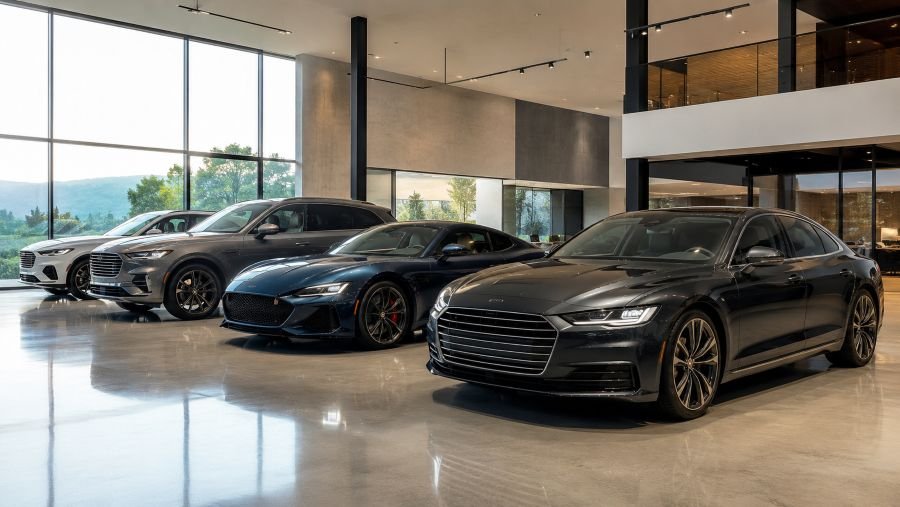
To understand the picture, it helps to separate two very different ideas that are often confused: who builds a car, who sells a car, and who owns the brand. A car can be designed in Sweden, built in Korea, sold through an American dealer network and owned by a Chinese parent company all at once. That tangle is exactly what makes this question so interesting, and it is why the simple label “Chinese car brand” tells you far less than you might expect.
If you would rather get the full picture in a few minutes, the video below explains Chinese car brand ownership in America before we break it all down in detail.
With those distinctions in mind, the sections below reveal exactly which brands carry Chinese ownership, why no Chinese badge sells cars here directly, and whether the situation is likely to change.
The Short Answer: No Chinese Brands, but Plenty of Chinese Ownership
Let us start with the headline. As of today, no pure Chinese passenger-car brand is officially sold to American consumers. You will not find a BYD, a Geely, a Nio or an XPeng dealership in your city the way drivers in Europe, the Middle East or Latin America increasingly do. Steep tariffs and political barriers have kept these brands out of US showrooms entirely.
Yet that headline hides the real story. Chinese companies own, or hold significant stakes in, a surprising number of brands that Americans buy every day. The most important player by far is Zhejiang Geely Holding Group, a Chinese conglomerate that has spent the past fifteen years quietly assembling one of the most impressive brand portfolios in the global auto industry. Through Geely, Chinese ownership is already woven into the fabric of the American market.
Geely: The Chinese Giant Behind Familiar Badges
If there is one name to remember in this entire conversation, it is Geely. Founded in 1986 and building its first car in the late 1990s, Geely transformed itself from a domestic Chinese manufacturer into a genuine global power through a series of bold acquisitions. Today, three of the brands it controls are sold in the United States, complete with their own dealer and service networks, which is a crucial advantage that pure newcomers lack.
The three Geely-owned brands sold in America
- Volvo Cars – Geely acquired the Swedish brand from Ford in 2010 and oversaw a remarkable turnaround. Volvo retains its Scandinavian identity and safety reputation while benefiting from Geely’s resources.
- Polestar – The electric performance brand was co-created by Volvo and Geely. It now operates as a standalone premium EV marque with its own US presence.
- Lotus – Geely took a controlling stake in the storied British sports-car maker in 2017. Lotus keeps its UK design and engineering soul while drawing on Geely’s electrification know-how, selling limited numbers of luxury EVs in the US.
Beyond these three, Geely’s wider empire includes Chinese brands such as Zeekr, Lynk and Co, Geely Auto and Galaxy, the smart brand operated as a joint venture with Mercedes-Benz, the London black-cab maker LEVC, and a major stake in Malaysia’s Proton. None of those sell passenger cars in the US today, but they show just how broad the group’s reach has become.
Chinese Stakes in Mercedes-Benz and Aston Martin
Geely’s influence does not stop at the brands it fully owns. The group’s founder, Li Shufu, acquired a stake of roughly ten percent in the parent company of Mercedes-Benz, making Geely one of the German luxury icon’s largest shareholders. That means a slice of one of the most prestigious names in motoring is, at the corporate level, Chinese-held.
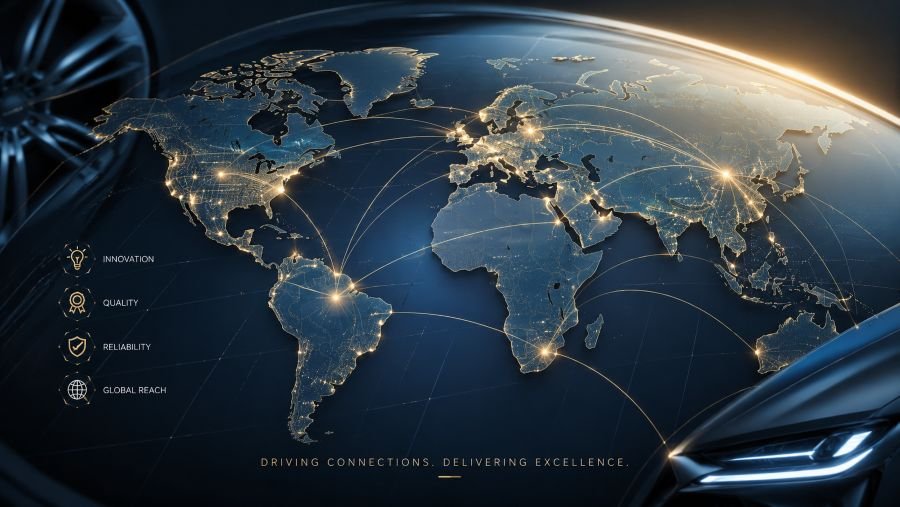
Similarly, Geely holds a minority stake in Aston Martin, the ultra-luxury British performance brand behind countless James Bond cars. The investment, made in 2022, came alongside other major shareholders such as Saudi Arabia’s Public Investment Fund. While Geely does not control Aston Martin, the stake illustrates how Chinese money is woven into even the most aspirational corners of the industry. For American buyers, this means that the line between “domestic,” “European” and “Chinese” has become genuinely blurry.
What About Pure Chinese Brands Like BYD?
BYD is the elephant in the room. The Shenzhen-based giant has grown into one of the largest electric-vehicle makers on earth, outselling many established names in markets around the world. So why can’t Americans buy one? The answer lies in trade policy. The United States imposes severe tariffs on Chinese-built electric vehicles, which makes selling BYD passenger cars to US consumers commercially unviable for now.
That said, BYD is not entirely absent from American soil. The company has a foothold in the commercial sector, most notably building electric buses at a facility in California. Chinese battery powerhouse CATL has likewise struck a licensing arrangement with Ford to support battery production in the United States. So while you cannot buy a BYD sedan at a dealership, Chinese automotive technology and manufacturing already touch American roads in less visible ways.
Why No Chinese Brand Sells Cars Directly in America
The barriers keeping Chinese brands out of US showrooms are both economic and structural. First and most obvious are the tariffs, which add enormous cost to any Chinese-built vehicle and erase the price advantage that makes these cars so competitive elsewhere. On top of that sit national-security concerns and import restrictions that specifically target Chinese vehicles and their supply chains.
There is also a quieter, practical hurdle: dealer and service networks. Selling cars in America requires a vast infrastructure for sales, maintenance and parts. This is precisely why Geely’s ownership of Volvo, Polestar and Lotus is so valuable, because those brands already have that network in place. A brand starting from zero would face years of expensive groundwork before it could properly support customers nationwide.
Could That Change in the Future?
The situation is far from frozen. Industry analysts widely view Geely’s premium brand Zeekr as a strong candidate to eventually lead a Chinese push into the US, and Zeekr executives have openly expressed interest in the American market. Notably, Zeekr vehicles are already being used as a platform for autonomous-driving fleets on US streets, giving the brand a quiet beachhead.
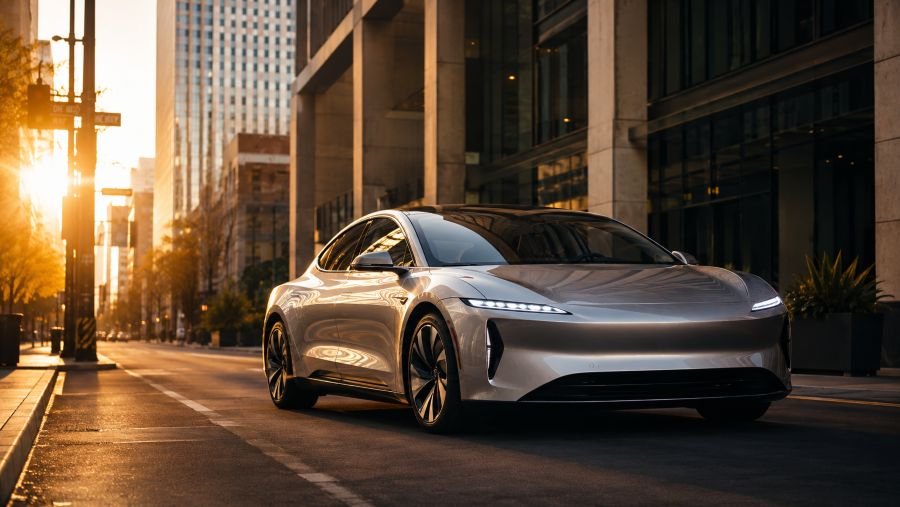
The broader trend is that Chinese automakers are increasingly building factories outside China, in places such as South Korea, Southeast Asia, Mexico and Europe, partly to sidestep tariffs aimed at Chinese-made goods. If that localization strategy matures, it could one day provide a legitimate route for a Chinese-owned brand to sell cars in America without the punishing import duties. For now, though, the door remains mostly closed to direct entry.
Chinese Ownership in America: Quick Reference
The table below summarizes the key relationships, showing which brands carry Chinese ownership and how each one currently relates to the US market. It is the clearest way to see the difference between brands that are Chinese-owned and brands that are genuinely Chinese.
| Brand | Chinese Owner / Stake | US Market Status |
|---|---|---|
| Volvo | Geely (full ownership) | Sold widely |
| Polestar | Geely (controlling) | Sold |
| Lotus | Geely (controlling) | Sold, limited |
| Mercedes-Benz | Geely (minority stake) | Sold (German-run) |
| Aston Martin | Geely (minority stake) | Sold (UK-run) |
| BYD | Chinese brand | Buses only, no cars |
| Zeekr, Geely, Nio, XPeng | Chinese brands | Not sold |
💡 Pro Tip: If brand origin matters to you as a buyer, look past the badge to the parent company. A Volvo or Polestar is Chinese-owned even though it feels Scandinavian, while a China-built Lincoln or Buick is American-owned despite being assembled overseas. Ownership and assembly are two separate things.
The Bigger Picture
Step back, and a clear pattern emerges. The question “are there any Chinese car brands in America?” has effectively two answers. In terms of badges on showroom floors, the answer is no. In terms of who actually owns the companies behind some of the market’s most respected names, the answer is a resounding yes. Chinese capital, led overwhelmingly by Geely, is already a major force in the American auto landscape.
⚠️ Important Note: Brand ownership stakes, tariffs and market-entry plans shift frequently as deals are struck and trade policy evolves. Specific ownership percentages and the US status of individual brands can change over time. Always verify the latest details before making assumptions about who owns a particular automaker.
FAQ: Chinese Car Brand Ownership in America
Are any Chinese car brands sold in America?
No pure Chinese passenger-car brand is officially sold to consumers in the United States today. However, several familiar brands sold in America are Chinese-owned, including Volvo, Polestar and Lotus, all of which belong to China’s Geely Holding Group. Chinese giant BYD also has a commercial presence building buses in California.
Who owns Volvo, Polestar and Lotus?
All three are controlled by China’s Zhejiang Geely Holding Group. Geely bought Volvo Cars from Ford in 2010, co-created the electric brand Polestar with Volvo, and took a controlling stake in the British sports-car maker Lotus in 2017. Each retains its own design identity despite the Chinese ownership.
Does a Chinese company own part of Mercedes-Benz?
Yes. Geely’s founder Li Shufu acquired a stake of roughly ten percent in Mercedes-Benz’s parent company, making Geely one of its largest shareholders. Geely also holds a minority stake in British luxury brand Aston Martin, so Chinese capital reaches well beyond the brands it fully owns.
Is BYD sold in the United States?
BYD does not sell passenger cars to American consumers, but it does operate in the US commercial space, most notably building electric buses at a facility in California. Steep tariffs on Chinese-built vehicles and political barriers have kept BYD’s hugely popular passenger models out of US showrooms.
Could a Chinese brand launch in America soon?
It is possible but not imminent. Analysts point to Geely’s premium brand Zeekr as a likely candidate, and its executives have voiced interest in the US market. Chinese automakers are also building factories outside China to sidestep tariffs, which could eventually open a path, but high duties currently make direct entry difficult.
Conclusion
So, are there any Chinese car brands in America? Not in the way most people imagine. There is no Chinese-badged passenger car for sale at a US dealership, and tariffs ensure that remains true for the foreseeable future. But that narrow answer misses the more fascinating reality: Chinese ownership has already arrived, hiding in plain sight behind some of the most trusted names in the business.
From the Volvo in a suburban driveway to a slice of Mercedes-Benz and Aston Martin, Geely has built a Chinese-owned presence that few American buyers ever notice. As the global industry continues to shift, the distinction between a Chinese brand and a Chinese-owned brand will only grow more important. Understanding that difference is the key to making sense of where the car market is heading next.