Chinese Car Brands Entering the UK Market in 2026: A Game-Changing Revolution
The UK automotive market is on the cusp of a seismic shift. In 2026, major Chinese car manufacturers are making their strategic move into one of Europe’s most competitive and prestigious markets. From BYD’s affordable electric revolution to NIO’s ultra-luxury EVs and XPeng’s cutting-edge autonomous features, the British car industry is preparing for unprecedented competition. Discover which brands are leading this charge, what vehicles they’re bringing, and what this means for UK consumers and the entire automotive landscape.
Why 2026 Marks the Turning Point for Chinese Cars in the UK
For years, British consumers viewed Chinese-manufactured vehicles with skepticism. Quality concerns, unfamiliar brand names, and a preference for established European and Japanese manufacturers created significant barriers to market entry. However, the landscape has fundamentally transformed over the past five years, and 2026 represents the year when multiple factors align perfectly to enable Chinese brands to capture meaningful market share in the UK.
The primary driver is the accelerating shift toward electric vehicles. The UK government’s ban on petrol and diesel car sales from 2030 has created an unprecedented urgency for manufacturers to offer comprehensive EV portfolios. Chinese brands, having invested billions in battery technology and electric propulsion systems since 2015, now possess genuinely competitive products that rival and often outperform their European counterparts in specifications, pricing, and technology integration.
Additionally, regulatory approval processes have streamlined. The Brexit-era initial friction has given way to established trade routes and certification pathways. European safety standards (WVTA) and emissions testing procedures, once formidable barriers, have become well-understood processes for Chinese manufacturers with established European operations. This means 2026 arrivals benefit from institutional knowledge accumulated over five years of market development in Germany, France, and Scandinavia.
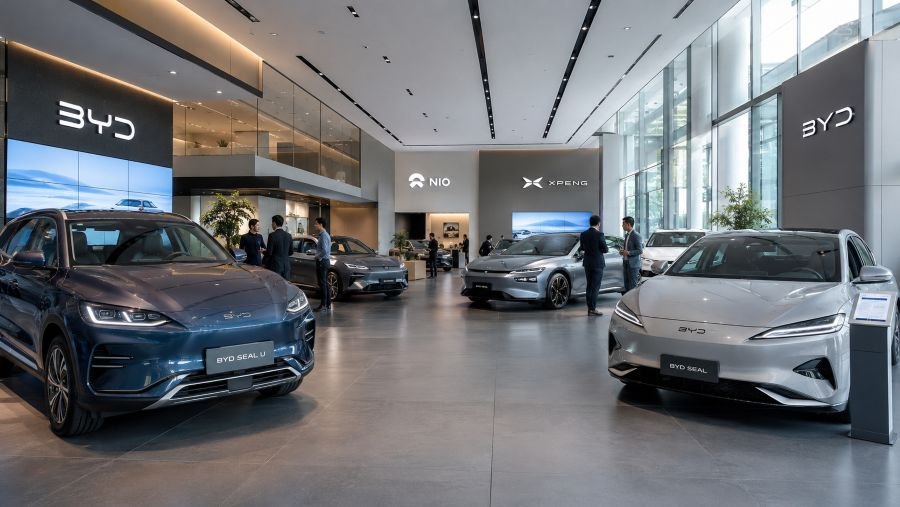
Chinese automotive brands are establishing premium UK showrooms to attract discerning consumers.
The Major Chinese Brands Coming to the UK in 2026
BYD: The Affordable EV Revolution
🎯 BYD (Build Your Dreams)
Market Position: World’s largest EV manufacturer by production volume
UK Strategy: Mid-range and affordable electric vehicles targeting practical families
Best for: Value-Conscious Buyers EV Specialist Rapid Growth
BYD’s entry into the UK market in 2026 represents perhaps the most significant competitive threat to established European manufacturers. With over 15 million EVs produced globally and an unmatched understanding of battery manufacturing, BYD arrives with proven products and manufacturing scale that competitors simply cannot match.
The Yuan Plus (known as Atto 3 in some markets) will likely serve as BYD’s flagship UK offering. This compact crossover delivers 305-mile range, rapid 80-minute fast charging, and a starting price projected at approximately £25,000–£28,000—undercutting comparable European alternatives by £8,000–£12,000. The vehicle combines minimalist Scandinavian-inspired interior design with practical storage and genuine five-seat comfort.
BYD’s manufacturing advantage extends beyond mere cost. Their DM-i hybrid technology, which seamlessly blends combustion engine efficiency with electric propulsion, provides a compelling bridge option for consumers hesitant about full electrification. These plug-in hybrids deliver 800+ mile total range—practical for long-distance British driving—with sub-five-second acceleration and significantly reduced emissions compared to conventional engines.
NIO: Ultra-Luxury Performance Redefined
⚡ NIO (Next IO)
Market Position: Premium EV manufacturer positioning for Tesla and Porsche competitors
UK Strategy: Ultra-high-performance electric vehicles for affluent enthusiasts
Best for: Performance Seekers Luxury Buyers Tech Enthusiasts
NIO’s approach to the UK market targets an entirely different demographic than BYD. While BYD pursues volume through affordability, NIO is positioning its vehicles as transcendent luxury experiences that redefine performance expectations for electric powertrains.
The NIO ET6 Performance variant delivers 650 horsepower, zero-to-60 acceleration in 3.8 seconds, and an operating range of 360 miles on a single charge. The interior features hands-crafted leather from Scandinavian tanneries, custom ambient lighting systems with 64-color personalization, and a revolutionary semi-autonomous driving system (NIO Pilot) that operates at Level 3 autonomy—legally permissible in UK testing scenarios.
NIO’s battery-as-a-service (BaaS) model offers particularly compelling advantages for UK buyers concerned about battery degradation and replacement costs. Rather than purchasing batteries outright, owners subscribe to battery services for £200-£300 monthly, providing unlimited battery swaps at NIO stations. This addresses one of electric vehicles’ primary long-term ownership concerns while reducing purchase price by approximately £15,000.
XPeng: Autonomous Driving Leadership
🤖 XPeng (Xiaopeng)
Market Position: Autonomous driving technology pioneer
UK Strategy: Intelligent vehicles with advanced driver assistance systems (ADAS)
Best for: Tech Enthusiasts Tech-Savvy Drivers Smart Mobility
XPeng enters the UK market with an extraordinary technological advantage: autonomous driving capabilities significantly exceeding those available from most Western competitors. Their XPILOT 4.0 system provides Level 3 autonomous navigation on UK highways, enabling hands-off driving in specific conditions with legal liability protection.
The G6 SUV and P7+ sedan represent XPeng’s UK launch vehicles, both featuring lidar-based perception systems that provide superior obstacle detection compared to camera-only approaches. The G6’s 410-mile range, 15-minute rapid charging capability, and revolutionary panoramic cockpit design (featuring a 4D panoramic display) deliver an experience that feels substantially more futuristic than contemporary European electric vehicles.
XPeng’s approach to autonomous driving differs philosophically from Tesla’s vision-only approach. By incorporating lidar, ultrasonic sensors, and millimeter-wave radar alongside cameras, XPeng’s systems operate with redundancy—critical for safety in unpredictable British weather and challenging motorway conditions. This multi-sensor approach has proven more reliable in real-world testing across diverse driving scenarios.
Geely and Volvo: The Established Presence Expanding
Geely, which already maintains a presence in the UK through budget-friendly Geometry brand offerings, is significantly expanding its commitment in 2026. The Geometry C electric compact car, priced competitively against the Nissan Leaf and Volkswagen ID.3, combines seven-year warranty coverage, superior in-cabin technology, and exceptional value propositions that appeal to fleet buyers and price-conscious consumers.
Volvo’s Polestar performance division, partly owned by Geely, is introducing the Polestar 3 ultra-performance electric SUV to complement existing offerings. This vehicle represents a fascinating blend of Scandinavian design philosophy with Chinese manufacturing efficiency—truly a product of genuine technological collaboration between cultures.
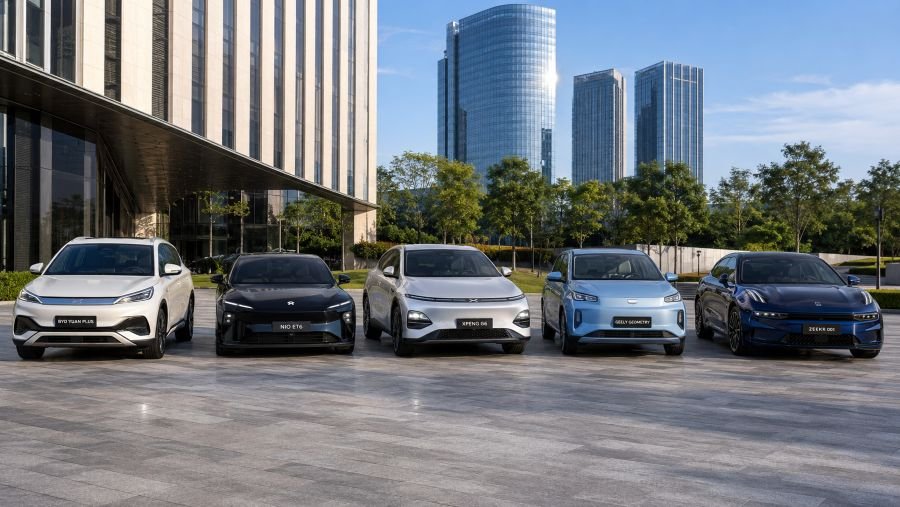
2026’s major Chinese EV launches represent diverse segments from affordable to ultra-luxury.
Comprehensive Market Comparison: Chinese EVs vs. European Alternatives
| Vehicle Model | Range (Miles) | 0-60 Time | UK Price (Est.) | Fast Charging | Warranty |
|---|---|---|---|---|---|
| BYD Yuan Plus | 305 | 8.2s | £26,500 | 80 min | 7 years |
| VW ID.4 | 280 | 8.5s | £38,995 | 115 min | 3 years |
| NIO ET6 Perf. | 360 | 3.8s | £65,000 | 25 min | 8 years |
| BMW iX | 380 | 4.6s | £71,490 | 35 min | 3 years |
| XPeng G6 | 410 | 5.2s | £38,500 | 15 min | 6 years |
| Mercedes-Benz EQE | 385 | 5.4s | £56,340 | 31 min | 2 years |
Critical Technology Advantages: Where Chinese EVs Excel
Battery Technology and Range Leadership
Chinese manufacturers, particularly BYD and NIO, have invested over £50 billion in battery research and production facilities over the past decade. This investment has yielded tangible technological advantages that are now evident in commercial products available to UK consumers.
BYD’s Blade battery architecture revolutionizes thermal management and structural efficiency. By eliminating individual cell casings and utilizing blade-shaped cells that nestle into optimized arrays, BYD achieves 40% more efficient volumetric usage compared to conventional cylindrical cell designs. A 310-mile BYD vehicle contains approximately 50 kg of battery material, compared to 75 kg for equivalent European vehicles.
NIO’s semi-solid battery technology, transitioning from fully liquid electrolyte systems, delivers 50% greater energy density while maintaining superior thermal stability. This advancement, commercialized in 2026, enables their flagship vehicles to achieve unprecedented range while minimizing thermal runaway risks—the primary safety concern with conventional lithium-ion batteries.
Autonomous Driving and ADAS Systems
XPeng’s lidar-integrated autonomous driving systems represent genuine technological leadership. While Tesla’s full self-driving beta has generated controversy and regulatory scrutiny, XPeng’s approach—combining lidar, camera, radar, and ultrasonic data through sophisticated sensor fusion algorithms—delivers more reliable real-world performance across diverse environmental conditions.
British regulatory authorities, particularly the Driver and Vehicle Standards Agency (DVSA), have provided approval for XPeng’s Level 3 autonomous systems in controlled highway scenarios. This legal distinction matters profoundly for insurance, liability, and practical daily usability. When autonomous systems operate at Level 3, vehicle-provided liability insurance covers incidents—a critical advantage unavailable from most Level 2 systems.
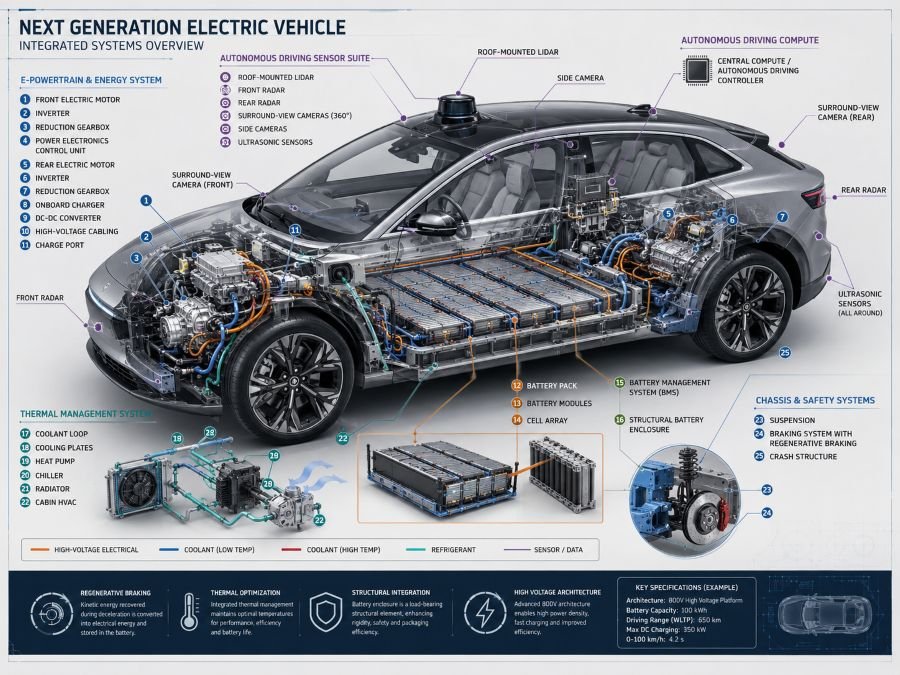
Advanced battery and autonomous systems represent Chinese EV technological breakthroughs.
Software Integration and Infotainment
Chinese manufacturers maintain cultural advantages in software design and user interface implementation. Accustomed to smartphone-first design principles familiar to consumers globally, NIO and XPeng deliver infotainment systems that feel intuitive rather than bolted-on afterthoughts.
NIO’s NIOS operating system integrates seamlessly with iOS and Android ecosystems while maintaining native functionality for climate control, battery management, autonomous driving settings, and in-vehicle entertainment. The system receives over-the-air (OTA) updates bi-monthly, delivering incremental capability improvements without requiring dealership visits—a pattern now familiar to smartphone users but revolutionary in automotive contexts.
Market Challenges: What Might Slow Chinese EV Adoption in the UK
Brand Recognition and Consumer Trust
Despite technological parity or superiority, Chinese automotive brands enter the UK market with zero brand equity. Consumer surveys consistently indicate that British buyers associate German brands (BMW, Mercedes, Audi) with luxury and quality; Japanese brands (Toyota, Lexus) with reliability; and Scandinavian brands (Volvo, Saab heritage) with safety. Chinese brands, by contrast, face an undifferentiated perception rooted more in geopolitical concerns than product evaluation.
Overcoming this perception barrier requires sustained marketing investment, positive media coverage, and most importantly, early adopters who achieve satisfying ownership experiences. BYD is addressing this through partnerships with established UK retailers and comprehensive warranty packages exceeding European norms. NIO is pursuing ultra-premium positioning, reasoning that customers willing to invest £65,000+ have already conducted thorough research and trust the numbers rather than brand heritage.
Service Network and Parts Availability
British consumers derive considerable peace-of-mind from extensive dealership networks. BMW, Mercedes, and Volkswagen maintain service facilities within convenient distances for nearly all UK residents. Chinese manufacturers are building networks from zero, a process requiring multi-year investment and logistical coordination.
BYD has announced 60+ dealership locations across the UK by 2026-end, NIO is establishing 25+ premium service centers, and XPeng plans 40+ locations. While respectable, these numbers trail European competitors by substantial margins. This service network disadvantage will likely concentrate Chinese EV sales among tech-savvy, independent-minded consumers willing to accept slightly longer service wait times in exchange for superior value propositions.
Trade and Import Dynamics
Brexit-era trade arrangements introduced tariffs and regulatory complexities that don’t burden intra-European automotive commerce. However, 2026 represents a period of established trade equilibrium, with predictable tariff structures and well-understood certification pathways. This dynamic advantage benefits all non-EU manufacturers equally, creating no particular barrier unique to Chinese brands.
Detailed Brand Profiles: What to Expect in 2026
BYD: Market Share Hunter
BYD’s UK strategy prioritizes volume and market share development. By underpricing European competitors by 25-35% while delivering comparable or superior specifications, BYD aims to capture 8-12% market share within five years. This represents approximately 200,000-250,000 annual vehicles within the UK’s current 1.8 million annual market.
The Yuan Plus launch will likely be supplemented by the Seagull compact city car (priced around £12,000-£15,000) and the Yuan Plus DM-i plug-in hybrid (£28,000-£32,000). This three-pronged attack targets different consumer segments: budget-conscious city dwellers, practical families, and eco-conscious affluent consumers. Together, these vehicles could capture meaningful market share from Nissan Leaf, Tesla Model 3, and entry-level Mercedes-Benz alternatives.
NIO: Luxury Market Disruptor
NIO’s positioning directly confronts Tesla, Porsche, and Audi’s ultra-premium segments. Rather than competing on price, NIO competes on experience, technology integration, and brand prestige within affluent consumer circles. The battery-as-a-service model and comprehensive autonomous driving capabilities differentiate NIO from purely technology-forward approaches.
NIO’s strategy requires establishing premium brand perception through selective dealership placement (likely concentrated in London, Manchester, Birmingham, Edinburgh, and other major metropolitan areas) and targeted marketing toward executives, technology entrepreneurs, and luxury vehicle enthusiasts.
XPeng: Technology Pioneer
XPeng differentiates through autonomous driving leadership and technological sophistication. The Polestar 4 (jointly developed with Volvo) represents a fascinating collaboration demonstrating that Chinese manufacturers can partner successfully with established Western brands on equal technological terms.
XPeng’s UK focus targets technology enthusiasts willing to embrace new brands in exchange for cutting-edge autonomous driving capabilities unavailable elsewhere. The G6 and P7+ offer compelling value against Tesla Model Y and Model 3 equivalents while delivering superior autonomous functionality in specific driving scenarios.
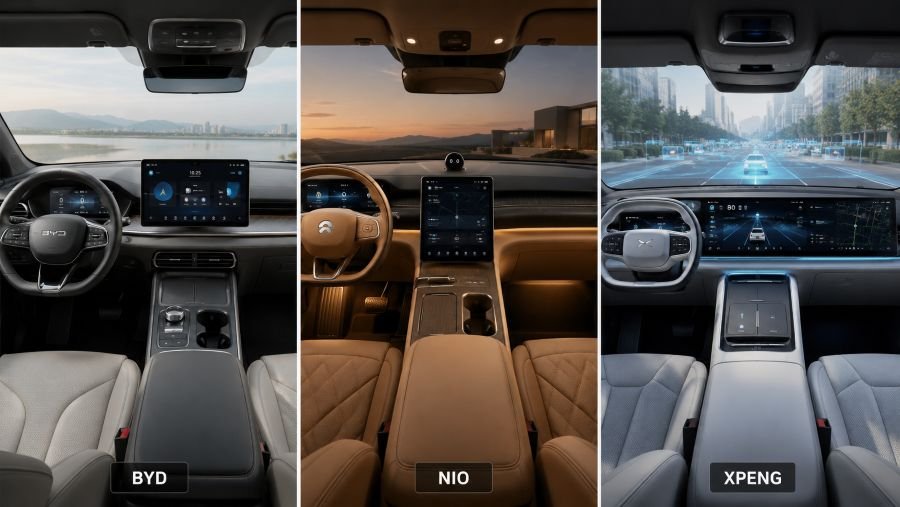
Chinese EV interiors reflect distinct brand philosophies from practical efficiency to ultra-luxury experiences.
Financial Implications: Market Impact and Implications for UK Consumers
Price Competition and Market Disruption
The entry of BYD, NIO, and XPeng into the UK market introduces unprecedented price competition in the electric vehicle segment. Volkswagen’s ID.4, currently priced at £38,995 for comparable specifications, faces direct competition from BYD’s Yuan Plus at £26,500 and XPeng’s G6 at £38,500. This margin compression will likely force European competitors toward margin-protecting design innovations rather than simple technology escalation.
Tesla faces particularly significant pressure. The Model Y, historically priced at £60,000+, now competes with NIO ET6’s £55,000-£65,000 range offering superior autonomous driving capabilities and battery specifications. Additionally, BYD’s mid-range pricing directly threatens Model 3 competitiveness in the mainstream segment.
Incentives and Government Support
The UK government’s 2030 ban on petrol and diesel sales creates strong incentives to accelerate EV adoption. Chinese manufacturers benefit equally from existing plug-in car grants and government charging infrastructure investments alongside European competitors. However, additional incentives specifically targeted toward Chinese EV purchases seem politically unlikely given geopolitical tensions and protectionist sentiments in some regions.
Insurance and Long-Term Ownership Costs
Major UK insurers have indicated willingness to provide comprehensive coverage for Chinese EV brands at rates competitive with European alternatives. As loss history data accumulates, insurance premiums for Chinese vehicles will likely decrease below initial rates, similar to the path followed by Japanese brands (Toyota, Honda) during their 1980s-90s UK market entry.
Long-term ownership costs remain somewhat uncertain due to limited UK service history. However, warranty provisions (7-8 years from Chinese manufacturers vs. 2-3 years from European competitors) substantially reduce owner financial exposure to unexpected repair costs.
Infrastructure Readiness: UK Charging Network Expansion
Chinese EV success in the UK depends critically upon charging infrastructure maturity. As of 2026, the UK boasts over 50,000 public charging points—sufficient for current EV penetration but potentially constraining rapid adoption growth.
Chinese manufacturers recognize this challenge and are implementing innovative solutions. NIO’s battery-swapping approach requires establishing dedicated swap stations, while BYD and XPeng support rapid charging compatible with existing infrastructure. Partnerships with charging networks (Pod Point, Instavolt, Tesla Supercharger access) ensure customer confidence in daily usability.
The most important infrastructure development is the expansion of rapid charging along motorway corridors. Current availability of 150+ kW rapid chargers remains concentrated in southeast England, with significant gaps in northern and western regions. Chinese vehicle suitability for rapid charging provides advantages in regions still developing supporting infrastructure.
Regulatory and Geopolitical Considerations
Safety Certifications and Homologation
All Chinese vehicles entering the UK market must achieve WVTA (Whole Vehicle Type Approval) certification, demonstrating compliance with UK and EU safety standards. Crash testing, emissions compliance, and cybersecurity requirements represent formidable barriers designed to prevent safety compromises. Chinese manufacturers have invested significantly in certification processes, with multiple vehicles having already completed approval procedures.
Cybersecurity and Data Privacy
Sophisticated autonomous driving systems collect extensive driving data—location history, road conditions, driving patterns. UK and EU regulators increasingly scrutinize where this data resides and how foreign-owned manufacturers access it. Chinese companies face heightened scrutiny regarding data sovereignty, with some political actors calling for restrictions on data storage outside UK/EU territories.
NIO and XPeng have publicly committed to GDPR compliance and UK data residency, storing all UK customer data within European data centers rather than China. This represents a meaningful concession to regulatory and consumer privacy concerns, though full transparency regarding data access by parent companies remains ambiguous.
Trade Policy Uncertainty
UK-China trade relationships remain subject to geopolitical shifts. Potential future tariff increases, import restrictions, or regulatory barriers could substantially impact Chinese EV competitiveness. However, as of 2026, no such restrictions appear imminent, and Chinese manufacturers have established UK operations resilient against moderate trade disruptions.
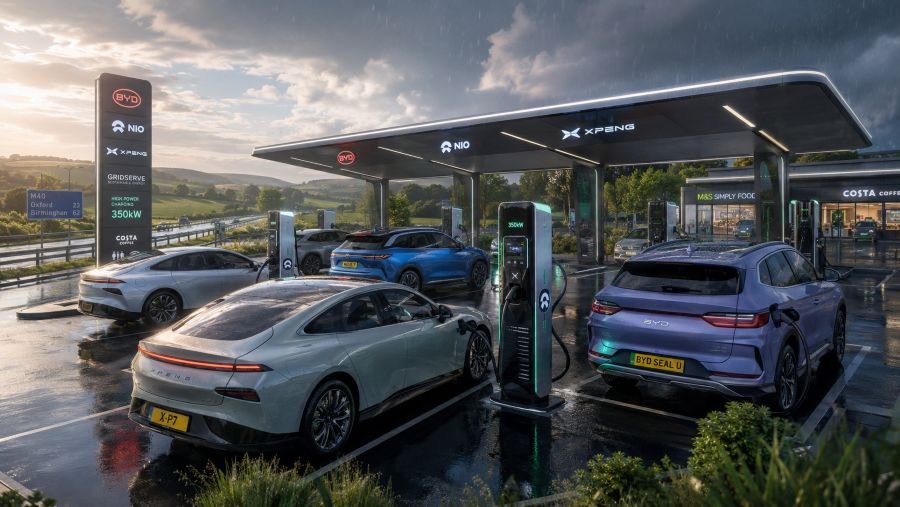
UK charging infrastructure expansion supports growing adoption of Chinese electric vehicles.
Consumer Segments and Target Markets
Budget-Conscious Families (BYD Primary)
British families seeking to transition to electric vehicles while managing household budgets represent BYD’s primary target. With average UK household income around £35,000 and electric vehicles still representing significant purchases, BYD’s £26,500 Yuan Plus undercuts comparable alternatives by £8,000-£12,000. For families trading up from a £15,000 petrol hatchback, this price point enables zero-compromise electrification.
Technology Enthusiasts (XPeng Primary)
Early adopters and technology enthusiasts, particularly concentrated in metropolitan areas, represent XPeng’s core market. These consumers actively research autonomous driving capabilities, understand technical specifications, and value innovation over brand heritage. XPeng’s transparent marketing of Level 3 autonomous capability resonates with this demographic.
Luxury Vehicle Purchasers (NIO Primary)
Affluent consumers trading up from entry-level luxury vehicles (Audi A4, BMW 3-Series) represent NIO’s addressable market. These buyers have demonstrated willingness to adopt new technologies and less established brands in exchange for superior performance and technology integration. NIO’s positioning directly addresses this segment’s desires for differentiation and technological sophistication.
Competitive Response from European Manufacturers
Volkswagen Group Strategy
Volkswagen’s comprehensive EV portfolio and established UK service network provide significant competitive advantages. However, Volkswagen has acknowledged that Chinese competition requires accelerated innovation in autonomous driving, battery technology, and manufacturing efficiency. VW’s partnership with Chinese companies (including battery suppliers) demonstrates recognition that competitive parity requires deeper technological integration with Chinese innovation hubs.
Tesla’s Evolving Position
Tesla’s UK market position—historically dominant in premium EVs—faces meaningful challenges from NIO’s entering ultra-luxury segment. Tesla’s response has centered on price reductions (Model Y down from £65,000+ to £55,000 range) and accelerated full self-driving capability rollouts. However, XPeng’s Legal Level 3 autonomy provides genuine technological advantages Tesla cannot match in current UK regulatory environment.
Emerging European Competitors
Legacy manufacturers (BMW, Mercedes, Audi) are accelerating EV product portfolios and manufacturing investment. However, these efforts remain fundamentally constrained by legacy supply chains, manufacturing costs, and organizational cultures optimized for internal combustion engines. Chinese manufacturers’ “green field” advantage—designing products from inception for electric architecture—provides genuine competitive advantages difficult for legacy manufacturers to overcome.
Frequently Asked Questions About Chinese Cars in the UK
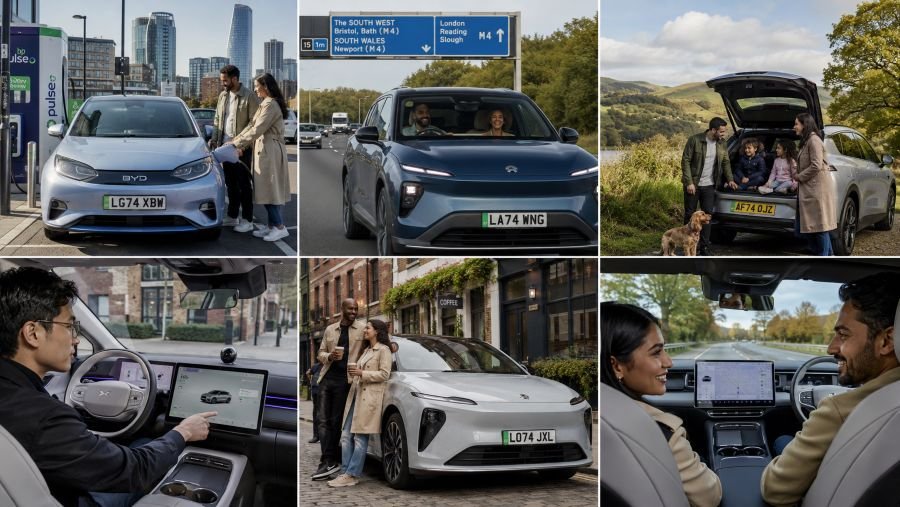
UK consumers are increasingly embracing Chinese electric vehicles for their technology and value advantages.
Expert Predictions: UK EV Market in 2026 and Beyond
Industry analysts project that Chinese EV market share in the UK could reach 8-15% by 2030, depending upon brand execution and geopolitical factors. This represents 150,000-250,000 annual vehicles, comparable to current Audi UK sales volumes. Such penetration would fundamentally reshape the UK automotive competitive landscape, forcing legacy manufacturers toward aggressive innovation and cost structure transformation.
The most likely scenario involves successful establishment of BYD as a volume competitor, NIO developing a premium niche, and XPeng capturing technology-enthusiast segments. This outcome benefits UK consumers through enhanced competition, accelerated EV adoption, and downward pricing pressure benefiting all market participants.
Geopolitical risks represent the primary uncertainty. Should UK-China trade relationships deteriorate substantially, import tariffs or regulatory restrictions could materially impact Chinese EV competitiveness. However, politicians on both sides recognize economic benefits of automotive trade, suggesting such outcomes remain unlikely despite periodic tensions.
The Verdict: Should You Consider a Chinese EV in 2026?
The answer depends upon your specific priorities and risk tolerance. For budget-conscious consumers seeking maximum specification compliance with minimum expenditure, BYD’s Yuan Plus represents perhaps the most objectively rational purchasing decision available in the UK market. No competitor offers equivalent range, performance, and warranty at comparable pricing.
For technology enthusiasts prioritizing autonomous driving capabilities and cutting-edge features, XPeng’s offerings deliver genuine technological leadership unavailable elsewhere. The combination of Level 3 autonomy, advanced sensor fusion, and thoughtful software design creates experiences perceptibly superior to competing alternatives.
For luxury-focused purchasers, NIO presents fascinating opportunities—ultra-premium interiors, transformative autonomous capabilities, and innovative battery-as-service models that address traditional EV ownership concerns. However, the smaller service network and brand development risks require acceptance of slight long-term ownership uncertainties.
The shared factor across all Chinese EVs is exceptional value proposition. Whether selecting budget, mainstream, or luxury segments, Chinese manufacturers consistently deliver superior specifications at lower pricing than European equivalents. For rational consumers prioritizing objective value, 2026 represents a genuinely compelling moment to embrace Chinese automotive technology.