Great Wall Motor Guide: Haval, Ora & Tank Explained
Great Wall Motor (GWM) is one of China’s most innovative automakers, revolutionizing the global SUV and EV markets with three distinct brands: Haval for premium SUVs, Ora for affordable electric vehicles, and Tank for rugged off-roaders. In 2026, GWM continues to dominate with products designed for every budget and lifestyle. This comprehensive guide explores what makes these brands game-changers in the automotive industry.
Who is Great Wall Motor?
Great Wall Motor Company Limited, established in 1984, has grown from a small vehicle manufacturer into one of China’s largest automotive companies. With headquarters in Baoding, Hebei Province, GWM operates multiple production facilities across China and internationally, generating revenue exceeding $40 billion annually. The company’s strategic diversification into three distinct sub-brands—Haval, Ora, and Tank—reflects a modern approach to market segmentation and brand positioning.
What sets GWM apart is its relentless focus on research and development. The company invests heavily in electric vehicle technology, autonomous driving capabilities, and intelligent connectivity systems. By 2026, GWM has become the world’s largest SUV manufacturer by volume, with operations spanning over 80 countries. This global presence underscores GWM’s commitment to delivering affordable, reliable, and innovative vehicles to consumers worldwide.
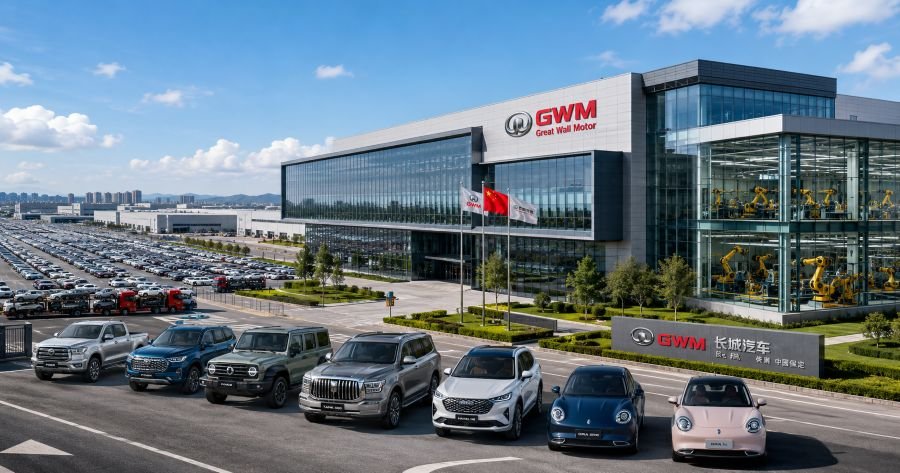
Great Wall Motor’s state-of-the-art manufacturing facilities produce over 1.5 million vehicles annually across multiple brands and segments.
Haval: Premium SUVs for Every Adventure
Haval is GWM’s flagship SUV brand, positioning itself as a provider of premium, feature-rich vehicles at competitive prices. Launched in 2005, Haval has evolved into GWM’s best-selling brand globally, with millions of units sold across diverse markets. The Haval lineup covers multiple segments, from compact city SUVs to full-size three-row family vehicles, ensuring there’s a model for virtually every consumer preference.
Haval’s Core Model Lineup
- Haval H6: The brand’s flagship compact SUV, offering 5 seats, turbocharged engines, and advanced safety features. Popular in over 60 countries.
- Haval H8: A mid-size premium SUV with three rows, ideal for families seeking luxury and space at affordable prices.
- Haval H9: Haval’s largest offering, a full-size SUV competing directly with global giants like Toyota’s Land Cruiser.
- Haval Jolion: An ultra-compact urban SUV designed for city dwellers and first-time buyers, combining style with efficiency.
- Haval Dargo: A rugged mid-size SUV combining luxury appointments with off-road capability.
The Haval H6 deserves special attention as it has consistently ranked among China’s best-selling vehicles for over a decade. In 2025-2026, GWM introduced the latest-generation H6 with significant improvements in powertrain efficiency, interior luxury, and autonomous driving capabilities. Prices range from $12,000 to $22,000, positioning Haval offerings as exceptional value compared to Western competitors offering similar features at 50-100% higher prices.
Haval’s Technology Innovations
Recent Haval models incorporate cutting-edge technology that rivals—and often exceeds—what Western manufacturers offer at premium prices. Features include:
- 12.3-inch touchscreen infotainment systems with smartphone integration
- Level 2+ autonomous driving capabilities on newer models
- Panoramic sunroofs and power-adjustable seats
- Advanced safety systems with AEB (automatic emergency braking)
- Turbocharged 1.5L and 2.0L gasoline engines with 7-speed DCT transmissions
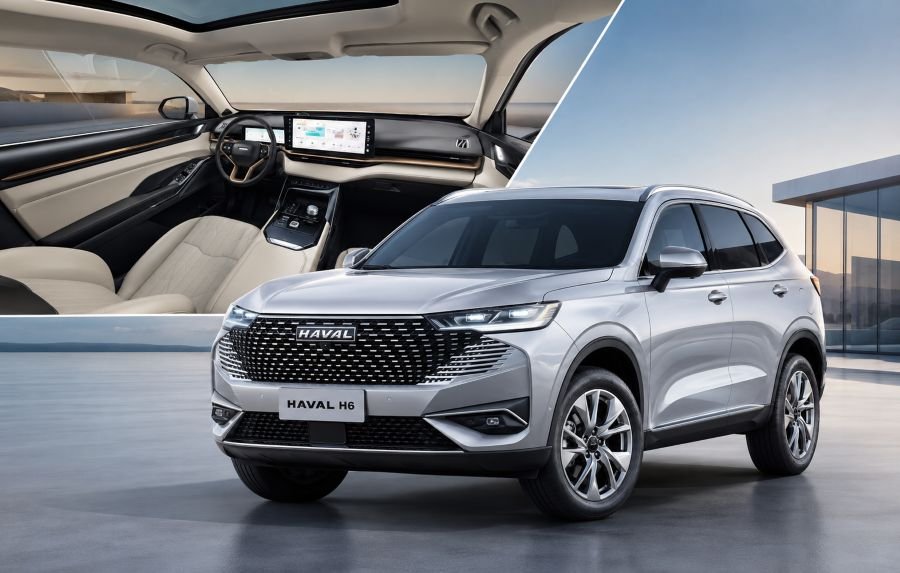
The Haval H6 features a modern, spacious interior with premium materials and intuitive controls, representing exceptional value in the compact SUV segment.
Ora: Affordable Electric Vehicles for the Future
Ora, GWM’s dedicated electric vehicle sub-brand launched in 2018, has emerged as a global leader in affordable EV manufacturing. Ora focuses exclusively on battery-electric vehicles, targeting budget-conscious consumers and first-time EV buyers who previously viewed electrification as unaffordable. The brand’s philosophy is simple: “Electric for everyone,” making advanced EV technology accessible to the masses.
By 2026, Ora has sold over 2 million units globally, making it one of the world’s fastest-growing EV brands. The brand’s success stems from its ability to deliver practical, well-designed electric vehicles with realistic driving ranges at prices 30-50% below comparable Tesla or European EV options.
Ora’s Key Electric Models
- Ora Good Cat (ORA 3): A compact hatchback with retro-inspired design, 305 km range, and starting prices around $9,500 USD.
- Ora Ballet Cat: An ultra-compact city car ideal for urban commuting, with ranges up to 305 km and prices from $8,000 USD.
- Ora Punk Cat: A crossover-styled EV combining SUV aesthetics with sedan efficiency, offering 400+ km range.
- Ora Free Cat: A larger family EV with three rows and ranges exceeding 450 km for long-distance capability.
- Ora Lightning Cat: Ora’s sportier offering with performance-oriented features and rapid acceleration capabilities.
Why Choose Ora Electric Vehicles?
Several factors make Ora an attractive choice for EV consumers:
| Feature | Ora Advantage | Typical Competitor |
|---|---|---|
| Price Range | $8,000 – $18,000 | $25,000 – $55,000 |
| Battery Range | 200-450 km | 300-600 km (similar tech) |
| Charging Time (10-80%) | 30-45 minutes (DC) | 25-35 minutes (DC) |
| Warranty | 8 years/200,000 km battery | 8 years/160,000 km (typical) |
| Infotainment | 10.3″ touchscreen, 5G ready | Variable by model |
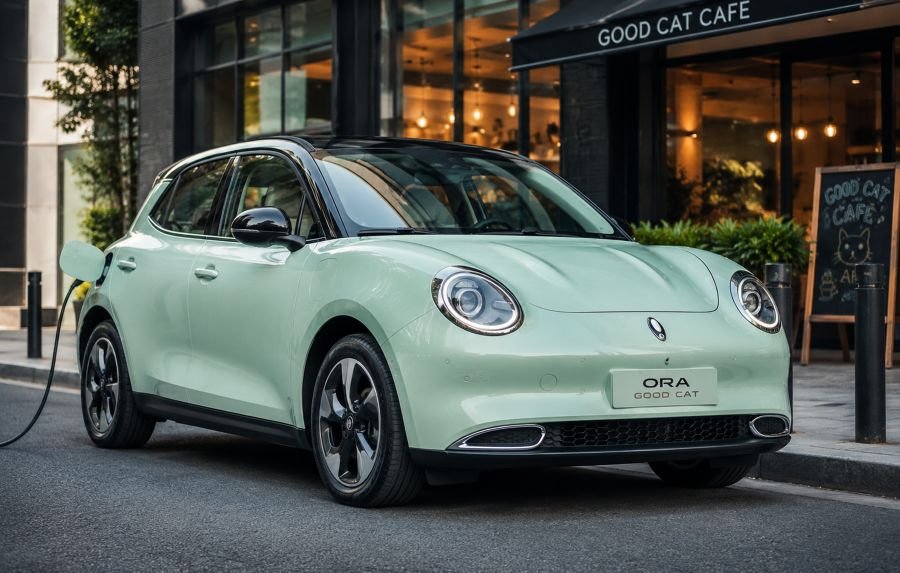
The Ora Good Cat combines retro-modern styling with 305 km of electric range, representing a revolution in affordable EV design and practicality.
Tank: Rugged Off-Road Excellence
Tank, GWM’s newest sub-brand established in 2020, specializes in rugged, purpose-built off-road vehicles. Named after its tank-like durability and capability, this brand targets adventure enthusiasts, expedition professionals, and consumers who prioritize off-road performance over urban comfort. Tank vehicles are engineered for extreme conditions, featuring advanced all-terrain technology and robust construction standards.
Tank represents a bold statement about GWM’s engineering prowess. These vehicles compete directly with legendary off-road brands like Toyota’s Land Cruiser series, Land Rover’s Defender, and Jeep’s lineup, offering comparable capability at significantly lower price points.
Tank’s Off-Road Lineup
- Tank 300: Tank’s flagship compact off-roader with independent body-on-frame construction, locking differentials, and approach angles exceeding 38 degrees.
- Tank 500: A larger three-row family-oriented off-roader combining luxury interiors with legendary off-road capability.
- Tank Yingxionglian: A premium luxury off-roader featuring sophisticated interior design and cutting-edge comfort technologies.
- Tank Urban Exclusive Edition: A civilized version optimized for both on-road comfort and off-road adventures.
Tank’s Off-Road Specifications
Tank vehicles are built on purpose-designed platforms that prioritize off-road performance. Key specifications include:
- Body-on-frame construction for maximum durability and repairability
- Centralized all-terrain controllers managing multiple differentials and traction systems
- High ground clearance (250mm minimum) for rough terrain navigation
- Rock crawl modes and terrain management systems comparable to Range Rover technology
- Turbo diesel engines (300 Nm+ torque) for maximum pulling power and efficiency
- Integrated recovery points and reinforced underbody protection
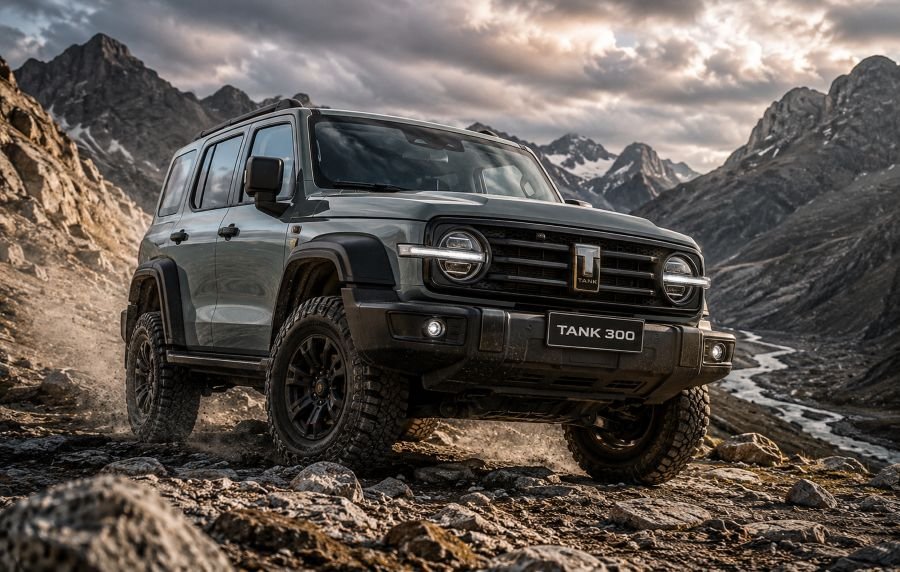
The Tank 300 demonstrates advanced off-road engineering with its distinctive design, proven durability, and extreme terrain capabilities that rival much more expensive global competitors.
Tank 300 vs. Toyota Land Cruiser: The Comparison
The Tank 300 has emerged as a legitimate competitor to the venerable Toyota Land Cruiser. While the Land Cruiser remains iconic, the Tank 300 offers compelling advantages:
| Specification | Tank 300 | Toyota Land Cruiser (2024) |
|---|---|---|
| Price (Base) | $22,000 – $28,000 | $55,000 – $85,000 |
| Engine | 2.0L Turbo Diesel (204 hp) | 3.3L Turbo Diesel (227 hp) |
| Torque | 430 Nm @ 1500 RPM | 500 Nm @ 1600 RPM |
| 0-100 km/h | 11.2 seconds | 12.5 seconds |
| Ground Clearance | 250 mm | 220 mm |
| Approach Angle | 38 degrees | 28 degrees |
| Warranty | 10 years / unlimited km* | 5 years / 100,000 km |
*Availability varies by market; check specific regional warranty terms.
GWM’s Global Expansion Strategy
By 2026, GWM operates manufacturing plants in multiple continents, including Thailand, India, Brazil, Russia, and Egypt. This global footprint achieves several strategic objectives:
- Tariff Optimization: Local manufacturing reduces import duties and taxes, lowering consumer prices significantly.
- Supply Chain Resilience: Distributed production facilities reduce dependency on single-source supply chains affected by geopolitical tensions.
- Market Localization: Regional plants adapt vehicles to local preferences, regulations, and driving conditions.
- Employment Creation: GWM invests billions in local communities, supporting entire ecosystems of suppliers and service providers.
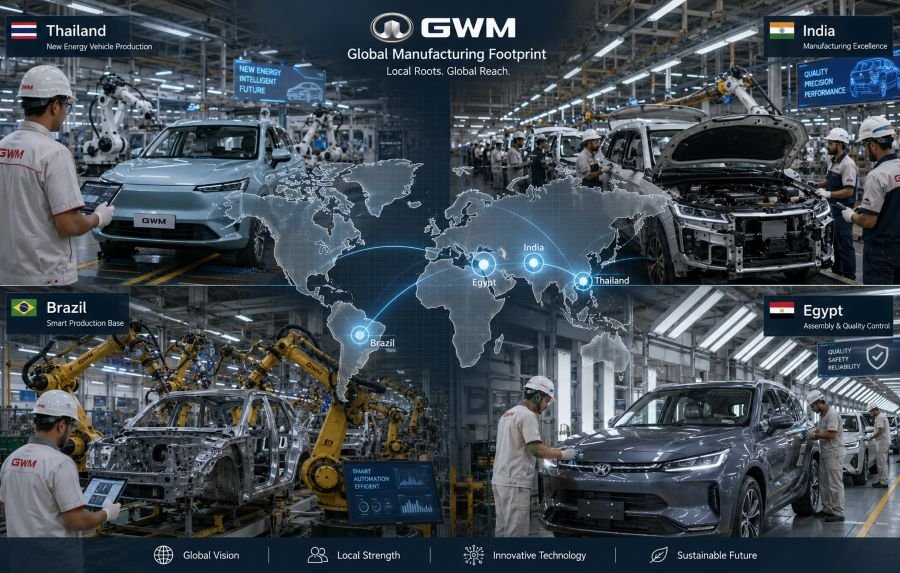
GWM’s global manufacturing footprint spans Asia, Europe, Africa, and South America, ensuring local availability and competitive pricing across all markets.
GWM’s Investment in Electric Vehicle Technology
GWM is heavily invested in battery technology and EV powertrains. The company owns majority stakes in battery manufacturers and has developed proprietary lithium-ion battery packs with industry-leading energy density and thermal management systems. Additionally, GWM’s “Honeycomb” battery architecture provides superior safety characteristics, with many vehicles achieving zero fire incidents across millions of kilometers.
The company’s 2026 roadmap includes expanding electric vehicle production to 60% of total output by 2030, with plans to launch hydrogen fuel cell variants of Tank and Haval models in premium markets. These investments position GWM as a technology leader, not merely a cost competitor.
Pricing and Affordability: The GWM Advantage
One of GWM’s most compelling advantages is pricing. Through efficient manufacturing, direct sales models, and vertical integration, GWM offers vehicles at price points 30-60% below equivalent Western offerings. For example:
- Haval H6 ($14,000) vs. Honda CR-V ($28,000): Same size, comparable features, half the price
- Ora Good Cat ($9,500) vs. Volkswagen ID.3 ($35,000): Both compact EVs, dramatically different prices
- Tank 300 ($25,000) vs. Toyota Land Cruiser ($70,000): Off-road capability, one-third the cost
This pricing advantage doesn’t reflect inferior quality but rather a different business model optimized for volume production and minimal marketing overhead. GWM invests directly in product quality rather than advertising budgets, resulting in exceptional value propositions for consumers.
Warranty, After-Sales Service, and Customer Support
GWM provides comprehensive warranty programs that often exceed industry standards, particularly for battery and powertrain components in electric vehicles. Warranty packages typically include:
- 5-10 year comprehensive coverage (varies by market and model)
- 8-10 year battery warranty for electric vehicles with 200,000+ km guarantees
- Free scheduled maintenance during warranty periods
- Mobile service support in many regions
- Genuine spare parts availability at authorized dealers
The after-sales service experience varies significantly by market. In developing countries with extensive dealer networks (India, Thailand, Brazil), service quality is consistently praised. In markets with limited dealer networks, consumers should research local support availability before purchasing.
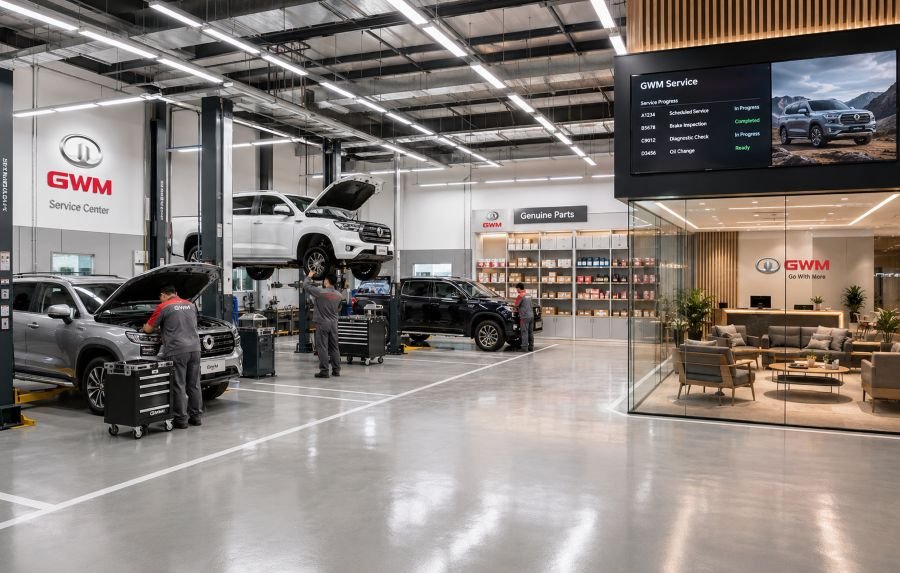
GWM’s global network of authorized service centers ensures convenient maintenance and support, with trained technicians and genuine parts availability across all operating regions.