Geely Brand Guide: The Chinese Company Behind Volvo & Zeekr
When most people think of Chinese automakers, luxury and global prestige might not be the first words that come to mind. Yet Geely Holding has fundamentally transformed this perception, evolving from a domestic Chinese vehicle manufacturer into a global automotive powerhouse that controls some of the world’s most recognizable brands. From the Swedish icon Volvo to the premium performance brand Polestar, and the innovative youth-focused Zeekr, Geely’s portfolio spans multiple market segments and price points, reshaping how the world views Chinese automotive innovation.
This comprehensive guide explores the fascinating story of Geely, the strategic acquisitions that changed the automotive landscape, and how the company is positioned to lead the global electric vehicle revolution while maintaining luxury heritage through its diverse brand ecosystem.
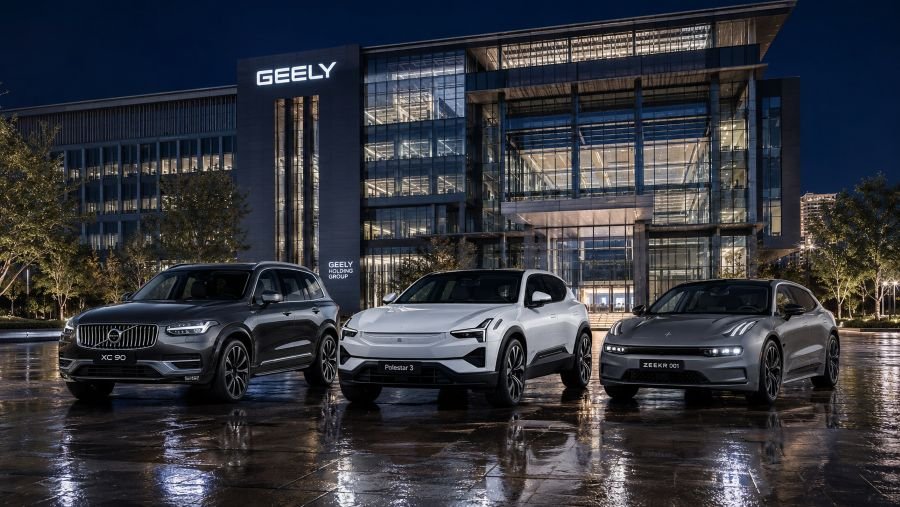
Understanding Geely’s significance requires appreciating the remarkable speed at which the company transitioned from manufacturing budget vehicles in a single market to becoming an international corporation with holdings spanning luxury, performance, and innovation segments. This journey, which began in 1997 with a small vehicle manufacturer in Zhejiang Province, represents one of the most successful corporate transformations in automotive history.
Geely: From Humble Beginnings to Global Icon
Geely Holding was founded by Li Shufu in 1997 as Shanghai Geely Automobile Company, initially focusing on the production of vehicles for the Chinese domestic market. During the 1990s and 2000s, Geely carved out its niche as an affordable vehicle manufacturer, producing entry-level cars for Chinese consumers who were increasingly adopting private vehicle ownership. The brand became synonymous with accessible, no-frills transportation in a rapidly industrializing nation.
However, Li Shufu harbored grander ambitions. Rather than remaining a regional player, he strategically positioned Geely for international expansion and acquired technologies to improve vehicle quality and safety standards. By the mid-2000s, Geely had begun exporting vehicles to developing markets and was investing heavily in research and development. The turning point came in 2009 when Geely began discussions that would fundamentally reshape its future and the global automotive landscape.
The Company’s Core Values and Philosophy
- Innovation-Driven Development: Geely invests approximately 5-7% of annual revenue in research and development, focusing on electric vehicle technology, autonomous driving systems, and next-generation battery solutions.
- Quality and Safety Excellence: The company has implemented rigorous testing protocols that exceed European and American safety standards, earning certifications from organizations like Euro NCAP.
- Global Brand Management: Rather than forcing a single brand identity, Geely cultivates distinct brand personalities for Volvo (luxury tradition), Polestar (performance and innovation), and Zeekr (youth and affordability), allowing each to flourish in its target market segment.
- Sustainable Mobility: Geely has committed to becoming a carbon-neutral company by 2050, with interim targets for electric vehicle market penetration and battery recycling innovation.
The Volvo Connection: How Geely Acquired a Swedish Legend
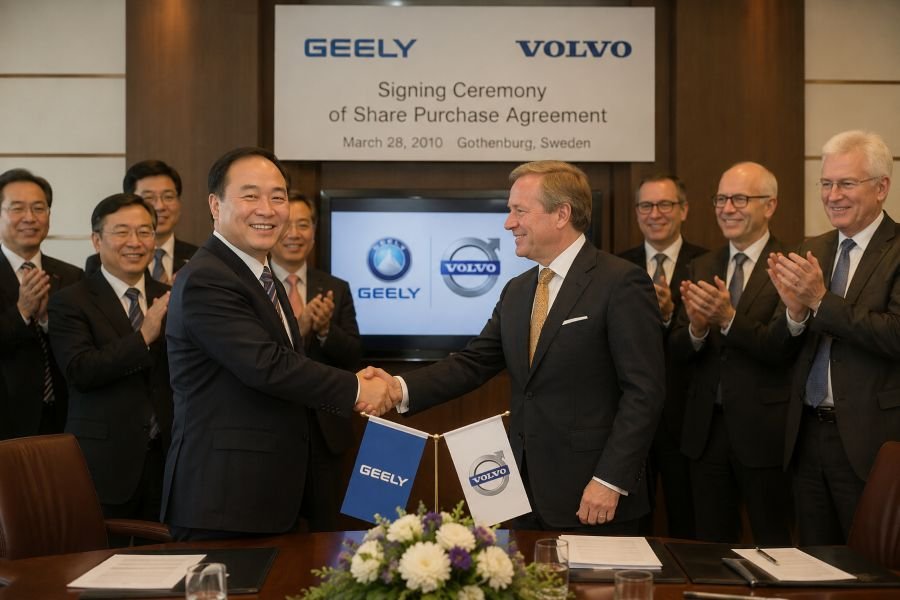
In December 2009, Geely announced its acquisition of Volvo Cars from Ford Motor Company for approximately $1.8 billion. This transaction sent shockwaves through the automotive industry. A Chinese manufacturer with limited global prestige was acquiring one of Europe’s most respected luxury brands—a company that had defined premium automotive standards since 1927. Industry observers questioned the wisdom of the deal, predicting that Geely lacked the expertise and resources to manage a luxury marque effectively.
These skeptics underestimated both Geely’s capabilities and its strategic vision. Rather than immediately imposing Chinese corporate structures or manufacturing practices, Geely allowed Volvo to operate independently with substantial operational autonomy. This decision proved crucial. Volvo’s Swedish management team retained decision-making authority over product development, marketing, and brand strategy, while Geely provided the capital, technology access, and manufacturing economies of scale necessary to compete globally.
The partnership has delivered remarkable results. Volvo Cars, which was struggling under Ford’s ownership and facing existential challenges in the late 2000s, has transformed into a thriving premium automaker. The company achieved record sales in 2021 with 705,452 vehicles delivered globally, and established itself as a leader in safety innovation and electrification. Today, Geely owns approximately 49.5% of Volvo Cars, with other shareholders including major automotive suppliers and investment firms.
Volvo’s Product Strategy Under Geely Ownership
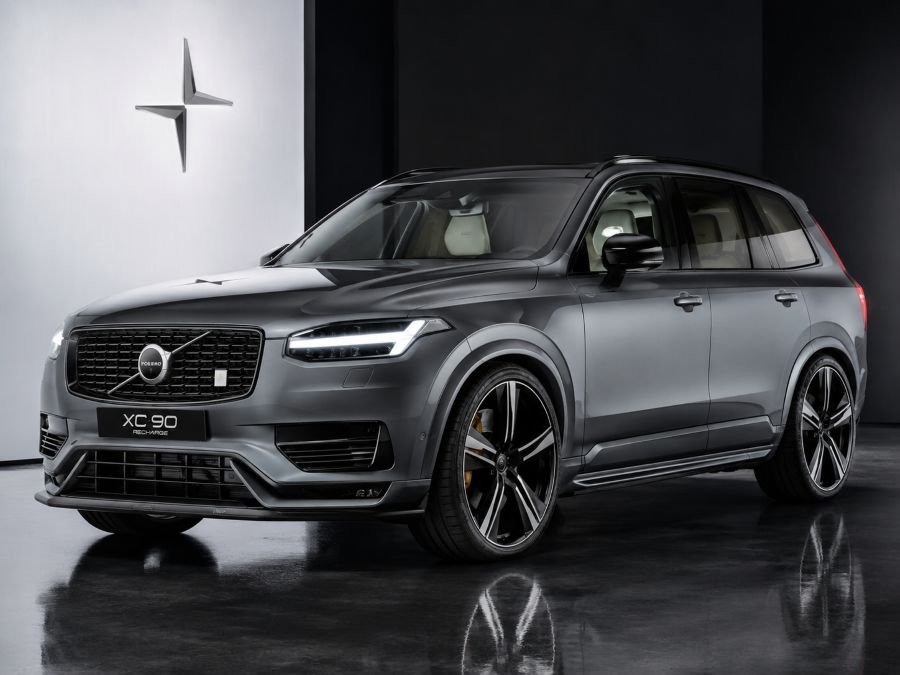
Since the Geely acquisition, Volvo Cars has executed a sophisticated product strategy encompassing three distinct initiatives. First, the company completed its transition from internal combustion engines to hybrid and fully electric powertrains. By 2030, Volvo aims to sell only electric vehicles, representing a complete transformation of its product line. Second, Volvo expanded its SUV lineup substantially, recognizing that consumers worldwide increasingly prefer elevated driving positions and increased cargo space. Models like the XC90, XC60, and XC40 have become best-sellers globally. Third, Volvo positioned itself as the “voice of reason” in premium automobiles, emphasizing safety, longevity, sustainability, and ethical manufacturing practices.
Polestar: The Performance Electric Brand
The Polestar brand represents Geely’s innovative approach to brand architecture. Originally established in the 1990s as Volvo’s performance and motorsports division, Polestar was repositioned as an independent performance EV brand starting in 2017. Today, Polestar exists as a standalone company under Geely Holding, creating vehicles that embody the performance heritage of Volvo while embracing electric propulsion technology.
Polestar’s initial offering, the Polestar 1, was a limited-production plug-in hybrid coupe positioned as a flagship that showcased Geely’s technological prowess. Subsequent models—the Polestar 2 (a performance sedan), Polestar 3 (a performance SUV), and Polestar 4 (a shooting brake crossover)—extended the brand’s reach into increasingly mainstream market segments. Importantly, Polestar positioned itself directly against premium EV manufacturers like Tesla and traditional luxury performance brands like Porsche and BMW M, emphasizing Scandinavian design minimalism, precise handling dynamics, and software sophistication.
What distinguishes Polestar is its focus on dynamic driving experience combined with environmental responsibility. The brand targets affluent consumers aged 30-50 who view vehicles not merely as transportation but as expressions of personal values. Polestar’s marketing emphasizes heritage, craftsmanship, and a “fight for what’s right” philosophy regarding climate change and sustainability, creating an emotional connection beyond technical specifications.
💡 Pro Tip: Polestar vehicles are particularly popular among enthusiasts who appreciate Scandinavian design minimalism combined with cutting-edge EV technology. The brand’s authentic commitment to performance differentiation sets it apart from competitors offering similar specifications at comparable price points.
Zeekr: Geely’s Youth-Focused Electric Vehicle Revolution
If Polestar targets affluent performance enthusiasts, Zeekr targets an entirely different demographic: younger, technology-savvy consumers seeking stylish, affordable electric vehicles with advanced features. Launched in 2021, Zeekr represents Geely’s response to the explosive growth of the EV market in Asia, particularly among first-time vehicle buyers and urban residents.
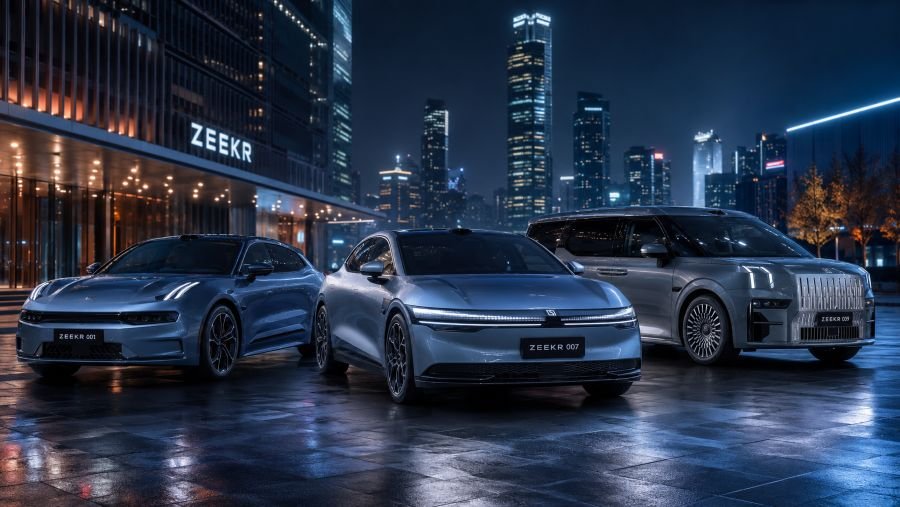
Zeekr models emphasize youthful design language, digital integration, and technological innovation at accessible price points. The Zeekr 001, a sleek crossover electric vehicle, exemplifies this philosophy—offering sedan-like handling, generous interior space, advanced infotainment systems, and competitive pricing compared to traditional ICE vehicles in the same segment. The brand quickly gained traction in China, becoming one of the fastest-growing new automotive brands in the world, with expansion into European and Southeast Asian markets underway.
The brand name itself carries significance: “Zeekr” derives from the English word “seek,” reflecting the brand’s philosophy of seeking excellence, seeking innovation, and seeking to understand customer desires. This emphasis on customer-centric development distinguishes Zeekr from competitors that often prioritize specifications over user experience. Zeekr conducts extensive market research, engages directly with social media communities, and rapidly iterates product features based on consumer feedback—an approach that resonates deeply with younger buyers accustomed to technology companies that prioritize user input.
Geely’s Current Vehicle Lineup and Market Segments
Geely’s portfolio architecture is remarkably sophisticated, with each brand occupying distinct market segments to minimize cannibalization while maximizing overall group profitability and market coverage. Understanding this segmentation requires examining how Geely brands position themselves relative to price point, vehicle type, and target demographic.
| Brand | Market Position | Key Models | Target Customer | Primary Market |
|---|---|---|---|---|
| Geely | Mainstream/Value | Emgrand, Boyue, Geometry | Budget-conscious families | China, emerging markets |
| Volvo | Premium/Luxury | XC90, XC60, S90, C40 | Affluent, safety-conscious | Europe, North America, Asia |
| Polestar | Performance/Premium | Polestar 1, 2, 3, 4 | Enthusiasts, eco-conscious | Europe, North America, Asia |
| Zeekr | Youth/Mainstream EV | Zeekr 001, 007, 009 | Young, tech-savvy buyers | China, Europe, Southeast Asia |
| Lynk & Co | Lifestyle/Premium | Lynk 01, 05, 06, 07 | Urban professionals | China, Europe, Southeast Asia |
The Geely Core Brand Strategy
The original Geely brand continues to focus on the Chinese domestic market and selective international markets in Southeast Asia, the Middle East, and Africa. Recent products like the Geometry electric vehicle series represent Geely’s commitment to electrification even at mainstream price points, making sustainable mobility accessible to price-sensitive consumers. The Boyue SUV has become one of China’s best-selling vehicles, demonstrating Geely’s continued strength in understanding Chinese consumer preferences.
Lynk & Co: The Premium Lifestyle Brand
Geely also controls Lynk & Co, a brand positioned between mainstream Geely and premium Volvo. Lynk & Co emphasizes lifestyle, connected technology, and premium experiences at attainable prices. The brand has gained significant traction in China and increasingly in European markets, targeting urban professionals who value digital integration and contemporary design.
Technology and Innovation: Geely’s Competitive Advantages
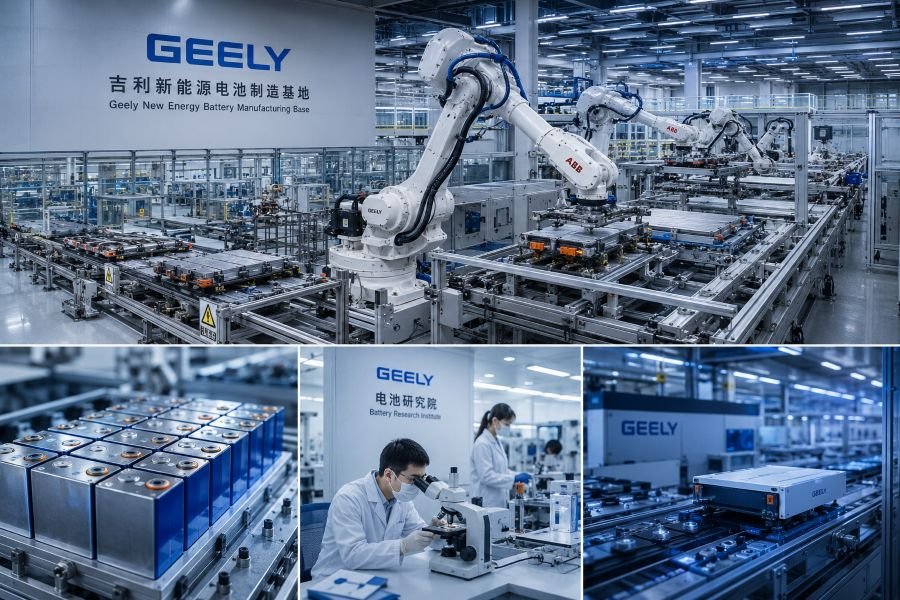
Geely’s success relies not merely on brand acquisition and portfolio management but on substantial technological innovations developed internally or through strategic partnerships. The company has made transformative investments in battery technology, autonomous driving systems, and software platforms that benefit all subsidiaries.
Key Technology Initiatives
- Battery Development and Integration: Geely has invested heavily in battery technology through partnerships with leading battery manufacturers and internal research facilities. The company develops proprietary battery management systems that optimize range, charging speed, and longevity across all electric vehicle brands.
- Autonomous Driving and AI: Geely collaborates with autonomous vehicle specialists to develop Level 3 and Level 4 autonomous driving capabilities for future vehicles, leveraging artificial intelligence and sensor technologies.
- Connected Vehicle Platforms: All Geely brands are integrating sophisticated connected vehicle platforms that enable over-the-air software updates, predictive maintenance, and advanced driver assistance systems.
- Manufacturing Excellence: Geely invests in Industry 4.0 technologies, including robotics, artificial intelligence, and advanced quality control systems, improving manufacturing efficiency and vehicle quality across production facilities.
⚠️ Important Note: While Geely has made impressive technological advances, the company remains subject to geopolitical tensions and supply chain disruptions affecting the global semiconductor and battery industries. Western governments have implemented restrictions on Chinese automotive technology exports in certain categories, which may impact Geely’s ability to integrate certain advanced technologies in vehicles sold in regulated markets.
Global Expansion and Future Outlook
Geely’s strategic vision extends far beyond maintaining current market positions. The company has articulated ambitious expansion plans to establish substantial presence in Europe, North America, and other developed markets where Geely brand vehicles have limited recognition. This expansion strategy operates through distinct channels: Volvo and Polestar continue to expand premium offerings; Zeekr targets growth in European and Southeast Asian markets; and the core Geely brand explores selective opportunities in developing economies.
The company has announced plans to establish manufacturing facilities in Europe, manufacturing Polestar and Zeekr vehicles for local markets. This localization strategy addresses regulatory requirements, reduces shipping costs, and demonstrates commitment to European markets. Additionally, Geely is developing next-generation battery technology with the goal of producing cobalt-free batteries offering superior energy density and faster charging capabilities.
Looking forward, Geely’s competitive positioning hinges on several critical factors: maintaining Volvo’s premium brand equity while transitioning completely to electric powertrains, scaling Zeekr internationally without diluting its distinct brand identity, advancing autonomous driving capabilities faster than competitors, and navigating geopolitical complexities surrounding Chinese technology in Western markets.
FAQ: Geely, Volvo, and the Global Automotive Transformation
Who owns Volvo Cars?
Geely Holding, a Chinese automotive conglomerate, owns approximately 49.5% of Volvo Cars, making it the largest shareholder. The remaining shares are held by other institutional investors and automotive supply companies. While Geely does not have controlling majority ownership, its stake gives the company substantial influence over Volvo’s strategic direction and decisions.
What is the relationship between Geely, Volvo, and Zeekr?
Geely is the parent company within Geely Holding that owns multiple automotive brands including Volvo (luxury vehicles), Polestar (performance EVs), Zeekr (youth-focused EVs), and Lynk & Co (lifestyle premium brand). These brands operate as separate subsidiaries, each with distinct management teams, product strategies, and target markets, though they benefit from shared technologies, battery platforms, and manufacturing expertise developed by Geely.
Is Geely a good car brand?
Geely’s reputation has improved substantially over the past decade. Modern Geely vehicles offer competitive features, modern design, reliable powertrains, and advanced technology at accessible price points. The brand has earned positive reviews from automotive publications for vehicles like the Geometry EV series. However, Geely remains less established in Western markets and lacks the brand prestige of premium competitors like BMW or Mercedes-Benz.
Does Geely sell cars in the USA?
Currently, the Geely brand does not officially sell passenger vehicles in the United States. However, Volvo Cars (owned by Geely), Polestar, and other Geely subsidiaries do operate in American markets. Geely has explored US market entry but faces regulatory hurdles, tariffs, and the challenge of establishing brand recognition in a competitive market where Chinese automotive brands remain unfamiliar to most consumers.
What is Zeekr and how does it differ from Geely?
Zeekr is Geely’s independent electric vehicle brand launched in 2021, focused on younger, tech-savvy consumers seeking stylish, affordable electric vehicles with advanced features. While the original Geely brand offers both traditional and electric vehicles across mainstream market segments, Zeekr exclusively focuses on electric mobility with youthful design language and premium digital integration at prices accessible to younger buyers typically purchasing their first vehicles.
The Future of Geely: Reshaping Global Automotive
Geely Holding represents a paradigm shift in global automotive markets. A company that emerged from Zhejiang Province with limited international recognition has, within two decades, become a major shareholder in a historic Swedish luxury brand, established independent performance and youth-focused EV brands, and positioned itself as a significant player in the global electric vehicle revolution. This transformation challenges assumptions about automotive innovation, brand management, and the geographic sources of automotive excellence.
Looking ahead, Geely’s success will depend on execution of several critical initiatives: completing Volvo’s transformation into a premium electric vehicle leader, scaling Zeekr and Polestar internationally while maintaining distinct brand identities, developing battery and autonomous driving technologies that achieve leadership positions relative to competitors, and navigating geopolitical complexities surrounding Chinese companies in Western markets. The company has demonstrated strategic sophistication in brand management, technological investment, and market positioning that positions it favorably for the electrified, autonomous future of global automotive.
For consumers worldwide, Geely’s diversified portfolio offers options across price points and market segments—from affordable Geely mainstream vehicles, to premium Volvo automobiles, to innovative Zeekr electric vehicles, to performance-focused Polestar models. This breadth positions Geely favorably to capitalize on global trends toward electrification, urbanization, and generational shifts in automotive preferences. The question is no longer whether Geely can compete globally, but rather how effectively the company will capture opportunities in markets it previously could not penetrate.