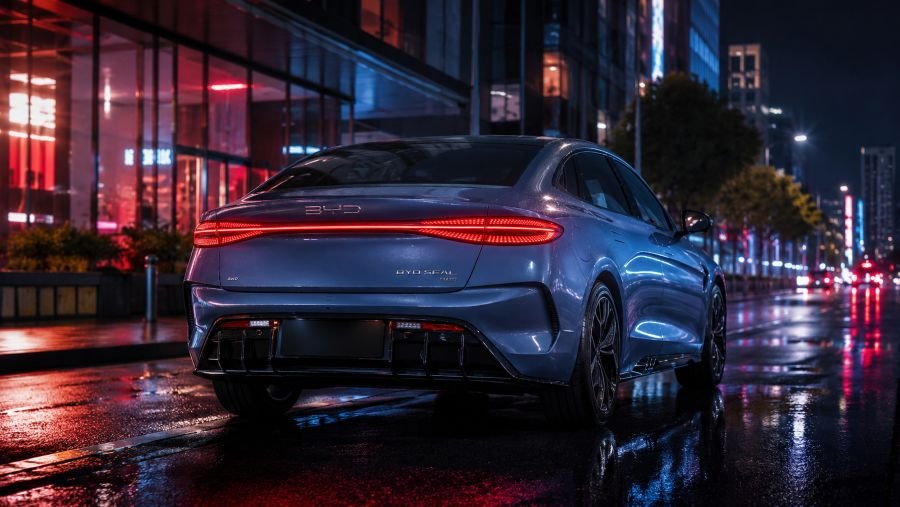
BYD Seal Review for American Buyers: The Tesla Model 3 Rival We Don’t Get
The automotive world is watching closely as Chinese manufacturers revolutionize the electric vehicle market. Among them stands the BYD Seal, a sleek electric sedan that has captured hearts and minds across Asia with performance metrics that rival—and in some cases exceed—the Tesla Model 3. Yet American consumers remain locked out of this remarkable achievement, unable to experience what many international reviewers hail as one of the finest compact electric sedans ever built.
This comprehensive BYD Seal review explores why this Chinese automotive marvel deserves your attention, what makes it such a compelling alternative to Western competitors, and the complex reasons why availability in the US market remains distant. Whether you’re curious about the future of global automotive technology or frustrated by limited EV choices, understanding the BYD Seal reveals much about the ongoing shift in automotive leadership.
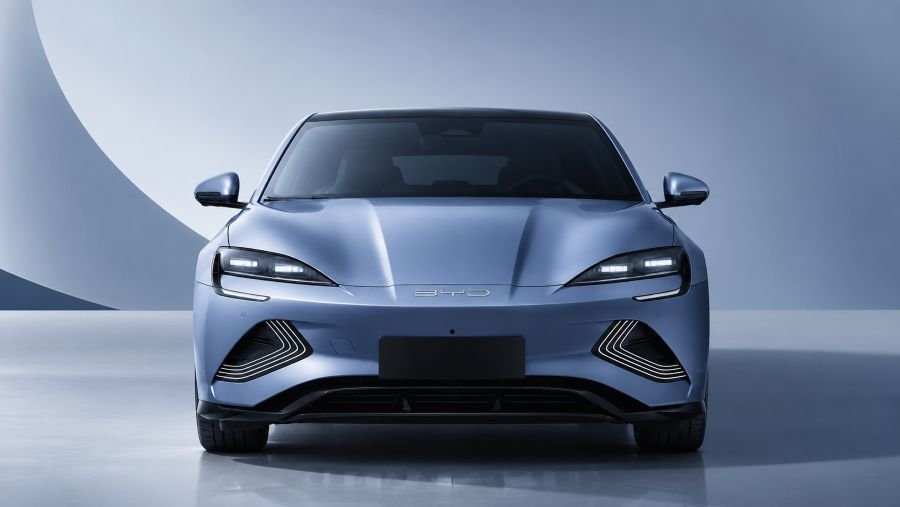
The BYD Seal arrived on the Chinese market in 2023 with expectations sky-high. BYD, already the world’s largest electric vehicle manufacturer by sales volume, was determined to make an impact in the premium sedan segment. What emerged was a vehicle that exceeded most expectations, blending sophisticated design, impressive performance, and value proposition that left competitors scrambling to respond. The Seal quickly climbed sales charts, proving that Chinese automotive innovation had moved far beyond cost-cutting strategies into genuine technological leadership.
Design Philosophy: Where Elegance Meets Aerodynamics
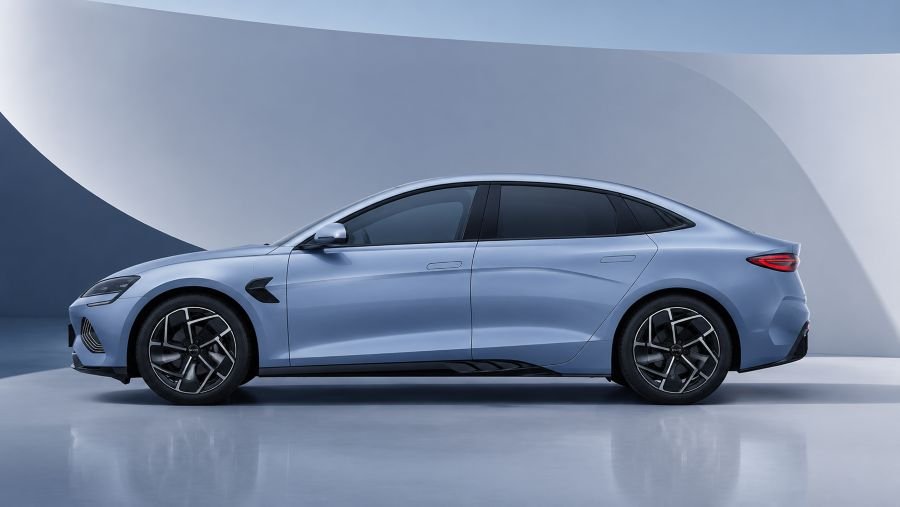
The BYD Seal’s exterior design tells a compelling story about modern automotive aesthetics. Unlike some EVs that prioritize futuristic excess, the Seal adopts a restrained elegance that appeals to mature buyers while maintaining visual interest for enthusiasts. The front fascia features BYD’s signature design language with a sleek, minimalist grille area that emphasizes the vehicle’s electric nature. The overall silhouette stretches long and low, with a swooping roofline that creates the impression of motion even when stationary.
At 188 inches in length, the Seal occupies similar dimensions to the Tesla Model 3, but its proportions feel more sophisticated. The side profile features subtle character lines that guide the eye from front to rear, while the fastback roofline creates a dramatic silhouette. Aerodynamic efficiency receives constant attention, with flush door handles, integrated side mirrors, and a carefully optimized underbody contributing to a drag coefficient of 0.219—impressive for a traditional-looking sedan.
Interior Luxury and Technology Integration
Step inside the BYD Seal, and the commitment to premium positioning becomes immediately apparent. The cabin features soft-touch materials throughout, with genuine leather appointments, ambient lighting, and a layout that prioritizes both driver comfort and technological accessibility. The dashboard centers around a large, responsive touchscreen that delivers intuitive control over vehicle systems without overwhelming the driver with excessive technology.
The driving position sits elevated compared to the Tesla Model 3, offering better visibility and a more commanding perspective of the road. Supportive seats feature multiple adjustment options and excellent lateral support for spirited driving. Rear seat space is genuinely generous, with adults able to stretch out in surprising comfort. The trunk provides 430 liters of storage in the base configuration, expandable to 1,341 liters with rear seats folded—practical dimensions for real-world ownership.
BYD Seal Performance Specifications: Power Meets Efficiency
The BYD Seal offers multiple powertrain configurations to suit different driving requirements and budget considerations. This segmented approach allows buyers to select the exact performance and range profile that matches their needs, rather than accepting a one-size-fits-all compromise. The engineering excellence evident in each configuration reveals why BYD has earned such rapid global respect.
| Configuration | Power Output | 0-60 MPH Time | Range (CLTC) | Battery Capacity |
|---|---|---|---|---|
| Standard Range | 150 kW (204 hp) | 8.2 seconds | 305 miles (490 km) | 44.9 kWh |
| Extended Range | 150 kW (204 hp) | 8.2 seconds | 373 miles (600 km) | 55.0 kWh |
| Performance DM-i | 192 kW (261 hp) | 6.8 seconds | 292 miles (470 km) | 38.9 kWh + Engine |
| Pure Electric Performance | 230 kW (312 hp) | 5.9 seconds | 263 miles (423 km) | 30.7 kWh |
The performance numbers speak for themselves. Even the base configuration accelerates from standstill to 60 mph in 8.2 seconds—perfectly adequate for daily driving. The extended range variant trades some power for significantly greater autonomy, making it ideal for drivers prioritizing range over acceleration. The Performance DM-i hybrid variant represents BYD’s commitment to satisfying drivers concerned about charging infrastructure, while the pure electric high-performance variant delivers Tesla Model 3 Performance-competitive acceleration figures.
💡 Pro Tip: The BYD Seal’s efficiency metrics are particularly impressive. Real-world energy consumption typically ranges from 0.14 to 0.18 kWh per kilometer, translating to approximately 14-18 kWh per 100 kilometers. This efficiency matches or beats the Tesla Model 3 in comparable configurations, largely due to lighter weight and aerodynamic optimization.
Battery Technology: BYD’s Competitive Advantage
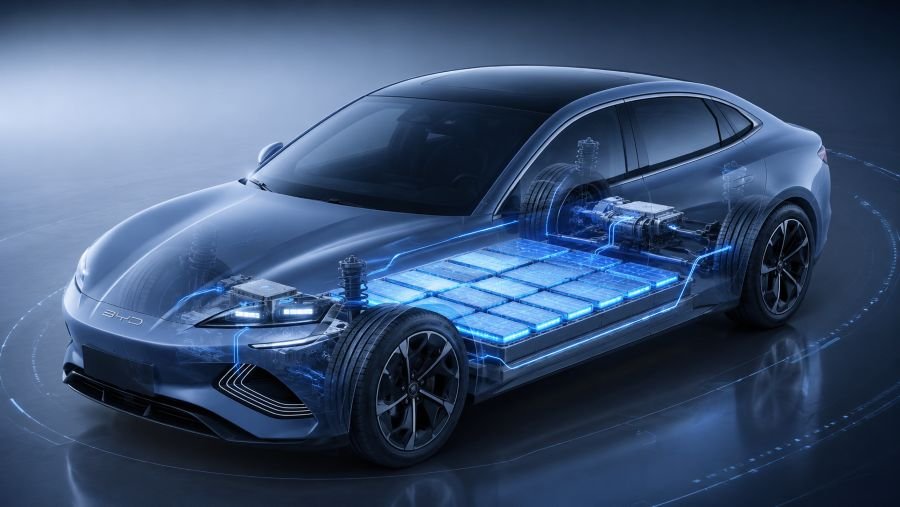
BYD manufactures its own batteries, providing a significant cost and performance advantage over competitors. The Seal utilizes BYD’s Blade battery technology—a lithium iron phosphate (LFP) chemistry that prioritizes safety, longevity, and cost-effectiveness over the higher energy density of NCA/NCM cells used by Tesla and others. This strategic choice means the Seal’s battery degrades more slowly over time, potentially outlasting competitors’ batteries by tens of thousands of miles.
Charging capabilities align with contemporary standards. DC fast charging accepts up to 150 kW, enabling a 10-80% recharge in approximately 30 minutes under optimal conditions. Home charging via standard AC wallbox requires 6-8 hours for a complete charge from empty, depending on circuit capacity. The vehicle’s onboard charger supports voltages from 110V to 220V, providing flexibility across different global markets.
Driving Dynamics: More Sophisticated Than Expected
Electric vehicles often sacrifice traditional driving engagement for silent efficiency, but the BYD Seal refuses to accept this compromise. The suspension architecture utilizes independent double-wishbone front geometry paired with a multi-link rear setup—components typically reserved for vehicles costing significantly more. This sophisticated suspension design absorbs road imperfections with confidence while maintaining excellent body control during cornering.
Regenerative braking is tuned for both efficiency and driving feedback, with multiple selectable levels allowing drivers to customize the feel. Set to maximum regeneration, the Seal captures significant energy during deceleration; switch to minimal regeneration, and the brake pedal feels nearly identical to traditional vehicles. This flexibility means drivers never feel forced to adjust their natural driving technique.
Steering is responsive without being hyperactive, providing genuine road feedback while maintaining comfort during highway cruising. The electric power steering system contributes to overall energy efficiency while maintaining engagement. One-pedal driving functionality works smoothly, with the vehicle slowing to a complete stop as the driver eases off the accelerator—useful in bumper-to-bumper traffic but optional rather than mandatory.
Technology and User Experience
The BYD Seal’s infotainment system represents the brand’s commitment to modern convenience. The large touchscreen delivers responsive performance with minimal lag, featuring seamless smartphone integration through Apple CarPlay and Android Auto. Voice control functionality supports multiple languages and demonstrates genuine artificial intelligence rather than simple command recognition.
Safety technology ranks among the segment’s best, with standard autonomous emergency braking, lane departure warning, and traffic sign recognition across all configurations. Adaptive cruise control responds to traffic conditions naturally, maintaining proper following distances without the jerky behavior common in some competitors. Higher trims add 360-degree camera systems, blind spot monitoring, and parking assistance that handles both parallel and perpendicular parking scenarios.
⚠️ Important Note: Currently, the BYD Seal remains unavailable for direct purchase in the United States. Specifications and features may vary in international markets. American buyers interested in Chinese electric vehicles should monitor import regulations and monitor Chinese manufacturers’ announced entry strategies into the North American market.
Pricing and Market Positioning
In the Chinese market, the BYD Seal positions itself as an attainable premium vehicle, with pricing starting around 150,000 CNY (approximately $21,000 USD) for base models and extending to 220,000 CNY ($31,000 USD) for fully equipped variants. This pricing proves remarkably competitive against the Tesla Model 3, which commands similar or higher prices in China. For American equivalents, similar specs would typically command prices in the $35,000-$45,000 range—considerably less than equivalent Tesla offerings.
This pricing advantage reflects several factors: lower labor costs in China, vertical integration providing battery savings, and government incentives supporting EV adoption. These advantages partly explain why major automakers struggle when competing directly with Chinese manufacturers in price-sensitive markets.
Why Americans Can’t Buy the BYD Seal
The absence of the BYD Seal from American showrooms reflects complex regulatory, economic, and geopolitical factors rather than product shortcomings. Import tariffs on Chinese-manufactured vehicles currently reach prohibitive levels, instantly erasing the BYD Seal’s primary competitive advantage: its price. Additionally, Chinese vehicles must satisfy EPA emissions standards, NHTSA crash safety requirements, and various state-specific regulations—certification processes requiring years and millions in development spending.
Trade tensions between the United States and China create additional barriers, with political pressure to protect domestic manufacturers regardless of product quality. Finally, BYD lacks the dealer network, service infrastructure, and brand recognition necessary to support successful market entry in the competitive American automotive landscape.
FAQ: BYD Seal Questions Answered
Why isn’t the BYD Seal available in the United States?
The BYD Seal hasn’t entered the US market due to tariffs, safety certification requirements, and existing competition from established EV manufacturers. Chinese automakers face significant regulatory barriers when entering the American market, including compliance with EPA emissions standards, NHTSA safety requirements, and existing trade tensions.
How does the BYD Seal compare to the Tesla Model 3?
The BYD Seal offers comparable performance to Tesla Model 3, with longer range in some variants and competitive pricing in China. However, the Model 3 remains superior in autonomous driving capabilities, brand recognition, and charging infrastructure in the US market.
What is the BYD Seal’s driving range?
The BYD Seal offers multiple range options, with some variants providing up to 305 miles (490 km) of range on a single charge, depending on battery configuration and driving conditions.
When will Chinese cars like BYD become available in America?
While no official timeline exists, industry experts anticipate Chinese EV manufacturers may enter the US market within 5-10 years as tariffs evolve and certification requirements are met. Companies like NIO have announced future US plans, though implementation remains years away.
Is the BYD Seal reliable?
Early ownership data from Chinese and international markets shows strong reliability ratings. BYD’s proprietary battery technology demonstrates particularly strong longevity, with minimal degradation over time compared to competing EV batteries.
Conclusion: A Glimpse into Automotive’s Future
The BYD Seal represents a watershed moment in global automotive development. Here is a vehicle designed and manufactured entirely by a Chinese company that matches or exceeds the capabilities of American and European competitors while commanding lower prices. It embodies the rapid advancement of electric vehicle technology, manufacturing sophistication, and supply chain integration that Chinese companies have achieved in just two decades of serious automotive development.
For American consumers, the Seal’s unavailability remains frustrating—a casualty of trade protections and regulatory walls rather than product inadequacy. As these barriers gradually erode and Chinese manufacturers establish market positions, American buyers will eventually access these vehicles. When that day arrives, the BYD Seal will likely prove to be one of the vehicles that fundamentally reshaped automotive competition.