100% Tariff on Chinese EVs: How America’s Trade War Blocks Market Entry
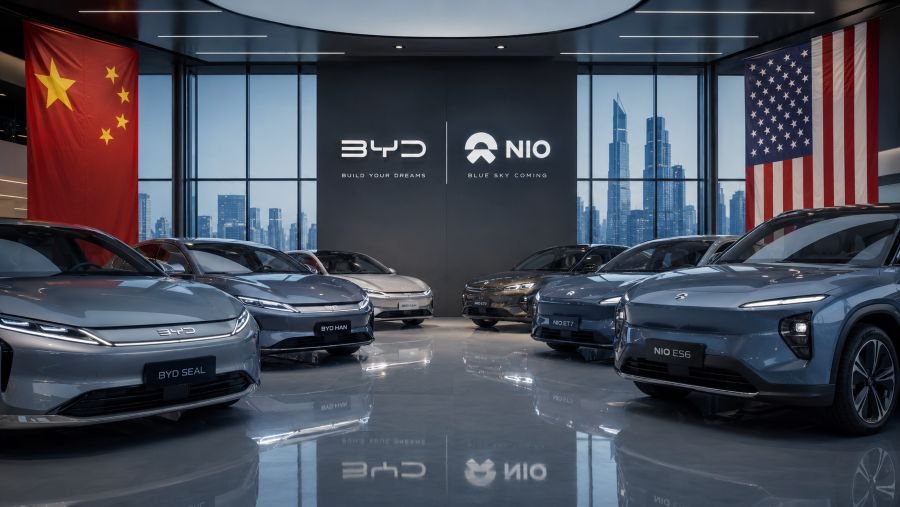
Imagine walking into a dealership in Los Angeles and finding the most affordable, most advanced electric vehicle in the world—and then discovering it costs three times what you expected because of a tariff. This isn’t science fiction; it’s the current reality of the US automotive market. When the Biden administration doubled tariffs on Chinese electric vehicles to 100% in 2024, it didn’t just increase prices—it fundamentally changed the global EV landscape. Today, the world’s largest EV manufacturers, including BYD (which produces more electric vehicles than any other company), are almost entirely locked out of the American market. But what exactly is this tariff, how did it happen, and what does it mean for the future of electric vehicles in America?
In this comprehensive guide, we’ll examine the 100% tariff on Chinese EVs from every angle: the political motivations behind it, the companies most affected, the real-world impact on consumers and the market, and what alternatives exist in this new trade war era. Whether you’re a prospective EV buyer, an industry analyst, or simply curious about how global trade policy shapes the cars we drive, this article will give you the full picture of one of the most consequential trade decisions in automotive history.
Understanding the 100% Tariff: What It Is and How It Works
To understand the 100% tariff on Chinese EVs, we first need to clarify what this number actually means. A 100% tariff is a 1:1 tax imposed on imported goods. In practical terms, if a Chinese EV costs $20,000 to manufacture and export, the 100% tariff adds another $20,000 in taxes before the vehicle ever reaches an American dealership. This is on top of shipping, dealer markup, and compliance costs—making the final retail price potentially $45,000 to $55,000 for a vehicle that costs only $20,000 in its home market.
The US has used tariffs as a trade policy tool for centuries, but a 100% rate is historically extreme. For comparison, the average US tariff across all imported goods hovers around 3-5%. Agricultural products might face 10-15% tariffs, and traditional automotive products typically see 2.5% tariffs. A 100% tariff on Chinese EVs is unprecedented in the modern era and signals the most aggressive protectionist stance American policymakers have taken in recent decades.
The Timeline: How We Got Here
The road to a 100% tariff didn’t happen overnight. Understanding this timeline is crucial to grasping the full scope of the US-China trade conflict over electric vehicles. The seeds were planted years ago, but recent policy decisions accelerated the process dramatically.
2017-2020: The First Trade War
The Trump administration initiated the first major US-China trade conflict by imposing tariffs on a broad range of Chinese goods, including automotive components and batteries. These initial tariffs ranged from 15-25% on various products. While the administration didn’t initially target complete vehicles, the precedent was set: China was now seen as an unfair trade competitor. The automotive industry, traditionally protected by the US government, became a focal point for nationalist trade policies.
2021-2023: The EV Growth Awakening
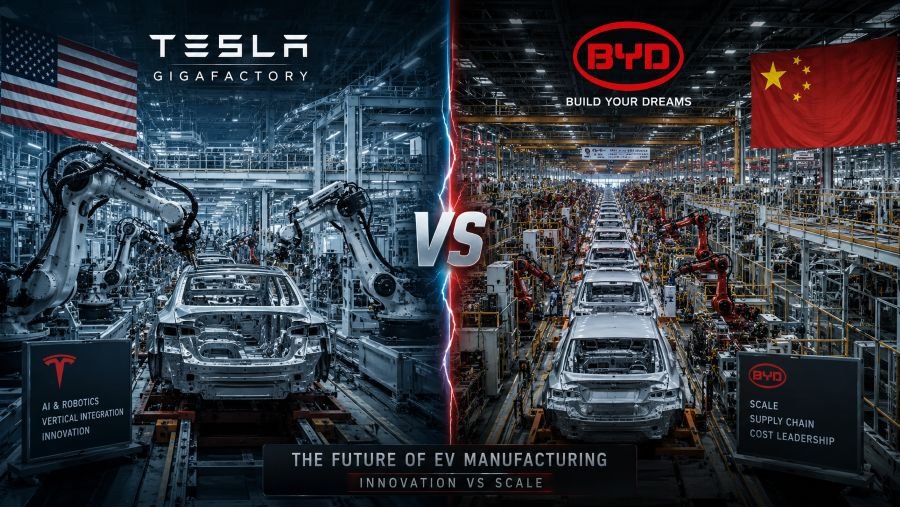
As Chinese EV manufacturers like BYD, NIO, and XPeng rapidly scaled production and began exporting globally, American policymakers became increasingly concerned. BYD’s dominance—producing more EVs than Tesla and all Western competitors combined—alarmed officials in Washington. Meanwhile, Chinese EVs were gaining market share in Europe, Southeast Asia, and other regions. The US government realized that if nothing was done, Chinese EVs could eventually reach American shores and disrupt the nascent domestic EV market that companies like Tesla had pioneered.
During this period, the Biden administration began signaling a more protectionist stance on EVs. The administration’s focus was twofold: protect American jobs and ensure that domestic EV manufacturers could establish themselves without facing immediate competition from far cheaper Chinese alternatives.
2024: The 100% Tariff Decision
In May 2024, the Biden administration announced a dramatic escalation: tariffs on Chinese EVs would double from roughly 25% to 100%. This wasn’t a subtle move—it was an explicit declaration that Chinese electric vehicles were now considered a national security and economic threat. The timing was significant, occurring during an election year and following increased pressure from domestic automakers and labor unions. The policy was framed around concerns about government subsidies in China, unfair trade practices, and the need to protect American manufacturing jobs.
Why the 100% Tariff Exists: The Government’s Rationale
American policymakers haven’t imposed a 100% tariff arbitrarily. They’ve provided several justifications, which are worth examining to understand both sides of this complex trade issue.
Defense Against Unfair Trade Practices
The US government argues that Chinese EV manufacturers benefit from massive state subsidies, government-backed financing, and preferential treatment that Western companies cannot match. BYD, for instance, receives substantial support from the Chinese government—though similar claims could be made about Tesla’s access to federal EV tax credits and subsidies in the United States. The argument is that these subsidies artificially depress Chinese EV prices, making fair competition impossible.
Protecting American Jobs and Manufacturing
Labor unions and domestic automakers have been vocal supporters of the tariff. The argument centers on employment: allowing cheap Chinese EVs into the US market could undermine the growth of domestic EV manufacturing and eliminate jobs in battery production, vehicle assembly, and related industries. With tens of thousands of jobs at stake in the emerging American EV sector, policymakers felt compelled to protect these positions during the critical growth phase.
National Security Concerns
A more contentious justification involves national security. The Biden administration has framed EV supply chains as a matter of national strategic importance. If the US becomes dependent on Chinese EVs, the argument goes, China could leverage this dependency in future geopolitical conflicts. Maintaining a domestic EV industry is presented as essential to American autonomy and military readiness—a claim that extends automotive policy deep into the realm of national security doctrine.
Preventing Long-Term Market Dominance
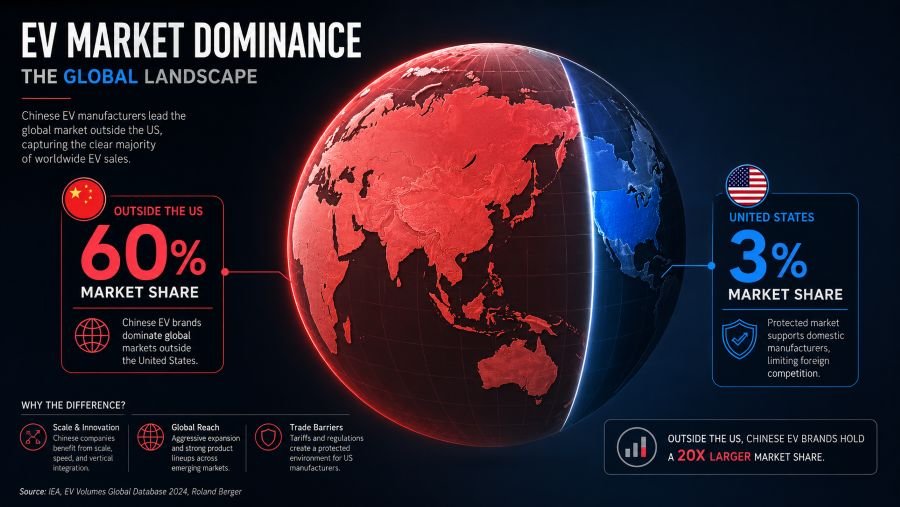
Perhaps the most pragmatic argument is forward-looking: if Chinese EVs aren’t excluded now, China could eventually dominate the American EV market as completely as it dominates the global market. Once this dominance is established, reversing it would be nearly impossible. The tariff is presented as a necessary defensive measure while American companies are still developing competitive advantages.
💡 Pro Tip: Understanding both sides of the tariff debate is essential for informed citizenship. While the US government emphasizes protecting jobs and fair competition, critics note that tariffs ultimately restrict consumer choice and may slow EV adoption by keeping prices artificially high. Both perspectives contain truth.
The Winners and Losers: Who Benefits and Who Pays?
Trade policy always creates winners and losers. Let’s examine who benefits from the 100% tariff and who bears the cost.
The Clear Winners: American EV Manufacturers
Tesla, Ford, General Motors, and other domestic EV producers benefit enormously from the tariff. Protected from competition, they can maintain higher prices while scaling production. Tesla’s dominance in the American market is insulated from potential disruption. Established automakers can transition to EVs at their own pace without fear of Chinese competitors undercutting them. The tariff essentially provides these companies with a window of opportunity to establish market leadership before any Chinese competition emerges.
Winners: American Workers and Communities
In theory, the tariff protects jobs in automotive manufacturing, battery production, and related industries. States like Georgia, Tennessee, and Ohio—where major EV battery and assembly plants are being built—benefit from sustained demand for domestic production. Union workers particularly support the tariff because it protects union manufacturing jobs from being undercut by cheaper imports.
The Losers: American Consumers
American consumers pay the heaviest price. The tariff eliminates the possibility of purchasing affordable Chinese EVs, meaning fewer choices and higher prices for existing options. A price-conscious consumer who might otherwise buy a BYD Seagull (starting around $15,000 in China) now has no option in the American market. Even used Chinese EVs are heavily restricted. This is particularly damaging for lower-income Americans who might benefit most from affordable EV technology.
The Losers: Global EV Adoption
When the world’s largest economy shuts out the world’s most efficient EV manufacturers, it slows global EV adoption. Chinese EVs aren’t just affordable—many are technologically advanced, with longer ranges, better battery management systems, and innovative features. Preventing Americans from accessing these vehicles delays the global transition away from fossil fuels. From an environmental perspective, the tariff may ultimately harm climate goals by slowing EV market penetration.
The Losers: Chinese Manufacturers and Their Supply Chains
Obviously, BYD, NIO, XPeng, and other Chinese EV makers are locked out of what would otherwise be their largest potential market. This forces them to focus on Europe, Asia, and other regions. Chinese suppliers of batteries, semiconductors, and other components also lose access to the American market, though they continue supplying Western companies manufacturing in other countries.
The Real-World Economics: What Does the Tariff Cost Consumers?
Let’s look at concrete examples of how the 100% tariff affects pricing. These examples illustrate why the tariff is so economically significant and why it generates such strong opposition from consumer advocates.
| Vehicle Model | Price in China (CNY) | Estimated US Price Without Tariff | Tariff Cost (100%) | Estimated US Price With Tariff |
|---|---|---|---|---|
| BYD Seagull (Base) | ¥99,800 | $18,000 | $18,000 | $36,000-$40,000 |
| BYD Yuan Plus (Mid-Size) | ¥199,800 | $28,000 | $28,000 | $56,000-$62,000 |
| NIO ET6 (Premium) | ¥398,000 | $54,000 | $54,000 | $108,000-$120,000 |
| XPeng G6 (Mid-Range) | ¥249,900 | $34,500 | $34,500 | $69,000-$78,000 |
As you can see, the 100% tariff fundamentally changes the competitive landscape. A BYD Seagull that sells for $18,000 equivalent becomes a $36,000+ vehicle before accounting for dealer markup. At that price, it’s no longer competing with Chinese brands—it’s competing directly with Tesla’s Model 3 and other premium vehicles. The pricing advantage that would make Chinese EVs attractive to cost-conscious consumers vanishes entirely.
How Other Countries Are Responding: The Global Tariff Landscape
The US isn’t alone in implementing tariffs on Chinese EVs, but America’s 100% rate is the highest globally. Understanding how other countries are responding reveals the broader global reaction to China’s EV dominance.
The European Union’s Graduated Tariff Approach
The European Union took a more measured approach. Rather than a blanket 100% tariff, the EU implemented graduated tariffs based on individual companies: 17.5% on Tesla, 19.3% on BYD, 25.9% on NIO, and 38.1% on other manufacturers. This allows some Chinese EVs to enter the European market at higher prices but still more affordably than would be possible with a 100% US-style tariff. Some Chinese manufacturers have negotiated deals or invested in European production to reduce tariff costs.
Canada’s Tariff Mirror
Canada, traditionally aligned with US trade policy, has implemented tariffs on Chinese EVs, though at lower rates than the US. As part of the broader North American trade framework, Canadian policy partially mirrors US protectionism while maintaining some degree of market access.
Australia’s Strategic Stance
Australia has largely allowed Chinese EVs to enter the market with standard tariff rates around 5%. This has resulted in significant Chinese EV market penetration in Australia, where brands like BYD are among the top sellers. Australia’s approach shows what happens when Chinese EVs aren’t tariff-protected: they rapidly gain market share due to superior value propositions.
Southeast Asia and India: Open Markets for Chinese EVs
Most developing and emerging markets have minimal tariff protection against Chinese EVs. As a result, Chinese brands are rapidly establishing dominance in these regions. India, in particular, is seeing aggressive competition from Chinese EV makers as Indian consumers seek affordable electric vehicles.
⚠️ Important Note: The fragmented global approach to Chinese EV tariffs is creating a patchwork world market. Chinese manufacturers are adapting by establishing regional manufacturing bases (particularly in Mexico and Southeast Asia) and targeting markets where tariffs don’t exist or are lower. This strategy allows them to circumvent the US tariff while maintaining global growth.
Market Alternatives: What Americans Can Actually Buy
Given the 100% tariff, what options do American consumers realistically have for affordable electric vehicles? The answer is more limited than many realize, and often involves compromises.
Domestic American Manufacturers
Tesla, Ford, Chevrolet, and Hyundai (with US manufacturing) offer a range of EV options. However, even budget models like the Chevy Bolt typically start at $25,000+ after recent price adjustments. These are more expensive than comparable Chinese alternatives would be without the tariff.
Imported EVs from Non-Tariff Countries
Some Korean (Hyundai, Kia) and European manufacturers (Volkswagen, BMW) offer competitive EVs, though they’re also more expensive than Chinese alternatives. Japanese manufacturers like Toyota and Honda are slower to introduce EV models, so options remain limited.
Used Chinese EVs: A Loophole?
Technically, some used Chinese EVs exist in the US market from prior imports, but importing new or recent-model Chinese EVs for personal use remains extremely difficult. The EPA hasn’t certified most Chinese EVs, and insurance and maintenance challenges are substantial.
The Mexico Manufacturing Workaround
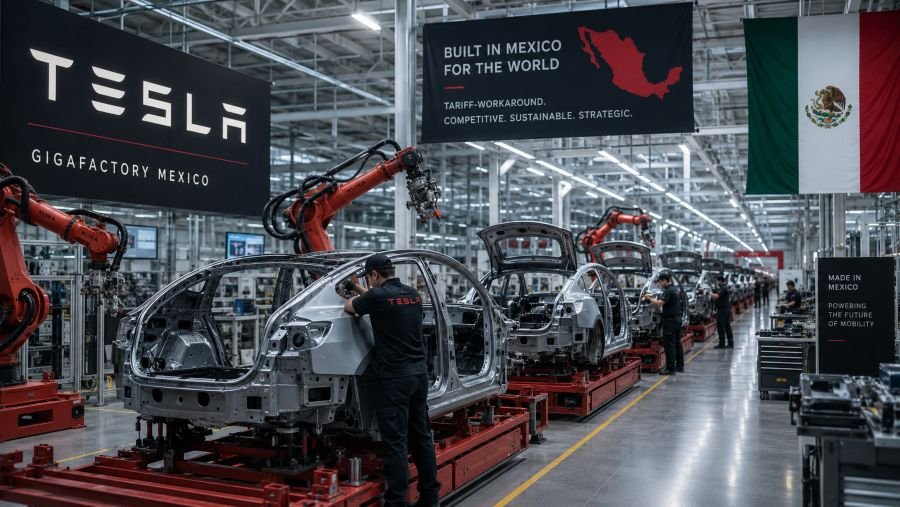
Some Chinese companies are exploring a workaround: manufacturing in Mexico (where tariff rates are lower at 25-35%) and importing to the US from there. If this strategy becomes viable, it could partially undermine the tariff while keeping manufacturing outside the US. However, Mexico-assembled vehicles still face higher tariffs than domestically-made vehicles.
The Long-Term Outlook: What Happens Next?
Will the 100% tariff last indefinitely? What’s the future trajectory of US-China EV trade relations? Several scenarios are plausible.
Scenario 1: The Tariff Persists
The most likely scenario is that the 100% tariff becomes a permanent fixture of US trade policy, at least for several years. Once tariffs are implemented, they’re politically difficult to remove without appearing to abandon American workers. Assuming continued political consensus around China trade restrictions, the tariff could remain in place through the 2020s.
Scenario 2: Negotiated Reduction
Alternatively, future negotiations between the US and China could result in a tariff reduction in exchange for Chinese concessions on other trade issues. A reduced tariff of 50%, 30%, or even 15% would still provide substantial protection to American manufacturers while allowing some market access for Chinese competitors.
Scenario 3: Technological Parity and Domestic Competition
If American EV manufacturers successfully close the technology gap and achieve cost parity with Chinese EVs, the justification for the tariff diminishes. When American-made EVs are competitive without protection, the tariff becomes less necessary politically.
Scenario 4: The Mexico Manufacturing Reality
Chinese manufacturers could establish significant production capacity in Mexico, creating lower-tariff routes to the US market. This wouldn’t eliminate the tariff but would create alternative pathways, gradually increasing the availability of cheaper EVs in America while technically respecting the tariff regime.
Broader Implications: Beyond Automobiles
The 100% tariff on Chinese EVs isn’t just about cars. It reflects broader US-China trade tensions that extend to semiconductors, batteries, rare earth elements, and numerous other industries. Understanding the EV tariff helps illuminate how trade policy will shape competition across multiple sectors in coming decades.
The tariff also represents a fundamental shift in how democracies approach trade. Rather than the post-Cold War consensus favoring free trade and globalization, we’re entering an era of strategic protectionism, where countries view critical industries as national security issues and restrict imports accordingly. The EV tariff is the automotive embodiment of this larger shift.
What This Means for EV Buyers and Enthusiasts
If you’re considering purchasing an electric vehicle in America, the 100% tariff on Chinese EVs creates several practical implications. First, your options are more limited and more expensive than they would be without the tariff. Second, you’re paying higher prices to protect American manufacturing. Third, you’re participating in a global experiment in strategic trade policy that will likely define the automotive industry for decades to come.
For enthusiasts and industry observers, the situation is equally consequential. We’re witnessing the moment when global automotive competition became openly protectionist. The question now is whether other countries will follow America’s lead, fragmenting the global market into protected regional blocks, or whether diplomatic solutions will eventually create more integrated international markets.
FAQ: Chinese EV Tariffs & Market Access
Why does the US have a 100% tariff on Chinese electric vehicles?
The 100% tariff on Chinese EVs is part of America’s broader trade protection strategy aimed at defending domestic manufacturing and employment. The Biden administration doubled tariffs on Chinese EVs in 2024, citing concerns about unfair trade practices, government subsidies in China, and the need to protect the emerging American EV industry. The tariff is intended to level the playing field and prevent Chinese manufacturers from undercutting American producers through lower labor costs and massive government incentives.
Which Chinese EV manufacturers are most affected by US tariffs?
BYD, the world’s largest EV manufacturer, along with NIO, XPeng, Geely-Volvo, and other major Chinese brands face the full brunt of the 100% tariff. These companies, which dominate the global EV market outside the US, are effectively locked out of the American market. Even companies with US operations, like Tesla (which has operations in China), face tariff complications when importing vehicles manufactured in China.
What would a Chinese EV cost American consumers with the 100% tariff applied?
A Chinese EV that costs $15,000 to $25,000 in China would face $15,000 to $25,000 in tariffs alone before transportation, dealer markup, and compliance costs. This effectively doubles or triples the final price for American consumers. For context, a BYD Seagull priced at $15,000 in China would need to sell for $30,000+ in America just to break even on tariffs, making it uncompetitive against established brands like Tesla, Ford, and Chevrolet.
Are there any exceptions to the 100% tariff on Chinese cars?
There are limited exceptions. Vehicles assembled in Mexico with Chinese components face lower tariff rates (around 25-35%), which is why some companies are considering Mexican factories. Additionally, used Chinese vehicles imported for personal use may face different tariff rates, though import regulations remain strict. However, the intent of the policy is clear: prevent Chinese EVs from entering the US market at scale.
How does the US tariff compare to other countries’ trade barriers on Chinese EVs?
The US 100% tariff is among the highest globally. The European Union has implemented graduated tariffs (up to 38% on some Chinese brands) and Canada has maintained tariffs, but none match America’s full 100% rate. This makes the US market uniquely protected—and uniquely expensive for Chinese EV manufacturers trying to expand internationally.
What’s the long-term impact of the tariff on electric vehicle adoption in America?
The tariff limits consumer choice and may slow EV adoption in price-sensitive segments. By preventing affordable Chinese alternatives from entering the market, American consumers are left with fewer budget-friendly options. However, it provides time for domestic EV manufacturers to scale production and reduce costs. The trade-off is increased competition versus slower market growth and innovation from international brands.
The Bottom Line: A Market in Isolation
The 100% tariff on Chinese electric vehicles represents a watershed moment in global automotive history. For the first time in the modern trade era, the world’s largest economy has effectively closed itself off from the world’s most efficient EV manufacturers. This decision reflects legitimate concerns about competition and employment, but it comes with significant costs—higher prices for consumers, limited choice, and a potentially fragmented global market.
As American EV manufacturers scale production and Chinese companies explore alternative routes (like Mexican manufacturing), the tariff landscape will likely evolve. But for now, the 100% tariff stands as a clear statement: the US has chosen protected domestic development over open global competition in the automotive sector. Whether this proves to be a wise strategic decision that allows American companies to establish competitive advantages, or a misguided protectionism that ultimately harms consumers and slows global EV adoption, will become clear only in hindsight. What’s certain is that the tariff will shape the automotive industry for years to come, affecting not just Chinese manufacturers and American consumers, but the entire global transition to electric vehicles.