Top 10 Chinese EVs Americans Want Most in 2026 (and How to Get Them)
Chinese electric cars have become the most talked-about vehicles that almost no American can actually buy. Across YouTube test drives, Reddit threads and auto-show coverage, the same models keep surfacing as objects of genuine desire — fast, feature-packed and priced at a fraction of an equivalent Western EV. Yet a 100% import tariff and a tightening web of safety and software rules keep them locked behind a wall at the border.
This guide cuts through the noise. First, we count down the ten Chinese EVs that American enthusiasts want most heading into 2026, with the specs and the reasons behind the hype. Then we lay out, honestly, the narrow legal pathways that actually exist for getting one onto US soil — and which dreams are best left for later.
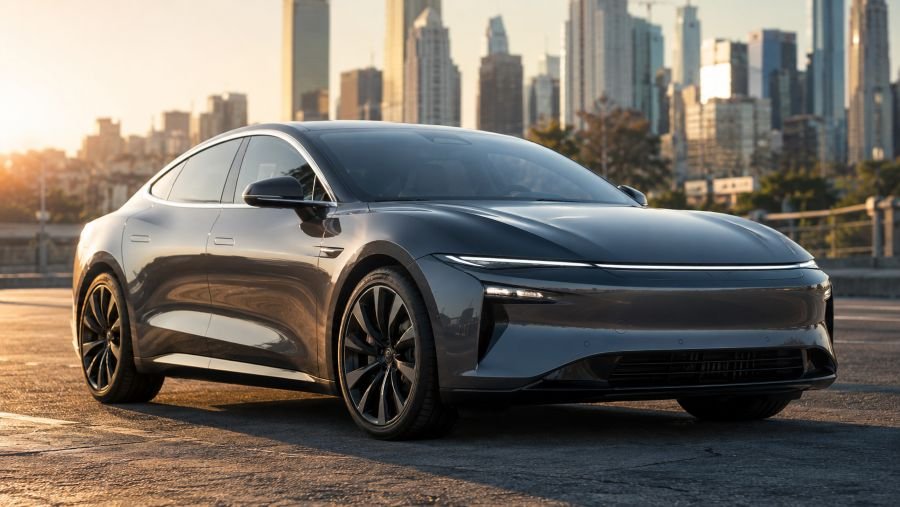
For the better part of a decade, the American EV conversation revolved around Tesla and a handful of legacy brands racing to catch up. That conversation has quietly shifted. Today, the most viral electric cars on US social media are often built in Shenzhen, Hangzhou or Hefei — and they undercut comparable Western models by tens of thousands of dollars while matching or beating them on range, charging speed and cabin technology. The result is a uniquely frustrating kind of demand: intense interest paired with near-total unavailability.
Before we dive into the full ranking, the short video below offers a quick visual tour of the Chinese EVs American drivers want most in 2026 — a useful primer on the models we break down in detail throughout this buying guide.
Why Americans Are Suddenly Obsessed With Chinese EVs
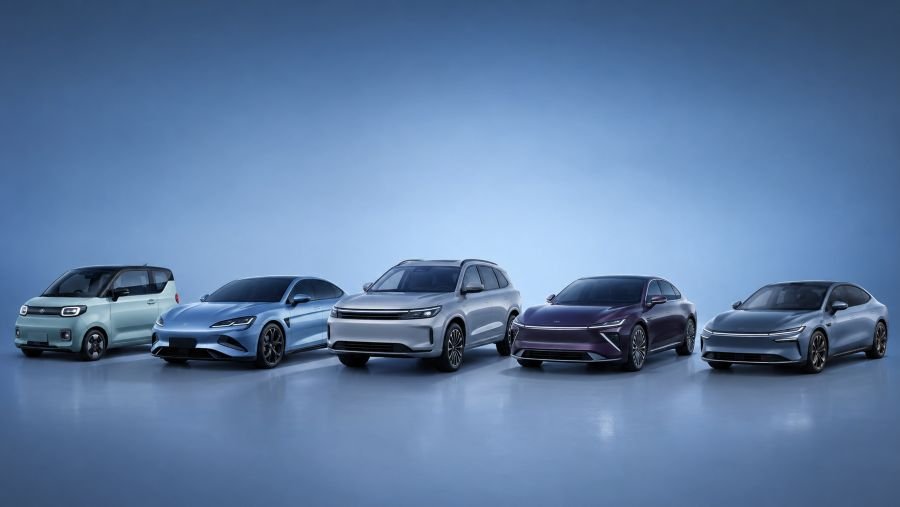
The fascination is not hard to explain. Chinese automakers have spent years iterating in the world’s largest and most competitive EV market, where more than two hundred manufacturers fight for attention. That pressure forged cars with vivid screens, fast 800-volt charging architectures, sophisticated driver assistance and interiors that punch far above their price. Meanwhile, BYD overtook Tesla as the world’s top-selling EV maker in 2025, shipping over 2.2 million pure-electric units, a milestone that put every Chinese brand on the American enthusiast’s radar.
Equally important is the price gap. The average new car in the United States now hovers around $51,000, while several best-selling Chinese EVs sit in a $10,000 to $12,000 band at home. Even after shipping and duties, the value proposition is staggering on paper. American buyers see crisp review footage from Europe, where many of these cars are sold openly, and naturally wonder why they cannot have the same. The short answer involves tariffs, safety law and a national-security rule — which we will unpack later in this guide.
Smart Accessories for EV Owners
Affiliate disclosure: As an Amazon Associate, Chinese Cars Asia earns from qualifying purchases. The links below may earn us a small commission at no extra cost to you.
Magnetic Wireless Phone Mount
Chinese EVs are famous for their screens, but you’ll still want your own phone in view. A strong magnetic mount with fast wireless charging keeps navigation and CarPlay glanceable in whatever you drive today.
🛒 Check Price on AmazonCordless Tyre Inflator
Range numbers drop fast on under-inflated tyres. A compact cordless inflator with a digital auto-stop gauge tops up pressure in the driveway or roadside — cheap insurance for efficiency and safety.
🛒 Check Price on AmazonThe Top 10 Chinese EVs Americans Want Most in 2026
The ranking below blends online search interest, US media coverage, enthusiast-forum chatter and the sheer aspirational pull each model carries. Specifications reflect manufacturer claims and home-market or European figures; real-world range and pricing vary with trim, climate and driving style. Think of this as a wish list rather than a showroom catalog.
1. Xiaomi SU7 — The Tech World’s Halo Car
No Chinese EV has captured American imagination quite like the Xiaomi SU7. Built by the smartphone giant, this low-slung performance sedan pairs a striking fastback profile with up to roughly 700 kilometers of claimed range and seamless integration with Xiaomi’s wider ecosystem of phones and smart-home devices. US reviewers who have driven it abroad routinely describe it as the car that finally makes the Tesla Model S feel dated. It tops nearly every “most wanted” list, and for good reason.
2. BYD Seal — The Sensible All-Rounder
If the SU7 is the dream, the BYD Seal is the car most analysts would actually recommend. This midsize sedan delivers a balanced blend of range, refinement and value, riding on BYD’s blade-battery platform that is engineered to resist thermal runaway. Across Europe it carries a five-star safety rating, and its calm road manners make it the everyday Chinese EV Americans most wish they could lease.
3. Zeekr 001 — The Shooting-Brake Showstopper
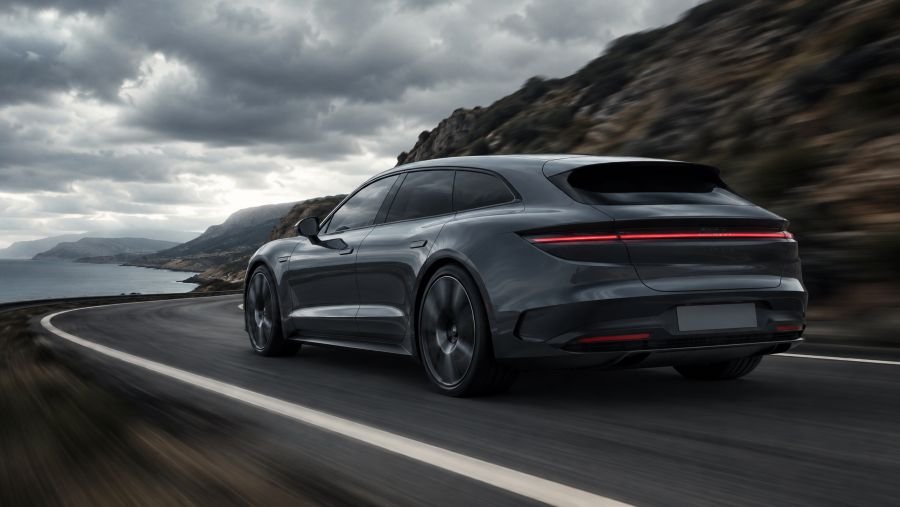
Geely’s premium Zeekr brand turns heads with the 001, a sleek shooting-brake that exceeds 700 kilometers of range in higher trims and charges with impressive speed. It made a celebrated appearance at the 2026 Consumer Electronics Show in Las Vegas, fueling speculation about an eventual North American entry and cementing its status as an enthusiast favorite.
4. NIO ET7 — The Range and Battery-Swap Pioneer
NIO’s flagship ET7 is the long-distance champion of the group, with top trims claiming figures approaching 1,000 kilometers and WLTP results well past 640 kilometers in real-world testing. Its party trick is battery swapping: rather than wait at a charger, owners pull into a station and have a fresh pack installed in minutes. That ownership model alone makes the ET7 a fixture of American EV fantasy.
5. XPeng G6 — The Model Y Rival
The XPeng G6 squares up directly against the Tesla Model Y, the world’s best-selling EV. With an 800-volt platform enabling rapid charging, a roomy cabin and advanced driver-assistance hardware, the G6 is exactly the kind of mainstream family SUV American shoppers keep asking about. Its competitive pricing abroad only sharpens the longing.
6. Xiaomi YU7 — The SUV Sibling
Following the SU7’s success, Xiaomi’s YU7 brings the same design language and ecosystem appeal in a practical SUV body. With claimed range stretching beyond 800 kilometers in some trims and an attainable price by Chinese standards, it has become one of the most searched upcoming models among American EV watchers who want space without sacrificing the tech halo.
7. BYD Sealion 7 — The Family Performance SUV
The Sealion 7 takes the Seal’s strengths and stretches them into a sporty midsize SUV with around 600 kilometers of range and brisk acceleration. As BYD’s global expansion accelerates, this is the model many expect to anchor the brand’s eventual push into Western markets, which keeps it firmly on the American radar.
8. NIO ET5 — The Long-Range Bargain
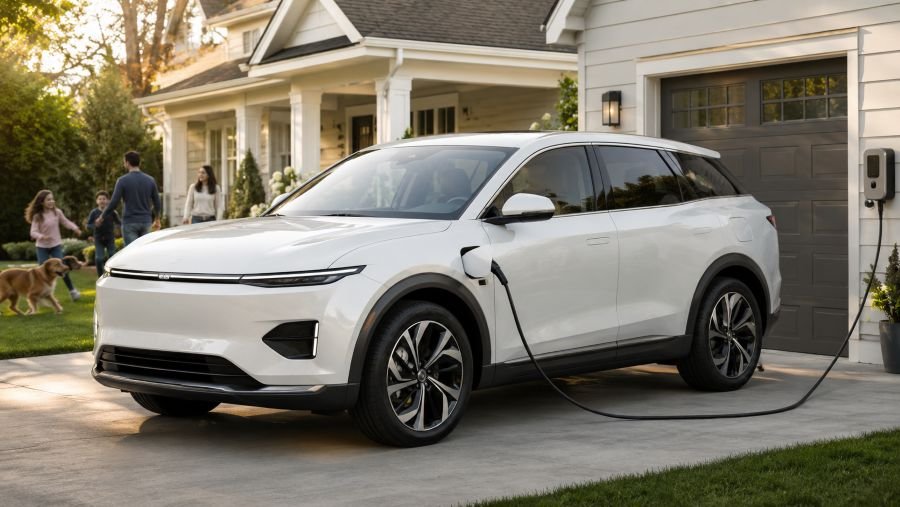
The smaller ET5 sedan delivers much of the ET7’s magic at a friendlier price, with semi-solid-state battery options pushing claimed range past 1,000 kilometers. It represents the sweet spot many American buyers crave: executive-class refinement and headline-grabbing range without a six-figure sticker.
9. MG4 EV — The Affordable Hatchback
Sold widely across Europe under the storied MG badge (now owned by SAIC), the MG4 proves that affordable need not mean compromised. As a compact, well-equipped hatchback at a genuinely accessible price, it is the model budget-minded American commuters point to when arguing that the US market is missing out on cheap, practical EVs.
10. Wuling Hongguang Mini EV — The People’s City Car
Rounding out the list is the tiny Wuling Hongguang Mini EV, one of China’s all-time best sellers at a price near $6,500. It is too small and slow for American highways, but it has become a cult curiosity stateside — a symbol of just how cheap basic electric mobility can be. A few have even been imported and registered as glorified golf carts.
| Model | Body Style | Claimed Range (approx.) | Why Americans Want It |
|---|---|---|---|
| Xiaomi SU7 | Sport sedan | Up to ~700 km | Design, performance, ecosystem |
| BYD Seal | Midsize sedan | ~550–650 km | Value, safety, refinement |
| Zeekr 001 | Shooting brake | 700+ km | Style, fast charging |
| NIO ET7 | Luxury sedan | Up to ~1,000 km | Range, battery swap |
| XPeng G6 | Midsize SUV | ~550–650 km | Model Y rival, 800V |
| Xiaomi YU7 | SUV | Up to ~835 km | Space plus tech halo |
| BYD Sealion 7 | Performance SUV | ~610 km | Family value, speed |
| NIO ET5 | Sedan | Up to ~1,055 km | Luxury at lower cost |
| MG4 EV | Hatchback | ~400–520 km | Affordability |
| Wuling Mini EV | City car | ~120–300 km | Ultra-low price |
💡 Pro Tip: When comparing Chinese EV range numbers, remember they are usually quoted on the optimistic CLTC or WLTP cycles. As a rough rule of thumb, expect real-world American highway range to land roughly 20–30% below the headline figure, especially in cold weather or at sustained high speeds.
How to Actually Get a Chinese EV in the United States
Now for the part everyone skips to. The honest reality is that there is no easy, legal way to walk into a US dealership and buy any of the cars above. No major Chinese brand sells passenger EVs directly in America, and a combination of trade and safety law makes private importing difficult, expensive and often impossible. That said, a few narrow doors exist. Here is the realistic landscape.
The Tariff Wall and the Software Ban
The headline barrier is a 100% import tariff on Chinese-made EVs, first imposed under President Biden and retained under President Trump. On top of that, the federal government has finalized a connected-vehicle rule that restricts Chinese vehicle software beginning with 2027 model-year cars on national-security grounds, with hardware restrictions following later in the decade. Because nearly every modern Chinese EV is heavily software-defined, this rule effectively closes the door on importing new ones, regardless of tariffs.
The 25-Year Rule Does Not Help — Yet
Classic-car enthusiasts know that vehicles aged 25 years or older are exempt from Federal Motor Vehicle Safety Standards and can be imported freely. The catch is timing: China’s EV revolution is recent, so the desirable models on this list will not reach that 25-year threshold until the 2040s. For now, this beloved loophole offers nothing to Chinese EV fans.
The Registered Importer Route
It is technically possible to bring a non-compliant car into the US through an NHTSA-registered importer who modifies it to meet all federal safety and EPA standards. In practice, almost no Chinese EV qualifies, the engineering work can cost more than the car itself, and few registered importers specialize in modern electric vehicles. This path is reserved for the deeply committed and deeply funded.
Show or Display, and the Low-Speed Workaround
The “Show or Display” exemption lets historically or technically significant vehicles enter for limited use, but NHTSA can — and often does — bar them from public roads entirely. A more practical curiosity is the low-speed vehicle classification: tiny models like the Wuling Mini EV have occasionally been registered for neighborhood use, treated essentially like an electric golf cart capped at low speeds. It is a novelty, not a commuting solution.
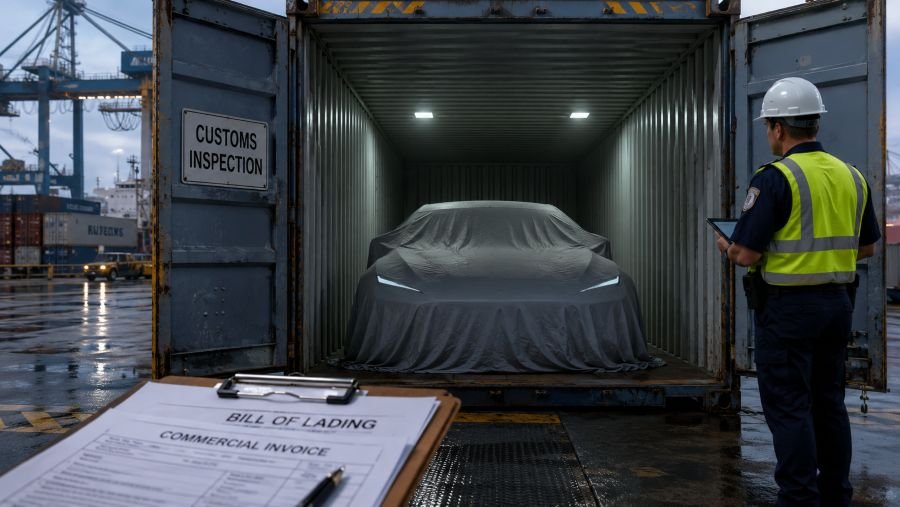
⚠️ Important Note: Be extremely wary of online brokers advertising “US-ready” Chinese EVs or claiming a car sold in Mexico or Canada can simply be driven across the border. Customs routinely denies non-compliant imports, and a vehicle that cannot be titled in your state becomes an expensive paperweight. Verify federal compliance before sending anyone money.
The Patient Option: Wait for North American Factories
The most sensible strategy for most buyers is simply to wait. Canada has already cut its tariff on Chinese EVs to 6.1% for a capped number of vehicles, giving brands a North American foothold, and President Trump has signaled openness to Chinese automakers building factories on US soil. Industry executives, including some at Geely, have suggested a US entry could arrive within two to three years. A locally built Chinese EV would sidestep both the tariff and the import-compliance maze — which may be the only realistic way most Americans ever park one in their garage.
FAQ: Chinese EVs in America
Can Americans legally buy a Chinese EV in 2026?
Not in any straightforward way. No major Chinese brand sells passenger EVs directly in the United States, and the 100% tariff combined with safety and connected-vehicle rules blocks ordinary retail sales. The only legal routes are narrow ones such as registered-importer compliance, the eventual 25-year exemption, or low-speed-vehicle classification for the smallest models.
Which Chinese EV do Americans want most right now?
By online buzz and media coverage, the Xiaomi SU7 leads the pack, prized for its design, performance and tech integration. It is followed closely by the BYD Seal, the Zeekr 001 and the long-range NIO sedans, each of which dominates enthusiast wish lists for different reasons.
Why are Chinese EVs effectively banned in the United States?
The 100% tariff is the most visible obstacle, but it is not the only one. A federal connected-vehicle rule restricts Chinese vehicle software starting with 2027 model-year cars on national-security grounds, and the vast majority of Chinese EVs do not meet US Federal Motor Vehicle Safety Standards. Together these rules close nearly every practical door.
Will Chinese EVs ever be sold openly in America?
Possibly, but likely through local assembly rather than direct imports. With Canada lowering its tariffs and US officials signaling openness to Chinese-owned factories on American soil, a domestically built Chinese EV within a few years looks like the most plausible path to genuine availability.
The Bottom Line for American EV Dreamers
The cars on this list represent the most compelling electric vehicles most Americans cannot buy — a rare case where demand is loud and supply is essentially zero. From the halo-grade Xiaomi SU7 to the bargain Wuling Mini EV, each model showcases a different facet of how far China’s EV industry has come, and why US enthusiasts watch every review with a mix of admiration and envy. For now, the honest advice is to enjoy the spectacle, stay clear of dubious import schemes, and keep an eye on the factory announcements that could finally change everything. The wall at the border is high, but it may not stand forever.