Xpeng Brand Guide: Revolutionizing Intelligent Mobility – Technology, Models & European Availability
As the global automotive industry undergoes its most significant transformation since the invention of the internal combustion engine, one name consistently emerges at the forefront of the intelligent electric vehicle revolution: Xpeng Motors. Founded in 2014 by He Xiaopeng, the company has moved beyond the label of a simple “Tesla challenger” to become a technology-focused EV manufacturer with its own clear identity.
In 2026, Xpeng is no longer just a Chinese startup. It is a global innovator competing in software-defined vehicles, advanced driver assistance, ultra-fast charging, smart cockpits, and European EV expansion. This comprehensive Xpeng brand guide explores the technology behind the brand, the current and upcoming model lineup, and the company’s growing availability across Europe.
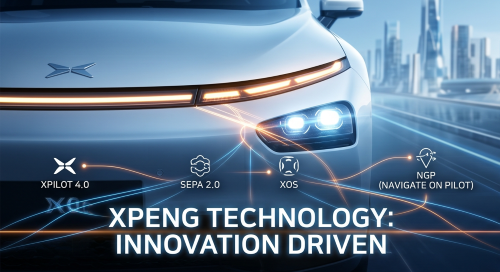
The Xpeng Philosophy: Software-Defined Everything
At the core of Xpeng’s success is a simple yet powerful belief: the cars of the future will be defined by software as much as hardware. While traditional manufacturers have often focused on mechanical engineering first, Xpeng treats its vehicles as mobile smart devices built around computing power, sensors, over-the-air updates, and intelligent user experiences.
This philosophy has led to the development of SEPA 2.0, short for Smart Electric Platform Architecture. This modular architecture helps standardize high-voltage systems, smart cockpit functions, autonomous-driving hardware, and core EV engineering across the lineup. By using a flexible platform strategy, Xpeng can shorten development cycles, reduce complexity, and bring updated technology to market more quickly.
By 2026, SEPA 2.0 has become central to Xpeng’s identity. It supports advanced electrical systems, high-speed charging capability, intelligent cabin functions, and scalable driver-assistance hardware. This technological backbone is one reason Xpeng can compete directly with both Tesla and established European premium brands in the electric vehicle space.
Quick Video: Xpeng Brand and Smart EV Technology
Before exploring Xpeng’s autonomous-driving systems and model lineup, this short 51-second YouTube video provides a useful visual introduction to the brand’s smart EV identity, futuristic design language, and technology-focused positioning.
XNGP: The Pinnacle of Autonomous Driving
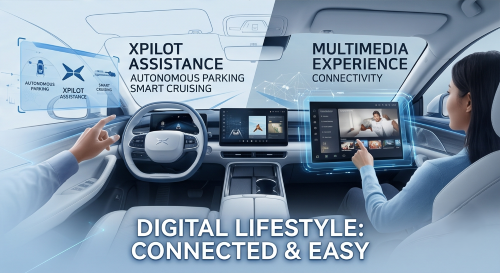
If there is one feature that defines the Xpeng brand, it is XNGP, or Xpeng Navigation Guided Pilot. Unlike many driver-assistance systems that rely heavily on mapped environments, Xpeng has worked toward more flexible scenario-based assisted driving. The goal is to allow the car to handle more complex real-world environments, including lane changes, traffic-light behavior, urban navigation, highway cruising, and automated parking support.
The system uses a powerful sensor suite that may include cameras, radar, ultrasonic sensors, and LiDAR depending on model and market specification. These sensors work with onboard computing power and AI-based software to interpret the surrounding environment. Xpeng’s software strategy also allows the system to improve over time through updates, making the car feel more like a constantly developing technology platform than a fixed mechanical product.
For European drivers, this matters because long motorway journeys, urban congestion, and parking stress are everyday realities. Xpeng’s driver-assistance philosophy is not only about future autonomy. It is about making current driving less tiring, more predictable, and more connected to the digital habits buyers already expect from smartphones and smart homes.
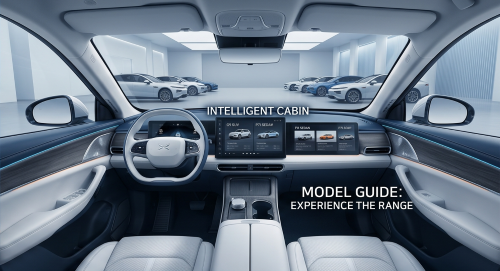
Detailed Model Analysis: The 2026 Xpeng Lineup
Xpeng’s model lineup is designed to cover multiple parts of the intelligent EV market. Rather than focusing only on affordable electric cars, Xpeng positions itself as a smart technology brand with practical SUVs, premium electric vehicles, sportier sedans, and family-focused models.
| Model | Vehicle Type | Main Appeal |
|---|---|---|
| Xpeng G6 | Mid-size electric SUV / coupe-SUV | Efficient platform, smart features, family usability, and strong EV value. |
| Xpeng G9 | Flagship electric SUV | Premium comfort, long-distance capability, advanced cabin technology, and high-end positioning. |
| Xpeng P7i | Intelligent electric sports sedan | Sleek design, strong performance, driver appeal, and smart cockpit technology. |
| Xpeng X9 | Luxury electric MPV | Executive comfort, family space, futuristic design, and technology-led practicality. |
1. Xpeng G6: The Ultra-Smart SUV
The G6 is Xpeng’s answer to the mid-size electric SUV segment. Built around a modern smart EV platform, it combines aerodynamic design, practical cabin space, fast-charging potential, and strong technology value. In Europe, it is one of Xpeng’s most important models because it sits in a segment where family buyers, company-car drivers, and EV switchers are actively shopping.
2. Xpeng G9: The Flagship Luxury SUV
The G9 is where Xpeng showcases its luxury ambitions. It is designed to compete with premium electric SUVs by offering a high-quality interior, advanced driving assistance, strong comfort features, and a more refined long-distance experience. It targets buyers who want a Chinese EV that feels premium, not simply affordable.
3. Xpeng P7i: The Intelligent Sports Sedan
The P7i is the evolution of Xpeng’s original P7, the car that helped put the brand on the international EV map. With its sleek silhouette, performance focus, and technology-led interior, it remains the driver-oriented choice in the Xpeng lineup. It appeals to buyers who want a more emotional EV than a practical SUV.
4. Xpeng X9: The Revolutionary MPV
The X9 is Xpeng’s attempt to redefine the electric MPV. Instead of looking like a traditional van, it uses futuristic styling, high-end seating, advanced cabin comfort, and technology-rich features. It is aimed at executive transport, large families, and buyers who want more space without sacrificing innovation.
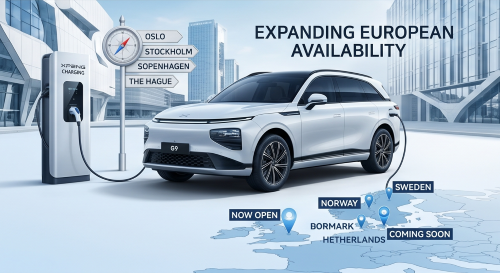
European Availability and Market Strategy
Xpeng’s expansion into Europe has been methodical rather than random. Instead of launching everywhere at once, the brand has focused on EV-ready countries first, then gradually expanded into larger and more competitive markets. This approach helps Xpeng test demand, build service confidence, and adapt its retail model to European expectations.
- Norway and Sweden: Early markets where Xpeng could test service support and EV-focused customer demand.
- The Netherlands and Denmark: Important regions for digital-first sales, EV adoption, and distribution planning.
- Germany: A critical market because it tests Xpeng directly against premium European brands.
- France and Italy: Expansion markets where the G6 and G9 can help build broader European awareness.
Xpeng’s European strategy is built on three pillars: local partnerships, transparent pricing, and service excellence. The company knows that strong technology alone is not enough. European customers also want warranty reassurance, parts availability, trained technicians, and a realistic service network. By partnering with local automotive groups and opening high-tech experience centers, Xpeng aims to reduce the uncertainty that often surrounds new EV brands.
Charging Infrastructure: The Power Network
Recognizing that a great EV is only as good as the charging experience around it, Xpeng has focused heavily on charging integration. In Europe, compatibility with major roaming partners is essential because drivers want simple access to public charging without managing too many apps, cards, and accounts.
Xpeng’s high-voltage platform strategy also supports the brand’s fast-charging image. For buyers, the important detail is not only peak charging power. It is how consistently the car can add useful range, how well the route planner guides drivers to chargers, and how effectively the battery is preconditioned before arrival.
Manufacturing Quality and Reliability
One of the biggest challenges for Chinese brands in Europe has been perception. Many buyers are curious about Chinese EVs but still ask questions about build quality, safety, parts availability, software stability, and long-term reliability. Xpeng has addressed this by investing in advanced manufacturing, digital quality control, and platform standardization.
Modern Xpeng vehicles are designed to meet demanding European safety and durability expectations. The brand’s challenge in Europe is no longer simply proving that Chinese EVs can be well built. It is proving that they can remain reliable, easy to service, and desirable after several years of ownership.
The Future: Xpeng AeroHT and AI Integration
Looking beyond conventional cars, Xpeng has also attracted attention through AeroHT, its flying-car subsidiary. While flying vehicles remain far from mainstream European roads, the project demonstrates the brand’s ambition. Xpeng wants to be seen not only as a carmaker, but as a mobility-technology company.
AI integration is another major part of the brand’s future. As voice assistants become more natural and vehicle systems become more connected, Xpeng aims to make the car feel like an intelligent companion rather than a passive machine. Future Xpeng vehicles may increasingly manage navigation, charging, entertainment, smart-home functions, route planning, and personal preferences through more conversational interfaces.
Internal EV Market Resources
For more coverage of Chinese electric vehicles, EV charging technology, buyer guides, and European market analysis, visit the Chinese Cars Asia homepage for related articles and future updates.
Conclusion: Is Xpeng the Right Choice?
Xpeng has successfully moved from disruptor to serious intelligent EV contender. Its commitment to software innovation, smart cockpit design, advanced driver assistance, and fast-charging platforms makes it a credible competitor to Tesla and European legacy brands.
If you value cutting-edge technology, connected interiors, driver-assistance innovation, and a digital-first EV lifestyle, Xpeng is a brand worth watching closely. The story of Xpeng is the story of the modern automobile: a fusion of software, sensors, batteries, and design that points toward a smarter and more connected future of mobility.
Xpeng Brand Guide FAQ
What is Xpeng best known for?
Xpeng is best known for smart electric vehicles, advanced driver assistance, software-defined vehicle architecture, fast charging, and technology-focused interiors.
Is Xpeng available in Europe?
Yes. Xpeng has expanded into several European markets, including early EV-focused countries and larger markets such as Germany. Availability varies by country and model.
Which Xpeng models are important in 2026?
Important Xpeng models include the G6, G9, P7i, and X9. The G6 and G9 are especially relevant for European SUV buyers.
Does Xpeng compete with Tesla?
Yes. Xpeng competes with Tesla in smart EV technology, software, charging, driver assistance, and value. It also competes with premium European brands in selected segments.
Should European buyers consider Xpeng?
European buyers should consider Xpeng if they want a technology-focused EV with strong software, modern design, and advanced features. Before buying, they should check local service coverage, warranty terms, charging compatibility, and resale expectations.