How to Charge a Chinese EV in Europe: Complete Network Guide
Owning a Chinese electric vehicle in Europe is increasingly common, with brands like BYD, NIO, Geely and others establishing a strong market presence. However, charging infrastructure varies significantly across European countries. This guide covers everything you need to know about charging Chinese EVs across Europe, from major networks to practical tips and cost breakdowns.
Whether you are a BYD Yuan Plus owner in Germany, a NIO ET5 driver in Norway, or simply exploring Chinese EV options, understanding the charging landscape is essential for seamless ownership.
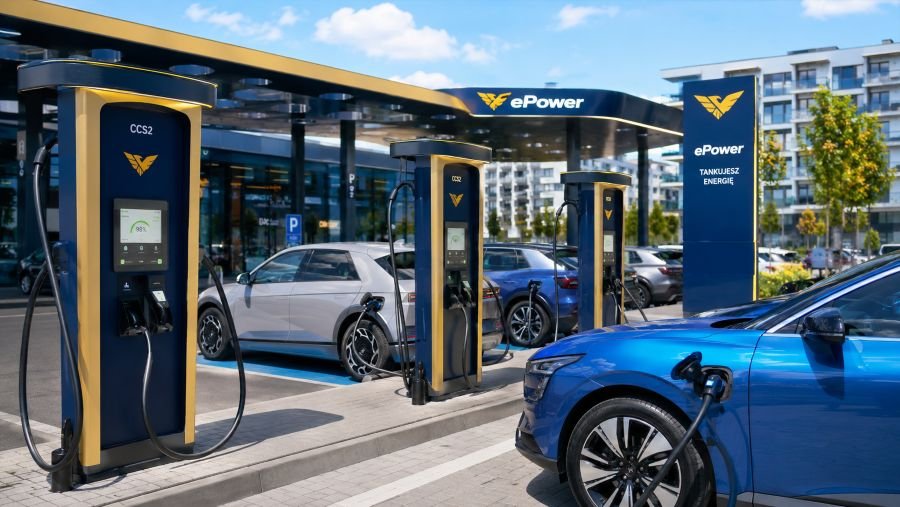
Europe has built one of the densest charging networks in the world, but for Chinese EV owners the real question is rarely “where can I charge?” — it is “will my car work here, and how do I pay?” The short video below answers the essentials, and the detailed guidance follows throughout the article.
Overview of EV Charging in Europe
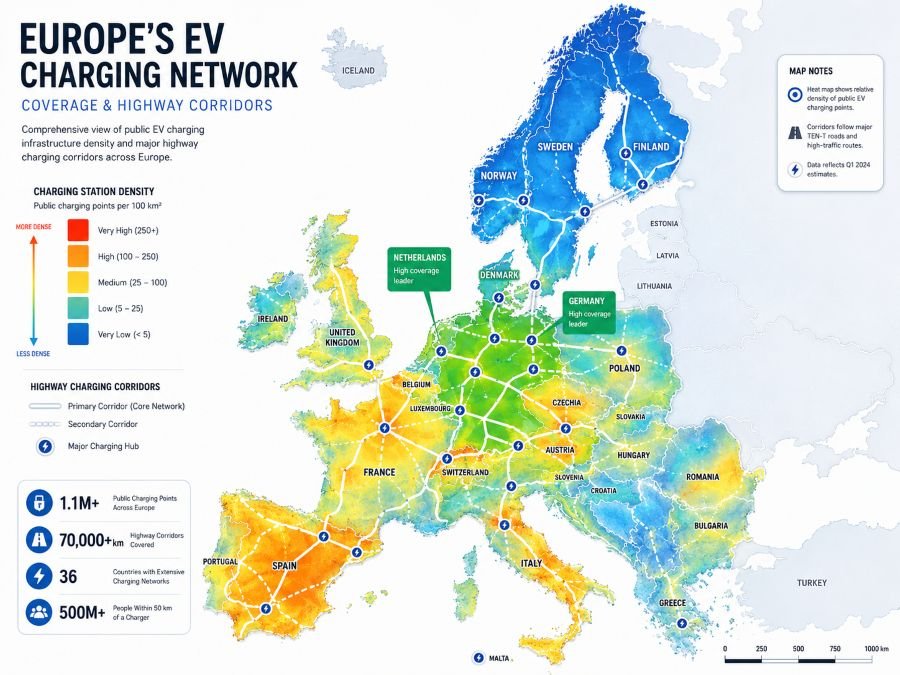
Europe’s electric vehicle infrastructure has transformed dramatically over the past five years. With over 1 million public charging points across the continent, Europe leads globally in charging density. However, distribution is uneven: countries like Norway, the Netherlands and Germany feature robust networks, while parts of Eastern Europe are still developing capacity.
For Chinese EV owners, the primary challenge is not finding charging stations — it is understanding compatibility. European charging networks use specific standards and payment systems that differ from those in China. This guide ensures you navigate those differences with confidence.
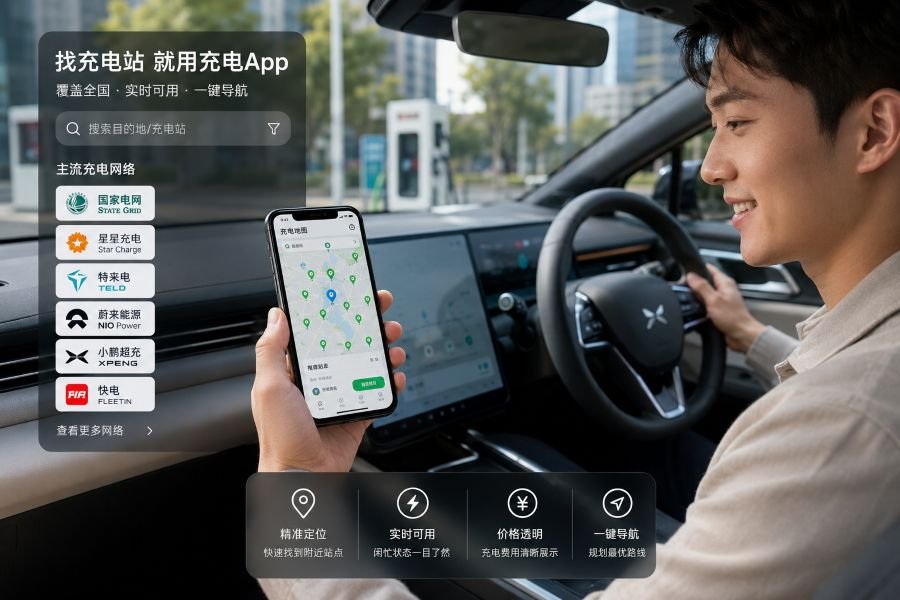
💡 Pro tip — plan ahead: Download charging apps such as Chargemap, PlugShare or the Tesla app before your trip. Real-time availability data prevents frustration when you arrive at a station.
Two Charging Accessories Every European EV Owner Should Carry
When charging at public posts, a combination cable lock secures the Type 2 cable to both your car and the charger, deterring opportunistic theft of an expensive accessory. Lightweight and weatherproof — worthwhile peace of mind for owners who regularly use street or car-park chargers.
A wall-mounted holster keeps your Type 2 connector off the garage floor and the cable neatly coiled, preventing plug damage and trip hazards in tight home parking spaces. A clean, five-minute install that finishes a home charging setup properly alongside a wallbox.
Major Charging Networks Across Europe
Understanding the major players in European charging is crucial for Chinese EV owners. These networks dominate the landscape and offer different connector types, speeds and pricing models.
Tesla Supercharger Network
Tesla operates tens of thousands of Supercharger stalls across Europe. From 2024–2025, Tesla began opening Supercharger access to non-Tesla vehicles, including compatible Chinese EVs with CCS2 connectors. Most newer Chinese EVs with a CCS2 port can now access Tesla Superchargers directly, though charging speed may be slightly lower than for Tesla vehicles.
IONITY
The premium ultra-fast charging network covers 24 European countries. IONITY stations provide up to 350kW capacity, enabling most Chinese EVs to reach 80% charge in 20–30 minutes. Coverage is excellent along major highways, making it ideal for long-distance travel.
Fastned and Other Rapid Networks
Dutch-founded networks such as Fastned focus on rapid charging with 150–300kW capacity, operating widely across the Benelux, Germany and Scandinavia and expanding eastward. Several other operators run 50–350kW sites across urban areas and motorway corridors, most offering simple app-based payment.
| Network | Countries | Max Power | Best For |
|---|---|---|---|
| Tesla Supercharger | Most European countries | up to 250kW | Long-distance highway travel |
| IONITY | 24 countries across Europe | 350kW | Ultra-fast rapid charging |
| Fastned | Benelux, Germany & Scandinavia | 350kW | Western & Nordic routes |
| Regional rapid operators | Varies by country | 50–300kW | Urban & corridor charging |
Charging Standards & Connectors Explained
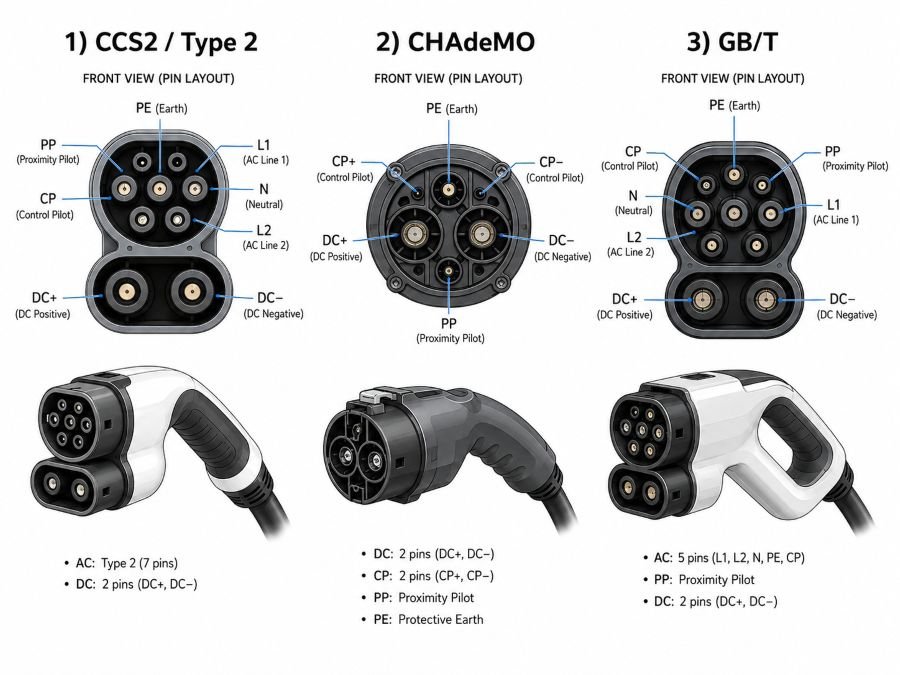
This is the most critical section for Chinese EV owners. Europe has standardised on CCS2 (Combined Charging System 2) as the connector type for new vehicles. Understanding connector compatibility can save you significant adapter costs and prevent charging issues.
CCS2 — The European Standard
CCS2 is the official European standard. New vehicles registered in Europe feature CCS2 ports, and most modern Chinese EVs imported to Europe come with CCS2 connectors directly from manufacturers such as BYD, NIO and Geely.
ℹ️ Connector types: Type 2 (Mennekes) is used for AC charging up to around 43kW and is the most common household and public AC option across Europe. CCS2 adds two DC pins below the Type 2 plug for rapid charging, and is the standard for new vehicles and public fast chargers.
Legacy Connectors: CHAdeMO and GB/T
Some older Chinese EV models may feature CHAdeMO (common in Japan) or the Chinese domestic GB/T connector. In Europe, CHAdeMO chargers are becoming harder to find as networks standardise on CCS2, so a CCS2-compatible vehicle — or, at minimum, a reliable adapter — is essential for stress-free charging.
Country-Specific Charging Guide
Germany — Best Overall Infrastructure
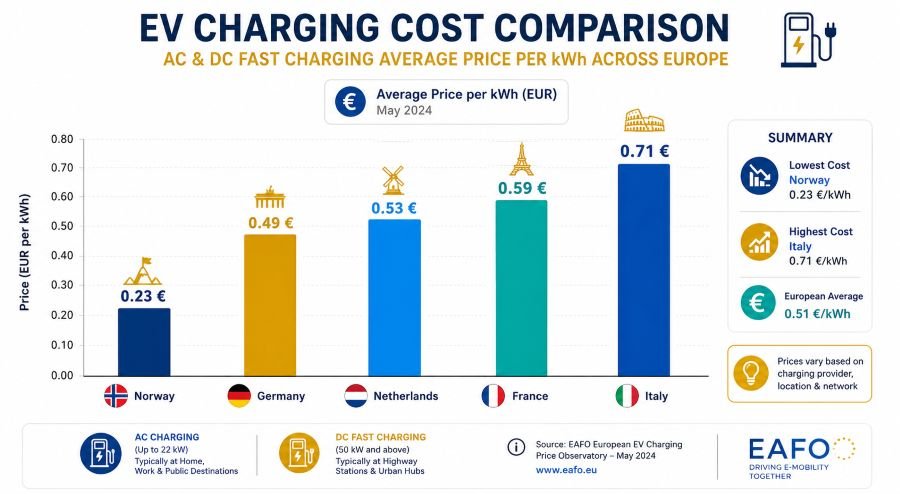
Germany features one of the densest charging networks in Europe, with major cities like Berlin, Munich and Frankfurt offering excellent coverage. IONITY, Tesla Supercharger and Maingau are prominent, payment is primarily app-based, and fast-charging costs typically range from €0.35–0.55/kWh.
France
With tens of thousands of charging stations, France offers strong highway coverage for long-distance travel, and urban areas like Paris, Lyon and Marseille have comprehensive networks. TotalEnergies runs one of the largest networks. Costs sit around €0.40–0.60/kWh.
Netherlands — Most Convenient
The Netherlands boasts one of the highest charging densities in the world, with charging woven into everyday infrastructure. Fastned, Shell Recharge and others dominate, payment is seamless through apps, and costs land around €0.38–0.52/kWh.
Scandinavia (Norway, Sweden, Denmark)
Norway leads EV adoption, with the vast majority of new vehicles being electric. IONITY, regional operators and Tesla Supercharger provide excellent highway coverage. Costs are higher, around €0.50–0.70/kWh, with Sweden and Denmark following similar patterns on robust infrastructure.
Italy & Spain
Mediterranean countries are expanding rapidly. Coverage is strong in major cities and along the coasts, while rural areas lag. Enel and Repsol lead in these regions, with costs around €0.35–0.50/kWh.
Central & Eastern Europe
Poland, the Czech Republic and Hungary are developing infrastructure quickly but remain behind Western Europe. Major highways and cities have coverage while rural areas need improvement. Costs are lower, around €0.25–0.40/kWh, but networks are less dense.
⚠️ Planning longer routes: When driving from Central Europe to Scandinavia, allow extra time for charging and verify highway-corridor coverage before departure. Apps like Chargemap show availability and crowding in real time.
Charging Costs Across Europe: Detailed Breakdown
Charging costs vary significantly based on location, network and charging speed. Here is what you should expect:
| Charging Type | Power Level | Time (0–80%) | Average Cost/kWh | Range Gained (Chinese EV) |
|---|---|---|---|---|
| Home charging (AC) | 7–11kW | 6–8 hours | €0.15–0.30 | 150–200km per charge |
| Public AC charging | 11–22kW | 2–3 hours | €0.25–0.35 | 150–200km per charge |
| Fast charging (DC) | 50–150kW | 20–40 minutes | €0.40–0.60 | 250–350km per charge |
| Ultra-fast (350kW) | 350kW+ | 15–25 minutes | €0.55–0.75 | 350–450km per charge |
Cost Optimisation Tips
- Charge at night: residential AC charging (7–11kW) costs 30–50% less than public networks.
- Avoid rapid charging for daily needs: using 22kW AC for most of your driving costs far less than relying on fast chargers.
- Use subscription packages: networks such as IONITY, Fastned and Tesla offer monthly plans that cut per-kWh costs by 20–30%.
- Target off-peak hours: charging during 22:00–07:00 often attracts discounts on public networks.
- Plan around free charging: many shops, hotels and parking facilities offer free Level 2 charging while you are there.
Adapters & Compatibility Issues
While CCS2 is the European standard, compatibility questions still matter for older models or unusual situations.
Do You Need an Adapter?
Modern Chinese EVs (2022+) come with CCS2 connectors for the European market, so no adapter is needed. Older or China-imported vehicles may feature the GB/T (Chinese standard) connector, requiring adapters for European networks; these exist but can be expensive and are not widely available. CHAdeMO-equipped models (some early NIO and XPeng cars) face a shrinking CHAdeMO network in Europe, and adapter performance varies.
💡 Adapter strategy: If buying a Chinese EV for European use, always confirm a CCS2 standard connector before purchase. Choosing a CCS2 car is far more practical than relying on adapters for daily charging.
Compatible Chinese EV Models with CCS2
| Brand | Models (Europe) | Connector Standard | Max Charging Speed |
|---|---|---|---|
| BYD | Atto 3 (Yuan Plus), Dolphin, Seal | CCS2 | up to ~150kW (DC) |
| NIO | ET5, EL6, ET7 | CCS2 | up to ~180kW (DC) |
| Geely / Geometry | Geometry C and related models | CCS2 | up to ~120kW (DC) |
| XPeng | G3i, P5, G6 | CCS2 | up to ~150kW (DC) |
| MG | MG4, MG ZS EV | CCS2 | up to ~140kW (DC) |
Practical Tips for Chinese EV Owners in Europe
1. Essential Apps to Download
- Chargemap: covers hundreds of thousands of stations across Europe with real-time availability, pricing and reviews.
- PlugShare: a community-driven app with millions of locations and excellent user comments on reliability.
- Tesla app: access to thousands of European Superchargers, now open to non-Tesla vehicles.
- IONITY app: direct access to 350kW ultra-fast chargers across 24 countries.
- Fastned app: real-time status updates for its rapid-charging network.
2. Payment Methods
European charging networks support several payment options:
- App-based payment: most modern networks offer native apps for seamless charging and billing.
- RFID cards: universal cards work across multiple networks for frequent users.
- Contactless and mobile payment: Visa, Mastercard and Apple Pay are accepted at most public chargers.
- Subscription packages: monthly plans reduce per-kWh costs at partner networks.
3. Long-Distance Travel Strategy
Planning a trip from Munich to Stockholm? A few habits make it painless:
- Pre-plan charging stops using route planners in Chargemap or the Tesla app.
- Prioritise ultra-fast chargers on the highway corridor for 20–30 minute stops rather than hour-long ones.
- Charge to 80% maximum — charging slows dramatically beyond that, so split longer stretches.
- Avoid peak hours (17:00–19:00) when queues form at popular highway stations.
- Download offline maps in case of patchy mobile coverage.
4. Home Charging Setup
Home charging is the most convenient and economical option. Installing a 7–11kW home charger brings real benefits:
- Charging overnight when electricity is cheaper (around €0.15–0.25/kWh).
- Always starting drives with a full battery.
- Less reliance on public networks for daily driving.
- Better long-term battery health by avoiding constant fast charging.
5. Cold-Weather Charging Tips
Winter charging in Scandinavia and Central Europe needs a little extra care:
- Preheat the battery before charging — cold packs charge slower, and most Chinese EVs can precondition before you arrive.
- Expect slower charging — around 20–30% slower in sub-zero temperatures.
- Plan for reduced range — real-world range can fall 30–40% in deep winter, so build in longer stops.
ℹ️ Charge management: Most modern Chinese EVs (BYD, NIO, XPeng) let you set a battery charge limit in the vehicle settings. Capping daily charges at 80% significantly extends long-term battery health — only charge to 100% for long trips.
Frequently Asked Questions
Can I charge a Chinese EV at any European charging station?
If your Chinese EV has a CCS2 connector (standard for 2022+ models), yes — you can use any public charging network across Europe. Older models with GB/T or CHAdeMO connectors require adapters and have limited options. Always confirm your connector type before travelling.
How much does it cost to charge a Chinese EV in Europe?
Fast charging costs around €0.40–0.75/kWh depending on location and network. For a 60kWh battery, expect roughly €24–45 for rapid DC charging. Home AC charging is much cheaper at €0.15–0.30/kWh, and network membership plans can cut costs by 20–30%.
What’s the fastest charging speed available in Europe?
IONITY and Fastned offer 350kW charging, the highest in Europe. Most modern Chinese EVs accept 100–180kW, and at 350kW you can gain around 200km of range in 15–20 minutes. Check your vehicle’s maximum DC rate.
Is Tesla Supercharger available for non-Tesla Chinese EVs?
Yes. From 2024, Tesla opened Superchargers to non-Tesla vehicles with CCS2 connectors. Most modern Chinese EVs can use them at 100–250kW depending on the car. Use the Tesla app for access.
How long does it take to charge a Chinese EV in Europe?
Home AC (7–11kW) takes 6–8 hours for a full charge; public AC (22kW) 2–3 hours; fast DC (50–150kW) 20–40 minutes to 80%; and ultra-fast (350kW) 15–25 minutes to 80%. Most owners stop at 80% because charging slows beyond that.
Which European country has the best charging infrastructure?
The Netherlands and Germany lead on density and reliability, while Norway leads on EV adoption. For sheer convenience, the Netherlands has the highest charger-to-population ratio. The best choice depends on your travel patterns.
Do I need a special membership card for charging?
No. Modern networks are app-based and accept contactless payment. RFID cards exist for frequent users but are not required — apps such as Chargemap and PlugShare handle payment through your phone.
What should I do if no chargers are available?
Use real-time apps showing availability. If nearby chargers are full, drive a few kilometres to alternatives — most have spare capacity. On highways, arrive early morning or late evening to avoid peak hours, and never rely on a single location.
Is charging a Chinese EV cheaper than running a petrol car in Europe?
Yes, significantly. Fast charging a 60kWh battery costs roughly €24–36 for 400–500km of range, against €60–80 of equivalent petrol. Home charging at €0.15–0.30/kWh is cheaper still.
Final Thoughts: Confidently Charging Your Chinese EV Across Europe
Charging a Chinese EV in Europe is simpler than it appears once you understand the basics. The continent’s rapid network expansion, combined with the standardised CCS2 connector on modern vehicles, means Chinese EV owners enjoy real convenience. The key to seamless travel is preparation: download the right apps, know your vehicle’s specifications, and plan longer routes in advance.
Whether you are a daily commuter using home charging or a road-tripper exploring European highways, the infrastructure exists, the costs are competitive against fossil fuels, and the technology keeps improving. The future of European motoring is electric — and increasingly, it is being shaped by Chinese manufacturers pushing the boundaries of EV capability and affordability.
As emissions standards tighten and more cities introduce vehicle restrictions, value-conscious electric models will only become more compelling. Being prepared today means you are ready for the next stage of the EV transition.