Why Chinese EVs Are Cheaper Than American EVs
The price gap between Chinese and American electric vehicles has become one of the most striking stories in the global auto industry. In the United States, a new EV still carries a heavy premium over a comparable gasoline car, yet in China electric vehicles have crossed a remarkable line: on average, they now cost less than gas-powered models. That reversal is not an accident, and it is not simply a story about government handouts.
In this guide, we unpack the real reasons Chinese EVs are cheaper than American EVs—from vertical integration and battery chemistry to manufacturing scale, labor, and logistics—and explain why the same Chinese EV that sells for the price of a small hatchback abroad cannot be bought affordably in America today.
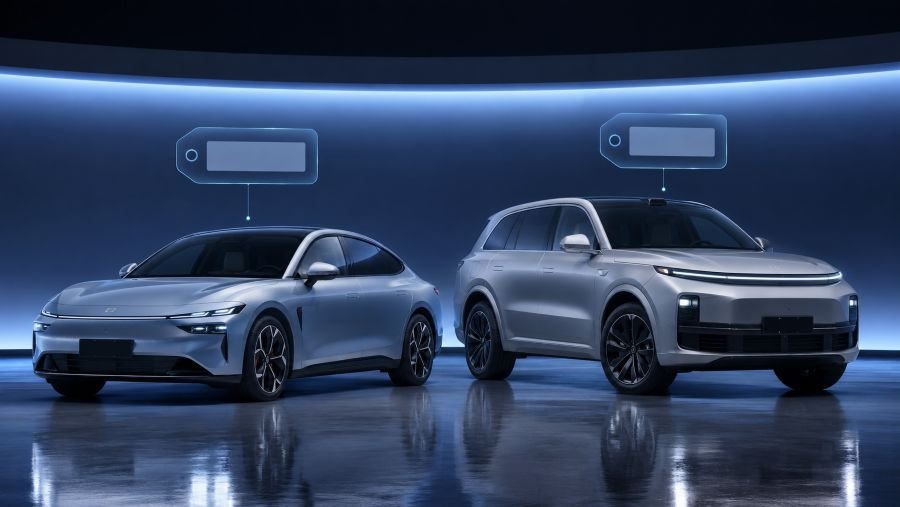
For years, the comfortable assumption in the West was that Chinese EVs are cheap only because Beijing writes enormous checks. It is a convenient explanation, but it is largely wrong. The most-cited independent study on the subject, from the New York–based research firm Rhodium Group, found that direct subsidies explain only a small fraction of the cost difference. The far more powerful forces are built into the way Chinese automakers design, manufacture, and ship their cars. To understand the price gap, you have to look under the hood of the business model, not just the policy debate.
Before we dig into the details, the short video below breaks down in under two minutes why Chinese EVs are cheaper than American EVs—a quick visual primer on the cost factors we explore throughout this guide, from battery chemistry to manufacturing scale.
With that overview in mind, let’s work through each driver of the price gap in detail—starting with the single biggest one that almost everyone underestimates.
The Real Reason Chinese EVs Cost Less (Beyond Subsidies)
When analysts broke down the numbers, the headline figure was eye-opening: BYD, the world’s largest EV maker, enjoys a per-vehicle cost advantage of roughly $4,700 over Tesla. Geely sits around $2,700 and the startup Leapmotor near $2,000. For BYD, that gap equals close to 15% of a Tesla Model 3’s sticker price. Crucially, subsidies accounted for only about 5% of BYD’s advantage. The remaining three-quarters or more came down to two structural pillars—deep vertical integration and dramatically lower overhead costs—with cheaper engineering talent adding even more.
This matters because it reframes the entire conversation. A subsidy can be matched or competed away. A manufacturing system that produces cars more efficiently at every stage is far harder for rivals to copy. That is exactly why Western automakers building cars inside China still struggle to match local prices, and why the cost gap has proven so durable rather than fleeting.
Two Low-Cost Upgrades That Protect an EV Bargain
Buying on value doesn’t stop at the showroom: a couple of inexpensive accessories help you hold on to the running-cost and resale advantages that make an affordable EV worth it in the first place. The two below suit any electric car, whichever brand you end up driving.
EVs are heavy, and correct tyre pressure directly protects the real-world range and efficiency that make a low-cost electric car so cheap to run. A rechargeable digital inflator with a preset auto-stop keeps pressures optimal, extends tyre life, and quickly pays for itself in saved energy.
Much of an affordable EV’s value lies in how well it holds up over time, and a quality microfiber towel and detailing set lets you clean paint, glass, and screens safely without swirl marks. It is an inexpensive way to keep the car looking newer for longer and protect its resale value.
Vertical Integration: Building Almost Everything In-House
The single biggest contributor to the Chinese cost advantage is vertical integration—the practice of making components in-house rather than buying them from outside suppliers who each add their own markup. BYD takes this further than almost any automaker on earth, producing close to 80% of its core components internally, roughly double the share that Tesla manufactures itself. Every component bought from a supplier carries a profit margin stacked on top; by making those parts itself, BYD captures that margin instead of paying it away.
The savings are concrete. On its Seal sedan, BYD is estimated to save around $2,369 per car in supplier markups compared with Tesla’s Model 3. Leapmotor, which produces about 60% of its components in-house, saves roughly $816 per unit of its B01 sedan against the same benchmark. The cumulative effect on the balance sheet is significant: BYD posted a gross profit margin of around 20% in 2025, edging out Tesla’s 18%, even though its base Seal sells for a fraction of the Model 3’s price in China. In other words, BYD makes a healthier margin while charging far less—a combination that should worry any competitor.
How BYD’s “Mine-to-Port” Model Works
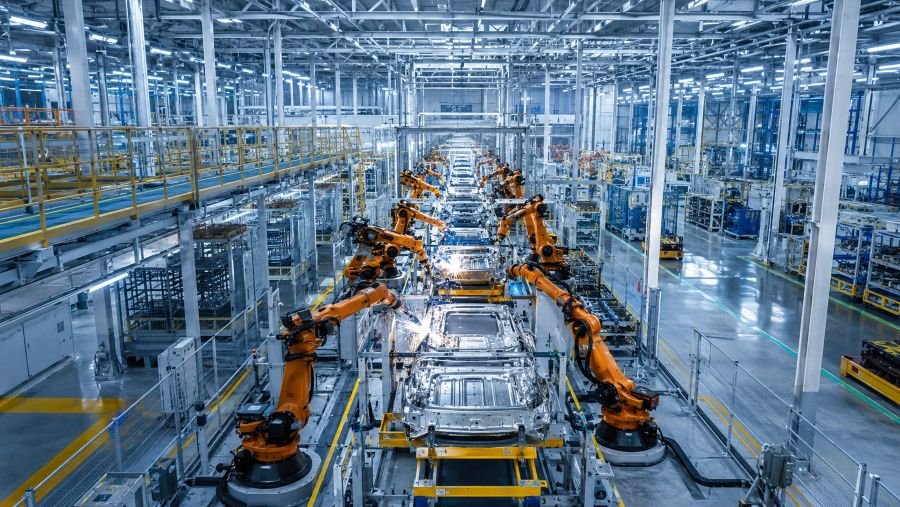
BYD has extended vertical integration into an almost end-to-end chain that the company describes as running from “mine to port.” Rather than depending on outside vendors and global shipping rates, it controls each link itself, which compounds the savings and shields the business from price spikes elsewhere in the supply chain:
- Raw materials: stakes in mining and processing of the lithium and other inputs that feed battery production.
- Cells and packs: in-house manufacturing of battery cells, the famous Blade battery packs, and the battery management systems that run them.
- Core hardware: motors, power electronics, and even semiconductors built internally rather than sourced from third parties.
- Final assembly: complete vehicles assembled on its own high-volume lines.
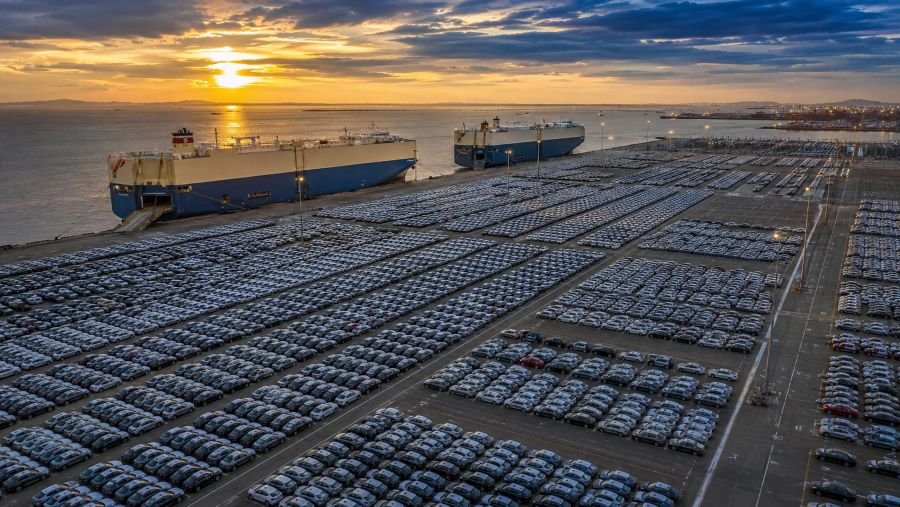
- Logistics: a growing fleet of company-owned car-carrier ships—starting with the BYD Explorer No. 1 launched in 2024—that move finished cars overseas without paying premium freight rates to outside carriers.
Few legacy automakers anywhere control this much of their own supply chain. Western brands spent decades outsourcing components to specialist suppliers, a model that lowered risk in the gasoline era but left them exposed when the cost of an EV shifted heavily toward the battery and electronics that Chinese rivals now build themselves.
The Battery Advantage: Why LFP Changes the Math
The battery is the most expensive single component in any electric car, so whoever wins on battery cost wins a huge share of the overall price battle. Here, Chinese manufacturers made a decisive strategic bet on lithium iron phosphate—LFP—chemistry, while many American and European EVs leaned on nickel- and cobalt-rich formulas prized for maximum range. That choice turned out to be a powerful cost lever.
LFP cells rely on iron and phosphate, materials that are abundant and relatively stable in price, instead of nickel and cobalt, which are scarce, volatile, and expensive. Independent teardown research has put the cost disadvantage of Tesla’s high-nickel 4680 cell at roughly $10 per kilowatt-hour compared with BYD’s Blade cell—a difference that adds up quickly across a battery pack measured in tens of kilowatt-hours. LFP also brings strong safety and longevity, with some Chinese LFP models showing annual battery degradation below 2%, among the lowest in the industry.
BYD’s Blade battery layers another efficiency on top: a cell-to-pack design that places long, thin cells directly into the pack and skips the traditional module stage entirely. That cuts material, weight, and assembly steps while improving how much of the pack volume is usable space. The depth of this engineering lead shows up in the patent record, where BYD holds well over a thousand battery-related patents to Tesla’s fewer than a hundred—a gap that reflects years of relentless, focused investment in cheaper, safer cells.
Economies of Scale in the World’s Largest EV Market
Cost advantages also flow from sheer volume. China is by far the world’s largest EV market, with electric vehicles now making up more than half of new car sales. That enormous home base lets manufacturers spread fixed costs—factories, tooling, research, and software—across millions of units, driving the cost per car steadily downward in a way that smaller-volume rivals simply cannot match.
The scoreboard tells the story. In 2025, BYD overtook Tesla as the world’s top EV seller, delivering roughly 2.26 million battery-electric vehicles to Tesla’s 1.64 million. Over the same period, Western automakers’ combined share of China’s EV market collapsed from about two-thirds in 2020 to roughly a third. Scale also accelerates development: Chinese firms are widely reported to bring new models to market in around half the time of legacy automakers, so they iterate faster, cut costs sooner, and respond to demand more nimbly. Volume, in short, is not just a sales metric—it is a cost weapon.
Lower Labor, Overhead, and Faster R&D
Underpinning all of this is a lower cost base across the board. Average manufacturing wages in China remain well below those in the United States and Europe, and engineering talent is both abundant and far cheaper to employ. That keeps both factory labor costs and research-and-development spending lower per vehicle, even as Chinese firms out-innovate many rivals—Ford’s chief executive has remarked that BYD files an average of around 52 patents a day.
Lean overhead is the other quiet advantage. Because BYD spreads its administrative and R&D budgets across so many vehicles, its overhead works out to a modest figure per car—estimated at roughly $930 per vehicle on administrative costs. Combine cheaper labor, lighter overhead, and rapid in-house engineering, and you get a structure that delivers feature-rich cars at prices Western automakers find genuinely difficult to reach. None of this requires a single subsidy to work.
Chinese EVs vs American EVs: A Price Reality Check
To see how wide the gap has grown, it helps to line up real models against the U.S. market. The figures below reflect approximate prices in each model’s home or main selling market and are meant to illustrate scale rather than serve as showroom quotes. Even so, the contrast with the average American new-car price is dramatic.
| Vehicle | Approx. Price | Context |
|---|---|---|
| Wuling Hongguang MiniEV | ~$6,560 | Budget city runabout, anchors the bottom of the Chinese price stack |
| BYD Seagull | ~$10,000 (China) / ~$25,000 (Europe) | Best-selling small hatchback; price roughly doubles once exported |
| BYD Dolphin | ~$23,000 (Europe) | Compact EV priced at roughly half a Tesla Model 3 |
| BYD Seal | ~$24,190 | Mid-size sedan, cut from about $30,198 in 2022 |
| Tesla Model 3 | ~$32,900+ | Closest Western rival; sticker barely moved over the same period |
| Average U.S. new car | ~$51,456 | For context—several Chinese EVs sit at a fifth of this figure |
💡 Pro Tip: The clearest sign of the gap is what happens to gas cars. In China, the average battery-electric vehicle now costs about $25,465—roughly 3% less than the average gasoline model. In the United States, EVs still carry a premium estimated at around $14,000 over comparable gas cars. Same technology, opposite price story.
So Why Can’t Americans Buy a Cheap Chinese EV?
If Chinese EVs are this affordable, the obvious question is why they are nowhere to be found in American showrooms. The answer is policy, not product. A tariff of roughly 100% on Chinese-built electric vehicles—first imposed in 2024 and retained since—effectively doubles their landed cost and prices them out of the U.S. market. The barrier exists precisely because, even with tariffs layered on top, many Chinese models would still undercut what Detroit and Tesla can offer.
Other markets have chosen differently. Canada moved to allow up to 49,000 Chinese-made EVs a year at a far lower 6.1% rate, and BYD has built a strong presence across Europe and Australia. The tension is escalating, too: BYD filed a legal challenge in the U.S. Court of International Trade in early 2026 arguing the tariff orders are invalid, while rivals such as Geely have signaled they are evaluating a U.S. entry. For now, though, no major Chinese brand has a confirmed affordable passenger-car launch on American soil.
⚠️ Important Note: Tariffs don’t just block sales—they flip the value equation. Studies show that without tariffs, a model like the BYD Seal would have a total cost of ownership roughly 19–20% below a Tesla Model 3. With the full tariff applied, that advantage reverses, leaving the same car significantly more expensive. The low Chinese price is real, but it only reaches buyers in markets that let these cars in.
What the Cost Gap Means for the Road Ahead
The pressure is already reshaping strategy in Detroit. Ford’s chief executive has publicly called BYD best-in-class on cost, supply chain, and manufacturing, and has begun reorienting the company around the “China cost curve” rather than around Tesla. Both Ford and General Motors have trimmed near-term EV production targets in North America, and the traditional Big Three’s global market share has slid from above 21% in 2019 to under 16% in 2025.
Will the gap ever close? It is likely to narrow somewhat as Chinese makers expand abroad and absorb the higher costs of overseas factories, sales networks, and tariffs. China has also moved to rein in destructive domestic price wars, which had pushed some suppliers and weaker brands to the brink. But the structural core—vertical integration, scale, cheap batteries, and lean overhead—will not vanish quickly. Matching it would require Western automakers to rebuild their supply chains from the ground up, a slow and politically fraught undertaking. For the foreseeable future, the cost gap is less a temporary glitch than a feature of how the two industries are built.
FAQ: Why Chinese EVs Are Cheaper
Are Chinese EVs cheaper only because of government subsidies?
No. Independent analysis estimates subsidies account for only around 5% of BYD’s cost advantage over Tesla. The far bigger drivers are vertical integration, manufacturing scale, lower overhead, and cheaper R&D, which together make up the large majority of the gap. Subsidies help, but they are not the headline reason.
Does a lower price mean Chinese EVs are lower quality?
Not necessarily. Many Chinese EVs ship with long-range LFP batteries, advanced driver-assistance systems, and well-finished interiors at mid-market prices. The low cost comes mainly from manufacturing efficiency and in-house production rather than from cutting corners on features or safety.
Why are LFP batteries cheaper than the batteries in most American EVs?
LFP (lithium iron phosphate) batteries use abundant iron and phosphate instead of expensive nickel and cobalt, making them cheaper per kilowatt-hour while remaining safe and long-lasting. Designs like BYD’s cell-to-pack Blade battery cut further cost by removing assembly steps and saving space.
Will affordable Chinese EVs ever be sold in the United States?
Not at low prices for now. A tariff of roughly 100% on Chinese-built EVs effectively blocks direct sales. Unless that policy changes—through trade negotiations or legal challenges now underway—the cheapest Chinese EVs will remain available mainly in China, Europe, Australia, and other open markets.
The Bottom Line on the EV Price Gap
Chinese EVs are cheaper than American EVs because of a manufacturing system built for low cost at every stage, not because of a single magic subsidy. Vertical integration captures supplier margins, LFP batteries slash the most expensive component, the world’s largest market delivers economies of scale, and lean overhead with cheap engineering talent keeps fixed costs low. Tariffs are the only thing currently keeping that price advantage out of American driveways—and as the global market shifts, the gap is shaping the future of the entire industry. The story of cheap Chinese EVs is, in the end, a story about how cars are made.