BYD Dolphin vs Chevy Bolt: Budget EVs America Is Missing
The electric vehicle market is undergoing a seismic shift, and nowhere is this more evident than in the budget segment. While American drivers have grown accustomed to premium-priced EVs, a quiet revolution is brewing in international markets. Two vehicles epitomize this transformation: the BYD Dolphin and the Chevrolet Bolt. One dominates global markets with aggressive pricing and proven reliability; the other represents Detroit’s commitment to affordable electrification. This comprehensive comparison reveals why the automotive landscape looks vastly different on either side of the tariff wall.
Whether you’re exploring what Americans are missing or simply curious about the state of budget EVs worldwide, this analysis breaks down performance, price, practicality, and the geopolitical forces shaping the future of affordable electric mobility.
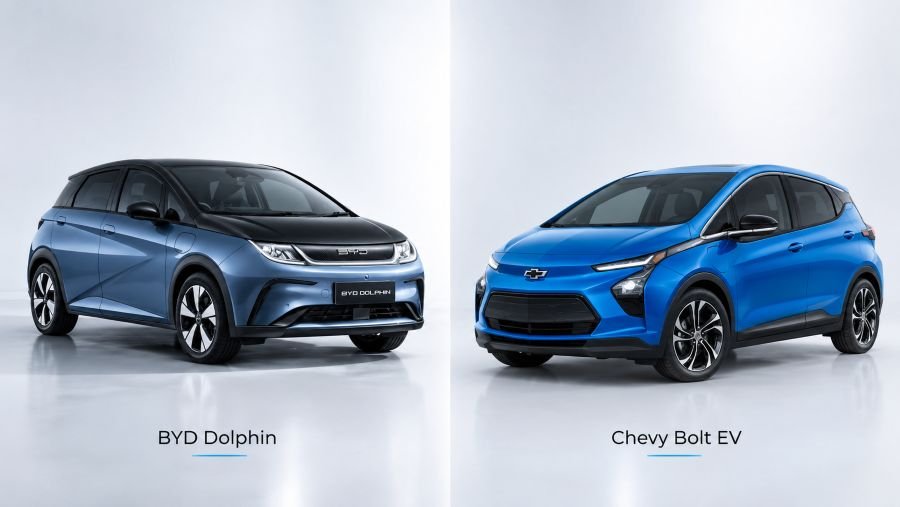
The automotive industry stands at a crossroads where affordability and innovation collide. The BYD Dolphin represents one vision: an ultra-affordable, feature-rich compact EV that has captivated millions worldwide. The Chevy Bolt, meanwhile, represents American pragmatism—a proven, accessible electric vehicle that prioritizes range and practicality. Understanding the differences between these two vehicles illuminates broader trends in global automotive markets and the choices available (or unavailable) to different consumers around the world.
The Price Divide: Why Cost Matters Most
When discussing budget electric vehicles, pricing is the opening act, and in this comparison, the gap is staggering. The BYD Dolphin demonstrates revolutionary pricing strategy, starting at approximately 9,500 USD in export markets and scaling up to around 13,000 USD for premium variants. The Chevy Bolt EV, by contrast, enters the market at 26,500 USD, with the EUV (utility variant) commanding even higher prices.
This 17,000 to 20,000 USD price difference isn’t merely a statistical curiosity—it fundamentally reshapes what “affordable EV” means across different markets. In China, India, and Southeast Asia, the Dolphin’s entry-level pricing has democratized electric vehicle ownership. For middle-class buyers in these regions, the Dolphin represents liberation from fossil fuels without financial catastrophe. The Bolt, conversely, remains aspirational for many American households, pricing it above the median used car purchase in several states.
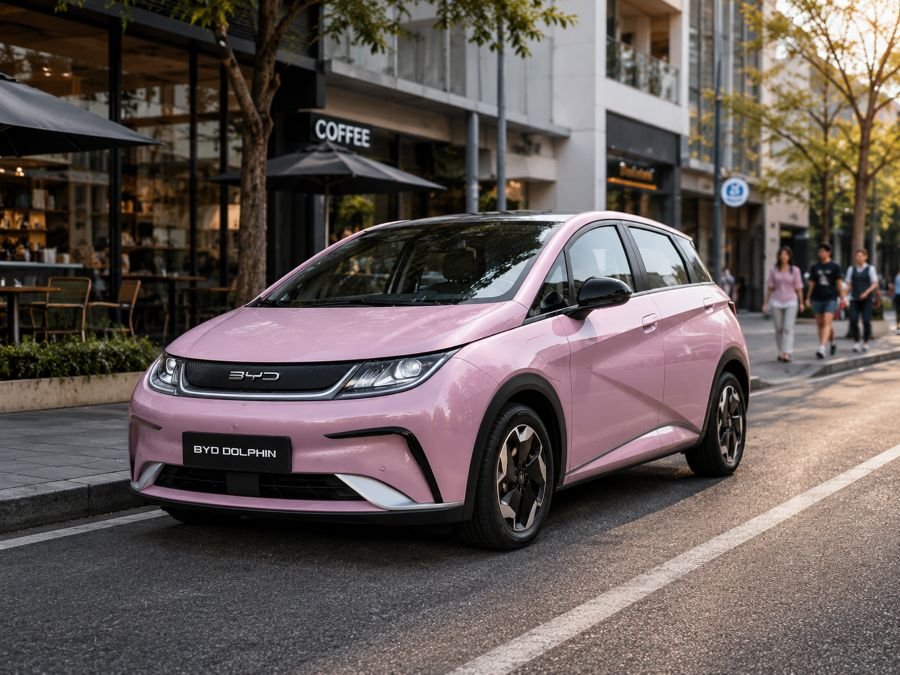
Several factors explain this dramatic price differential. BYD’s vertical integration—manufacturing everything from batteries to semiconductors in-house—eliminates supply chain markups that burden Western manufacturers. The Chinese company’s massive production scale (selling over 1.5 million vehicles annually) distributes fixed costs across a larger customer base. Additionally, labor costs in manufacturing facilities across Asia remain significantly lower than American operations. Import tariffs, regulatory compliance expenses, and Western market expectations for features and warranties further inflate Bolt pricing.
Total Cost of Ownership: The Longer View
While purchase price favors the Dolphin overwhelmingly, total cost of ownership presents a more nuanced picture. The Chevy Bolt benefits from established American EV charging infrastructure, lower electricity costs in many US regions, and readily available service. The Dolphin’s ownership experience varies dramatically depending on geographic location—exceptional in China with abundant fast-charging networks, considerably more complicated elsewhere due to sparse service centers and limited spare parts availability.
Range and Battery Performance: Practical Considerations
Range anxiety remains the primary concern for EV buyers transitioning from internal combustion vehicles. Both the Dolphin and Bolt address this concern, though with different approaches and capabilities.
| Specification | BYD Dolphin | Chevy Bolt EV |
|---|---|---|
| Starting MSRP | $9,500 (export) | $26,500 |
| Maximum Range | 252 miles (CLTC) | 259 miles (EPA) |
| Battery Capacity | 44.9 kWh / 55.4 kWh | 66 kWh (EV) / 65 kWh (EUV) |
| 0-60 Acceleration | 7.9 seconds | 6.2 seconds |
| Fast Charging Time (10-80%) | 30 minutes (DC) | 35 minutes (DC) |
| Cargo Space | 385 liters (13.6 cu ft) | 408 liters (14.4 cu ft) |
| Length | 4.42m (14.5 ft) | 4.20m (13.8 ft) |
| Target Market | Urban commuters globally | American middle-class families |
The Chevy Bolt delivers superior range with EPA-certified 259 miles per charge—a significant advantage for Americans considering road trips or weekend getaways. The Dolphin’s maximum range of 252 miles (though using the more optimistic CLTC testing standard, equating to approximately 200 miles under real-world conditions) suits daily commuting and urban driving perfectly, but international variants trading performance for affordability offer shorter ranges starting around 162 miles.
Battery technology showcases both vehicles’ engineering priorities. BYD’s battery chemistry leverages lithium iron phosphate (LFP), offering superior thermal stability, longevity (8-year degradation estimates suggest 80%+ capacity retention), and safety profiles. The Dolphin’s batteries excel in warm climates, maintaining performance in tropical and subtropical regions where NCA/NCM chemistries falter. The Chevy Bolt employs NCA chemistry with advanced thermal management, delivering premium performance in diverse climates but with slightly higher degradation rates and elevated raw material costs.
Performance and Driving Dynamics: Daily Experience
Beyond specifications lies the qualitative experience of actual driving. The Chevy Bolt accelerates from zero to sixty in 6.2 seconds, combining brisk response with American muscle car heritage. Its sport-tuned suspension and responsive steering appeal to drivers prioritizing engagement over economy. Regenerative braking systems capture energy efficiently, and the Bolt’s weight distribution provides planted confidence in spirited driving.
The BYD Dolphin prioritizes efficiency and urban maneuverability. Its 7.9-second acceleration feels adequate rather than thrilling, but its lightweight construction (roughly 600 pounds lighter than the Bolt) delivers surprising nimbleness. The Dolphin excels in congested city environments, darting through traffic with the precision expected from a purpose-built compact. Its turning radius of just 4.6 meters (15 feet) transforms parallel parking from ordeal to trivial task. For speed enthusiasts, the Bolt wins decisively. For urban dwellers craving efficiency and agility, the Dolphin prevails.
💡 Pro Tip: If you prioritize range, fast-charging capability, and engaging driving dynamics, the Chevy Bolt delivers. For urban living, daily commuting under 150 miles, and budget optimization, the BYD Dolphin’s engineering is arguably superior despite lower performance metrics.
Interior Design and Comfort: Where Classes Diverge
Step inside each vehicle and immediate differences surface. The Chevy Bolt presents an interior designed for American expectations—upscale materials, intuitive controls, and spacious seating for five adults. The cabin features soft-touch plastics, a user-friendly 10.2-inch touchscreen, and climate control zones. Apple CarPlay and Android Auto integration reflect modern connectivity standards. The driving position feels commanding, and the comprehensive instrument cluster displays crucial EV metrics clearly.
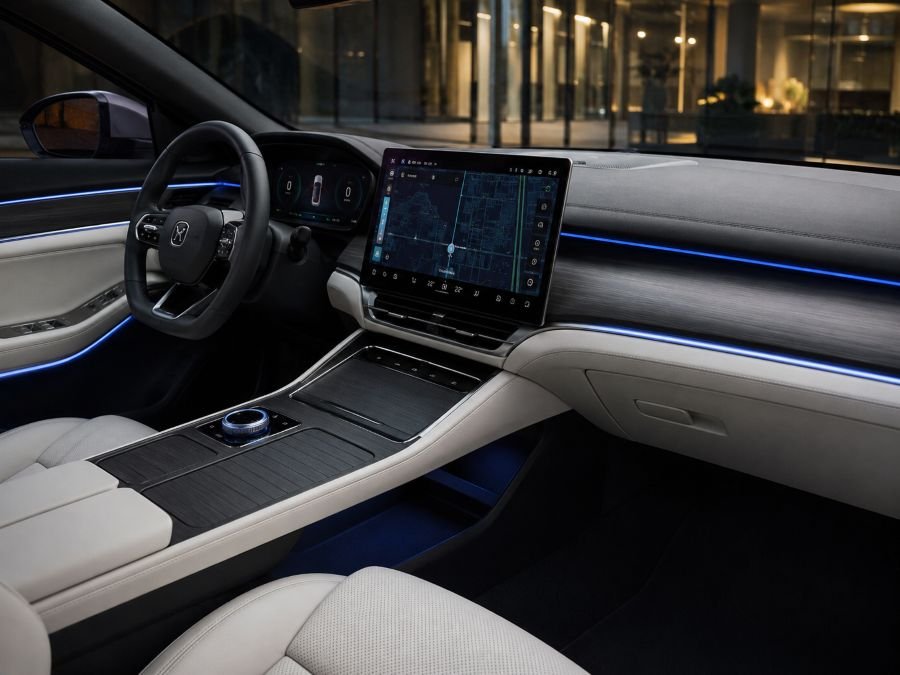
The BYD Dolphin’s interior exemplifies intelligent minimalism. Rather than pursuing luxury materials, it optimizes functionality. The 10.25-inch central display integrates BYD’s Dimond OS operating system, offering genuine smart vehicle capabilities including IoT integration and predictive maintenance alerts. Comfort features like heated seats, panoramic sunroofs (on higher trims), and ergonomic seating accommodate longer journeys. However, material quality feels more budget-oriented, with harder plastics and simpler assembly evident upon close inspection. Rear legroom differs too—the Bolt accommodates adults more generously, while the Dolphin suits compact body frames better.
Safety features, however, reveal surprising convergence. Both vehicles offer multiple airbags, comprehensive stability control, and advanced collision avoidance systems. The Dolphin includes blind-spot monitoring, lane-keeping assist, and autonomous emergency braking—technologies traditionally associated with premium vehicles. The Bolt provides parallel-parking assist, backup camera, and similar safety suites. Neither vehicle exhibits significant safety disadvantages relative to the other.
Charging Infrastructure and Practicality
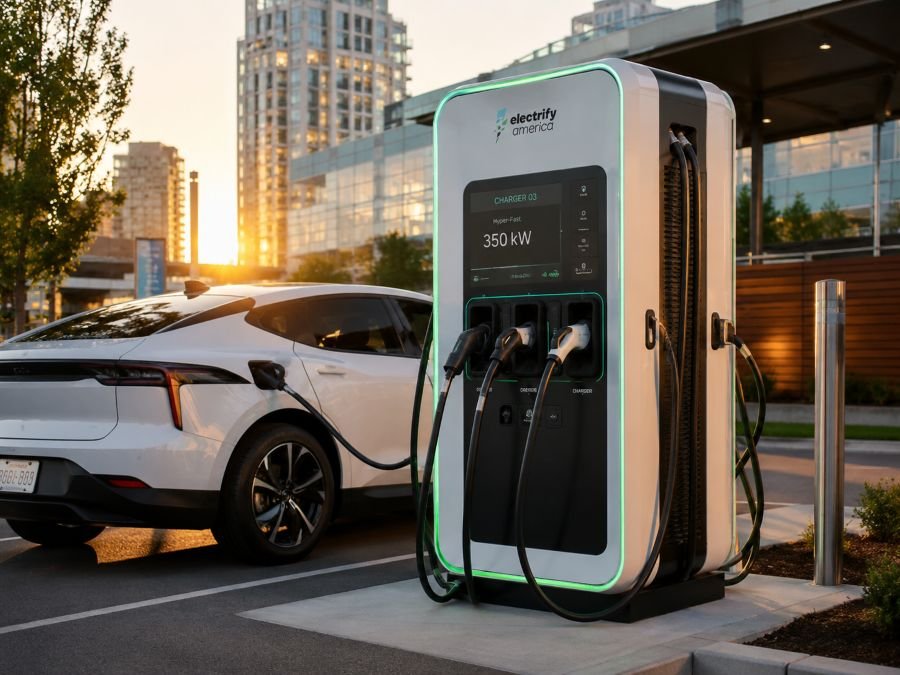
Vehicle specifications matter little without compatible charging infrastructure. This consideration fundamentally shapes real-world practicality. The Chevy Bolt benefits from America’s expanding charging network—over 50,000 public charging ports, including thousands of rapid DC chargers. ChargePoint, Tesla Superchargers (via adapters), and Electrify America networks cover major highways and urban centers. Home charging with a standard 240V outlet (Level 2) requires approximately 9 hours for a full charge, aligning perfectly with overnight charging habits.
The BYD Dolphin’s charging experience varies spectacularly by geography. In China, proprietary BYD charging networks and compatibility with national fast-charging standards make ownership seamless. Charging from empty to eighty percent takes approximately thirty minutes via DC fast charging. In European markets, the Dolphin adapts to regional charging standards, though proprietary elements occasionally complicate matters. Outside established BYD markets, owners face significant challenges—limited charging compatibility, sparse service networks, and technical support complications. This geographic variance makes charging infrastructure analysis necessarily location-specific.
Technology and Software: The Digital Divide
Modern vehicles are fundamentally computers on wheels, and here both vehicles embrace digital-first design. The Chevy Bolt’s OnStar system (included for ten years on new purchases) offers emergency assistance, remote unlock, and roadside service. The touchscreen integrates seamlessly with smartphone platforms, and software updates improve vehicle functionality over time. However, critics note Bolt’s technology feels somewhat dated compared to Tesla’s rapid iteration cycles.
The BYD Dolphin showcases China’s technological sophistication. The Dimond OS operating system delivers genuine smart-home integration—users control home lighting, HVAC systems, and security cameras from the vehicle. 5G connectivity enables over-the-air updates, voice recognition understands natural language in multiple Chinese dialects, and AI-powered predictive maintenance alerts owners to potential issues before failures occur. The technology integration feels more advanced, though Western consumers might find Chinese-language optimization limiting.
Environmental Impact and Sustainability
Electric vehicle benefits fundamentally depend on electricity generation sources. The Chevy Bolt in regions powered by renewable energy (California, Pacific Northwest) delivers genuine emissions reductions over its lifespan. In coal-heavy grids (parts of the Midwest and South), benefits diminish but remain positive. Battery production environmental costs are substantial initially, though multi-year ownership quickly recovers these investments.
The BYD Dolphin’s sustainability credentials are complicated. While generating zero tailpipe emissions, production environmental costs are significant. However, BYD’s advancement in battery recycling—recovering lithium, cobalt, and nickel from spent batteries—mitigates production impacts. The company’s massive scale enables efficient manufacturing, and the Dolphin’s lightweight design reduces battery material requirements compared to heavier competitors. Additionally, the dramatically lower sticker price encourages broader EV adoption, accelerating overall emissions reductions across developing markets transitioning from motorcycles and scooters to EVs.
⚠️ Important Note: Both vehicles encounter import restrictions, tariffs, and regulatory obstacles depending on destination markets. The Dolphin faces 25% US tariffs and remains unavailable domestically. The Bolt meets regulatory standards everywhere but costs reflect American manufacturing and regulatory burdens. Future policy decisions around EVs, trade, and manufacturing will reshape availability and pricing dramatically.
Market Positioning and Target Demographics
The Chevy Bolt targets American middle-class buyers aged 35-65 with established credit, homeownership (enabling home charging installation), and modest environmental consciousness. These customers value American brand heritage, established warranty/service networks, and incremental technology improvements. They can absorb $26,500+ vehicle costs and embrace longer-term financing.
The BYD Dolphin targets global buyers aged 25-45 with different priorities. In developing markets, the Dolphin represents accessible modernization—affordable electrification without financial hardship. In developed markets outside America (Europe, Australia), the Dolphin appeals to practical buyers valuing efficiency and advanced technology over brand prestige or domestic manufacturing. Price-sensitive professionals, small business owners, and young families comprise the core demographic.
Resale Value and Long-term Investment
The Chevy Bolt’s established presence in American used car markets provides relatively transparent resale value trajectories. Year-old Bolts retain approximately 70-75% of purchase price—respectable for budget EVs but declining to 50-60% by year five as battery degradation concerns emerge. American manufacturer brand recognition supports used market demand.
The Dolphin’s resale value profile depends entirely on market location. In China, strong demand and plentiful used inventory support stable valuations. International markets show nascent used-car markets with unpredictable pricing, limited demand, and uncertain battery warranty interpretations affecting buyer confidence. This uncertainty makes long-term investment analysis premature for non-Chinese markets.
FAQ: BYD Dolphin and Budget EV Decisions
What is the price difference between BYD Dolphin and Chevy Bolt?
The BYD Dolphin starts at approximately $9,500 USD (in export markets), while the Chevy Bolt EV begins around $26,500. This $17,000 price difference makes the Dolphin significantly more affordable for budget-conscious buyers, though availability in the US remains limited due to tariffs and regulatory restrictions.
Which car has better range: BYD Dolphin or Chevy Bolt?
The Chevy Bolt EV offers superior EPA-certified range with up to 259 miles on a single charge. The BYD Dolphin provides 211-252 miles depending on the variant (using CLTC standards that are more optimistic than EPA testing). Under real-world conditions, the Bolt’s advantage narrows but remains meaningful for long-distance travel.
Can I buy a BYD Dolphin in the United States?
Currently, the BYD Dolphin is not officially available in the US market due to 25% tariffs on Chinese vehicles and regulatory certification barriers. American consumers remain limited to the Chevy Bolt and other domestically available or approved EVs, though this situation may evolve as trade policies change.
Is the BYD Dolphin reliable compared to the Chevy Bolt?
Both vehicles have strong reliability records in their respective markets. The Chevy Bolt benefits from established GM service networks in the US, while the BYD Dolphin has proven dependability across millions of sales globally, backed by BYD’s 28+ years of battery manufacturing expertise and rigorous quality testing.
Which car is better for city driving?
The BYD Dolphin excels in urban environments with its compact 4.42-meter (14.5-foot) length, tight 4.6-meter turning radius, and lightweight agility. The Chevy Bolt is slightly smaller and still highly maneuverable. Both offer excellent acceleration and responsive steering ideal for city navigation and parking.
Conclusion: Which Budget EV Deserves Your Consideration?
The BYD Dolphin versus Chevy Bolt comparison ultimately reflects broader geopolitical and economic realities rather than simple mechanical superiority. The Dolphin represents what’s possible when manufacturers prioritize efficiency, affordability, and technology innovation simultaneously—producing capable vehicles at prices that democratize EV ownership globally. Its vertical integration, manufacturing scale, and strategic vision have created the world’s most successful affordable EV platform by sales volume.
The Chevy Bolt represents American automotive tradition adapted for electrification—reliable, service-accessible, and optimized for domestic infrastructure and consumer expectations. Its superior range, established warranty networks, and American brand familiarity appeal powerfully to domestic buyers, and the vehicle deserves credit for making EVs financially accessible to millions of middle-class Americans.
For American consumers, the choice remains straightforward: the Chevy Bolt represents today’s practical option. The Dolphin remains aspirational for now, though increasing trade discussions and potential regulatory changes might eventually alter this landscape. For international buyers, the Dolphin’s combination of affordability, technology, and proven global market success makes it increasingly compelling—a vehicle that challenges long-held assumptions about what budget EVs should deliver.
The real story isn’t which vehicle is “better”—both excel in their respective contexts. Rather, it’s that Americans are missing authentic competition in the budget EV segment. Whether that changes depends on trade policy, regulatory decisions, and whether American manufacturers can match BYD’s pricing without sacrificing profitability. Until then, the Chevy Bolt remains America’s best accessible EV option, even as the world gravitates toward alternatives that prove EVs can be genuinely affordable.