BYD Sealion 7 & Sealion 08 Review: Flagship SUV Performance & Features
BYD’s Sealion line has quietly become one of the most important families in the global electric SUV race, and two names now anchor it from opposite ends. The BYD Sealion 7 is the sharp-suited mid-size contender taking direct aim at the Tesla Model Y, while the brand-new BYD Sealion 08 arrives as a genuine full-size flagship with three rows of seating and headline-grabbing range figures.
In this detailed review, we break down the powertrains, battery technology, charging speeds, cabin space and standout features of both models, then help you decide which Sealion deserves a place on your shortlist. Whether you want a family hauler or a premium electric statement piece, this comparison covers the numbers that matter.
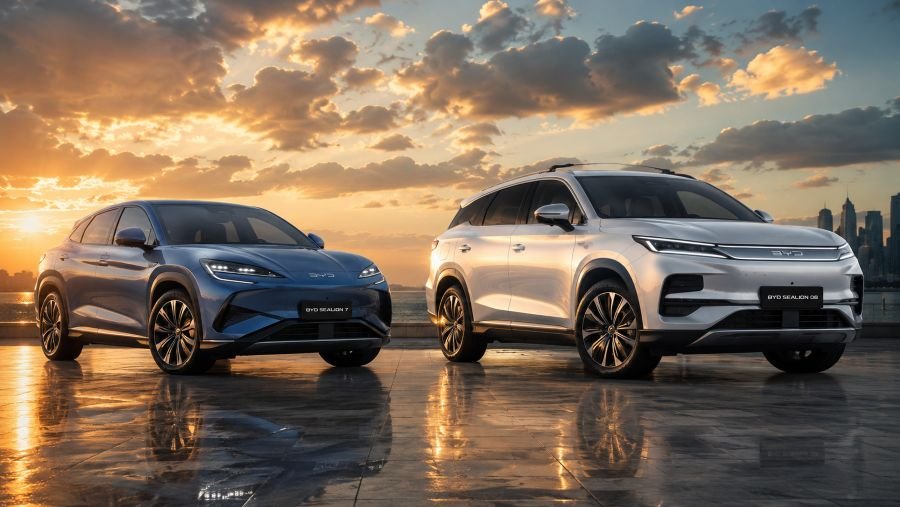
Before we dig into the numbers, watch our full video walkthrough below, where we line up the BYD Sealion 7 and the Sealion 08 side by side and explain exactly what separates this mid-size electric SUV from BYD’s new full-size flagship.
BYD has expanded faster than almost any carmaker in recent memory, and its Ocean series of vehicles now stretches from compact hatchbacks all the way up to limousine-length SUVs. Within that lineup, the Sealion badge is reserved for the brand’s crossover and SUV models, and the gap between the smallest and largest members of the family has grown wider with every launch. Understanding where the Sealion 7 and Sealion 08 sit is the first step to choosing the right one.
Two Sealions, One Flagship Ambition
It helps to think of these two cars as different chapters in the same story rather than direct rivals. The Sealion 7 has been on sale across Europe, Australia and Southeast Asia for some time now and represents BYD’s mainstream attack on the booming mid-size electric SUV segment. To the end of November, more than 10,800 Sealion 7s were delivered to Australian homes, roughly half the volume of the Tesla Model Y over the same window, despite the BYD only launching locally in early 2025. That is a remarkable result for a newcomer, and it explains why BYD felt confident enough to aim even higher.
The Sealion 08, by contrast, is a fresh arrival. BYD unveiled the Sealion 08 with more than 640 horsepower and up to 560 miles of range, confirming plans to take the full-size electric SUV to the European market. Where the Sealion 7 plays in the same arena as the Model Y, the Sealion 08 squares up against far larger and more expensive machinery. Its proportions place it in the same segment as the BMW X7 or the Land Rover Defender 130. In other words, BYD is no longer content to undercut mainstream EVs; it now wants a slice of the premium full-size market too.
BYD Sealion 7: The Electric Mid-Size Contender
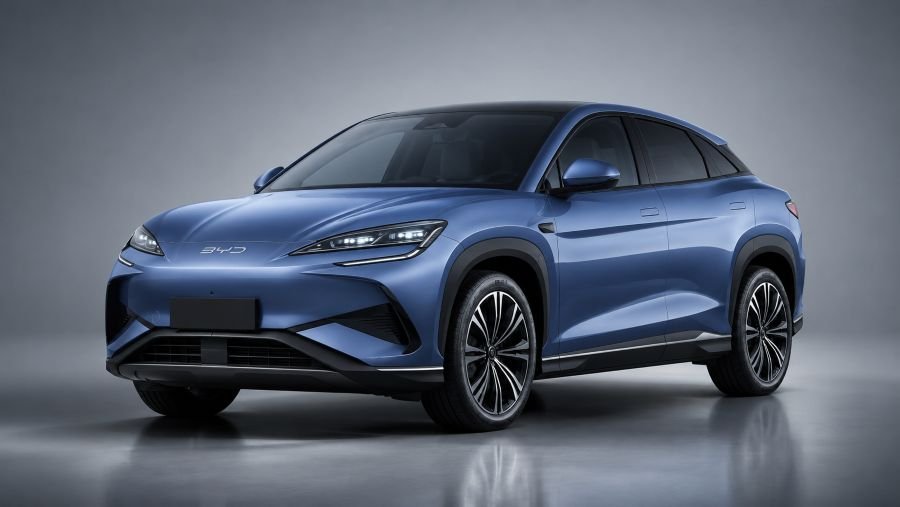
The Sealion 7 is the model most international buyers will encounter first, and it is built to a clear brief: deliver Tesla Model Y space and pace at a sharper price. Stretching a little over 4.8 metres in length, it is a true mid-size SUV with a coupe-influenced roofline that gives it a more athletic stance than many rivals. It is slightly longer and wider than the Tesla Model Y, although not quite as tall, so side by side the differences are subtle. Crucially, despite the number in its name, this is strictly a five-seater rather than a seven-seat model.
Powertrain and Performance
BYD keeps the powertrain choices simple but effective. There are three versions of the Sealion 7, with power outputs ranging from 313 hp to 530 hp depending on whether you choose the rear-wheel-drive model or the dual-motor all-wheel-drive flagship. Entry and mid-range cars use a single rear motor that is smooth and more than brisk enough for daily driving, while the range-topping Performance variant adds a second motor up front. In Performance trim the Sealion 7 produces 390 kW and 690 Nm of torque through an intelligent all-wheel-drive system, allowing a 0 to 100 km/h sprint of just 4.5 seconds; the single-motor Premium still manages 230 kW and a respectable 6.7 second dash.
That straight-line pace is genuinely impressive for the money, although BYD has never positioned the Sealion 7 as a driver’s car in the traditional sense. Reviewers describe it as luxurious and spacious inside, packed with technology, and offering a well-sorted if not especially exciting driving experience. If you prioritise comfort, refinement and effortless acceleration over outright agility, the Sealion 7 delivers exactly the kind of relaxed, easygoing character that suits family motoring.
Battery, Range and Charging
Underpinning every Sealion 7 is BYD’s signature Blade battery, which uses rugged lithium-iron-phosphate (LFP) chemistry prized for its longevity and thermal stability. There is a choice of two packs: an 82.5 kWh battery for the rear-drive and standard all-wheel-drive models, and a larger 91.3 kWh battery reserved for the most powerful versions. Official figures are competitive on paper. The Excellence model with the biggest battery claims up to 312 miles of range, entry models manage around 300 miles, and the mid-spec Design version sits at 283 miles.
Charging is where the Sealion 7 quietly shines. Maximum charge speeds reach 150 kW on the smaller battery and 230 kW on the larger pack, trimming a 10 to 80 percent DC top-up to roughly 32 and 24 minutes respectively. BYD has engineered the LFP pack to sustain high power deep into the charge event, averaging around 170 kW on the Excellence, and it pairs that with one of the most advanced heat pumps around, fitted as standard, so winter range should hold up reasonably well. Every version also offers 11 kW AC charging and standard Vehicle-to-Load capability, letting you run appliances or camping gear directly from the car’s battery.
💡 Pro Tip: If you regularly road-trip, the Excellence trim’s 91.3 kWh battery is worth the premium not just for the extra range, but for the meaningfully faster 230 kW charging. Sustained charge speed matters far more on long journeys than a few extra miles of WLTP range on paper.
BYD Sealion 08: The Full-Size Flagship
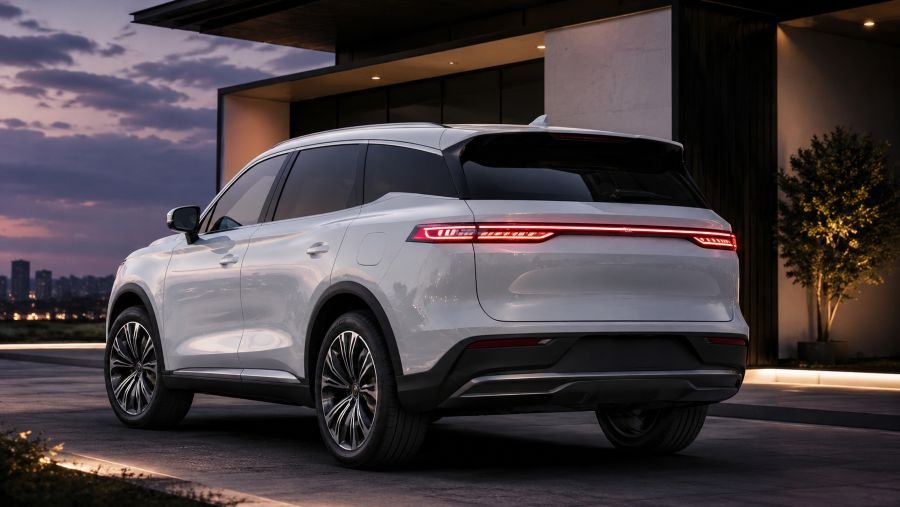
If the Sealion 7 is about value and efficiency, the Sealion 08 is about presence and ambition. Revealed at the Beijing Auto Show in April 2026, it is BYD’s new range-topping SUV and the largest member of the Ocean series to date. The styling leans into a simplified, modern design language with split headlights, wave-shaped daytime running lights, flush door handles and an enormous full-width rear light bar. This is a car designed to be noticed in a hotel forecourt, not just a sensible school-run machine.
Dimensions, Seating and Cabin
The numbers immediately set the Sealion 08 apart. It measures 5,115 mm in length, 1,999 mm in width and 1,800 mm in height, riding on a generous 3,030 mm wheelbase, and is offered in both five- and seven-seat layouts. To put that footprint in context, it is 100 mm longer than a Toyota Land Cruiser 300 Series and only 92 mm shorter than a Mercedes-Benz GLS, making it unambiguously a large flagship SUV. BYD has clearly studied how three-row SUVs are actually used. Third-row passengers receive dedicated attention, with the D-pillar and roof line shaped specifically to improve headroom and natural light for the rearmost row, learning from feedback on previous BYD products.
Inside, the cabin is pitched well above the Sealion 7. Connectivity is extensive, with multiple USB-C ports and wireless charging pads spread throughout, a rear-seat entertainment display expected on higher trims, and voice control handling most functions so the driver can keep their hands on the wheel. Buyers stepping up from a mainstream three-row SUV will find the materials, screen real estate and seating flexibility a clear notch more premium.
Powertrain, Battery and Technology
The Sealion 08 arrives with a deliberately broad powertrain strategy. BYD offers it in both pure electric and plug-in hybrid forms, using its proven DM-i hybrid system for the latter, a dual-option approach that suits buyers who want a full EV as well as those in regions where charging remains limited. The fully electric version is the headline act. Its dual-motor all-wheel-drive system delivers 480 kW, equivalent to 643 horsepower, allowing the five-metre-plus SUV to accelerate from 0 to 100 km/h in the five-second range. Range claims are equally bold. BYD quotes up to 900 km on a single charge under the CLTC testing standard, positioning the Sealion 08 as a direct answer to range anxiety.
For plug-in hybrid buyers, the technology is just as current. The PHEV uses BYD’s fifth-generation DM system with a 1.5-litre turbocharged engine producing 115 kW, in single- and dual-motor variants, and can achieve up to 400 km of CLTC electric-only range. The hardware list is genuinely flagship-grade. The Sealion 08 adopts BYD’s second-generation Blade Battery, CTB battery-body integration, rear-wheel steering, DiSus-A dual-chamber air suspension with road-preview capability, and roof-mounted lidar for the God’s Eye 5.0 driver-assistance system. That is a suite of features normally reserved for cars costing two or three times as much.
Sealion 7 vs Sealion 08: Specifications Compared
To make the differences crystal clear, the table below lines up the headline figures for both flagships. Remember that the Sealion 7 is a settled, on-sale product with confirmed WLTP figures, whereas several Sealion 08 numbers are based on the more generous CLTC cycle used in China and early manufacturer claims.
| Specification | BYD Sealion 7 | BYD Sealion 08 |
|---|---|---|
| Segment | Mid-size electric SUV | Full-size flagship SUV |
| Length | ~4,830 mm | 5,115 mm |
| Seating | 5 seats | 5 / 6 / 7 seats |
| Powertrain | Fully electric (BEV) | BEV and PHEV (DM) |
| Battery | 82.5 / 91.3 kWh Blade LFP | 2nd-gen Blade LFP |
| Max power | Up to 390 kW (530 hp) | Up to 480 kW (643 hp) BEV |
| 0–100 km/h | 4.5 s (Performance) | ~5 s (BEV) |
| Range | 283–312 mi (WLTP) | Up to 900 km (CLTC) |
| DC charging | Up to 230 kW | Flagship-grade fast charge |
| Key tech | V2L, heat pump, 15.6″ screen | Air suspension, lidar, rear steer |
⚠️ Important Note: Manufacturer range figures use different test cycles in different markets. The Sealion 7’s 283–312 mile claims follow the stricter WLTP standard, while the Sealion 08’s 900 km headline uses the more lenient CLTC cycle. Real-world driving, cold weather and motorway speeds will reduce both figures noticeably, so treat the numbers as a comparison guide rather than a guarantee.
Which BYD Sealion Should You Choose?
Choosing between these two ultimately comes down to how much car you actually need. For the majority of buyers, the Sealion 7 will be the more sensible pick. It offers genuine mid-size SUV space, strong performance, fast charging and a tempting price, all wrapped in a package that has already proven itself in showrooms worldwide. If your household runs to two adults and a couple of children, and you want a polished electric SUV without stepping into luxury-car money, the Sealion 7 is hard to argue against.
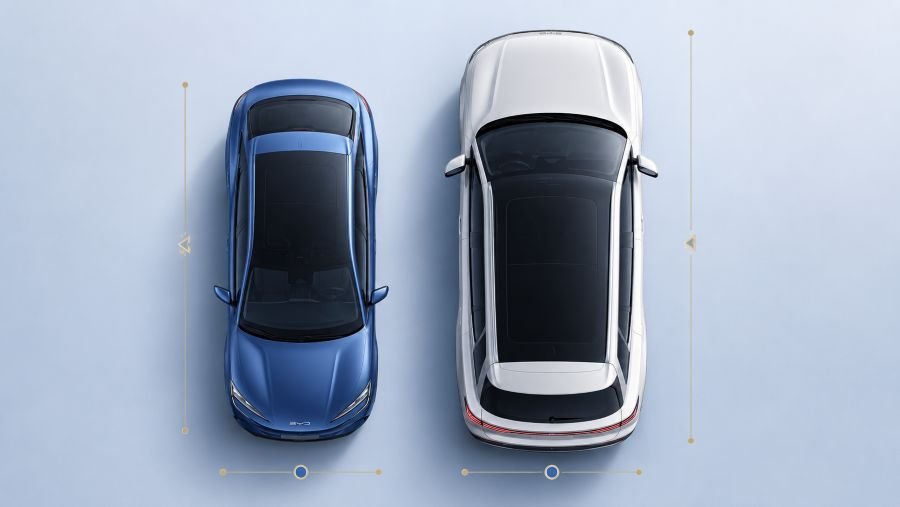
The Sealion 08, on the other hand, is for buyers who need more. If you regularly carry six or seven people, want the reassurance of a plug-in hybrid for long trips, or simply desire the road presence and equipment of a premium full-size SUV, the flagship makes a compelling case. Its air suspension, rear-wheel steering and advanced driver-assistance hardware push it into territory that established luxury brands have dominated for years. The trade-off is size; at over five metres long it demands more space to park and manoeuvre than the nimble Sealion 7.
Both cars showcase how quickly BYD has matured as an engineering force. The Sealion 7 proves the brand can build a class-competitive mainstream EV, while the Sealion 08 demonstrates real ambition to compete with established premium players. Together they bracket one of the most complete SUV ranges any electric brand currently offers, and they signal that BYD’s upward march is far from over.
FAQ: BYD Sealion 7 and Sealion 08
What is the difference between the BYD Sealion 7 and the Sealion 08?
The Sealion 7 is a mid-size, five-seat electric SUV that rivals the Tesla Model Y, while the Sealion 08 is a larger full-size flagship measuring over five metres long, offering five-, six- or seven-seat layouts across three rows and available in both fully electric and plug-in hybrid forms.
How much range does the BYD Sealion 7 offer?
The Sealion 7 uses an 82.5 kWh battery on rear-wheel-drive versions and a 91.3 kWh battery on the top Excellence trim, delivering a WLTP range of roughly 283 to 312 miles, or about 456 to 482 km, depending on the model chosen.
Is the BYD Sealion 08 a seven-seater?
The Sealion 08 family is offered with five-, six- and seven-seat configurations depending on the market. The electric flagship can travel up to 900 km on the CLTC cycle, while plug-in hybrid versions add a 1.5-litre turbo engine for greater long-distance flexibility.
How fast can the BYD Sealion 7 charge?
Rear-drive Sealion 7 models charge at up to 150 kW, while the larger 91.3 kWh Excellence battery accepts up to 230 kW, allowing a 10 to 80 percent top-up in around 24 minutes. All versions support 11 kW AC charging and standard Vehicle-to-Load output.
The Verdict
BYD’s Sealion strategy is a masterclass in covering bases. The Sealion 7 remains the smart-money choice for most families: efficient, well-equipped, surprisingly quick and priced to embarrass several established rivals. The Sealion 08 raises the ceiling, bringing flagship space, three-row practicality and genuinely premium technology to a brand that, only a few years ago, was still proving it belonged on the world stage. Choose the Sealion 7 if you want the sweet spot of value and usability, or the Sealion 08 if you need the room and the prestige of a full-size flagship. Either way, BYD has delivered two of the most convincing electric SUVs in their respective classes.