Best Chinese Electric SUVs in 2026
Chinese manufacturers now produce some of the world’s finest electric SUVs, spanning every segment from budget compact crossovers to flagship luxury models that compete directly with BMW and Mercedes. This is the definitive ranked guide to 10 Chinese electric SUVs available in European markets, with full specifications, pricing, technology comparisons and honest buying advice.
Whether your priority is the lowest price, the fastest charging, genuine seven-seat practicality or true luxury interior quality, there is now a Chinese electric SUV engineered to match. Below, we rank each model, compare them side by side and help you decide which one is right for your budget and needs.
Before we dive into the individual rankings, the short video below walks through all 10 models, summarising the key specifications and the standout strengths of each. It is the fastest way to get an overview before reading the detailed breakdowns that follow.
📹 Watch the complete ranked guide to Chinese electric SUVs in 2026 | Video by Walk Me Through
Why Chinese Electric SUVs Now Lead the Global Market
The electric SUV segment is the battlefield where the automotive industry’s future is being decided. While European and American manufacturers spent 2024 and 2025 apologising for delayed EV launches, missed production targets and aggressive price wars, Chinese brands systematically deployed increasingly sophisticated electric SUVs across every market segment, from the most price-sensitive budget buyers to ultra-premium luxury consumers.
The structural reasons for this dominance are now undeniable. China controls roughly 75% of global lithium-ion battery cell production and around 65% of all battery pack assembly capacity. That control extends throughout the supply chain: silicon carbide semiconductors crucial for fast charging, permanent magnet motors, thermal management systems and aluminium die-casting infrastructure are all now predominantly manufactured in China. The result is a cost-structure advantage that Western automakers cannot close through localised production, tariffs or conventional efficiency improvements alone.
In the SUV segment specifically, Chinese manufacturers have identified and delivered exactly the features Western buyers demand: spacious interiors with genuine three-row options, premium audio from established brands, advanced driver assistance approaching Level 3 autonomy, and heated and ventilated seats as standard, all at price points that undercut European rivals by £10,000 to £25,000. This is not pricing built on razor-thin margins; it is a genuine cost advantage flowing directly from supply-chain control and manufacturing scale.
This guide ranks the 10 most compelling Chinese electric SUVs available in European markets, based on market availability, real-world testing, Euro NCAP crash data where available, and direct comparison with European and American rivals. For each model we provide UK and European pricing, WLTP range figures, performance specifications and our honest assessment of which buyers benefit most.
📍 Guide scope & methodology: All models ranked here are available for purchase in the UK, Western Europe, Norway, Australia or New Zealand. Pricing reflects published starting figures for the most common export configuration. WLTP range figures come from official manufacturer testing or equivalent national standards. We exclude China-only models and vehicles without confirmed European availability.
The 10 Best Chinese Electric SUVs, Ranked
Here is our complete ranking, beginning with the unbeatable value of the MG ZS EV and building up to flagship technology and luxury. Each card summarises pricing, key specifications and the buyer profile each model suits best.
The MG ZS EV has become Europe’s best-selling Chinese electric SUV by solving a deceptively simple problem: delivering maximum practical capability at the lowest possible price while maintaining genuine build quality and comprehensive support. The 2026 update brings a refreshed interior with a larger 10.25-inch display, improved materials, better sound insulation and a more sophisticated ADAS suite. MG’s 7-year warranty and dense UK and European dealer network, unmatched by any other Chinese brand, mean ownership confidence extends far beyond the purchase decision.
The Leapmotor C10 marks a strategic turning point. Backed by Stellantis, the world’s fourth-largest automotive group, Leapmotor instantly gains thousands of established European service centres, spare-parts networks and franchise dealer relationships. The C10 is a clean, well-proportioned mid-size SUV with genuine design sophistication; its 69.9 kWh battery delivers 420 km WLTP range, the interior offers real premium materials, and pricing undercuts the Peugeot e-3008 by €10,000 to €12,000. For buyers worried about service continuity with a Chinese brand, the Stellantis partnership eliminates that concern entirely.
The BYD Atto 3 is the de facto reference point for compact premium electric SUVs from Chinese manufacturers. Built on BYD’s e-Platform 3.0 and powered by the company’s own Blade Battery (LFP chemistry with exceptional thermal safety), the Atto 3 genuinely surprises owners used to European rivals. The interior features BYD’s distinctive design, a rotating AMOLED infotainment display, ambient lighting and materials that feel truly premium. Real-world owners report interior quality on par with the Hyundai Kona Electric and better than a comparable VW ID.4 Pro. At £36,990, the value proposition becomes hard to argue against.
The Xpeng G6 is a genuine technological achievement that deserves comparison to cars costing twice as much. At its heart is an 800V silicon carbide architecture, previously exclusive to vehicles like the Porsche Taycan, enabling 280 kW peak DC charging. In practice, 300 km of range can be added in around 10 minutes at a compatible ultra-fast charger, turning range anxiety into irrelevance for frequent motorway users. Beyond charging, the G6 offers 570 km WLTP range (best in the mid-size class), Xpeng’s sophisticated XNGP driving suite and a cabin combining understated minimalism with real material quality.
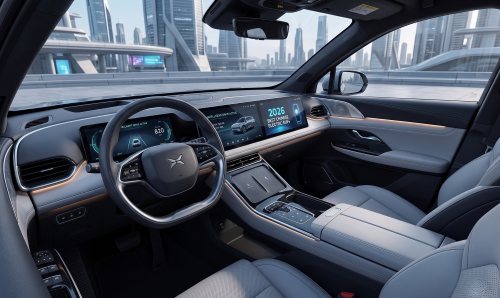
NIO’s EL6 is the most complete challenge to the BMW X3 and Mercedes GLC in the mid-size premium segment. Interior quality is exceptional: genuine Nappa leather, a panoramic glass roof, ambient lighting, a 12.8-inch AMOLED display and NIO’s NOMI AI assistant. More significantly, NIO offers something neither BMW nor Mercedes can replicate: Battery-as-a-Service leasing and Power Swap infrastructure, exchanging a depleted battery for a charged one in under 5 minutes, faster than any DC charging. The combination of reduced purchase price when leasing the battery plus genuine luxury makes the EL6 compelling at €55,900.
The BYD Tang EV answers a question Western buyers have been asking for years: where is the seven-seat fully electric SUV that doesn’t cost £70,000 or more? At £54,990, the Tang EV delivers three genuine rows of seating, 530 km WLTP range, dual-motor all-wheel drive with 0–100 km/h in 4.6 seconds, and BYD’s proven Blade Battery. For families that genuinely need seven seats, the pricing advantage versus a comparable Range Rover Sport or BMW iX L (both above £75,000) becomes almost impossible to argue against.
Not every buyer is ready for full electric commitment, and the Haval H6 PHEV makes a compelling case for that segment. Built by Great Wall Motor, it combines a 1.5T petrol engine with a 66 kW electric motor for 258 hp of combined output. The 44.9 kWh battery provides around 80 km of all-electric range for daily commutes, while the petrol engine makes longer journeys effortless without planning around chargers. Combined CO₂ emissions of roughly 95 g/km sit well below the EU fleet average.
Geely’s premium sub-brand Zeekr brings a distinctive proposition to the compact premium segment. Built on the CMA platform co-developed by Geely and Volvo, the Zeekr X inherits engineering DNA from Volvo while benefiting from Geely’s manufacturing quality control. At around €38,900 it competes directly with the Audi Q4 e-tron and BMW iX1 while offering more standard equipment, with 440 km WLTP range and 150 kW DC charging.
The NIO EL7 is the most credible Chinese challenger to the BMW iX, Mercedes EQS SUV and Audi e-tron in the full-size luxury segment. Its credentials are genuine: a 100 kWh battery delivering 509 km WLTP range, dual-motor AWD with 480 hp, a full-length panoramic roof, Nappa leather throughout, air suspension as standard and the full NIO ecosystem. Interior materials and assembly genuinely rival established luxury brands, something that could not have been said about Chinese SUVs even two years ago. The battery-swap network extends the ownership experience well beyond the vehicle itself.
Xpeng’s flagship G9 brings the brand’s 800V ultra-fast charging architecture to the large family segment. At peak it accepts 300 kW, adding roughly 200 km of range in under 6 minutes at a compatible charger, fundamentally changing the relationship with range anxiety on long family trips. Beyond charging, the G9 offers a spacious 660 L boot, a 14.96-inch display, the full XNGP suite and 520 km WLTP range, in both RWD and AWD configurations.
Complete Comparison Table — All 10 Models
Here is every model ranked side by side across the key buying criteria. Use this table to quickly compare pricing, range, charging capability, performance and seating across the full lineup:
| Rank | Model | Price | WLTP Range | DC Charge | 0–100 km/h | Seats | Score |
|---|---|---|---|---|---|---|---|
| 1 | MG ZS EV | £28,495 | 440 km | 92 kW | 8.2s | 5 | 8.7 |
| 2 | Leapmotor C10 | €36,400 | 420 km | 85 kW | 7.5s | 5 | 8.6 |
| 3 | BYD Atto 3 | £36,990 | 420 km | 88 kW | 7.3s | 5 | 8.7 |
| 4 | Xpeng G6 ⚡ | €44,900 | 570 km | 280 kW | 3.9s | 5 | 8.9 |
| 5 | NIO EL6 | €55,900 | 513 km | 130 kW + swap | 4.5s | 5 | 8.8 |
| 6 | BYD Tang EV | £54,990 | 530 km | 110 kW | 4.6s | 7 | 8.5 |
| 7 | Haval H6 PHEV | £36,995 | ~1,100 km total | PHEV | 6.5s | 5 | 8.2 |
| 8 | Zeekr X | €38,900 | 440 km | 150 kW | 3.8s | 5 | 8.4 |
| 9 | NIO EL7 ✨ | €72,900 | 509 km | 130 kW + swap | 3.9s | 5 | 8.9 |
| 10 | Xpeng G9 ⚡ | €54,900 | 520 km | 300 kW | 3.9s | 5 | 8.7 |
💡 Quick selection by budget: Under £30,000 → MG ZS EV. £30,000–£40,000 → Leapmotor C10 or BYD Atto 3. €40,000–€50,000 → Xpeng G6 or Zeekr X. €50,000–€75,000 → Xpeng G9, NIO EL6 or BYD Tang EV. Luxury tier (€70,000+) → NIO EL7.
How to Choose the Right Chinese Electric SUV
The diversity of Chinese electric SUVs now on sale means there is genuinely a correct answer for almost every buyer profile. The key is clarity on what matters most in your circumstances. These are the decision points that should guide your choice:
🔋 If maximum range matters most
The Xpeng G6 leads with 570 km WLTP, followed by the BYD Tang EV (530 km) and Xpeng G9 (520 km), all offering genuine peace of mind on long journeys.
⚡ If charging speed is your priority
The Xpeng G9 (300 kW) and G6 (280 kW) lead the ultra-fast tier, both using 800V architecture for 200 km of range in under 6 minutes.
👨👩👧👦 If you genuinely need 7 seats
The BYD Tang EV is currently the only full-size fully electric 7-seat Chinese SUV available in European markets.
💰 If value for money is king
The MG ZS EV at £28,495 with 440 km range and a 7-year warranty is nearly impossible to beat. For £35,000–£40,000, the Atto 3 and C10 offer maximum equipment.
🏆 If premium interior is non-negotiable
NIO’s EL6 and EL7 deliver interior quality and an ownership ecosystem that rivals BMW and Mercedes directly, at meaningfully lower prices.
🛡️ If safety is your top priority
BYD’s Blade Battery models (Atto 3, Tang EV) offer the lowest thermal-runaway risk of any EV battery technology. All models here carry 5-star Euro NCAP ratings or equivalent.
Essential Accessories for Your Chinese Electric SUV
Once you have chosen your electric SUV from the rankings above, two genuinely worthwhile accessories will meaningfully improve daily ownership and help protect your investment. These are the items our team considers most essential, chosen to complement the BYD, MG, Xpeng, NIO and Zeekr models featured throughout this guide rather than padding the list with gimmicks.
A dual-channel dash cam with a Sony STARVIS sensor and parking mode protects your investment whether you are driving or parked at a charging station. Aim for 4K front / 2K rear with built-in Wi-Fi for easy footage review, increasingly expected by insurers and a sound safeguard for a high-value EV.
Model-tailored, all-weather TPE floor mats and a boot liner are the single best way to protect interior carpets and preserve resale value, especially for the premium cabins of the BYD Atto 3, MG ZS EV and NIO models. Always search your exact model and year to guarantee a precise, no-slip fit.
⚠️ Important note: Always confirm the exact specification, market availability and warranty terms with an official dealer before purchase. Pricing and configurations vary by country and can change quickly. WLTP figures are official lab estimates; expect 75–85% of the rated range in real-world driving depending on weather, road conditions and driving style.
FAQ: Chinese Electric SUVs in 2026
Which Chinese electric SUV offers the best value for money?
The MG ZS EV remains the best pure-value proposition at £28,495 with 440 km WLTP range, a 7-year warranty, a 5-star Euro NCAP rating and MG’s unmatched dealer network across Europe. For buyers with slightly higher budgets (£35,000–£40,000), both the BYD Atto 3 and Leapmotor C10 offer premium interior materials and technology at competitive pricing.
Are Chinese electric SUVs safe? What are the Euro NCAP ratings?
Yes. The Chinese electric SUVs in this guide carry either confirmed 5-star Euro NCAP ratings or equivalent independent safety certifications. BYD’s Blade Battery architecture has demonstrated exceptional thermal safety performance in independent testing, with the lowest thermal-runaway risk of any EV battery chemistry currently in production.
What is NIO’s battery swap (Power Swap) service and how does it work?
NIO’s Power Swap service exchanges a depleted battery for a fully charged one in under 5 minutes at NIO Power Swap Stations, faster than any DC charging. NIO’s Battery-as-a-Service model lets buyers reduce the upfront price by €10,000–€14,000 in exchange for monthly battery rental, keeping ownership financially comparable to traditional vehicles.
What is the longest-range Chinese electric SUV available?
The Xpeng G6 leads with 570 km WLTP range. For larger SUVs, the Xpeng G9 and BYD Tang EV both deliver 520 km or more. Remember that real-world driving typically achieves 75–85% of official WLTP figures, so a 570 km rating yields roughly 425–480 km in practice.
Which Chinese electric SUV has the fastest charging capability?
The Xpeng G9 leads with 300 kW peak DC charging, adding roughly 200 km of range in under 6 minutes at compatible ultra-fast chargers. The Xpeng G6 matches with 280 kW. Both use 800V silicon carbide architecture, while NIO models add their unique Power Swap advantage.
Is there a 7-seat Chinese electric SUV available in Europe?
Yes. The BYD Tang EV is the only fully electric 7-seat Chinese SUV currently available in European markets. It starts at around £54,990 and delivers genuine three-row seating, 530 km WLTP range, dual-motor all-wheel drive and 4.6-second 0–100 km/h acceleration.
Final Verdict: The Best Chinese Electric SUVs in 2026
The Chinese electric SUV market in 2026 is one of the most remarkable automotive stories of the past five years. In less than half a decade, Chinese manufacturers have moved from producing curiosities to competing directly with established European and American brands on interior quality, technology, safety and real-world ownership experience.
For pure value, the MG ZS EV at £28,495 remains the entry point to Chinese EV ownership, combining 440 km range, a 7-year warranty and an unmatched dealer network. For technology and capability, the Xpeng G6’s 280 kW charging and 570 km range represent genuine disruption, capabilities that would cost twice as much in European vehicles. And for luxury, NIO’s EL6 and EL7 deliver a premium ownership ecosystem, including battery-swap convenience, that no European rival has successfully replicated, at meaningful savings versus BMW and Mercedes.
Whichever model you choose from this guide, you are buying a vehicle independently safety-tested to European standards, backed by meaningful warranty cover and engineered with technology that frequently surpasses equivalent European offerings at the same or higher prices. The question is no longer whether to buy a Chinese electric SUV, but which one is right for your needs and budget.