Chinese EVs vs American EVs: Real-World Range, Charging & Total Cost of Ownership
The gap between Chinese and American electric cars is no longer about who builds the better vehicle — it is about who builds it for less. In 2026, Chinese EVs and American EVs increasingly match each other on range and safety, yet diverge sharply on charging speed, sticker price and the long-term cost of ownership.
This guide breaks down where each side genuinely leads, using real-world figures rather than headline marketing claims — so you can read every number in this Chinese EVs vs American EVs comparison with confidence.
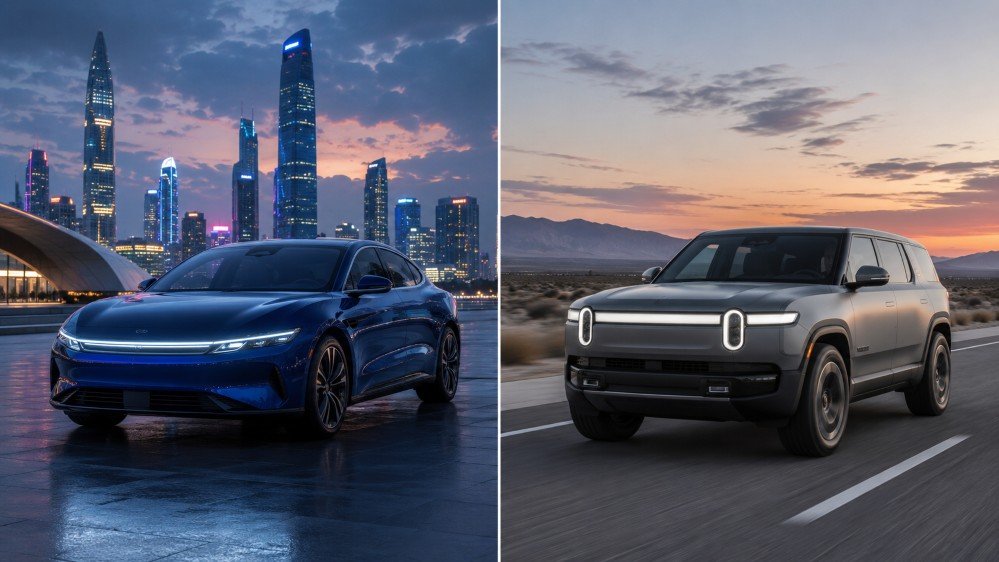
For most of the last decade, the electric-vehicle conversation in the West revolved around a single American name. That era is over. In 2025, BYD overtook Tesla as the world’s largest seller of electric vehicles, delivering roughly 2.26 million units against Tesla’s 1.64 million. The shift matters because it reframes the entire comparison: this is no longer a story about a scrappy challenger catching up to an established leader, but about two mature industries that have each optimised for very different goals.
Chinese manufacturers have built their advantage around cost engineering and vertical integration — controlling everything from battery chemistry to semiconductors. American manufacturers, meanwhile, have leaned into software, premium positioning and a charging network famed for its reliability. Understanding that split is the key to reading every number that follows.
If you prefer a fast visual overview before diving into the figures, the short video below summarises the Chinese EVs vs American EVs comparison across range, charging speed and cost of ownership. We then unpack each of those points in detail throughout the rest of this guide.
With that snapshot in mind, let us start where the two markets diverge most — in how, and where, these cars are actually sold.
The Big Picture: Two Very Different EV Markets
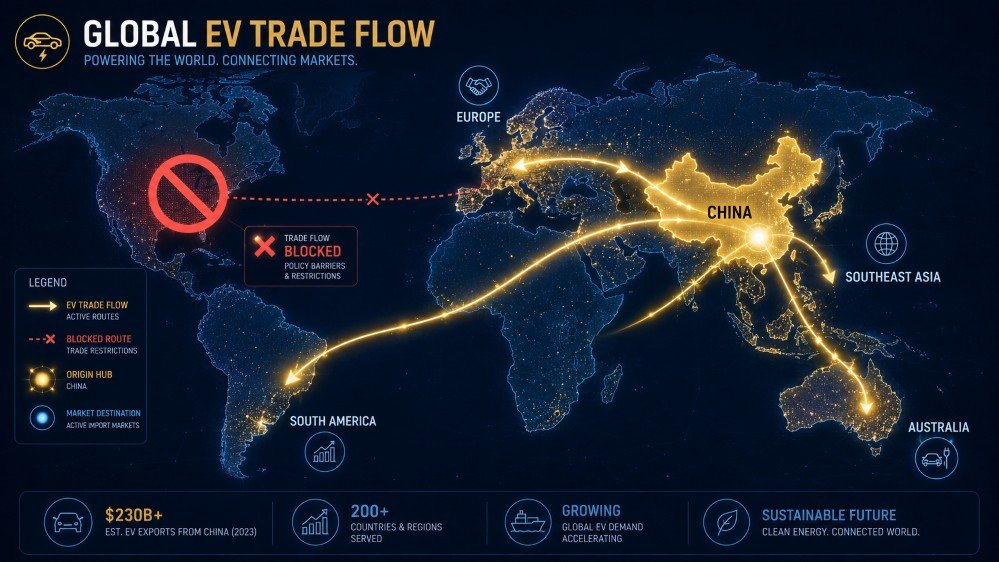
Before comparing individual specifications, it helps to understand that Chinese and American EVs rarely meet on the same showroom floor. A 100% US federal import tariff, raised from 25% and in force since September 2024, effectively bars Chinese-built EVs from American driveways. As a result, the practical comparison for a US reader is not “which should I buy” but rather “what does Chinese EV capability reveal about the domestic models I can actually purchase, and where their pricing might eventually head.”
In the markets where the two compete head to head — the United Kingdom, the European Union and Australia — the contrast is stark. Chinese models consistently undercut comparable American and European rivals while matching them on crash safety. That price-to-specification gap is the single most important theme in this entire comparison, and it cascades through every cost figure we examine below.
Two Smart Buys That Protect Real-World Range & Running Costs
EVs are heavy, and correct tyre pressure directly affects real-world range and efficiency — a critical factor when WLTP figures already differ from everyday driving. A rechargeable digital inflator with a preset auto-stop keeps pressures optimal and quickly pays for itself in saved range and longer tyre life.
Every EV still relies on a conventional 12V battery to power its electronics and “wake” the car — and that battery can go flat. A compact lithium jump starter restarts a dead 12V system and doubles as a power bank and emergency torch.
Real-World Range: WLTP, EPA and What You Actually Get
Range is where the two camps look closest on paper — and where the testing standards matter most. Chinese and European figures usually quote the WLTP cycle, while American figures use the stricter EPA estimate, and China’s domestic CLTC cycle is the most optimistic of all. Comparing a CLTC number directly against an EPA number is one of the most common mistakes buyers make, because CLTC can overstate usable range by 20% or more.
Take a concrete example. The BYD Seal delivers around 354 miles of WLTP range and, in the UK, undercuts a comparable Tesla Model 3 Long Range by roughly £2,500 — while using a safer LFP battery chemistry. Up in the flagship tier, the China-only BYD Tang quotes a headline 590 miles on the generous CLTC cycle; translate that to EPA-equivalent expectations and the real figure lands far lower, closer to what premium American three-row SUVs achieve.
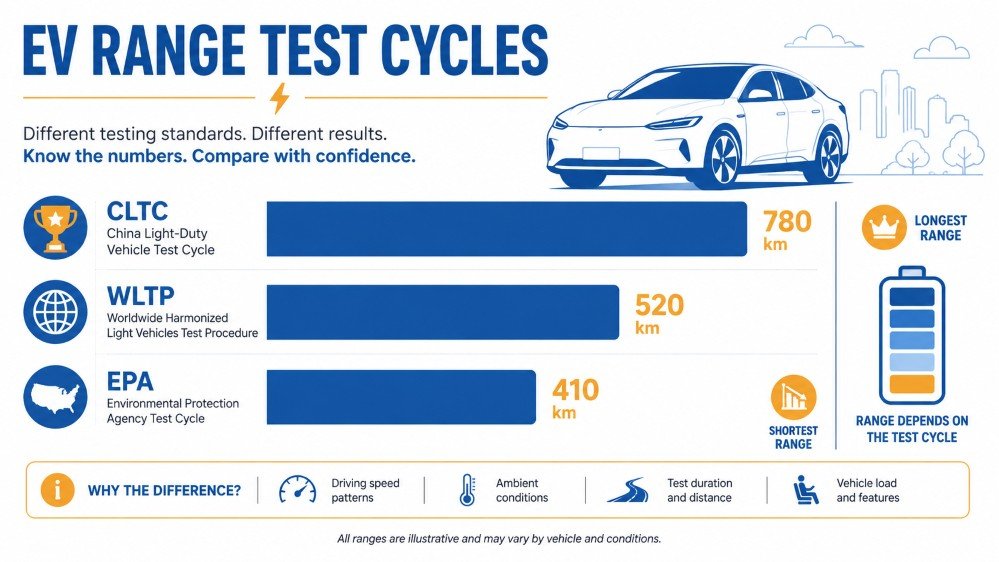
💡 Pro Tip: When you compare any Chinese and American EV, convert everything to a single yardstick. A rough rule of thumb is that EPA figures are about 10–15% lower than WLTP, and WLTP is around 15–20% lower than CLTC. Always ask which cycle a quoted range refers to before treating two cars as equals.
It is also worth remembering that real-world range depends on more than the battery. Heavy EVs are unusually sensitive to tyre pressure, ambient temperature and driving style. A well-maintained American EV and a well-maintained Chinese EV with similar rated range will often deliver similar usable miles — the headline gap narrows considerably once both cars leave the laboratory.
Charging Speed: Megawatt China vs Supercharger America
If range is a near tie, charging speed is where Chinese EVs have opened a genuine, measurable lead. BYD’s latest flash-charging platform, built on a 1,000-volt architecture and the Blade Battery 2.0, peaks at around 1,000 kW and can take a battery from roughly 10% to 70% in about five minutes — adding close to 250 miles of range in the time it takes to buy a coffee. Rival Zeekr has demonstrated chargers rated even higher, at 1.2 MW.
By contrast, most Tesla vehicles still cap their intake around 250 kW, and even the V4 Supercharger peaks at 500 kW. On older hardware, a 10–80% top-up can stretch toward half an hour. The hardware gap is real, and BYD is now rolling its flash-charging stations into Germany and the UK while expanding charging capacity faster than any Western rival.
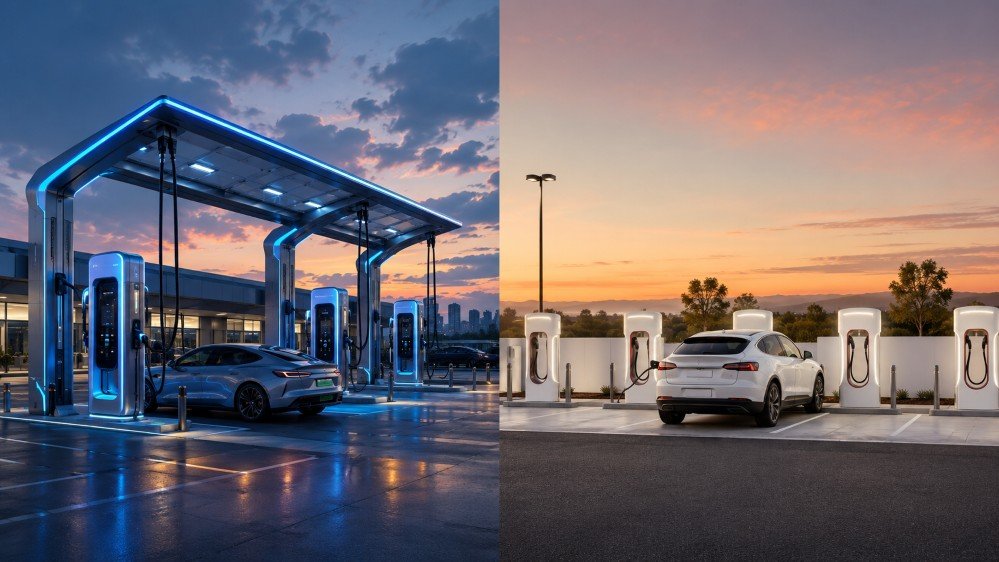
There is, however, an important asterisk. Those headline speeds require both a compatible vehicle and a compatible charger, and today that ecosystem is densest inside China. America’s advantage is not raw peak power but coverage and reliability: the Supercharger network remains one of the most dependable charging experiences in the world, with predictable uptime and seamless payment. For a buyer who road-trips frequently, that consistency can matter more than a record-breaking peak figure they will rarely reach in practice.
⚠️ Reality check: A 1,000 kW headline is only as useful as the nearest charger that can deliver it. If you charge overnight at home and rarely take long trips, ultra-fast public charging is a specification you may almost never use — so weigh it against network density and reliability where you actually drive.
Total Cost of Ownership: Where the Real Gap Lives
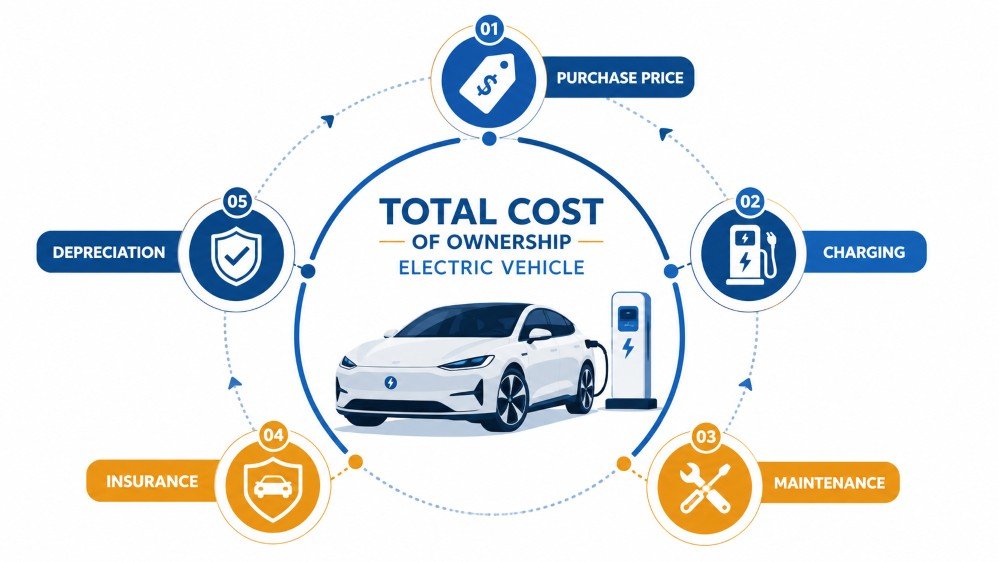
Range and charging make the headlines, but total cost of ownership is where the comparison is ultimately won or lost. TCO bundles the purchase price, energy and running costs, maintenance, insurance and depreciation into a single picture of what a car truly costs to live with. On every one of these fronts, the structural advantages of Chinese manufacturing show through.
1. Purchase Price
This is the most dramatic gap. Inside China, the best-selling EVs sit in a roughly $10,000–$12,000 band, with the entry-level BYD Seagull starting under $8,000 — against a US new-car average above $51,000. Even premium Chinese flagships look modest: the BYD Tang lists around $36,460 at home, while comparable American three-row electric SUVs start far higher. The Kia EV9 opens in the mid-$50,000s, the Lucid Gravity around $81,000, the Rivian R1S near $87,000, and the Cadillac Escalade IQ above $127,000. Even Ford’s chief executive has publicly pointed to BYD, rather than Tesla, as the real benchmark for affordable EVs.
2. Energy and Running Costs
Both Chinese and American EVs slash fuel bills compared with petrol cars, but Chinese models hold a small structural edge. The LFP-based Blade battery design is cheaper to produce and notably durable, and many Chinese EVs are tuned for efficiency in dense urban use. American EVs counter with strong software-managed efficiency and, in some cases, access to lower off-peak home-charging tariffs. Day to day, running costs are close — the divergence is modest compared with the purchase-price chasm.
3. Depreciation and Resale
Depreciation is the quietest but often largest ownership cost. Here the picture is genuinely mixed. Established American brands with strong resale reputations can hold value well in their home market, which softens their high entry price over a typical ownership period. Chinese brands, still building name recognition outside Asia, can depreciate faster in Western markets in the short term — though rapid sales growth and improving reputations are steadily narrowing that gap.
Chinese EVs vs American EVs: Head-to-Head Summary
The table below distils the comparison into the factors that move a buying decision. Figures are indicative 2026 benchmarks drawn from each category’s representative models, and exact numbers vary by trim and market.
| Factor | Chinese EVs (BYD, MG, Zeekr, NIO) | American EVs (Tesla, Rivian, Lucid) |
|---|---|---|
| Entry price (home market) | From under $8,000; mainstream $10k–$36k | Premium-led; popular SUVs $50k–$127k+ |
| Real-world range | Competitive; LFP Blade battery, ~350 mi WLTP on mid-size | Competitive; strong software-managed efficiency |
| Peak charging speed | Up to ~1,000 kW flash charging (≈250 mi in 5 min) | Most cars ~250 kW; V4 Supercharger peaks 500 kW |
| Charging network | Densest in China; expanding into UK/EU | Supercharger network: dependable, wide US coverage |
| Safety | Strong; BYD scores ~88–91% Euro NCAP adult occupant | Strong; consistently high crash-test results |
| Software & UX | Functional and improving fast | Class-leading interface, navigation and updates |
| US availability | Blocked by 100% import tariff (since Sept 2024) | Widely available |
| Overall TCO | Lowest where sold; price advantage dominates | Higher entry cost; strong resale can offset |
What the Tariff Means for American Buyers
For readers in the United States, the comparison carries an unusual twist. Because the 100% tariff keeps Chinese EVs out of dealerships, no amount of admiring their value translates into a purchase you can make today. Yet the capability still matters in two concrete ways. First, it sets the benchmark domestic manufacturers are now racing to meet — which is precisely why American executives talk openly about the “China cost curve” and target sub-$30,000 electric SUVs. Second, it shapes the global market: every sale a Chinese brand wins in Europe, South America or Southeast Asia is one an American automaker no longer gets to contest, pressuring prices and innovation worldwide.
Other markets are charting different courses. Canada moved in early 2026 to cut tariffs and allow a capped volume of Chinese-made EVs at a much lower rate, an experiment worth watching as a preview of what direct competition might look like. For buyers in the UK, EU and Australia, that competition is already here — and it is the main reason equivalent EVs there can cost thousands less than they would otherwise.
FAQ: Chinese EVs vs American EVs
Can I buy a Chinese EV in the United States in 2026?
No. A 100% federal import tariff on Chinese-built EVs, raised from 25% and effective from September 2024, keeps brands like BYD out of the US retail market. The relevant question for American buyers is what Chinese EV capability signals about the domestic models you can actually purchase.
Do Chinese EVs really charge faster than American EVs?
On the latest hardware, yes. BYD’s flash-charging platform peaks around 1,000 kW and can add roughly 250 miles in about five minutes, while most Tesla vehicles cap near 250 kW and the V4 Supercharger peaks at 500 kW. Real gains depend on having both a compatible car and a compatible charger.
Are Chinese EVs cheaper than American EVs?
In markets where they compete directly — the UK, EU and Australia — Chinese EVs typically undercut comparable US and European models by around £2,500 to £11,500 for similar range while matching them on safety. The gap is even larger inside China itself.
Why do American EVs cost so much more?
Higher labour and platform costs, plus premium positioning. The most popular US electric SUVs sit firmly in the luxury bracket: the Rivian R1S, Lucid Gravity and Cadillac Escalade IQ start between roughly $80,000 and $127,000, while equivalent Chinese flagships cost a fraction of that at home.
Which has the lower total cost of ownership?
Where they are sold side by side, Chinese EVs generally win on TCO thanks to lower purchase prices, efficient LFP Blade batteries and competitive warranties. American EVs narrow the gap with a denser, more reliable charging ecosystem and strong software, but rarely beat Chinese pricing.
The Verdict: Who Wins on Range, Charging and Cost?
Add it all up and a clear pattern emerges. On real-world range, the two are effectively tied once you normalise the test cycles. On charging speed, Chinese EVs hold a genuine technical lead in peak power, while American EVs counter with network reliability and coverage. On total cost of ownership, Chinese EVs win decisively wherever they are actually sold, driven overwhelmingly by their lower purchase price and efficient battery technology.
None of this makes American EVs a poor choice. For a buyer who values mature software, a dependable charging network and strong resale in their home market, an American EV remains a compelling — if pricier — proposition. But the broader trajectory is unmistakable: the cost engineering that powers Chinese EVs has reset global expectations of what an electric car should cost, and that pressure will continue reshaping every showroom, tariff wall or not.