Chinese Electric Pickups Ready to Challenge the Ford F-150 Lightning
For most of this decade, the Ford F-150 Lightning sat at the center of the electric pickup conversation in the West. Yet the ground has shifted dramatically. As Ford winds down the all-electric Lightning in favor of a future range-extended model, a wave of Chinese electric pickup trucks is moving in the opposite direction, expanding aggressively across Australia, the Middle East, Europe and Latin America with sharper pricing and surprisingly mature technology.
This buying guide breaks down the most credible Chinese electric pickups of 2026, how their specifications line up against the F-150 Lightning, and the realistic picture of where you can actually buy one today. If you are tracking the global pickup shake-up, these are the names to know.
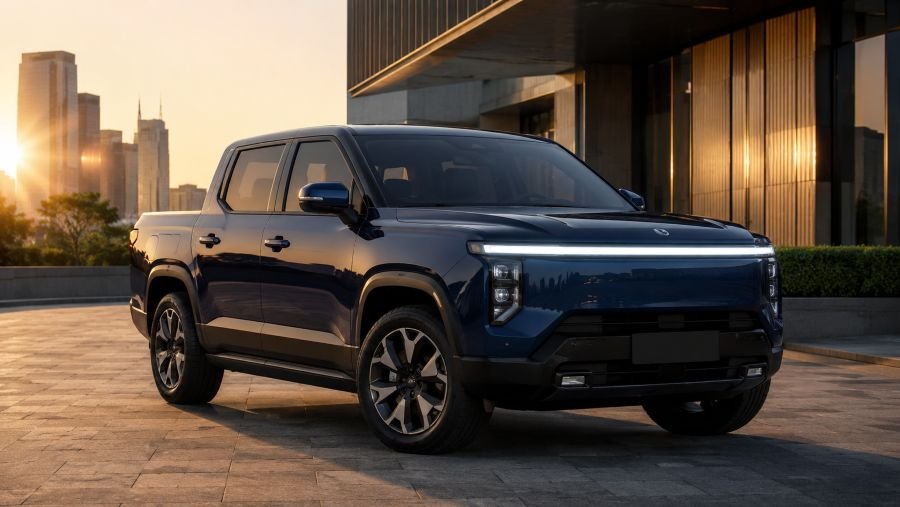
To set the scene, the short overview below highlights how these Chinese electric pickup trucks are positioning themselves against the Ford F-150 Lightning before we examine each contender in detail.
With that context in mind, let us look at why Ford’s strategic shift created such an opening for these electric pickup trucks, and which models are best placed to seize it.
The electric pickup landscape entering 2026 looks nothing like the one analysts predicted three years ago. Demand growth slowed, battery costs stayed stubborn, and regulatory incentives wobbled in several Western markets. In response, legacy manufacturers recalibrated. Ford, the brand that arguably legitimized the electric truck with the F-150 Lightning, made the boldest move of all by stepping back from a pure-battery approach. Meanwhile, Chinese automakers treated the same conditions as an opening rather than a warning, pouring engineering and capital into new-energy pickups built specifically for export.
That divergence is exactly why this comparison matters. The question is no longer whether Chinese electric pickups can match Western trucks on paper; in several respects, they already do. The more interesting questions concern range, towing, price and availability, and that is where this guide focuses. Before we profile each truck, it helps to understand why the F-150 Lightning’s strategic retreat created such a clear opportunity.
Why the F-150 Lightning’s Retreat Opens the Door
The headline development is unambiguous. Ford confirmed that production of the all-electric F-150 Lightning ended with the 2025 model year, closing a run that lasted barely three years after its 2022 launch. The reasons cited were familiar to anyone following the industry: softer-than-hoped EV demand, persistently high battery and production costs, and a broader strategy shift toward hybrids and extended-range vehicles.
Crucially, the Lightning is not simply disappearing. Ford has signaled that the next-generation truck will return as an extended-range electric vehicle (EREV), keeping its dual electric motors but adding a gasoline generator to charge the battery on the move. The target is ambitious, with more than 700 miles of total range and a launch expected around 2027. In other words, the most recognizable electric pickup in the West is pivoting away from being a pure EV at the exact moment Chinese brands are doubling down on electrification. That timing is the heart of this story.
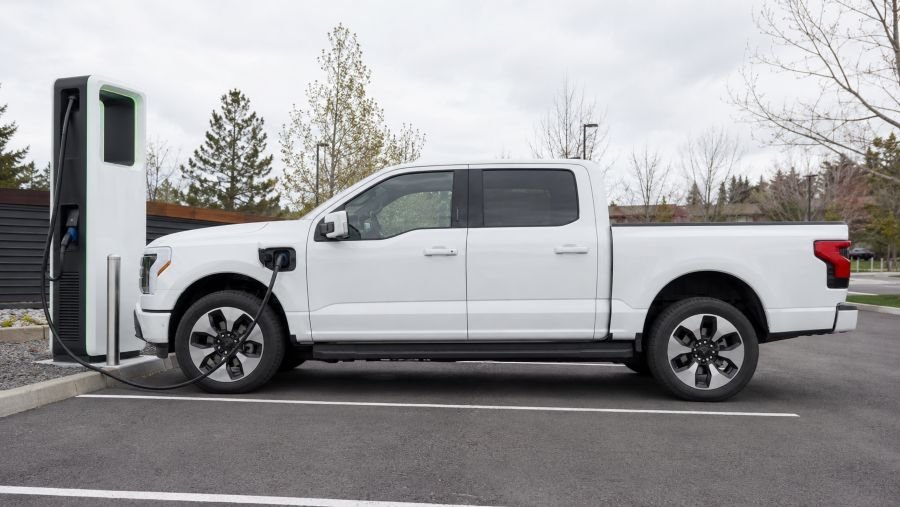
For context, the outgoing F-150 Lightning was a genuinely strong product. It paired dual electric motors producing up to 580 horsepower with a usable battery as large as 131 kWh, an EPA-rated range spanning roughly 240 to 320 miles, and a towing ceiling of about 10,000 pounds. It also offered standout bidirectional power features through Pro Power Onboard, letting it run tools or back up a home during outages. Any challenger therefore has a high bar to clear, especially on towing and overall capability.
The Chinese Electric Pickups Worth Knowing in 2026
The Chinese pickup field is broad, and not every model is a true battery-electric vehicle. Some of the most successful trucks are plug-in hybrids that lean on a gasoline engine for long-distance confidence. To keep the comparison honest, we will flag each powertrain type clearly. Here are the contenders that matter most.
Geely Riddara RD6 (Radar RD6)
If one truck embodies China’s electric pickup ambitions, it is the Geely Riddara RD6, sold domestically as the Radar RD6. Built on a dedicated multi-platform architecture that supports battery-electric, plug-in hybrid and range-extender layouts, the RD6 has helped Riddara hold its position as China’s top-selling new-energy pickup brand for several years running. The brand has also pushed exports hard, reaching more than 60 countries including key Middle Eastern, Australian and New Zealand markets.
In its all-electric form, the RD6 offers rear-wheel-drive variants around 272 horsepower and a flagship all-wheel-drive setup near 422 horsepower, good for a brisk 0–100 km/h sprint of roughly 4.5 seconds. Long-range versions use an 86 kWh battery quoting up to about 455 km on the optimistic NEDC cycle. Just as notable is its near-instant electric torque response, which the brand markets as roughly ten times quicker than a conventional diesel pickup. The RD6 is positioned as a refined, SUV-like ute rather than a hardcore work truck, which suits its target buyers well.
Maxus eTerron 9
Where the RD6 leans toward lifestyle, the Maxus eTerron 9, from SAIC, aims squarely at serious capability. Marketed as one of Europe’s first all-electric four-wheel-drive pickups, the eTerron 9 is a genuinely large truck at about 5.5 metres long. International versions pair a dual-motor all-wheel-drive system producing roughly 442 horsepower with a 102.2 kWh battery, delivering a WLTP range near 267 miles, which is among the longest of any electric pickup currently on sale in markets like the UK.
The eTerron 9 also tackles the towing question head-on, with a braked towing capacity of 3,500 kg (about 7,700 pounds), DC fast charging up to roughly 115 kW, a useful front trunk, and a five-star Euro NCAP safety rating. Payload sits around 620 kg, which trails some diesel rivals because of battery weight, but the combination of long range, real towing ability and proper four-wheel drive makes it the most convincing electric work-focused pickup in this group.
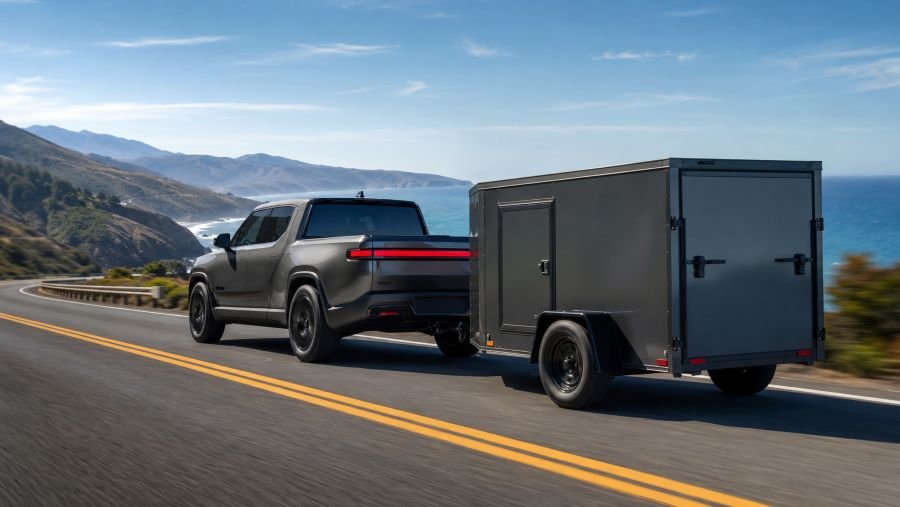
BYD Shark (Shark 6)
No Chinese pickup has generated more global headlines than the BYD Shark, launched as the Shark 6 in markets such as Mexico, Brazil, the Middle East and Australia. Its styling, with stacked headlights and a full-width light bar, drew immediate comparisons to the F-150 Lightning. The Shark became Australia’s best-selling plug-in hybrid truck in 2025 with more than 18,000 deliveries, proving that buyers will embrace an electrified pickup when the value equation is right.
The important caveat is that the Shark 6 is a plug-in hybrid, not a pure EV. It combines a turbocharged engine acting mainly as a generator with dual electric motors for a combined output near 430 horsepower (rising to around 476 in the Performance trim) and a 0–100 km/h time of about 5.7 seconds. Its modest Blade battery delivers only around 50 to 60 miles of electric driving, with a gasoline tank stretching total range past 600 miles. BYD has also signaled plans for both a pure-electric Shark and a larger, full-size pickup explicitly aimed at the F-150 class, so its true electric assault is still building.
JAC T9 EV and JAC Hunter PHEV
JAC rounds out the field with a two-pronged strategy. The all-electric JAC T9 EV uses an 88 kWh battery feeding a dual-motor all-wheel-drive system worth about 220 kW, with a WLTP range near 330 km and a 0–100 km/h time around 8.4 seconds. It is a sensible, work-oriented electric ute rather than a performance flagship.
For buyers wanting brute force, the JAC Hunter plug-in hybrid is the headline grabber, pairing a 2.0-litre turbo engine with dual motors for a combined output of roughly 516 horsepower and an enormous 1,000 Nm of torque, all while quoting around 100 km of electric-only range. The Hunter underscores a wider trend: many Chinese brands are using plug-in hybrids as a bridge, offering EV-style torque and refinement without range anxiety on long hauls.
💡 Pro Tip: When comparing Chinese pickups, always separate battery-only range from total range. A truck quoting 1,000+ km usually relies on a gasoline tank, while its true electric range may be under 100 km. For pure-EV shopping, weigh the Maxus eTerron 9 and Geely Riddara RD6 against the F-150 Lightning rather than the plug-in hybrids.
How They Stack Up Against the F-150 Lightning
Specifications only tell part of the story, but they remain the cleanest starting point for comparison. The table below focuses on the pure-electric contenders alongside the outgoing F-150 Lightning, since comparing battery-electric trucks to a battery-electric benchmark is the fairest approach. Plug-in hybrids like the BYD Shark and JAC Hunter are noted separately because their range figures are not directly comparable.
| Model | Powertrain | Approx. Power | Battery | Quoted Range | Towing |
|---|---|---|---|---|---|
| Ford F-150 Lightning | Dual-motor BEV | Up to 580 hp | Up to 131 kWh | 240–320 mi (EPA) | Up to 10,000 lb |
| Maxus eTerron 9 | Dual-motor BEV (AWD) | ~442 hp | 102.2 kWh | ~267 mi (WLTP) | ~7,700 lb |
| Geely Riddara RD6 | BEV (RWD or AWD) | 272–422 hp | Up to 86 kWh | ~283 mi (NEDC) | Light-duty |
| JAC T9 EV | Dual-motor BEV (AWD) | ~295 hp | 88 kWh | ~205 mi (WLTP) | Light-duty |
A few patterns emerge quickly. On peak power and especially on towing, the F-150 Lightning still leads this group, reflecting its full-size, body-on-frame heritage and American work-truck priorities. The Maxus eTerron 9 comes closest to matching it on capability while undercutting it on size class. The Riddara RD6 and JAC T9 EV, by contrast, are mid-size trucks tuned more for daily driving and lighter duty than for heavy hauling. None of these Chinese trucks yet matches the Lightning’s 10,000-pound towing headline, which remains a meaningful gap for buyers who genuinely tow.
Where Chinese trucks consistently win, however, is value. In their home and export markets, models like the RD6 launch at prices that are a fraction of a comparably equipped Western EV pickup, and they often arrive loaded with large touchscreens, vehicle-to-load power and advanced driver assistance as standard. That blend of low price and high feature count is precisely what made the BYD Shark a sales phenomenon in Australia.
Can You Actually Buy One?
This is the question that separates hype from reality, and the honest answer depends heavily on where you live. The rivalry with the F-150 Lightning is real, but it is currently a global contest rather than an American one.
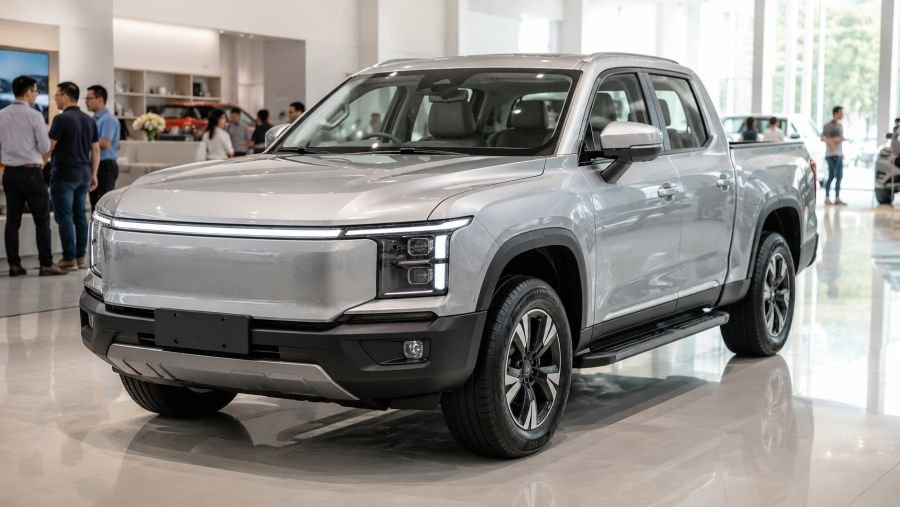
⚠️ Important Note: As of 2026, none of these Chinese electric pickups are sold new in the United States. Steep tariffs on Chinese-built vehicles, combined with unresolved data-security and regulatory rules, keep them out of U.S. showrooms. American buyers comparing them to the F-150 Lightning should treat this as a look at the global market, not a local shopping list.
Outside the U.S., the picture is far more open. Australia has become a showcase market, with the BYD Shark, JAC range and others competing fiercely on price. The Middle East has welcomed the Geely Riddara RD6 and its hybrid siblings as part of regional electrification pushes. Europe and the UK now offer the Maxus eTerron 9 to fleet and commercial buyers, while Latin America has embraced the Shark since its Mexican debut. For readers in those regions, several of these trucks are genuine purchase options today, often at compelling prices.
It is also worth watching the next 18 months closely. BYD has openly discussed both a pure-electric pickup and a full-size truck targeting the F-150 segment, and Geely Riddara continues to expand its export footprint. As these plans mature, the competitive pressure on Western pickups, including whatever form the next Lightning takes, will only intensify.
FAQ: Chinese Electric Pickups vs the F-150 Lightning
Can you buy a Chinese electric pickup in the United States?
No. As of 2026, Chinese-built electric pickups such as the Geely Riddara RD6, Maxus eTerron 9, BYD Shark and JAC T9 EV are not sold new in the U.S. market. Steep tariffs on Chinese vehicles and unresolved regulatory and software-security rules keep them out of American showrooms, so the rivalry with the Ford F-150 Lightning currently plays out in Australia, the Middle East, Europe, Latin America and Southeast Asia rather than in the U.S.
Is the Ford F-150 Lightning being discontinued?
Ford ended production of the all-electric F-150 Lightning at the close of the 2025 model year. The next-generation Lightning is set to switch to an extended-range electric (EREV) layout that pairs electric motors with a gasoline generator, targeting more than 700 miles of total range and a launch around 2027. So the pure-electric Lightning is winding down just as Chinese electric pickups expand globally.
Which Chinese electric pickup has the longest range?
Among full-battery models, the Maxus eTerron 9 leads with a WLTP range of about 267 miles from its 102.2 kWh battery, followed by the Geely Riddara RD6 at up to roughly 283 miles on the optimistic NEDC cycle. Plug-in hybrid trucks like the BYD Shark and JAC Hunter quote far higher total figures, but most of that comes from a gasoline tank rather than the battery alone.
Are Chinese electric pickups good for towing?
It depends on the model. The full-size Maxus eTerron 9 tows up to about 7,700 pounds, which rivals many diesel utes, while mid-size models like the Riddara RD6 and JAC T9 EV are tuned for lighter duty. None yet matches the outgoing F-150 Lightning’s 10,000-pound rating, so heavy-duty towers should compare carefully before assuming parity.
The Verdict: A Global Race That Is Only Heating Up
The story of Chinese electric pickups challenging the Ford F-150 Lightning is, at its core, a story about momentum moving in opposite directions. Ford is stepping back from the pure-electric pickup to regroup around an extended-range future, while Chinese brands are accelerating into export markets with trucks that increasingly hold their own on technology, refinement and value. The Maxus eTerron 9 proves a Chinese EV pickup can take towing and range seriously; the Geely Riddara RD6 proves the segment can be both affordable and quick; and the BYD Shark proves buyers will line up when the package is right.
For now, the F-150 Lightning’s towing strength and full-size footprint keep it ahead of most challengers on raw capability, and U.S. buyers remain shielded from direct competition by tariffs and regulation. But that protective gap is unlikely to last forever. With BYD eyeing the full-size class and Geely Riddara widening its global reach, the next chapter of the electric pickup wars looks increasingly likely to be written in Mandarin. Whether you are shopping in Sydney, Dubai or Manchester, these are the trucks to keep on your radar.