Inside the ‘Huawei Effect’: How Chinese Tech Giants Are Redefining Smart Vehicle OS
The most important component in a modern Chinese car is no longer the engine or even the battery — it is the operating system. Led by Huawei’s HarmonyOS, a wave of Chinese technology giants has turned the car into a connected device that behaves like an extension of your phone, watch and home.
This guide unpacks the so-called “Huawei Effect”: how a company that famously refuses to build its own cars has come to define the software inside them, and how Xiaomi, NIO, Baidu, Alibaba and others are reshaping what a smart vehicle operating system can be.
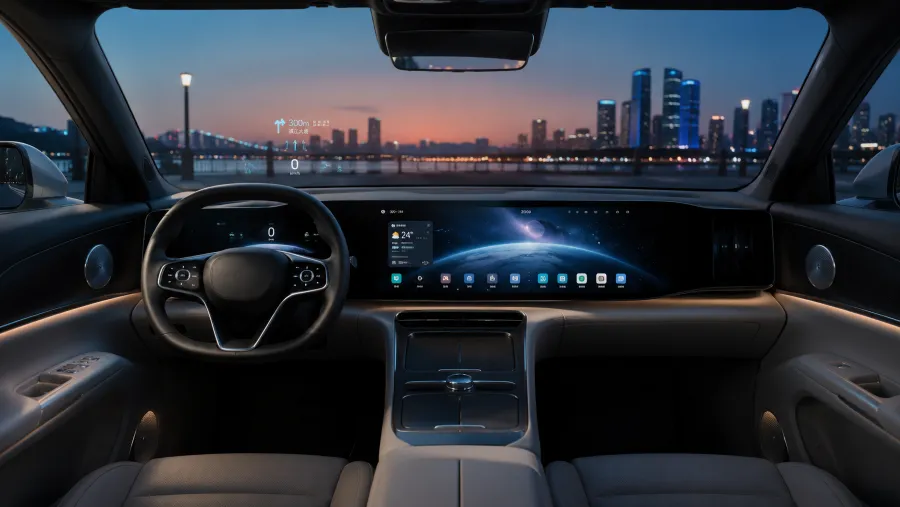
For a century, carmakers competed on mechanical engineering: engines, gearboxes, chassis tuning. In China’s electric era, the contest has moved to software. The screens, the voice assistant, the driver-assistance system and the over-the-air updates that quietly improve the car overnight now decide whether a vehicle feels modern or dated. And no company has shaped that shift more than Huawei.
If you would rather see the story in brief first, the short video below explains the Huawei Effect and the rise of the Chinese smart vehicle OS. The full detail then follows throughout the article.
What Is the ‘Huawei Effect’?
The “Huawei Effect” rests on a deceptively simple idea: Huawei does not build cars. Instead, it builds the intelligence that goes inside them — the HarmonyOS Cockpit that runs the displays and voice control, and the Qiankun intelligent-driving system that handles assisted and autonomous functions. It then supplies that technology stack to a group of carmakers, letting each badge and build the vehicle while Huawei provides the digital brain.
This is a supplier model, but a radically ambitious one. Rather than selling a single part, Huawei effectively defines the entire user experience of the car, from the moment the driver sits down to the way the vehicle updates months later. The result has reframed the industry’s central question. It is no longer “who builds the best car?” but “whose software is inside it?” — and that question is now just as decisive for buyers as horsepower once was.
Get the Most From a Software-First Cabin: Two Smart-Cockpit Add-ons
Because these EVs route nearly every control through one large central display, a tempered-glass screen protector guards that costly panel against scratches, glare, and fingerprints. Select the size cut for your exact screen — common fits exist for BYD, MG, Xpeng, and Zeekr displays.
A plug-in wireless adapter converts wired CarPlay or Android Auto into a cable-free connection, so your phone can stay on a charging mount instead of tethered to the dash. A popular upgrade that modernizes infotainment on models that still expect a cable.
HarmonyOS Cockpit: The Operating System Behind the Alliance
At the heart of the Huawei Effect is HarmonyOS Cockpit, now in its fifth generation. It is the software that drives the central touchscreen, the digital instrument cluster, the augmented-reality head-up display and the voice assistant, knitting them into a single responsive interface. Crucially, Huawei has opened the system’s programming interfaces to carmakers, suppliers and app developers, so the cockpit can be extended with new features rather than frozen at launch.
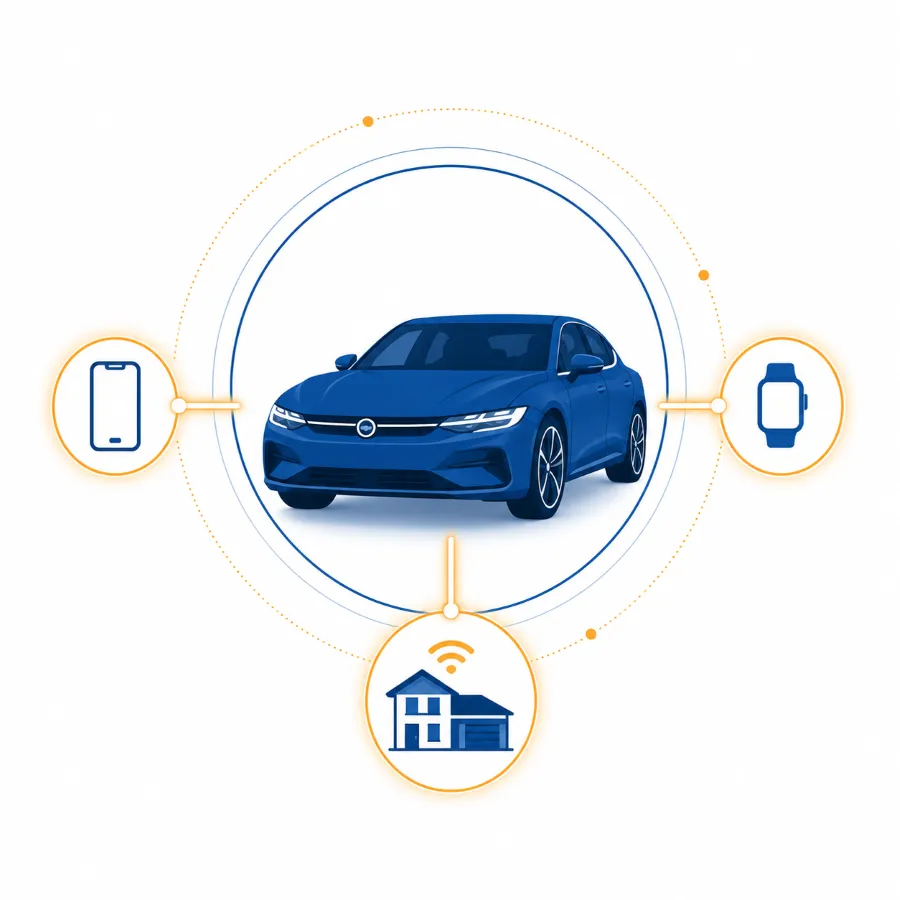
What makes HarmonyOS distinctive is continuity. The same operating system family runs on Huawei phones, watches, tablets and home devices, so a driver who already lives inside that ecosystem finds the car behaves like another screen in a familiar network. Navigation can hand off from phone to car, calls follow you inside, and apps appear where you expect them. For millions of existing Huawei users, the car simply slots into a digital life they already own.
Sitting alongside the cockpit is Huawei’s Qiankun intelligent-driving system, which reached its ADS 4.1 generation in early 2026 with safety upgrades such as an “anti-sandwich” function designed to avoid being trapped between vehicles. Paired with high-resolution LiDAR, it gives partner cars a driver-assistance suite that rivals anything on the market — without each automaker having to develop it alone.
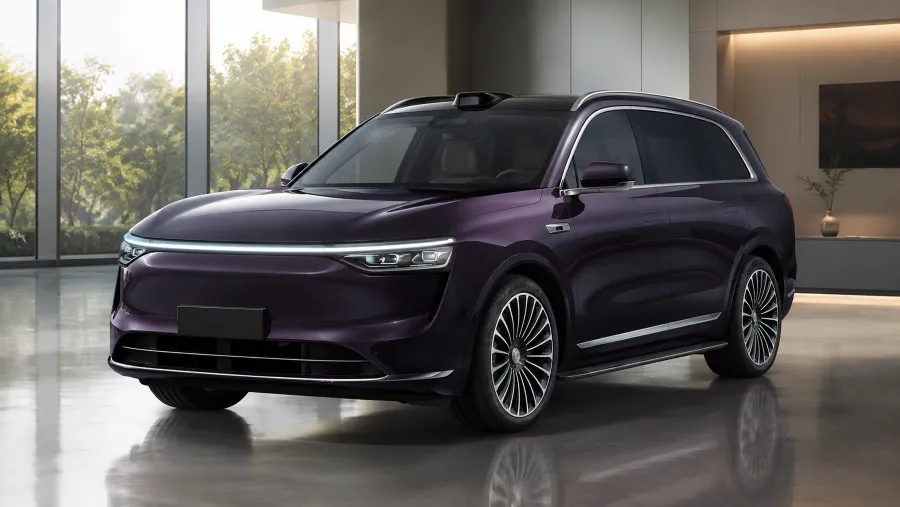
Huawei’s Supplier Model: HIMA, AITO, Luxeed and Beyond
Huawei channels this technology through the Harmony Intelligent Mobility Alliance, or HIMA, which it formed in late 2023 from its earlier “smart selection” car business. Rather than one brand, HIMA is a family of marques, each pairing Huawei’s software with a different manufacturing partner.
- AITO — built with Seres, the alliance’s volume leader, whose M-series SUVs have become the public face of HarmonyOS on the road.
- Luxeed — a collaboration with Chery, spanning sleek sedans and the alliance’s first MPV.
- Stelato — developed with BAIC BluePark, aimed at the full-size luxury segment.
- Maextro — a partnership with JAC pushing into the ultra-premium tier.
- SAIC — the newest partner, broadening the alliance’s reach into one of China’s largest automakers.
The momentum has been striking. AITO’s M-series has racked up hundreds of thousands of deliveries, the brand sold well over 400,000 vehicles in a single recent year, and a new mid-size model gathered tens of thousands of pre-orders within a day of opening its order books. Just as telling, Huawei has begun licensing HarmonyOS Cockpit beyond the alliance: a GAC Toyota model recently became the first Toyota-badged car to adopt the system, a sign that even global incumbents now see Huawei’s software as a feature worth buying in.
It’s Not Just Huawei: Xiaomi, NIO, Baidu and Alibaba
Huawei may have set the template, but the strategy has spread across China’s technology landscape. The smart vehicle OS has become the new competitive frontier, and several giants are pursuing it in their own way.
Xiaomi and HyperOS
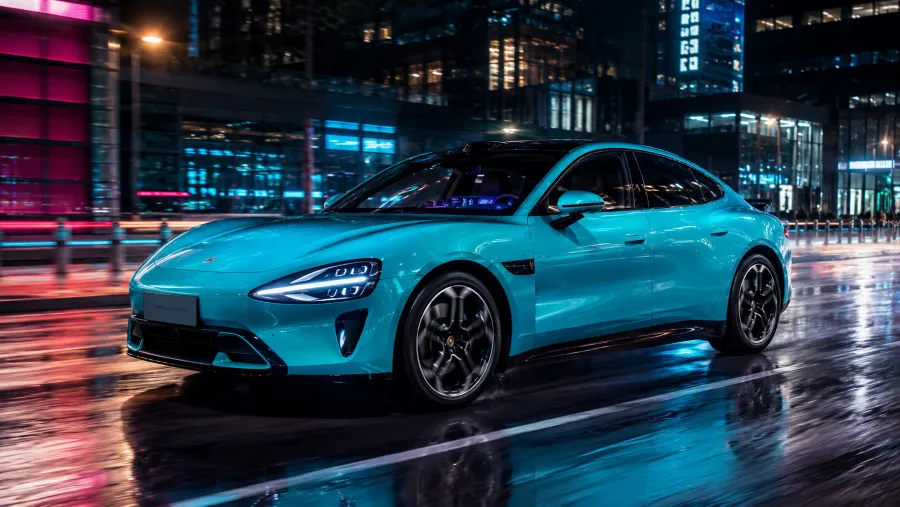
Xiaomi has arguably executed the ecosystem idea most aggressively. Its HyperOS is explicitly built around a “human–vehicle–home” vision, running on phones, tablets, smart-home gadgets and the SU7 sedan and YU7 SUV alike. The payoff has been remarkable: the SU7 passed 200,000 deliveries in under a year, and Xiaomi has muscled into China’s top five EV makers, outselling more established brands in some months. Buyers already embedded in Xiaomi’s world get a level of integration that legacy automakers struggle to match, turning the operating system into a genuine competitive moat rather than a marketing line.
NIO, Baidu, Alibaba and Tencent
Others contribute different layers of the same revolution. NIO developed its own full-stack vehicle operating system and the in-car NOMI assistant, giving it tight control over the experience from chip to screen. Baidu brings mapping, voice and the Apollo autonomous-driving platform; Alibaba and Tencent supply cloud, AI and app ecosystems that thread through many Chinese cabins. The common thread is that software companies, not just carmakers, now sit at the centre of the vehicle — exactly the shift the Huawei Effect set in motion.
Why the Software-Defined Vehicle Changes Everything
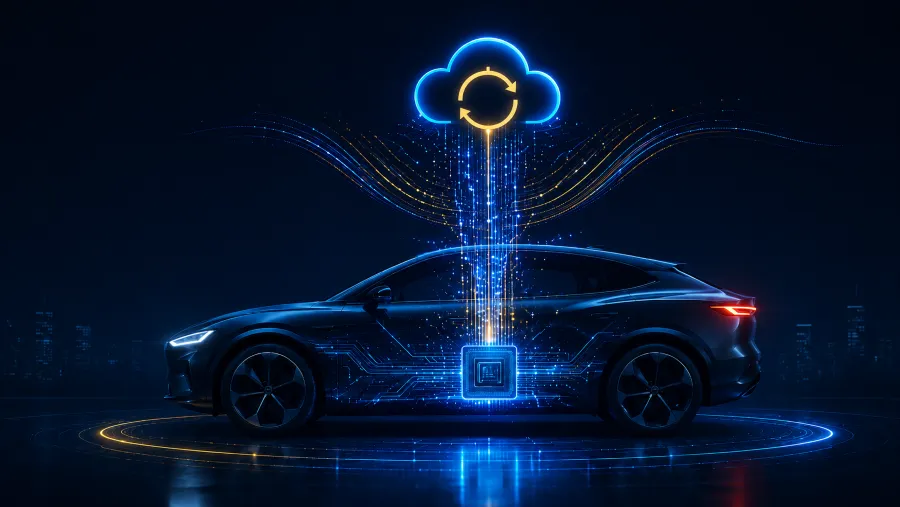
Underlying all of this is the shift to the software-defined vehicle — a car whose character is determined by code that can be rewritten after purchase. An over-the-air update can add features, sharpen the driver-assistance system or refresh the interface, so the car a buyer owns in two years may be meaningfully better than the one they drove home. That single idea upends the traditional model, in which a car began ageing the moment it left the forecourt.
It also explains the speed gap. Chinese makers, steeped in consumer-electronics culture, can take a new model from concept to road in roughly 18 to 24 months, iterating software continuously. Many established Western brands still work on cycles measured in years. The table below summarises how the leading Chinese platforms compare.
| Tech giant | Operating system / platform | Key vehicles | Ecosystem hook |
|---|---|---|---|
| Huawei | HarmonyOS Cockpit + Qiankun ADS | HIMA brands: AITO, Luxeed, Stelato, Maextro, SAIC | Huawei phones, watches and home devices |
| Xiaomi | HyperOS (“human–vehicle–home”) | SU7, YU7 | Xiaomi phones, tablets and smart home |
| NIO | In-house full-stack OS + NOMI assistant | NIO ET and EL series | Battery-swap network and app community |
| Baidu | Apollo driving + maps & voice | Partner and robotaxi vehicles | AI, mapping and autonomous-driving stack |
| Alibaba / Tencent | Cloud, AI and app layers | Various partner brands | Super-app and cloud services |
💡 Buyer’s tip: When comparing two otherwise similar Chinese EVs, look closely at the operating system and its update record. A car that receives frequent, meaningful over-the-air updates will age far better than one with a static system, even if the hardware specs look identical on paper.
What It Means for Drivers — and for the West
For drivers, the upside is real. Cabins are more responsive, voice control actually works, navigation and media follow you between devices, and the car keeps improving long after purchase. The flip side is lock-in: once your phone, watch, home and car all speak the same proprietary language, switching brands carries a hidden cost in lost convenience. The operating system, in other words, is both a feature and a fence.
For Western automakers, the Huawei Effect is a wake-up call. They are pouring resources into their own software-defined platforms and partnering with technology firms to close the gap, but matching the pace and ecosystem depth of China’s tech giants is a formidable task. The competition is no longer only about who can build a better car — it is about who can write a better operating system and wrap a richer digital ecosystem around it.
⚠️ Worth keeping in mind: Many of these systems are deeply tied to Chinese app ecosystems and cloud services. Buyers outside China should check which features, apps and assistants actually work in their region before assuming the full experience travels with the car.
Frequently Asked Questions
What is the ‘Huawei Effect’ in the car industry?
It describes how Huawei, without building its own car, supplies the software brain of the vehicle — the HarmonyOS Cockpit and Qiankun intelligent-driving system — to multiple automakers through its HIMA alliance. It has reframed the car as a software platform first and a piece of hardware second, forcing rivals to compete on operating systems and user experience.
What is HarmonyOS Cockpit and which cars use it?
HarmonyOS Cockpit is Huawei’s in-car operating system for smart displays, AR head-up displays and voice control. It powers the HIMA alliance brands — AITO, Luxeed, Stelato, Maextro and SAIC’s new line — and is increasingly licensed to outside makers, including a GAC Toyota model that became the first Toyota-badged car to use it.
Is Huawei the only Chinese tech giant building car operating systems?
No. Xiaomi’s HyperOS links its phones, home devices and the SU7 and YU7 into one ecosystem; NIO has its own full-stack operating system and NOMI assistant; and Baidu, Alibaba and Tencent supply mapping, voice, AI and cloud layers used across many Chinese cars.
Why does an ecosystem operating system matter to car buyers?
When the car runs the same operating system as your phone, watch and home devices, calls, navigation, media and smart-home controls move seamlessly between them. That continuity is convenient and creates strong brand lock-in, which is why it has become a central battleground rather than a side feature.
How are Western automakers responding to the Huawei Effect?
They are investing heavily in their own software-defined vehicle platforms and partnering with technology firms, but most still develop new models over a longer cycle than Chinese rivals, who can iterate software and hardware in around 18–24 months. Closing that software and ecosystem gap is now a strategic priority.
The Bottom Line: Software Is the New Engine
The Huawei Effect marks a genuine turning point. By proving that the most valuable part of a car can be its operating system — and that a technology company can own that layer across many brands — Huawei has rewired the industry’s incentives. Xiaomi, NIO, Baidu, Alibaba and Tencent have each taken up the idea, and together they have made China the laboratory where the smart vehicle OS is being defined.
For buyers, the message is simple but profound: when you choose one of these cars, you are choosing an ecosystem as much as a vehicle. And for the wider industry, the lesson is unmistakable — in the electric, connected age, software is the new engine, and the companies that master it will set the pace for everyone else.