Chinese Car Resale Value: What to Expect After 3 Years
Chinese car resale value is one of the most important considerations for buyers weighing the total cost of ownership. Whether you’re looking at a budget-friendly BYD, a premium NIO, or an affordable XPeng, understanding what these cars are actually worth after three years is essential to making a financially sound decision.
This guide walks through realistic depreciation rates by brand and powertrain, the factors that move the number most, and practical steps you can take — both as a buyer and a future seller — to protect what your Chinese vehicle is worth.
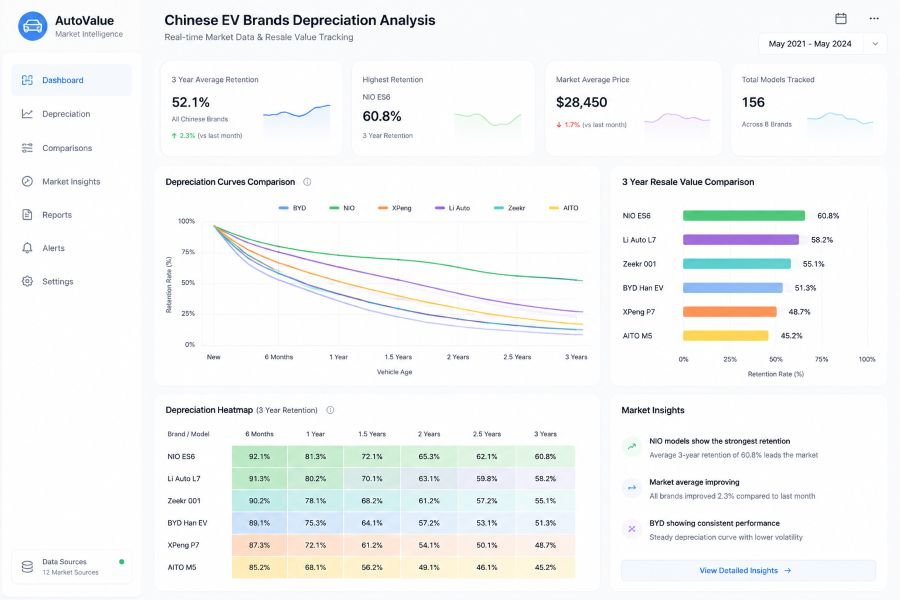
For a quick 12-minute walkthrough of these depreciation patterns before the full breakdown, the video below covers the same ground with expert analysis and worked examples.
Understanding Chinese Car Depreciation Rates
The data on Chinese car resale value reveals consistent patterns across most manufacturers and vehicle types. After three years of ownership, the average Chinese vehicle retains between 40-55% of its original purchase price — a range that shifts significantly depending on brand prestige, vehicle condition and local market demand.
Electric vehicles consistently hold value better than their petrol counterparts. A Chinese EV bought for $35,000 might resell for $17,500-$21,000 after three years, while an equivalent petrol-powered model could fall to $14,000-$15,750 over the same period — a meaningful gap that compounds the longer you own the car.
Two Inexpensive Ways to Protect Resale Value
Tailored leatherette seat covers guard the original upholstery against wear, spills, and sun fade while lifting the cabin’s premium feel — useful for family use and a smart move for protecting resale value. Choose a set listed for your exact model and seat configuration for the cleanest fit.
A simple silicone cover keeps dust, rain, and grit out of the charging port when it is not in use — a small habit that protects the contacts over years of ownership and supports a clean battery health report at resale. Browse the options to match the exact port shape of your BYD, MG, or XPeng model.
EVs vs. Petrol-Powered Chinese Cars
The shift to electric powertrains has fundamentally changed the depreciation landscape for Chinese automobiles. Several factors explain the divergence between EV and petrol resale value:
- Battery technology improvements reduce range anxiety for second owners.
- Growing charging infrastructure makes used EVs more attractive across more markets.
- Government incentives in many regions still favour EV purchases, even pre-owned ones.
- Lower running costs appeal directly to cost-conscious used-car buyers.
- Environmental considerations continue to drive demand for pre-owned electric vehicles.
Factors Affecting Chinese Car Resale Value
Understanding what moves Chinese car resale value helps owners make smarter decisions about maintenance, usage and timing of sale. Several interconnected factors determine how much of your initial investment comes back.
1. Brand Reputation and Heritage
Established manufacturers like BYD, XPeng and NIO command noticeably higher resale values than lesser-known brands. These companies have invested heavily in quality assurance, technology development and after-sales support — all of which directly influence how desirable a used example is.
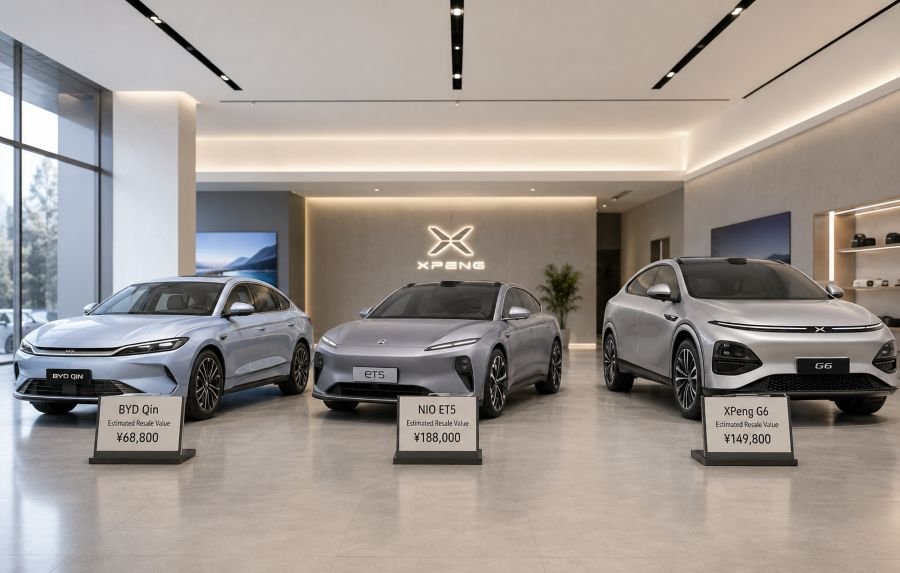
A three-year-old BYD Qin might retain around 52% of its original value, while an equivalent vehicle from a less-established brand could retain only 38%. That fourteen-point gap represents real money at resale.
2. Mileage and Condition
As a general guide, each additional 10,000 miles driven reduces resale value by roughly 2-3%. A vehicle with 30,000 miles after three years — a typical 10,000-mile annual average — holds value far better than one with 60,000 miles on the clock.
Condition covers both mechanical performance and appearance. Paint protection, a clean interior, the absence of dents, and a complete maintenance record all build buyer confidence and support a higher asking price.
💡 Pro tip — document everything: Keeping detailed service records — oil changes, tyre rotations, warranty repairs — can lift resale value by 5-8%. Buyers read a well-documented history as a sign of a well-maintained car, and they pay accordingly.
3. Battery Health for Electric Vehicles
For EVs, battery degradation has a direct line to resale value. Most manufacturers warranty batteries for 8-10 years or 100,000-plus miles, which reduces buyer risk considerably. A battery still holding 90%-plus of its original capacity commands a premium, while a noticeably degraded pack pulls the price down sharply.
Sensible battery habits — avoiding deep discharges, moderating fast-charging frequency, and storing the car at reasonable temperatures — preserve capacity and translate directly into a stronger resale number.
4. Market Demand and Regional Factors
Geography has an outsized effect on Chinese car resale value. In markets with strong charging infrastructure and supportive environmental policy — Western Europe, parts of the Gulf, Singapore — Chinese EVs hold their value well. In regions with limited charging access or import restrictions, resale values are noticeably depressed.
Seasonality matters too. Spring and early summer typically bring stronger used-car prices as buyers prepare for road trips, while winter months tend to soften demand and pricing.
Resale Value Comparison: Top Chinese Car Brands
| Brand | Vehicle Type | Original Price Range | 3-Year Resale Value | Estimated Resale Price |
|---|---|---|---|---|
| BYD | EV (Qin DM-i) | $32,000–$40,000 | 52–58% | $16,640–$23,200 |
| NIO | Premium EV (ET5) | $48,000–$58,000 | 55–62% | $26,400–$35,960 |
| XPeng | EV (G6) | $38,000–$48,000 | 53–60% | $20,140–$28,800 |
| Geely | Petrol (Emgrand) | $12,000–$16,000 | 42–48% | $5,040–$7,680 |
| Chery | Petrol (QQ3) | $9,000–$12,000 | 38–45% | $3,420–$5,400 |
| MG | EV (MG4) | $25,000–$32,000 | 48–55% | $12,000–$17,600 |
Premium vs. Budget Chinese Car Resale Value
Market segment matters as much as brand. Premium models hold a stronger percentage of their value despite a steeper sticker price, while budget-oriented vehicles see sharper percentage-based depreciation.
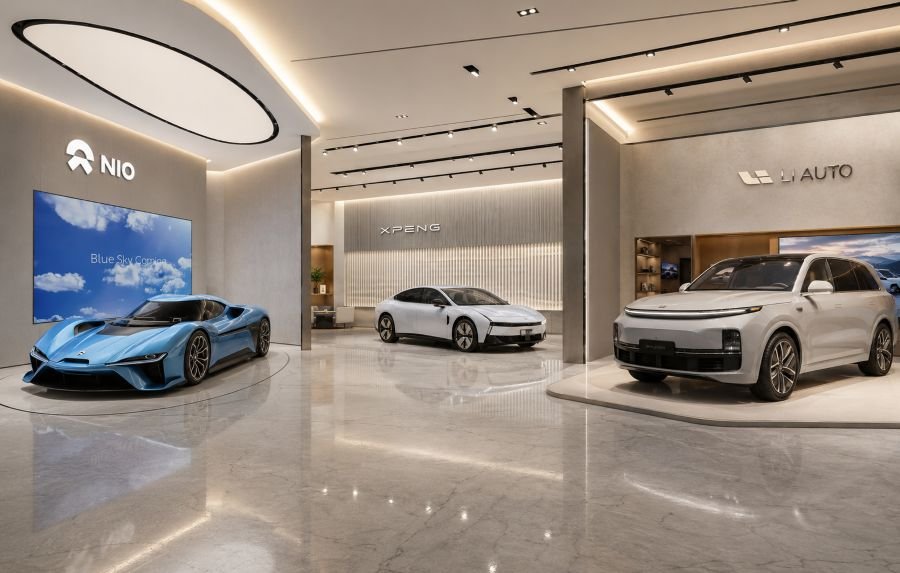
Premium Segment (NIO, Li Auto, High-End XPeng)
Premium Chinese vehicles aimed at affluent buyers — advanced features, better materials, stronger brand positioning — typically retain 55-65% of their original value after three years. These cars attract second owners seeking discounted access to Chinese automotive technology without paying full retail.
Mid-Range Segment (BYD, XPeng, MG)
The mid-range segment, where most global buyers actually shop, typically retains 50-58% of original value. These models balance affordability with genuine quality, which is exactly what used-car buyers respond to.
Budget Segment (Chery, JAC, Lifan)
Budget Chinese vehicles depreciate most sharply in percentage terms, retaining only 35-48% after three years. The absolute dollar gap stays modest, though, simply because the starting price is so much lower.
⚠️ Worth keeping in mind: Budget Chinese vehicles can face extra depreciation pressure from lingering perceptions about manufacturing quality, even where actual reliability has improved substantially. Consumer perception often lags well behind real-world quality gains.
Maximizing Your Chinese Car’s Resale Value
Market conditions and brand reputation sit largely outside your control, but several practical steps measurably improve what you get back at resale.
Maintenance and Documentation
Sticking to the manufacturer’s service schedule and keeping meticulous records can lift resale value by 8-12%. Regular oil changes, filter replacements, fluid checks and component inspections signal responsible ownership and reduce a buyer’s worry about hidden problems.
Battery Care for Electric Vehicles
For Chinese EVs, battery preservation matters most. Avoid extreme-temperature exposure, limit how often you fast-charge, keep the state of charge between roughly 20-80% during storage, and park in a climate-controlled space when you can.
Cosmetic Preservation
Paint protection film, ceramic coating, interior conditioning and careful regular cleaning maintain a car’s appearance. These cost roughly $500-$2,000 but can add $2,000-$5,000 to resale value — a clearly worthwhile trade.
💡 Detailing pays for itself: A professional detail two to three weeks before listing the car yields strong returns. First impressions shape buyer psychology, often justifying a $500-$800 detailing spend through a meaningfully higher selling price.
Strategic Timing
Watch the seasonal cycle. Spring generally brings stronger resale prices as buyers gear up for road trips and summer driving; avoid listing in the depths of winter, when both demand and prices typically soften.
Warranty Management
If your Chinese vehicle carries transferable warranty coverage, make that a headline selling point. A warranty acts like insurance for the next owner, and that reassurance translates directly into a higher price they’re willing to pay.

Regional Variations in Chinese Car Resale Value
Geography creates real differences in Chinese car resale value, shaped by regulation, charging infrastructure, cultural attitudes and tariff policy.
Western Europe
Strong environmental policy, dense charging infrastructure, and growing acceptance of Chinese brands support healthy resale values here. Three-year-old Chinese EVs typically retain 55-65% of original value — among the strongest figures globally.
United States
Tariffs, limited official presence for many Chinese brands, and domestic-industry protection suppress resale values in the US. Most Chinese cars retain only 40-50% after three years, and some models are essentially unsellable locally due to import restrictions.
Australia and Asia-Pacific
Australia shows solid resale values (50-60%) for established Chinese brands, while Southeast Asian markets vary more, depending on local regulation and brand recognition.
Middle East and Gulf States
Wealthy Gulf markets with strong appetite for premium Chinese brands like NIO see exceptional resale retention (58-68%), while budget Chinese brands see comparatively soft demand and weaker resale values.
Future Outlook: Chinese Car Resale Value Trends
Several forces are likely to shape Chinese car resale values going forward:
- Technology pace: rapid progress in autonomous driving, battery chemistry and software means used cars with outdated tech may depreciate faster as buyer expectations rise.
- Battery technology: as solid-state and sodium-ion batteries mature, current lithium-ion vehicles may face extra depreciation pressure, while early adopters of newer chemistries could command a premium.
- Supply chain maturity: as Chinese manufacturing scales globally — including local production in Europe and North America — tariff-driven pricing pressure may ease, which could support healthier resale values in currently restricted markets.
Practical Tips for Sellers of Chinese Vehicles
Pricing Strategy
Research comparable listings across multiple platforms to set a realistic price. Pricing 5-8% below market initially tends to attract more interest and can spark competitive offers that push the final price back up.
Effective Marketing
High-quality photos showing the exterior, a clean interior and the car’s technology features dramatically increase inquiries. A $100-$200 investment in professional photography often returns an extra $1,000-$3,000 in final selling price.
Transparency and Trust
Provide full service history, accident reports, warranty status and any mechanical inspection results. Transparency removes buyer hesitation and supports a stronger price; offering a pre-purchase inspection by an independent mechanic shows real confidence in the car’s condition.
Platform Selection
Different platforms reach different buyers. Specialist Chinese-car forums and marketplaces attract enthusiasts willing to pay closer to top dollar, while mainstream listing sites offer wider reach at a potentially lower average price.
🎯 Multi-platform strategy: List the car on more than one platform at once — manufacturer marketplaces, general listing sites and specialist Chinese-car forums. Wider exposure creates the competitive pressure that tends to push the final price higher.
Frequently Asked Questions
How much do Chinese cars depreciate after 3 years?
Most Chinese vehicles depreciate 40-55% of their original value over three years. Electric vehicles typically retain 50-60%, while petrol-powered vehicles retain 40-45%. Premium brands maintain higher percentages than budget models.
Do Chinese electric cars hold value better than petrol cars?
Yes, Chinese EVs consistently outperform petrol vehicles on resale value retention. Better running costs, improving battery technology, expanding charging infrastructure and strong environmental demand all support superior EV resale values.
Which Chinese car brands have the best resale value?
BYD, NIO and XPeng maintain the strongest resale values thanks to brand reputation, build quality, advanced technology and growing global demand. These premium and mid-range brands typically retain 52-62% of original value after three years.
What factors most significantly affect Chinese car resale value?
Key factors include brand reputation, mileage, vehicle condition, battery health for EVs, maintenance history, geographic market and timing of sale. Documenting maintenance and protecting the car’s condition give owners the greatest control over resale value.
How can I maximize my Chinese car’s resale value?
Keep meticulous service records, keep mileage reasonable, protect the car’s cosmetic condition, manage battery health for EVs, maintain warranty coverage where possible, and time your sale strategically. Professional detailing before listing also delivers a strong return.
Conclusion: Making Informed Decisions About Chinese Car Resale Value
Understanding Chinese car resale value after three years turns ownership from a pure spending decision into a calculated financial one. Market conditions, brand reputation and geography sit largely outside your control, but strategic maintenance, cosmetic care and well-timed selling all give owners real leverage to maximize what they recover.
The Chinese automotive industry has matured significantly, and manufacturers like BYD, XPeng and NIO now build vehicles that rival premium international brands on technology, quality and reliability. That shift directly supports stronger resale values, particularly for electric vehicles sitting at the intersection of innovation and everyday practicality.
Whether you’re buying a Chinese vehicle today or planning to sell one down the line, prioritise brand reputation, keep careful documentation, protect the car’s condition, and watch the market cycle. Do that consistently, and the resale outcome takes care of itself when it’s time to move on to your next vehicle.