How Chinese Cars Are Changing Europe and Australia While America Waits
The same Chinese car that is reshaping showrooms in Berlin, Madrid, and Sydney is completely invisible in Los Angeles. While Europe and Australia have thrown open their doors to brands like BYD, MG, Chery, and GWM, the United States has built a wall — a 100% tariff that keeps these vehicles off American roads entirely.
The result is a tale of three markets moving in radically different directions. In 2026, Chinese brands are closing in on a tenth of all European car sales and roughly a quarter of the Australian market, yet hold essentially zero percent in the US. This is the story of how that gap opened, why it matters, and what it means for car buyers on both sides of the divide.
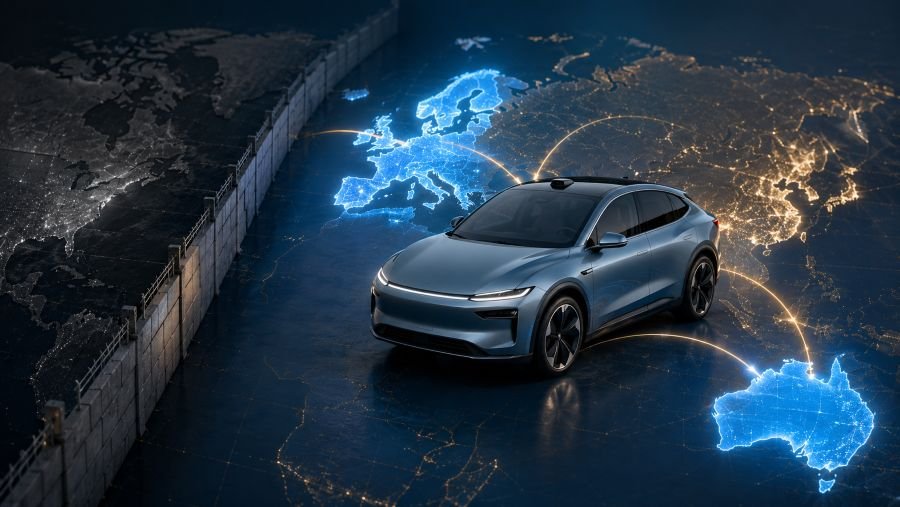
For most of automotive history, a genuinely new wave of carmakers arrived slowly. Japanese brands took the better part of two decades to establish themselves in the West from the 1970s, and Korean brands followed a similar slow climb from the 1990s. The Chinese wave is different. It is arriving at a speed the industry has never witnessed — and the three largest English-speaking-adjacent markets are responding in three completely different ways. Understanding those responses tells you almost everything about where the global car industry is heading.
For a quick visual summary of how the three markets compare before we dig into the detail, the short video below breaks down where Chinese brands stand in Europe, Australia, and the United States in 2026.
📹 How Chinese cars are reshaping Europe and Australia while America waits | Video by Chinese Cars Asia
Europe: Chinese Brands Close In on 10% of the Market
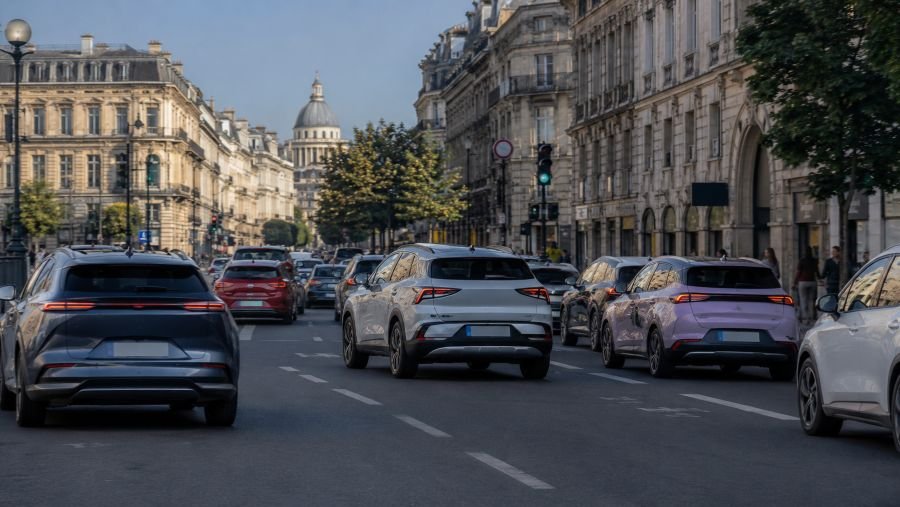
Europe is where the Chinese transformation is most visible to the mainstream buyer. By the end of 2025, Chinese brands had reached a record 9.5% share of the European car market, and through early 2026 they have been pushing toward the symbolic 10% threshold. In the segment that matters most for growth — fully electric cars — Chinese manufacturers now account for a record share of around 15% of sales, and their combined volumes have, in several recent months, outsold established rivals such as Kia.
The brand picture is led by MG, the once-British marque now owned by SAIC, which has become the most successful Chinese brand in Europe; the region accounts for more than half of MG’s global registrations. Hot on its heels is BYD, which has been the fastest-rising major brand, posting eye-watering year-on-year growth (well over 100% in some months of 2026) on the strength of models like the Dolphin Surf small EV and the Seal U plug-in hybrid. Behind them, a whole cohort of newcomers — Leapmotor, Chery’s Omoda and Jaecoo, Xpeng, and Zeekr — are recording triple-digit and even quadruple-digit growth rates as they expand across more than two dozen European markets.
Crucially, much of this growth has shifted toward plug-in hybrids, which (unlike pure EVs) are not subject to the EU’s additional duties on Chinese-built electric cars. By blending EVs, plug-in hybrids, and conventional models, Chinese brands have found a way to keep growing even as trade barriers tighten.
Australia: A Quarter of the Market in Record Time
If Europe shows the Chinese wave rising, Australia shows it cresting. The Australian market has embraced Chinese brands more enthusiastically than almost anywhere in the developed world. By the first two months of 2026, Chinese automakers accounted for roughly 24% of the entire new-car market — up from about 14% in the same period a year earlier. That is a near-doubling of share in twelve months.
Four Chinese brands now regularly appear inside the Australian top ten: BYD, Chery, GWM, and MG. BYD has been the standout, with sales up well over 100% in 2026 and the company openly targeting a top-three finish by year’s end. Its momentum is built on genuinely popular models — the BYD Shark 6 plug-in hybrid ute has reshaped that segment, while the Sealion 7 has become the best-selling non-Tesla electric vehicle in the country. Chery’s Tiggo 4 and GWM’s Haval Jolion have brought affordable SUVs to huge numbers of buyers, and smaller brands like Leapmotor, Zeekr, Omoda, and Jaecoo are piling in behind them.
The appeal is straightforward. Australia has no domestic car industry to protect, no punitive tariffs on Chinese vehicles, and a buyer base squeezed by cost-of-living pressures. Chinese brands arrived with affordable electric, plug-in hybrid, hybrid, and petrol options all at once — and found a sweet spot that established Japanese and Korean brands have struggled to defend, with several seeing sharp double-digit declines.
America: The 100% Wall
Then there is the United States, where the story is the exact opposite. In May 2024, the Biden administration raised the tariff on Chinese-made electric vehicles from 25% to 100% — a rate so high it functions not as a competitive handicap but as a de facto ban. The Trump administration kept the tariff in place and went further, finalizing rules that restrict Chinese software (from 2026) and hardware (by 2029) in connected vehicles. US trade officials have signaled they have no intention of easing the barrier soon.
The effect is total exclusion. A BYD Seagull that sells for around $10,000 in China, or a Xiaomi SU7 that hits 60 mph in under three seconds, simply cannot be bought at any US dealership. And yet the appetite is unmistakable. Surveys in 2026 found that around 38% of US consumers would seriously consider a Chinese EV if it were available, and that figure rises sharply among younger buyers who encounter these cars constantly on TikTok and YouTube. American viewers can watch detailed walkarounds of cars they are legally unable to purchase — one of the stranger dynamics in modern trade policy.
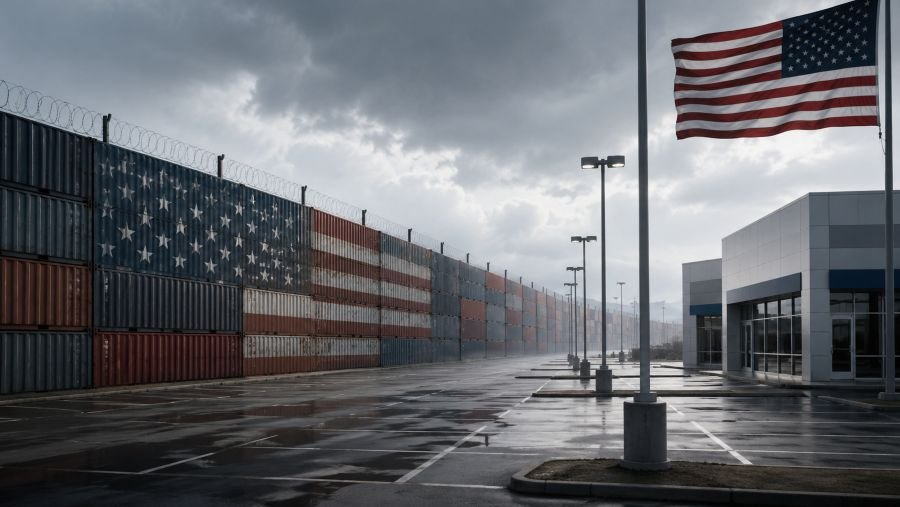
The irony is that the wall is being built around a company that the industry’s own leaders openly admire. Ford’s chief executive Jim Farley has repeatedly called BYD “the best in the business,” and reports suggest Ford is now reorienting its strategy around the Chinese cost curve rather than Tesla. Meanwhile, BYD overtook Tesla as the world’s largest EV seller in 2025, delivering about 2.26 million battery-electric vehicles against Tesla’s 1.64 million. Canada, for its part, has already cracked the door open, cutting its tariff to 6.1% on a quota of Chinese EVs and giving BYD a North American foothold through planned dealerships.
Three Markets, Three Outcomes
The contrast is best seen side by side. The table below summarizes where each market stands in 2026 — the share Chinese brands hold, the names leading the charge, and the policy environment shaping it all.
| Market | Chinese Brand Share (2026) | Leading Brands | Policy / Tariff | Direction |
|---|---|---|---|---|
| Europe | ~10% of all cars, ~15% of EVs | MG, BYD, Leapmotor, Chery | Targeted EU duties on Chinese EVs | Rising fast |
| Australia | ~24% of all cars | BYD, Chery, GWM, MG | No special tariffs | Surging |
| United States | ~0% (not sold) | None available | 100% tariff (de facto ban) | Blocked |
💡 Pro Tip: Watch the plug-in hybrid numbers, not just pure EVs. In both Europe and Australia, Chinese brands have grown fastest by offering PHEVs and hybrids alongside EVs — giving cautious buyers an easy first step into the brand without full charging commitment. It is the quiet engine behind the headline market-share gains.
Why the Gap Matters for Buyers
For buyers in Europe, the UK, and Australia, the practical upshot is simple: more choice and lower prices. The flood of Chinese competition has forced legacy brands to sharpen pricing and accelerate their own electric plans, which benefits everyone shopping for a car — whether or not they ultimately buy Chinese. Buyers in these markets can test-drive a BYD, MG, or Zeekr at a local dealer today and benefit from genuine warranty support and a growing service network.
For American buyers, the gap means the opposite: fewer affordable EV options and prices that remain stubbornly high. The cheapest new EVs in the US still start near $29,000, roughly three times the price of the cheapest Chinese models sold elsewhere. Whether the tariff wall protects American jobs or simply protects American buyers from affordable cars is one of the most contested questions in the industry — and the answer will shape the next decade of mobility.
⚠️ Important Note: Market-share figures and tariff policies change frequently and vary by month and data source. The numbers here reflect the best available 2026 data at the time of writing; always check the latest official registration statistics and current trade rules before drawing firm conclusions or making a purchase decision.
Essential Accessories If You’re Joining the Switch
If you live in Europe or Australia and this shift has you considering a Chinese EV or plug-in hybrid, a few well-chosen accessories make ownership smoother from day one — from faster, tidier home charging to interior protection that helps preserve resale value. The picks below suit BYD, MG, Chery, GWM, and Zeekr models alike, and are practical rather than gimmicky.
A dual-channel dash cam with a Sony STARVIS sensor and parking mode protects your investment whether you are driving or parked at a charging station. Aim for 4K front / 2K rear with built-in Wi-Fi for easy footage review — increasingly expected by insurers and a sound safeguard for any new car.
Model-tailored, all-weather TPE floor mats and a boot liner are the single best way to protect interior carpets and preserve resale value — especially worthwhile on popular models like the BYD Atto 3, MG ZS, or Chery Tiggo. Always search your exact model and year for a precise, no-slip fit.
EVs and plug-in hybrids are heavy, and correct tyre pressure directly affects real-world range and efficiency. A rechargeable digital inflator with a preset auto-stop keeps pressures optimal and quickly pays for itself in saved range and longer tyre life — a must-have in any boot.
A waterproof, fire-retardant carry bag keeps your charging cable clean and contained in the boot — no more grimy hands or a dirty load space after every charge. A small, inexpensive accessory that solves a daily annoyance every EV owner eventually faces.
A dedicated MagSafe-compatible mount with wireless charging keeps your phone visible for navigation and topped up without cluttering the minimalist dashboards found in modern Chinese-brand cabins. Vent and air-outlet versions fit most interiors cleanly and install in seconds.
Chinese EVs sold in Europe and the UK use the Type 2 (IEC 62196) standard for AC charging. A TÜV-certified 32A / 22kW cable future-proofs your setup, reaches awkward public chargers, and works with home wallboxes and street posts alike. Note: this is the European connector — no US link is shown, as US charging standards differ.
FAQ: Chinese Cars in Europe, Australia & the USA
What share of the European car market do Chinese brands hold in 2026?
Chinese brands are approaching 10% of all new passenger cars sold in Europe in early 2026, and around 15% of fully electric car sales. MG is the largest Chinese brand in the region, while BYD, Leapmotor, Chery, Xpeng and Zeekr are growing rapidly, with BYD posting triple-digit year-on-year growth.
How popular are Chinese cars in Australia?
Chinese brands accounted for roughly a quarter of the Australian new-car market in early 2026, up from about 14% a year earlier. Four Chinese brands — BYD, Chery, GWM and MG — regularly sit inside the top ten, helped by models like the BYD Shark 6, Sealion 7 and Chery Tiggo 4.
Why can’t Americans buy Chinese cars like the BYD Seagull?
Since May 2024 the United States has applied a 100% tariff on Chinese-made electric vehicles, which functions as a de facto ban on direct imports. BYD and other Chinese brands do not sell passenger cars in the US, and new rules also restrict Chinese software and hardware in connected vehicles.
Is BYD bigger than Tesla now?
In battery-electric vehicles, yes. BYD sold about 2.26 million BEVs in 2025, overtaking Tesla’s roughly 1.64 million to become the world’s top EV seller for the first time. BYD also outsells Tesla in several European and Australian months, though it remains absent from the US market.
Will Chinese cars ever be sold in the United States?
It is uncertain. The 100% tariff remains in place and US officials have signaled they will not ease it soon, though there have been hints that Chinese automakers could be allowed in if they build cars with American factories and workers. For now, US buyers can only watch Chinese EVs online rather than buy them.
The Bottom Line
Europe, Australia, and the United States are running the same experiment with three different settings. Europe is letting Chinese brands in while managing the pace with targeted tariffs. Australia has welcomed them almost without restriction and is being reshaped fastest of all. America has slammed the door shut. Within a few years, these three markets will offer a clear, real-world verdict on which approach serves buyers and industries best.
What is no longer in question is the strength of the product. The same cars driving these market-share gains in Sydney and Stuttgart are the ones American buyers are watching enviously on their phones. Whether the US wall holds, cracks like Canada’s, or is replaced by local Chinese factories, the global center of gravity in the car industry has already shifted east — and the rest of the world is adjusting in real time.