BYD Seagull vs Chevrolet Bolt / Equinox EV: The Budget EV War America Is Missing
There is a budget electric-car war raging across the world right now, and most American buyers will never get to fight in it. On one side sits the BYD Seagull, a fully electric hatchback that starts at roughly $10,000 in China. On the other side sits America’s idea of an affordable EV: the returning 2027 Chevrolet Bolt at $28,995 and the Chevrolet Equinox EV at around $34,995.
This comparison puts the BYD Seagull head-to-head with Chevrolet’s two cheapest electric vehicles to answer a simple but uncomfortable question: how does a $10,000 Chinese city car stack up against America’s most affordable EVs, and why can’t US buyers have it? Here is the full breakdown of price, range, technology, and the politics keeping the real budget EV war off American roads.
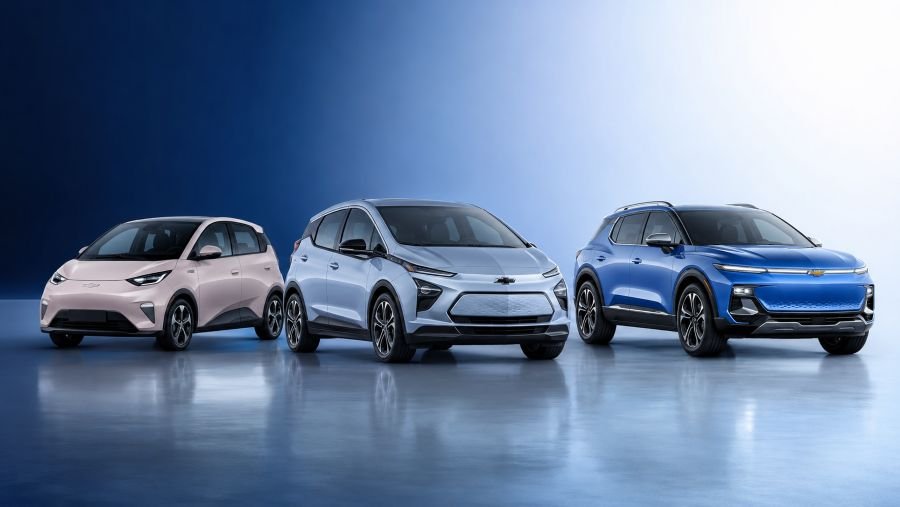
For most of the past decade, “affordable electric car” has been a contradiction in terms in the United States. The original Chevrolet Bolt was one of the few honest attempts at a cheap, long-range EV, and when Chevrolet killed it in 2023 it left a gaping hole at the bottom of the market. Meanwhile, on the other side of the Pacific, BYD has been quietly building the cheapest practical EV on earth and selling it by the hundreds of thousands. Understanding how these cars compare reveals exactly how wide the gap between the two markets has become.
If you would rather see the comparison at a glance, the short video below breaks down the BYD Seagull against the Chevrolet Bolt and Equinox EV on price, range, and technology before we dig into the full detail.
📹 BYD Seagull vs Chevrolet Bolt / Equinox EV — the budget EV war explained | Video by Chinese Cars Asia
The $10,000 EV America Can’t Buy: BYD Seagull
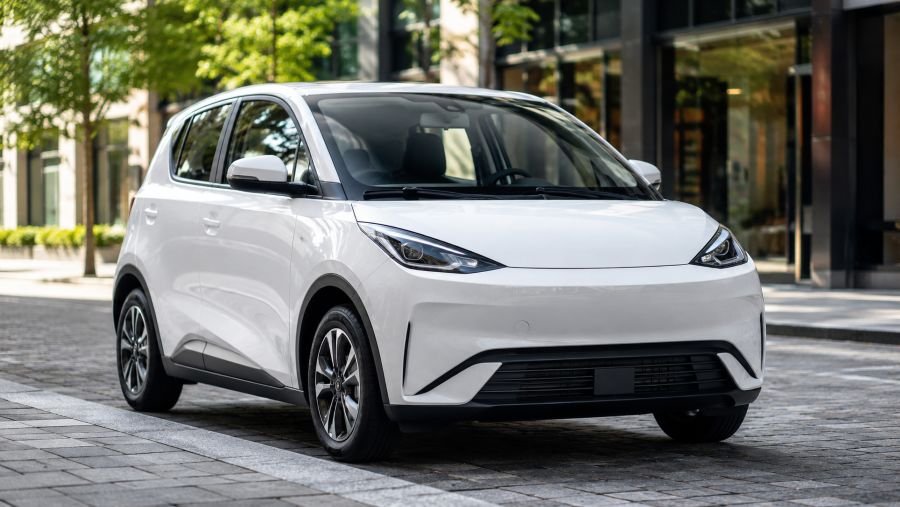
The BYD Seagull, sold internationally as the Dolphin Mini or Dolphin Surf, is the car that rewrote the rules of EV pricing. The 2026 model launched in China in May starting at just 69,900 yuan, or roughly $10,300, with the top trims reaching about $12,600, and LiDAR-equipped smart-driving versions topping out near $14,400. In the United Kingdom it arrives as the Dolphin Surf from around £7,700, rising to about £10,000 with the long-range battery and driver-assistance package.
Despite the rock-bottom price, the Seagull is no penalty box. It uses BYD’s own safety-focused LFP Blade Battery in two sizes: a 30.08 kWh pack good for 305 km and a 38.88 kWh pack rated at 405 km on China’s lenient CLTC cycle, which equates to a more realistic 250 to 320 km in everyday driving. A single front motor produces 55 kW (73 hp), which sounds modest until you remember this is a sub-3.8-metre city car weighing barely over a tonne. Inside, the 2026 update adds a 12.8-inch rotating touchscreen, BYD’s DiLink 150 cockpit software, 50W wireless charging, and the option of a roof-mounted LiDAR sensor for advanced driver assistance — a feature that, until recently, was reserved for cars costing five times as much.
Chevrolet’s Comeback Kid: The 2027 Bolt Returns
America’s most direct conceptual answer to the Seagull is the resurrected Chevrolet Bolt. After killing the original in 2023, General Motors listened to the outcry and brought it back for the 2027 model year, though only as a limited run expected to last around 18 months. The new Bolt starts at $28,995 including destination for the LT trim, with a sportier RS version at $31,600.
The reborn Bolt is far more than a nostalgia play. It rides on GM’s Ultium foundations with a 65 kWh LFP battery delivering an EPA-estimated 255 to 262 miles of range — and independent testing has seen close to 290 miles in the real world. Its X76 drive unit, shared with the Equinox EV, produces 210 hp and sends the car to 60 mph in about 7.1 seconds. Crucially, the new Bolt charges 2.5 times faster than its predecessor thanks to 150 kW DC capability (10 to 80% in roughly 25 minutes) and ships with a native NACS port for direct Tesla Supercharger access. The cabin is modernised with dual 11-inch displays running Google built-in software, though it drops Apple CarPlay and Android Auto entirely.
The Affordable American SUV: Chevrolet Equinox EV
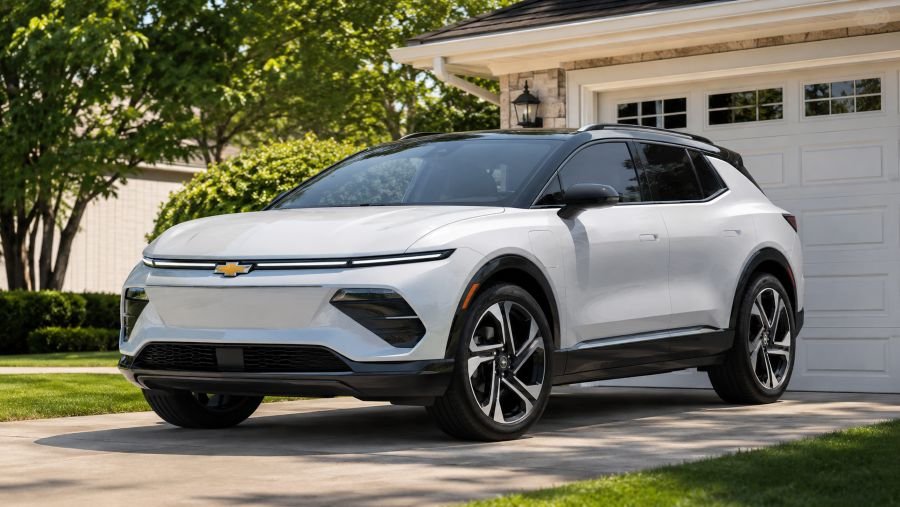
If the Bolt is America’s budget hatchback, the Chevrolet Equinox EV is its affordable family SUV — and currently one of the best-selling electric vehicles in the country. Pricing starts at about $34,995, climbing past $44,000 for the loaded RS trim. For that money, buyers get a genuinely spacious compact crossover with up to 57.2 cubic feet of cargo space and an EPA-estimated range of up to 319 miles in single-motor front-wheel-drive form.
The Equinox EV pairs an 85 kWh battery with either a 220 hp front-drive setup or a 300 hp dual-motor all-wheel-drive system that still manages 307 miles. DC fast charging peaks at 150 kW, adding about 70 miles in 10 minutes, and Chevrolet’s excellent hands-free Super Cruise driver-assistance system is available. A huge 17.7-inch central touchscreen anchors the Google-based infotainment system. Like the Bolt, it omits smartphone mirroring, which remains its most controversial decision.
Head-to-Head: BYD Seagull vs Chevy Bolt vs Equinox EV
Numbers tell the story most clearly. The table below lines up the three contenders across the specifications that matter most to budget EV buyers. Bear in mind the Seagull’s range is quoted on the lenient CLTC cycle, while the Chevrolets use the stricter EPA standard, so the gap in usable range is narrower than the headline figures suggest.
| Specification | BYD Seagull (2026) | Chevrolet Bolt (2027) | Chevrolet Equinox EV (2026) |
|---|---|---|---|
| Starting price | ~$10,300 (China) | $28,995 (incl. destination) | ~$34,995 |
| Body style | City hatchback | Compact hatchback | Compact SUV |
| Range | Up to 405 km / ~251 mi (CLTC) | 255–262 mi (EPA) | Up to 319 mi (EPA) |
| Battery | 30.08 / 38.88 kWh LFP | 65 kWh LFP | 85 kWh |
| Power | 55 kW (73 hp) | 210 hp | 220 hp (FWD) / 300 hp (AWD) |
| DC fast charging | Up to ~40 kW (class-typical) | 150 kW (10–80% ~25 min) | 150 kW (~70 mi in 10 min) |
| Center screen | 12.8-inch | Dual 11-inch | 17.7-inch |
| US availability | Not available | Yes (limited run) | Yes |
💡 Pro Tip: Don’t be fooled by the Seagull’s 405 km headline. China’s CLTC cycle is far more optimistic than the EPA standard used in the US. Apples-to-apples, the Seagull’s usable range sits closer to the Bolt’s than the raw numbers imply — the truly staggering gap is in price, not range.
Why America Is Missing the Real Budget EV War
The most revealing part of this comparison is not the spec sheet — it is the absence on it. The BYD Seagull simply cannot be bought new in the United States, and the reasons are political rather than technical. In 2024 the US imposed tariffs of roughly 100% on Chinese-made electric vehicles, effectively doubling their landed price and making them commercially unviable. BYD, unlike in Europe and Latin America, does not sell passenger cars in the US market at all.
The result is a strange asymmetry. European and Australian buyers can walk into a showroom and drive away in a Seagull-class EV for the price of a well-equipped e-bike, while American buyers’ “cheapest” options start at nearly three times that figure. Chevrolet deserves real credit for the returning Bolt and the strong-selling Equinox EV — they are genuinely good, genuinely affordable cars by US standards. But “affordable by US standards” and “affordable by global standards” have become two very different things.

⚠️ Important Note: Pricing and specifications differ sharply by region and change frequently. The Seagull’s figures reflect Chinese-market pricing and the CLTC range cycle; the Chevrolet figures reflect US MSRP and EPA ratings. Always confirm current local pricing, incentives and availability with an official dealer before making a buying decision.
Which One Should You Buy?
For the vast majority of readers outside the US, the BYD Seagull is the obvious value champion — nothing else delivers a modern, safe, tech-laden EV at anywhere near its price. If you live in Europe, Australia, or Latin America, it is one of the smartest small-car purchases available today.
For American buyers, the choice narrows to Chevrolet’s pair. Pick the 2027 Bolt if you want the lowest possible price, a compact and easy-to-park footprint, and nearly 300 miles of real-world range for city and commuter duty — but act fast, because it is a limited-run model. Choose the Equinox EV if you need genuine SUV space, the longest range of the trio at up to 319 miles, and available Super Cruise for highway driving, and you can stretch roughly $6,000 further. Both Chevrolets share the same trade-off: excellent value and modern hardware, but no Apple CarPlay or Android Auto.
Essential Accessories for Your New EV
Whichever side of this budget EV war you land on, a few well-chosen accessories make ownership smoother from day one — from faster, tidier home charging to interior protection that helps preserve resale value. The picks below suit the Bolt, the Equinox EV, and the Seagull alike, and are practical rather than gimmicky.
A dual-channel dash cam with a Sony STARVIS sensor and parking mode protects your investment whether you are driving or parked at a charging station. Aim for 4K front / 2K rear with built-in Wi-Fi for easy footage review — a smart safeguard for any new EV.
Model-tailored, all-weather TPE floor mats and a boot liner are the single best way to protect interior carpets and preserve resale value — especially worthwhile on a budget EV you plan to keep for years. Always search your exact model and year for a precise, no-slip fit.
EVs are heavy, and correct tyre pressure directly affects real-world range and efficiency — a critical factor on small-battery cars like the Seagull and Bolt. A rechargeable inflator with a preset auto-stop keeps pressures optimal and quickly pays for itself in saved range and tyre life.
A waterproof, fire-retardant carry bag keeps your charging cable clean and contained in the boot — no more grimy hands or a dirty load space after every charge. A small, inexpensive accessory that solves a daily annoyance every EV owner eventually faces.
Since both Chevrolets drop Apple CarPlay and Android Auto, a dedicated MagSafe-compatible mount with wireless charging is more useful than ever — it keeps your phone visible for navigation and topped up without cluttering the dashboard. Vent and air-outlet versions fit most interiors cleanly.
European-market EVs such as the Dolphin Surf use the Type 2 (IEC 62196) standard for AC charging. A TÜV-certified 32A / 22kW cable future-proofs your setup, reaches awkward public chargers, and works with home wallboxes and street posts alike. Note: this is the European connector — US cars like the Bolt and Equinox EV use NACS/J1772 instead, so no US link is shown.
FAQ: BYD Seagull vs Chevy Bolt & Equinox EV
Is the BYD Seagull available in the United States?
No. The BYD Seagull is not sold in the United States. Roughly 100% US tariffs on Chinese-made EVs, plus the fact that BYD does not sell passenger cars in the US, keep it out of American showrooms. It is available in China from around $10,000 and in Europe as the Dolphin Surf.
How much does the BYD Seagull cost compared to the Chevy Bolt and Equinox EV?
In China the 2026 Seagull starts at about $10,300. The returning 2027 Chevrolet Bolt starts at $28,995 including destination, and the Chevrolet Equinox EV starts at around $34,995. The Seagull is roughly a third of the price of America’s cheapest new EV.
What is the range of the BYD Seagull versus the Chevrolets?
The Seagull offers up to 405 km (about 251 miles) on the lenient CLTC cycle, which means a smaller real-world figure. The 2027 Bolt is EPA-rated at 255 to 262 miles, and the Equinox EV reaches up to 319 miles in front-wheel-drive form — the longest range of the three.
Why are Chinese EVs like the Seagull so much cheaper?
BYD controls its own battery production, semiconductors and core components, and benefits from massive scale and a mature domestic supply chain. The Seagull also uses an affordable LFP Blade Battery and a simple single-motor layout, all of which keep costs far below Western rivals.
Which is the better buy, the Chevrolet Bolt or the Equinox EV?
The 2027 Bolt is the better value for city drivers and commuters who want the lowest price and a compact footprint. The Equinox EV suits buyers needing more space, longer range and SUV practicality for roughly $6,000 more. Both use Google built-in software and omit Apple CarPlay and Android Auto.
The Verdict: A War Worth Watching
The BYD Seagull versus the Chevrolet Bolt and Equinox EV is not really a fair fight — and that is exactly what makes it so important. On pure value, the Seagull is in a league of its own, proving that a genuinely good electric car can cost as little as a high-end smartphone. On real-world usability in the US, the Bolt and Equinox EV are the cars buyers can actually drive home today, and both are excellent within their market.
The deeper lesson is about the widening gap between what is technically possible and what is locally available. As global EV competition intensifies, the pressure on Western brands to match Chinese pricing will only grow. For now, American buyers should celebrate the Bolt and Equinox EV for what they are — while keeping a close eye on the budget EV war being fought everywhere else.