Best Affordable EVs in the US Compared With Chinese EVs
Electric cars have never been cheaper in America — and never further from Chinese prices. In 2026 the most affordable new EVs in the US finally dip below $30,000, yet on the other side of the Pacific, China sells electric cars for barely a third of that.
This guide does two things. First, it rounds up the best affordable EVs you can actually buy in the US right now. Then it sets them against China’s budget EVs — led by the remarkable BYD Seagull — to explain the price gap, and the real reasons an American buyer still can’t park one in the driveway.
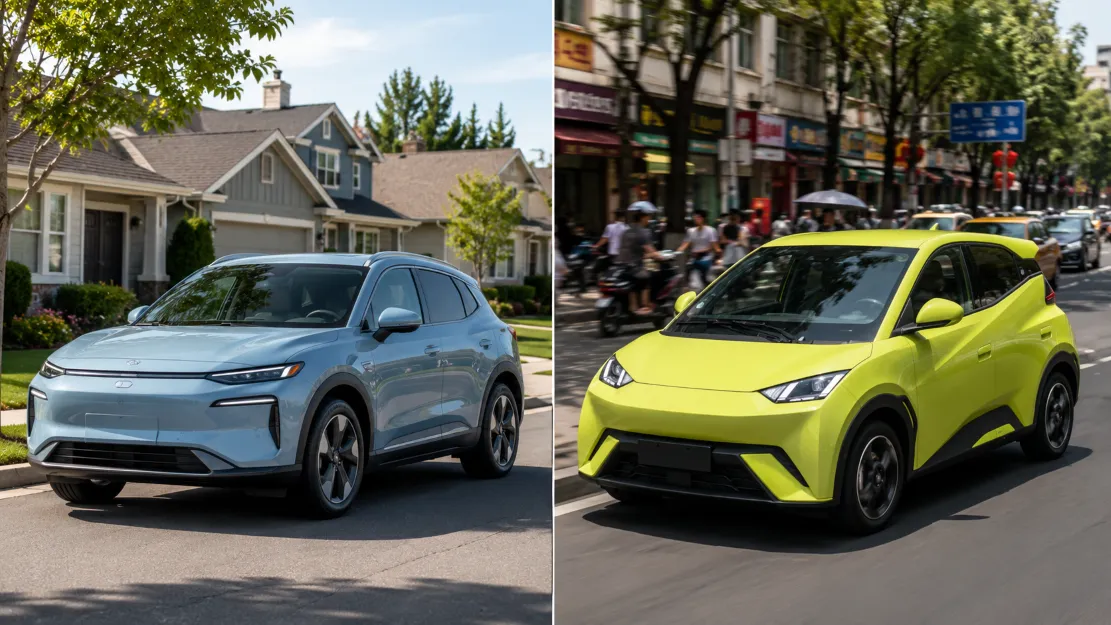
The phrase “affordable EV” means something completely different depending on where you stand. In the United States it now describes a solid, long-range car for around the price of a mid-spec petrol crossover. In China it describes a fully equipped electric hatchback that costs less than many used cars. Understanding that gap is the key to understanding the global EV story in 2026.
The State of Affordable EVs in the US in 2026
The good news for American buyers is real: EVs have become genuinely affordable. With battery costs falling, the cheapest new electric cars now start below $30,000 — well under the roughly $48,000 that the average new vehicle commands. A few years ago, an “entry-level” EV still meant spending $40,000 or more, so this is a meaningful shift, and it is widening the audience for electric driving.
Just as importantly, cheap no longer means compromised. Today’s budget EVs offer 250 to 320 miles of range, fast charging on the increasingly universal NACS plug, and the kind of standard equipment — wireless smartphone integration, driver assistance, big screens — that was reserved for premium cars not long ago. The result is that an affordable American EV is now a credible only-car for many households, not just a second runabout.
There is value below the new-car market, too. A growing supply of used EVs — think Chevrolet Bolt, earlier Nissan Leaf Plus, Hyundai Kona Electric or higher-mileage Tesla Model 3 — regularly appears in the roughly $10,000 to $16,000 bracket, and local incentives, utility rebates and lease deals can push effective prices lower still. For buyers willing to shop used or chase regional offers, electric motoring is cheaper than the headline MSRPs alone suggest.
Smart, Low-Cost Add-ons for a New Budget EV
A compact multi-port GaN car charger delivers fast USB-C charging to phones, tablets, and laptops at once — handy on long trips when passengers compete for power. The efficient GaN design stays cool and frees up the car’s own ports.
A fitted armrest organizer tray turns the often-deep center console into sorted storage for cards, cables, and small essentials — a tidy match for the minimalist interiors these cars are known for. Pick the version sized for your specific model’s console.
The Best Affordable EVs You Can Buy in the US Right Now
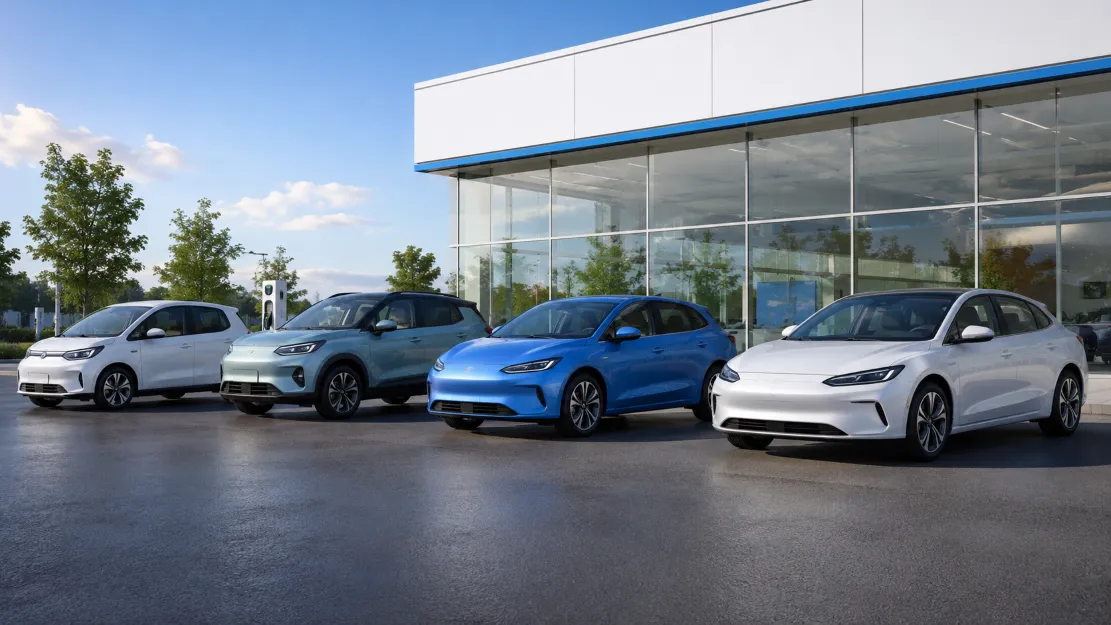
So which models actually deliver? The list below gathers the standout value choices on sale in 2026, with approximate starting prices including typical destination charges. Exact figures shift with trim, incentives and local dealer offers, so treat them as a guide rather than a quote.
- Nissan Leaf (from ~$29,990): the redesigned, crossover-shaped Leaf is the value champion — a 75 kWh battery, up to 303 miles of range, NACS charging and a generous standard kit make it the cheapest serious EV in America.
- Chevrolet Bolt (from ~$28,995): Chevy’s returning hatchback uses cheaper LFP batteries to hit a rock-bottom price while improving range to around 255 miles.
- Chevrolet Equinox EV (from ~$35,000): the range-per-dollar star, pairing roughly 319 miles with a roomy, family-friendly crossover body.
- Hyundai Ioniq 5 (from ~$36,600): a price cut for 2026 makes this award-winning crossover far better value, with fast 800-volt charging.
- Toyota bZ (from ~$36,495): the heavily updated former bZ4X gains more power and up to 314 miles of range.
- Tesla Model 3 (from ~$36,990): still a benchmark for efficiency, software and access to the Supercharger network.
How China Does Affordable: The BYD Seagull and Friends
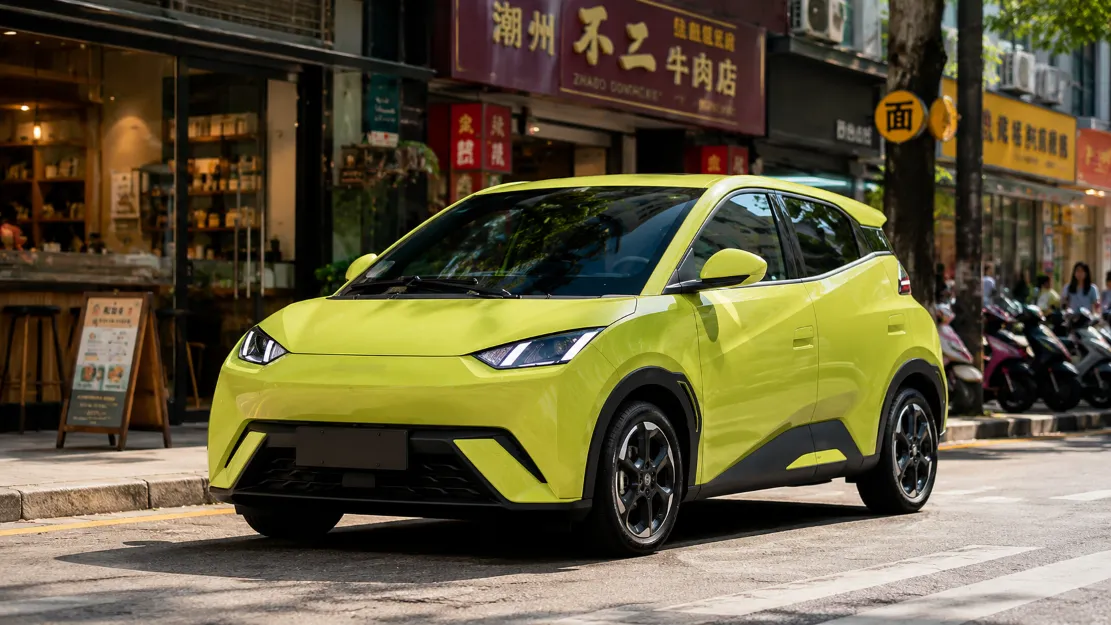
Now for the other side of the world. China’s definition of cheap is in a different league entirely. The headline act is the BYD Seagull, a compact five-door electric hatchback that, in its 2026 form, starts at about 69,900 yuan — roughly $10,300. Longer-range trims reach around $12,600, and even a version with LiDAR-based driver assistance lands near $14,400. For context, that LiDAR-equipped Seagull costs less than half the cheapest new EV in America.
The Seagull is not a one-off. BYD’s slightly larger Dolphin sells for around $16,500 at home, and the well-regarded Seal sedan for roughly $30,300 — about the price of a base US Leaf. These cars are genuinely good, not stripped-out penalty boxes: the Seagull alone notched nearly 450,000 deliveries in 2025 and is sold across Europe, Latin America, Asia and Australia under names like Dolphin Surf, Dolphin Mini and Atto 1. China’s budget EV scene is now so fierce that rivals such as Geely’s Xingyuan have even overtaken the Seagull at home.
US vs Chinese EVs: The Price Gap in One Table
Laid side by side, the contrast is stark. The table compares representative affordable models from each market; US prices are approximate 2026 starting figures, while Chinese prices are domestic starting prices converted to dollars. Note that Chinese range figures use the optimistic CLTC cycle, so real-world range is lower than the headline number suggests.
| Model | Market | Approx. starting price | Range (approx.) |
|---|---|---|---|
| BYD Seagull | China | ~$10,300 | 305 km CLTC |
| BYD Dolphin | China | ~$16,500 | ~420 km CLTC |
| Chevrolet Bolt | US | ~$28,995 | 255 mi |
| Nissan Leaf S+ | US | ~$29,990 | 303 mi |
| BYD Seal | China | ~$30,300 | ~550 km CLTC |
| Chevrolet Equinox EV | US | ~$35,000 | 319 mi |
| Tesla Model 3 | US | ~$36,990 | 321 mi |
💡 Buyer’s tip: When you see a jaw-dropping Chinese EV price, remember it is a domestic figure. The same car sold in Europe often costs two to three times more once tariffs, shipping and local taxes are added — so compare landed, local prices, not factory-gate ones.
Why You Can’t Buy a $10,000 Chinese EV in America
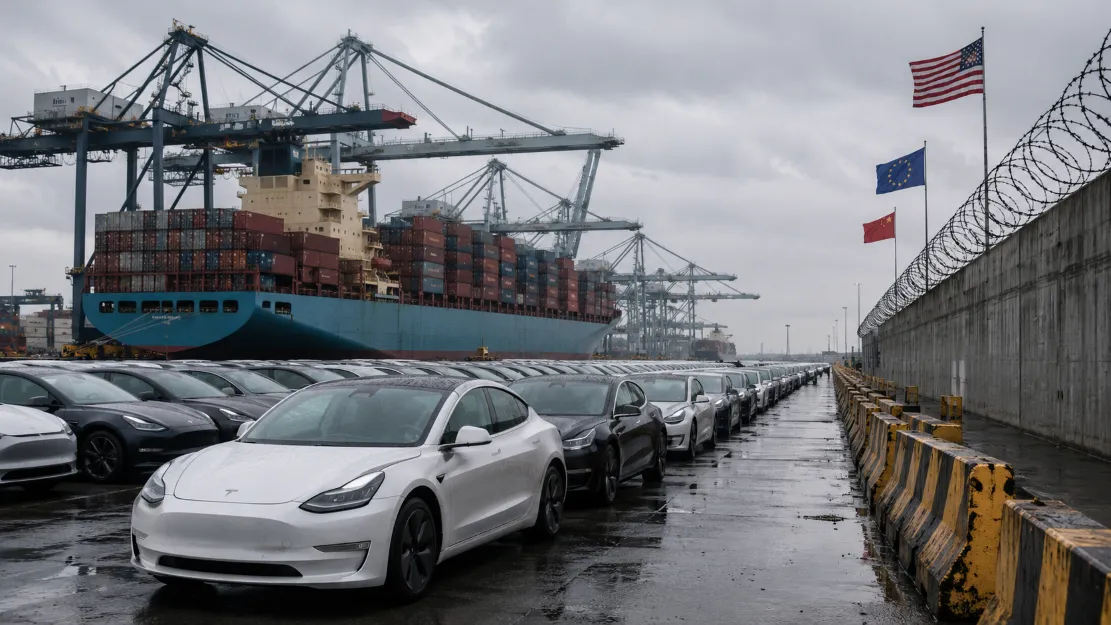
If the Seagull is so cheap and so good, why isn’t it flooding American streets? The answer is policy, not product. Chinese-built EVs face a Section 301 tariff of 100% on top of the standard import duty, and further auto tariffs can stack on top of that — figures that would roughly double or triple the landed price and erase the Seagull’s advantage. Estimates suggest a Seagull sold in the US would carry a sticker closer to $26,000 once duties are applied.
Tariffs are only part of it. Chinese-built cars do not qualify for the federal EV tax credit, because they are neither assembled in North America nor compliant with the battery-sourcing rules. On top of that, US regulations restrict connected-vehicle hardware and software from China on national-security grounds, and lawmakers from both parties have pushed to keep Chinese vehicles out of the market altogether. The combined effect is a wall that makes selling cars like the Seagull commercially unviable today, regardless of how well they perform elsewhere.
Tellingly, BYD’s own response is not to fight the tariffs head-on but to build around them. The company is opening factories in Europe, Southeast Asia, Brazil and Turkey so that cars sold in those regions are made locally and sidestep import duties. That same playbook is what would be required for the US — local production by a Chinese brand — and it is precisely the step that current American political pressure is designed to block. For the foreseeable future, then, the cheapest Chinese EVs will remain a fascinating benchmark rather than a showroom option for US buyers.
⚠️ Important note: Tariff rates, tax-credit rules and import restrictions change frequently and are politically contested. The figures here reflect the 2026 picture; always check the current rules before drawing conclusions about whether a specific model can be imported or sold.
Which Affordable EV Is Right for You?
For American buyers, the practical takeaway is encouraging. You may not be able to buy a $10,000 Chinese hatchback, but the cars you can buy are better value than ever. If outright price is everything, the Nissan Leaf and returning Chevrolet Bolt are the obvious starting points. If you want the most range and space for the money, the Chevrolet Equinox EV is hard to beat, while the Hyundai Ioniq 5 and Tesla Model 3 reward buyers who value charging speed and software.
For readers elsewhere — in Europe, the Middle East, Latin America or Asia — the choice is wider still, because the Chinese models in this comparison are genuinely on sale, if at higher local prices than in China. Wherever you are, the smart approach is the same: compare the real, local on-the-road price, look past the optimistic range cycle, and weigh charging access alongside the sticker. Do that, and 2026’s affordable-EV boom works firmly in your favour.

Frequently Asked Questions
What is the cheapest EV you can buy in the US in 2026?
The redesigned 2026 Nissan Leaf is the cheapest mainstream new EV in the US, starting around $29,990 with up to 303 miles of range. The returning Chevrolet Bolt launches at a similar price, and both sit comfortably under the roughly $48,000 average price of a new car.
How much does the BYD Seagull cost?
In China the 2026 BYD Seagull starts at about 69,900 yuan, roughly $10,300, rising to around $12,600 for longer-range trims and about $14,400 with the LiDAR-based driver-assistance package. It is sold in Europe as the Dolphin Surf from around €22,990.
Can you buy a Chinese EV like the BYD Seagull in the US?
Not in practice. Chinese-built EVs face a 100% Section 301 tariff plus other duties, do not qualify for the federal EV tax credit, and are affected by rules restricting connected-vehicle hardware and software from China. Together these make selling cars like the Seagull in the US commercially unviable today.
Why are Chinese EVs so much cheaper than US EVs?
Chinese makers such as BYD are vertically integrated, producing their own LFP batteries and many components in-house, and benefit from huge scale and a fiercely competitive home market. That lets them sell cars like the Seagull for a fraction of the price of the cheapest US EVs.
Which affordable US EV offers the best range for the money?
The Chevrolet Equinox EV stands out, pairing around 319 miles of range with a starting price near $35,000. The Nissan Leaf S+ is the value leader at the very bottom of the market, offering up to 303 miles for roughly $30,000.
The Bottom Line
The affordable-EV story of 2026 is really two stories. In the US, electric cars have finally become attainable, with strong, long-range models slipping under $30,000 and improving every year. In China, the same technology sells for a third of the price, reshaping what the rest of the world believes an electric car should cost.
Those two worlds remain separated by tariffs, regulation and politics rather than by engineering. For now, American buyers should embrace the genuinely good value on their own forecourts, while keeping an eye on the Chinese models that continue to set the global benchmark — because the pressure they create is, slowly but surely, pushing affordable EVs forward everywhere.