Best Chinese Electric Cars in the UK 2026: Complete Buying Guide
🚗 Quick Overview: Chinese electric vehicles have transformed the UK automotive market in 2026. With brands like BYD, NIO, Geely, and Xpeng now firmly established, buyers have access to premium EVs at competitive prices.
This comprehensive guide explores the best Chinese electric cars available in the UK, comparing specifications, pricing, and performance to help you make an informed decision.
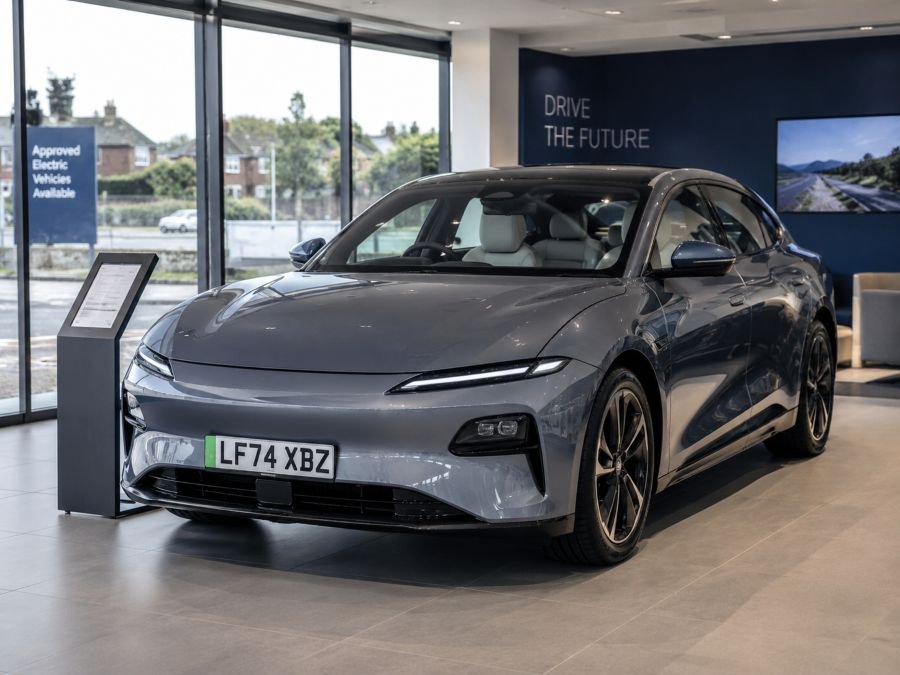
Why Chinese EVs Are Taking Over the UK Market
The electric-vehicle revolution in the United Kingdom has been shaped significantly by the entry of premium Chinese manufacturers. Far from the early stereotype of cheaply made vehicles, contemporary Chinese EVs represent sophisticated engineering, cutting-edge battery technology, and innovative driver-assistance features. 2026 marks a pivotal moment when these vehicles have earned considerable market trust and become widely available across major UK dealership networks.
Chinese manufacturers have invested heavily in research and development, with companies like BYD producing more electric vehicles globally than any other manufacturer. Their UK presence now includes comprehensive after-sales service networks, warranty programmes, and access to proprietary technologies developed over decades of EV production.
Several factors drive the growing popularity of Chinese electric cars in Britain. First, the battery technology developed by Chinese companies has reached parity with — and in some cases exceeded — Western competitors. Second, aggressive pricing makes premium EV features accessible to middle-income buyers. Third, government incentives and London’s ULEZ expansion have driven demand for zero-emission vehicles nationwide.
Must-Have Accessories for New EV Owners
Affiliate disclosure: As an Amazon Associate, Chinese Cars Asia earns from qualifying purchases. The links below may earn us a small commission at no extra cost to you.
4K Front & Rear Dash Cam
Whichever model on this list you choose, a dual-channel 4K dash cam with parking mode is one of the smartest first buys — useful evidence for insurance claims and round-the-clock protection that several UK insurers now reward with a discount.
🛒 Check Price on AmazonEV Charging Cable Storage Bag
With most UK owners juggling a home wallbox lead and a public-charging cable, a waterproof storage bag keeps both clean and tangle-free in the boot — a tidy, inexpensive upgrade for any new EV.
🛒 Check Price on AmazonTop Chinese Electric Cars Available in the UK 2026
1. BYD Yuan Plus (Atto 3) — Best Overall Chinese EV
The BYD Yuan Plus, marketed as the BYD Atto 3 internationally, stands as a high point of Chinese electric-vehicle engineering. This mid-size compact SUV combines Scandinavian-influenced design with manufacturing excellence, competing directly with the Tesla Model Y and Audi Q4 e-tron.
The Atto 3 features BYD’s Blade Battery technology, a structural innovation that improves safety margins while increasing effective range. The 2026 model year offers two primary configurations: a 326-mile standard edition and a premium 420-mile long-range variant, both using a permanent-magnet synchronous motor that delivers responsive acceleration and strong efficiency.
| BYD Atto 3 — Key Specs | Detail |
|---|---|
| ⚡ Electric Range | 326–420 miles depending on variant |
| 🔋 Battery Capacity | 60–82 kWh Blade Battery |
| ⏱️ 0–60 mph | 7.9 sec (standard), 5.3 sec (performance) |
| 💷 UK Price Range | £28,000–£36,000 |
Interior quality is a significant step up from earlier Chinese EVs. The cabin features a 12.8-inch touchscreen running BYD’s proprietary operating system with smartphone integration, voice commands in British English, and over-the-air updates. Premium variants add leather upholstery, a panoramic glass roof, and a power-adjustable driver’s seat with lumbar support.
💡 Pro Tip: The BYD Atto 3 qualifies for several UK charging schemes and accesses over 25,000 public charging stations through partnerships with Instavolt, Shell Recharge, and Chargepoint. Subscription plans start from around £8.99/month for unlimited charging on standard networks.
2. NIO ET5 — Best for Luxury and Technology
NIO’s ET5 is the Chinese EV industry’s answer to the Tesla Model S, delivering a luxury sedan experience alongside an innovative Battery-as-a-Service (BaaS) model that has proven popular in the UK. Launched in premium UK dealerships in 2025, it quickly earned a reputation for technological sophistication and driving refinement.
The ET5 distinguishes itself with a radical interior philosophy. A minimalist dashboard houses a 12.8-inch curved AMOLED display, NIO’s NOMI AI assistant provides conversational interaction and learns driver preferences, and a 188-speaker Harman Kardon system rivals luxury European sedans for immersion.
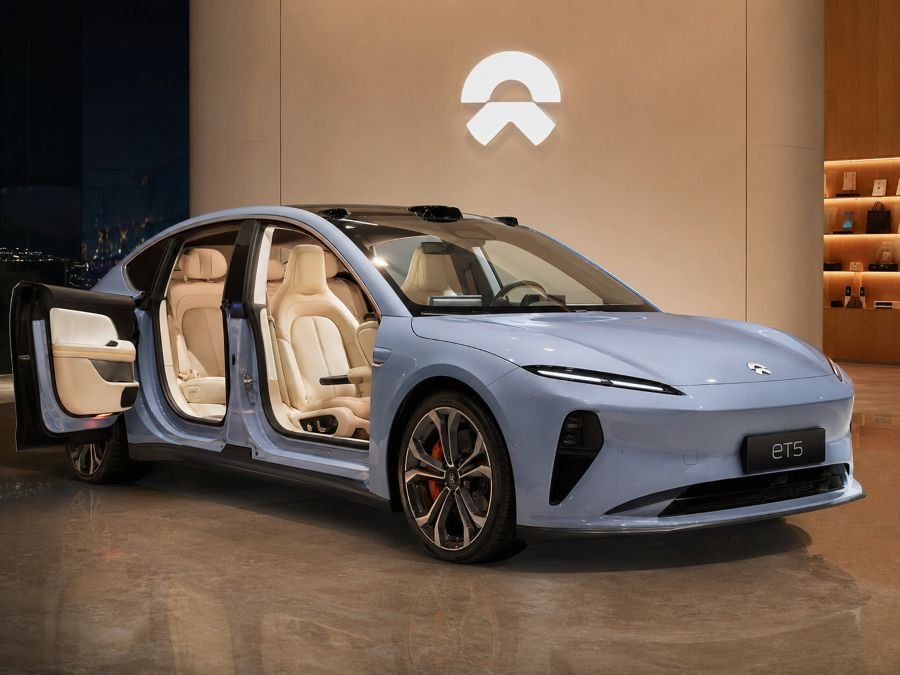
| NIO ET5 — Key Specs | Detail |
|---|---|
| 🚀 0–60 mph | 3.9 sec (Performance edition) |
| 🔌 Battery Flexibility | 70–100 kWh modular battery system |
| 🗺️ Total Range | Up to 310+ miles with battery swapping |
| 💰 Monthly Cost | £699–£899 (battery included in subscription) |
The ET5 introduces BaaS to UK consumers, allowing monthly battery rental from around £99 alongside vehicle purchase or subscription. This eliminates battery-degradation concerns and allows capacity upgrades for long journeys. NIO has established battery-swapping stations in London, Manchester, and Birmingham, with further expansion planned.
⚠️ Important Note: While the BaaS model offers flexibility, customers must commit to NIO’s ecosystem. The battery-swapping infrastructure, though expanding, remains limited compared to traditional charging networks — consider your driving patterns and charging access before committing.
3. Geely Geometry A — Best Budget-Friendly Option
Geely’s Geometry brand has won over UK buyers by delivering genuinely affordable EVs without major compromise on quality. The Geometry A, a compact hatchback aimed at first-time EV buyers, offers exceptional value with modern styling and reliability informed by Geely’s Volvo engineering heritage.
The Geometry A focuses on essentials delivered efficiently — optimized for urban driving while remaining motorway-capable. Its compact 4.4-metre footprint simplifies city parking, while the 305-mile maximum range covers longer weekend trips. The interior prioritises durability, though quality materials maintain a premium feel despite the reasonable price.
| Geely Geometry A — Key Specs | Detail |
|---|---|
| 💷 Starting Price | From £14,990 (entry-level) |
| 🔋 Battery Options | 38 kWh, 51 kWh, 61 kWh |
| 📊 Maximum Range | 305 miles (61 kWh variant) |
| 🎯 Target Market | First-time EV buyers, urban professionals |
Despite its affordability, the Geometry A doesn’t cut corners on safety or technology. European safety testing placed it in the “Good” category, and the infotainment system offers Apple CarPlay and Android Auto. The vehicle benefits from six years or 100,000 miles of warranty coverage, exceeding many European competitors.
4. Xpeng G6 — Best for Driver-Assistance Features
Xpeng’s G6 mid-size SUV brings cutting-edge driver-assistance capability to the UK, positioning itself as a technology pioneer. It showcases Xpeng’s advanced research with LIDAR-based perception systems that push beyond Level 2.5 driver-assistance capability as defined by SAE standards.
The G6’s assistance suite includes automatic lane-changing, intelligent traffic navigation, and pilot self-parking. These are functional systems developed through millions of kilometres of real-world testing, and owners report genuine time savings during commutes and reduced fatigue on long journeys.
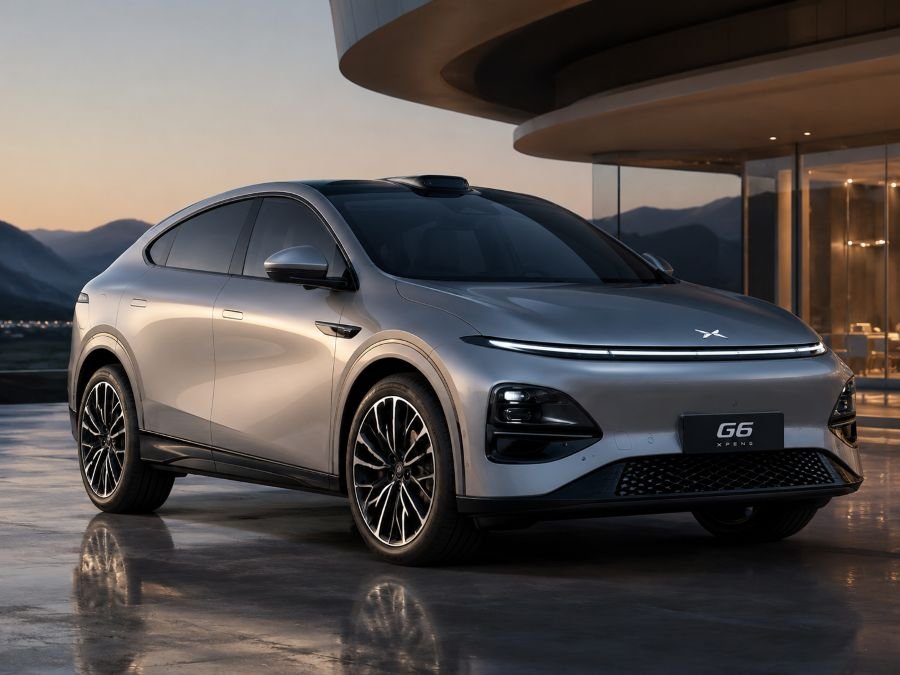
| Feature | Xpeng G6 | Tesla Model Y | BYD Atto 3 |
|---|---|---|---|
| Driver-Assistance Level | Level 2.5 (LIDAR-based) | Level 2 (camera-based) | Level 2 (radar-based) |
| Electric Range | 340–435 miles | 358–405 miles | 326–420 miles |
| 0–60 mph | 5.4 sec | 5.1 sec | 5.3–7.9 sec |
| UK Price | £32,000–£42,000 | £41,000–£65,000 | £28,000–£36,000 |
| Warranty | 5 yr / 100k miles | 4 yr unlimited | 6 yr / 100k miles |
The G6’s design merges aerodynamic efficiency with contemporary styling, achieving a 0.24 drag coefficient through meticulous refinement for superior efficiency. The interior houses a 15.6-inch rotating touchscreen — vertical for normal driving, horizontal for video while parked — an innovative interface rarely matched by European competitors.
🔧 Maintenance Insight: Chinese EVs like the Xpeng G6 feature simpler mechanical systems than traditional cars, and brake-maintenance intervals extend dramatically thanks to regenerative braking. Typical annual ownership costs run £400–£600 versus £1,200–£1,500 for equivalent petrol vehicles.
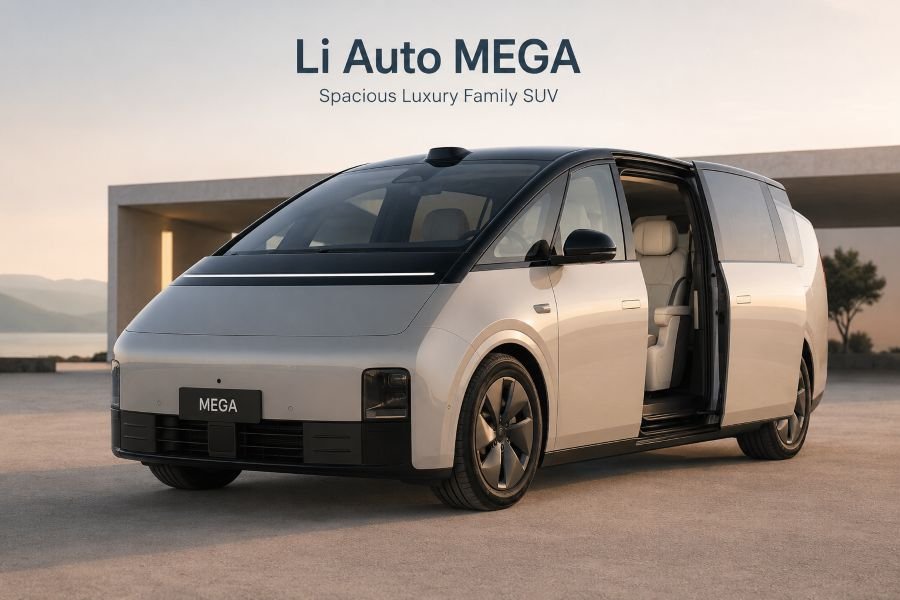
5. Li Auto Mega — Best Family SUV Option
Li Auto’s Mega extended-range electric vehicle (EREV) combines battery-electric technology with a range-extending petrol engine, an appealing proposition for families concerned about charging-infrastructure gaps. Its seven-seat configuration targets British family buyers seeking SUV practicality with EV credentials.
The range-extension concept addresses a genuine worry among UK buyers hesitant about pure-EV range. The Mega travels roughly 310 miles on electric power alone, then deploys a turbocharged three-cylinder petrol engine to generate electricity, extending total range beyond 630 miles — eliminating range anxiety while keeping zero local emissions during urban driving.
Comparative Analysis: Chinese EVs vs Traditional Options
The competitive landscape for electric vehicles has shifted dramatically with Chinese manufacturers entering the UK. Where consumers once chose between premium German EVs and Tesla, Chinese brands now offer competitive alternatives that challenge old assumptions about quality, reliability, and value.
Price-to-performance ratios increasingly favour Chinese EVs. The BYD Atto 3 delivers performance comparable to a Tesla Model Y for roughly 30% less capital outlay, while the Geometry A provides genuine entry-level access without the financial barrier that previously excluded first-time buyers.
Battery technology is another advantage. BYD’s vertical integration lets the company manufacture batteries cost-effectively while maintaining cutting-edge chemistry, and the Blade Battery design improves safety and longevity, with independent testing confirming 93% remaining capacity after 500,000 km of use.
⚠️ Resale Value Consideration: Chinese EVs remain relatively new to the UK, creating uncertainty around residual values. Early adopters of BYD and Xpeng vehicles should expect faster depreciation than long-established brands — though robust warranties and improving brand recognition point to better resale prospects for 2026 model-year cars.
Charging Infrastructure and Supporting Ecosystem
Successful EV ownership depends critically on charging access. UK charging infrastructure has matured significantly, with over 50,000 public charging points now operational nationwide. Chinese manufacturers have partnered with major charging networks to ensure seamless integration with existing UK infrastructure.
BYD vehicles integrate with Instavolt’s network of 100–120 kW fast-chargers at motorway services. NIO’s battery-swapping stations in London, Manchester, and Birmingham provide an alternative rapid solution, while Xpeng owners access integrated routing that finds available charging points and reserves capacity automatically.
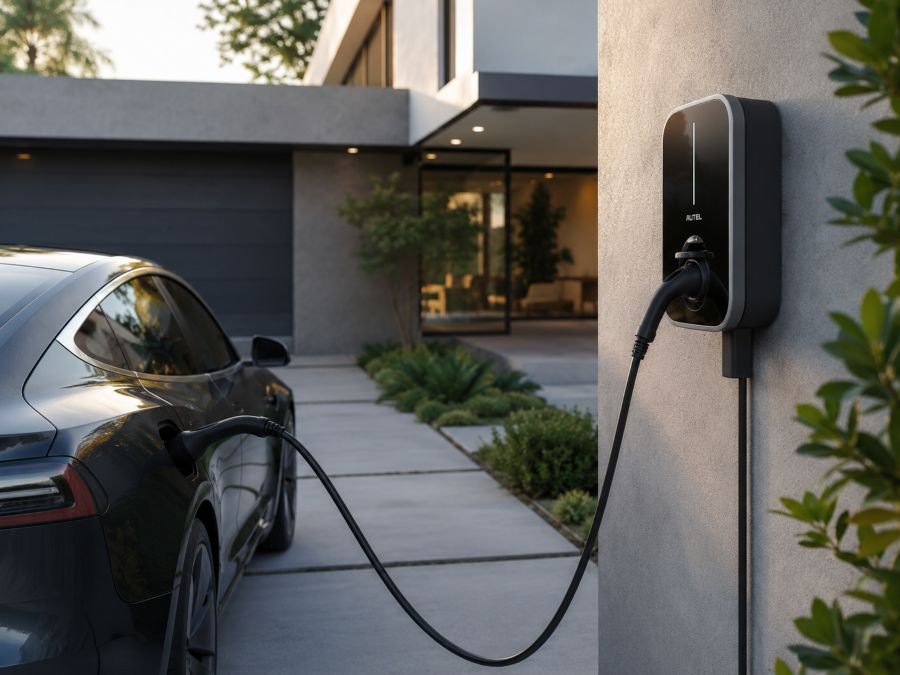
Home charging remains the optimal solution for most UK drivers, with 7 kW Level 2 wallboxes commonplace in British properties. Installation costs range from £500–£1,200 depending on existing electrics, and monthly home-charging electricity averages £25–£35 versus £80–£120 for equivalent petrol fuel consumption.
Government Incentives and Tax Benefits
UK government incentives for EVs have evolved significantly by 2026. While the plug-in car grant has been discontinued, substantial savings remain through alternative mechanisms. Corporation-tax benefits for business buyers create particularly attractive propositions for fleet operators and the self-employed.
London’s ULEZ expansion, now covering large portions of the capital, effectively subsidises EV ownership through congestion-charge exemption. Annual savings of £2,000–£3,000 for London-based drivers accumulate quickly, helping justify premium EV pricing over combustion engines.
Registered EV owners also access free or heavily discounted parking in many UK municipalities. Numerous local councils offer 100% parking-permit discounts for electric vehicles, a valuable ownership benefit in congestion-prone urban areas.
Maintenance and Service Considerations
EV ownership eliminates numerous maintenance procedures standard on traditional cars. Oil changes, transmission-fluid servicing, spark-plug replacements, and emission-system maintenance simply don’t apply to battery-electric vehicles. This mechanical simplicity translates directly into lower ownership costs and simpler service scheduling.
Chinese manufacturers have established service centres in major UK cities — BYD operates authorised centres in London, Birmingham, Manchester, Liverpool, and Bristol. Warranty coverage universally includes eight years/200,000 km for battery systems, protecting the most expensive component.
✓ Service Reality: Typical annual EV maintenance involves brake-fluid inspection, tyre rotation, and air-filter replacement. Labour costs average £150–£250 a year versus £800–£1,200 for petrol vehicles, and battery-health monitoring through diagnostics is included in most manufacturer apps.
Insurance and Financial Considerations
Insurance costs for Chinese EVs have normalised to approximate petrol-vehicle rates as insurers accumulate claims data. The initial 5–10% premium differential over equivalent combustion vehicles has largely disappeared in 2026. Comprehensive coverage remains advisable given battery-replacement costs, though modern vehicles rarely experience battery failures.
Personal contract hire and lease options are increasingly attractive ownership models. Monthly lease payments for the BYD Atto 3 start around £299 with full service included — appealing to risk-averse buyers concerned about residual-value uncertainty while providing access to newer technology through regular refreshes.
Used-EV purchases have also become genuinely viable. 2024–2025 model-year Chinese EVs now available second-hand offer exceptional value, particularly given battery-health certification and remaining warranty coverage, with used Geometry A vehicles retailing for £10,000–£13,000.
Practical Driving Experience: What to Expect
Switching from petrol vehicles to Chinese electric cars brings both technical and psychological adjustments. Regenerative braking requires mental recalibration, as lifting off the accelerator initiates deceleration without traditional brake-pedal engagement. Most drivers adapt within two to three weeks, subsequently valuing reduced brake wear and simplified mechanics.
Acceleration feels different from combustion engines. Electric motors deliver maximum torque instantly, creating more aggressive initial acceleration than equivalent power-rated petrol engines — a sensation that contributes to EV driving enjoyment, with even modestly powered cars feeling responsive in town.
Range anxiety diminishes rapidly with experience. Most UK drivers complete daily mileage within 30–50 miles, comfortably covered by even entry-level batteries. Motorway journeys require planning a charging stop roughly every 250 miles, though modern routing systems manage this automatically through integrated navigation.
Cabin quietness is perhaps the most surprising aspect of EV ownership. The absence of engine noise creates a serene environment, especially welcome during stop-start urban commuting. Wind and tyre noise become more apparent without engine masking, though well-designed Chinese EVs minimise these secondary sounds through quality construction.
FAQ: Chinese Electric Cars in the UK
Are Chinese electric cars reliable? What’s the warranty coverage?
Chinese EV manufacturers have invested heavily in reliability engineering. BYD, the world’s largest EV manufacturer, delivers 6 years/100,000 miles of vehicle cover and 8 years/200,000 km for batteries. Independent testing by German automotive institutes rates Chinese EVs on par with European alternatives on reliability.
Will Chinese EV brands maintain UK service centres long-term?
Chinese manufacturers view the UK as a strategic long-term market. BYD, NIO, Xpeng, and Geely have all announced significant investment in UK service infrastructure through 2027, and brand-specific service contracts guarantee warranty availability throughout ownership.
What’s the realistic resale value projection for Chinese EVs?
Three-year residuals for 2026 model-year Chinese EVs are conservatively estimated at 50–60% of purchase price. As the used-EV market matures and confidence grows, residuals should improve — early data suggests BYD and Geely hold value better than niche premium brands such as NIO.
Can I charge a Chinese EV using standard UK charging networks?
Yes. Chinese EVs use standardised CCS plugs compatible with all major UK networks, and operators have installed dual-standard chargers ensuring universal access. Home charging requires only a standard 7 kW Level 2 wallbox available everywhere in the UK.
How does cold weather affect Chinese EV range and performance?
Cold temperatures reduce EV range by 15–25% due to battery chemistry and heating-system draw. Chinese manufacturers fit thermal-management systems that pre-heat batteries during overnight charging, minimising cold-start losses — a real benefit through UK winters.
Making Your Decision: Which Chinese EV Is Right for You?
Selecting the optimal Chinese EV requires weighing your driving patterns, budget, and feature priorities. The diversity of options ensures a viable solution for nearly every buyer profile.
- Choose the BYD Atto 3 if you prioritise overall value, proven reliability, and balanced performance — the safest choice for typical UK drivers replacing a petrol SUV.
- Choose the NIO ET5 if you value cutting-edge technology, a luxury interior, and are comfortable with a battery-as-a-service ownership model.
- Choose the Geely Geometry A if budget is the primary consideration, or if you’re a first-time EV buyer building ownership experience before upgrading.
- Choose the Xpeng G6 if advanced driver-assistance and technology integration appeal to you and you’re willing to pay a premium for future-oriented features.
- Choose the Li Auto Mega if you’re a family needing seven seats and have range concerns that a pure EV doesn’t fully address.
Conclusion: The Chinese EV Revolution in the UK
Chinese electric vehicles have firmly established themselves as legitimate alternatives to traditional European and American manufacturers. The combination of technological sophistication, competitive pricing, comprehensive warranties, and improving service infrastructure creates compelling ownership value that extends well beyond the initial purchase.
The vehicles in this guide represent the current pinnacle of Chinese automotive engineering, delivering capability and refinement that challenge long-standing assumptions about Chinese manufacturing quality. Whether prioritising budget, technology, luxury, or performance, viable options exist within the Chinese EV line-up.
2026 is an optimal purchasing window. Brand confidence has stabilised, service infrastructure has matured, used-vehicle markets are emerging, and financing options have normalised. The next five years will likely see Chinese manufacturers capture 20–25% of the UK EV market, fundamentally reshaping industry dynamics. For environmentally conscious drivers seeking capable, affordable, advanced electric vehicles, Chinese manufacturers deserve serious consideration.