Best Alternatives to BYD Cars for American Buyers
BYD has become the most talked-about name in the global electric-vehicle world, outselling legacy giants in market after market with cars that combine long range, dense technology, and genuinely competitive prices. Yet there is one enormous market where you still cannot walk into a showroom and drive one home: the United States. For American buyers drawn to everything BYD represents, the practical question is not “should I buy a BYD?” but “what can I buy instead that delivers the same thing?”
This guide answers exactly that. We explain why BYD’s passenger cars remain locked out of America, define what actually made the brand so appealing, and then walk through the best BYD alternatives you can buy in the US today — real models on real dealer lots that match the value, range, and tech that put BYD on everyone’s radar in the first place.
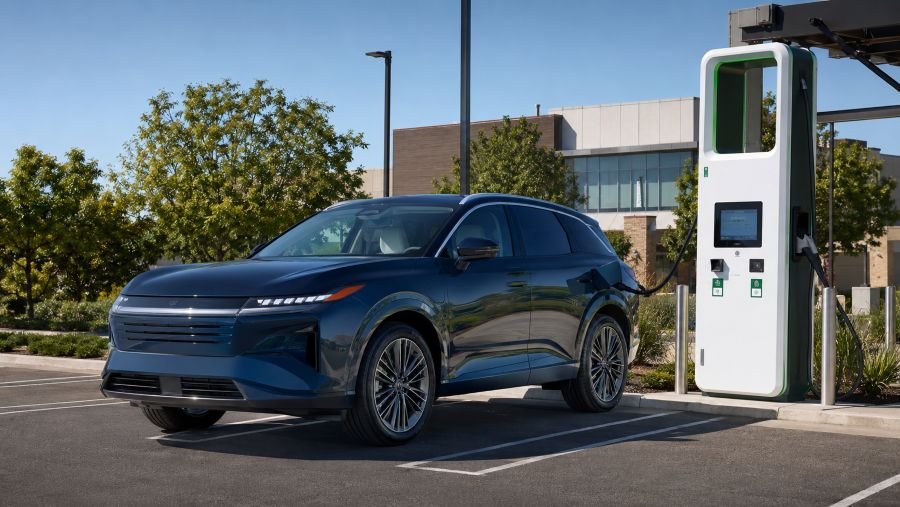
Interest in Chinese electric vehicles among American shoppers has climbed sharply, and surveys repeatedly show that a growing share of US drivers say they would at least consider a Chinese brand. BYD sits at the center of that curiosity. The problem is that curiosity and availability are two very different things. Before we look at what to buy, it helps to understand exactly why the car you may be searching for simply isn’t an option — and what that means for your shortlist.
If you’d rather see the highlights first, the short video below breaks down why BYD remains off-limits in America and runs through the best BYD alternatives US buyers can purchase today. Watch it for a quick overview, then read on for the full breakdown of pricing, range, and the new incentive rules.
Why Can’t Americans Buy BYD Cars Right Now?
The short answer is policy, not product. BYD builds excellent cars, but it does not retail passenger vehicles to American consumers because the economics of importing them have been made deliberately punishing. Successive rounds of US tariffs on Chinese-built electric vehicles have pushed the effective import duty to roughly 100% or more, which means a car designed to undercut rivals on price would arrive on US soil priced like a luxury vehicle. That single barrier dismantles the entire reason a buyer would want a BYD in the first place.
There is a second, quieter barrier as well: software and data-security rules that restrict connected vehicles built by Chinese manufacturers, layered on top of the absence of any US dealer or service network. Even if the tariffs vanished tomorrow, BYD would still need showrooms, technicians, parts logistics, and regulatory certification before a single sedan reached a private driveway. Interestingly, BYD is not entirely absent from America — it already operates a large facility in California that produces electric buses and employs hundreds of workers — but commercial buses and consumer cars are governed by very different rules.
BYD has signaled it wants in. The company filed a lawsuit challenging the legal basis for these tariffs, arguing the government overstepped its authority, and a favorable ruling could eventually lower the barriers for the whole category of Chinese EVs. Even so, industry analysts generally describe the latter half of this decade as the earliest realistic window for a US passenger-car launch, with heavy caveats attached. For anyone shopping today, the takeaway is simple: treat a US-market BYD as a someday possibility, and focus your money on what’s genuinely on sale now.
Two Accessories Worth Adding to Any New EV
Whichever alternative on this list ends up in your driveway, a couple of inexpensive extras make the first weeks of EV ownership smoother and protect what is, for many American buyers, a significant purchase. The two below are universal — they fit any of the models recommended here rather than tying you to a single brand.
A dual-channel dash cam with a Sony STARVIS sensor and parking mode is one of the smartest first buys for a new EV — it records clear footage on the move and keeps watch while the car is parked at a public charger, exactly the evidence US insurers increasingly value. A sound safeguard for any of the alternatives on this list.
On the longer road trips these long-range EVs make easy, a compact multi-port GaN car charger keeps phones, tablets, and laptops powered for everyone on board at once. The efficient GaN design stays cool and frees the car’s own ports for navigation and music — useful in every model here, from the Equinox EV to a Tesla.
What Made BYD So Appealing — And What to Look For in an Alternative
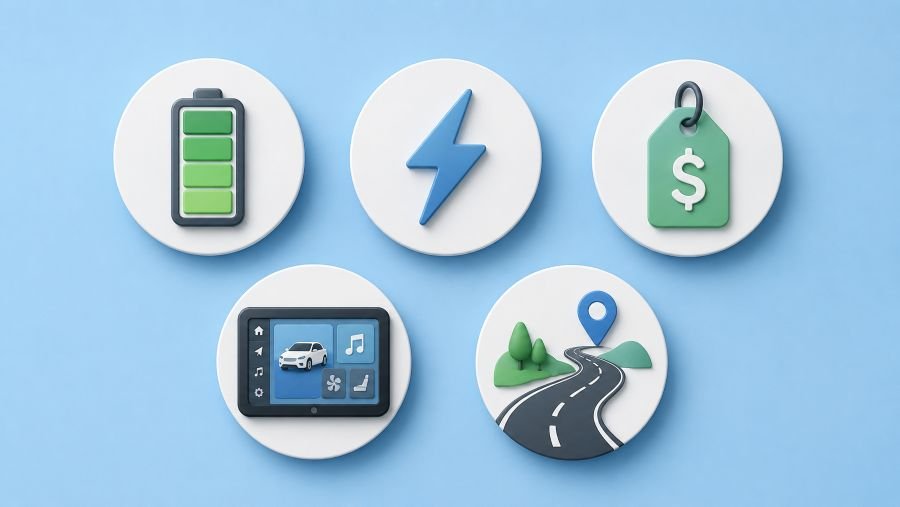
To choose a smart substitute, you first have to name what you’re actually substituting. BYD’s reputation rests on a handful of clear strengths, and the best alternatives are the cars that replicate those strengths rather than just sharing a body style. When you evaluate the models below, measure each one against the same scorecard that made BYD a global phenomenon.
The BYD Scorecard
- Aggressive value: generous standard equipment and real range for the money, rather than a stripped-out base trim padded with expensive options.
- Usable range: a comfortable buffer for daily commuting and the occasional road trip, typically in the 250–320 mile zone.
- Dense, modern technology: a large central touchscreen, smartphone integration, driver-assistance features, and over-the-air updates that keep the car feeling current.
- Battery confidence: a reputation for safe, durable battery chemistry and fast charging that takes the anxiety out of ownership.
- Distinctive design: styling that feels intentional and contemporary instead of an afterthought bolted onto a gas-car platform.
Hold those five points in mind. The American EV market in 2026 has shifted dramatically in the buyer’s favor, and several mainstream models now hit four or five of these marks at once. Below are the standouts, organized by the kind of buyer each one suits best.
The Best BYD Alternatives You Can Buy in America Today
The list that follows isn’t ranked by a single number, because the “best” alternative depends on whether your priority is the lowest price, the slickest technology, or the most charging convenience. Each pick is widely available through US dealers and delivers a meaningful slice of the BYD value equation. Use the comparison table further down to see them side by side.
1. Chevrolet Equinox EV — Best Overall Value
If you want the single closest spiritual successor to a BYD electric crossover, start here. The Equinox EV pairs an EPA-estimated range of roughly 319 miles with a spacious, family-friendly cabin, a large central touchscreen, and a starting price that has hovered in the low-to-mid $30,000s. Crucially, it has been one of the most heavily discounted EVs on the market since the federal tax credit ended, with some trims seeing five-figure price cuts as dealers move inventory. That combination of long range and a genuinely affordable transaction price is precisely the formula that made BYD a household name elsewhere — except you can sign for an Equinox EV this afternoon.
2. Hyundai Ioniq 5 — Best Technology and Charging
The Ioniq 5 is the enthusiast’s value pick. Built on an 800-volt architecture, it can add a substantial chunk of range in well under twenty minutes at a capable fast charger — a party trick that even many pricier EVs can’t match. Hyundai also made the Ioniq 5 notably more affordable for 2026, sharpening an already strong value story. Add a roomy, lounge-like interior, a crisp dual-screen dashboard, and a built-in charging port compatible with the most common US fast-charging network, and you have a car that out-techs most rivals at the price.
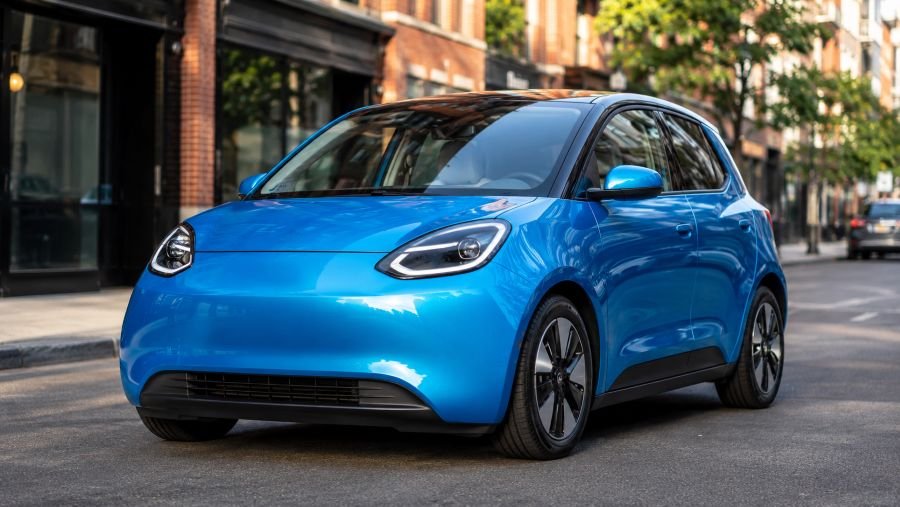
3. Chevrolet Bolt (2027) — Best Budget Pick
The reintroduced Bolt is the answer for buyers chasing BYD’s reputation for low cost of entry. With a starting price around $27,600 and an estimated range near 262 miles, it offers one of the most attractive range-per-dollar ratios in the country. It won’t dazzle anyone with exotic materials, but it nails the fundamentals: cheap to buy, cheap to run, and easy to live with. For a first EV or a high-mileage commuter, that practicality is exactly the point.
4. Tesla Model 3 / Model Y — Best Ecosystem
Whatever you think of the brand, Tesla still sets the benchmark for software, efficiency, and charging convenience. The Model 3 sedan and Model Y crossover deliver competitive range, brisk performance, and access to the most extensive and reliable fast-charging network in America. If your version of the BYD appeal is “tech-forward EV that just works on a road trip,” the case for a Tesla is hard to argue against — and recent pricing moves have kept both models squarely in the mainstream conversation.
5. Nissan Leaf — Cheapest Way In
Fully redesigned for 2026, the Leaf shed its dated image and now offers far more range than the car that wore the badge a few years ago, while remaining one of the least expensive EVs you can buy new. It is the natural pick for an urban driver or a two-car household adding an electric runabout. It doesn’t chase the premium-tech crown, but it delivers honest, affordable electric mobility — a very BYD-like proposition at the entry level.
6. Kia EV6 — Best Design-and-Performance Balance
Sharing its quick-charging 800-volt underpinnings with the Ioniq 5 but wrapping them in a sportier, more aggressive package, the EV6 is for the buyer who wants their value EV to feel exciting. Strong range, sharp handling, and a genuinely striking exterior make it the choice when you refuse to compromise style for sensibility. It rounds out a shortlist that, taken together, covers nearly every reason an American might have wanted a BYD.
💡 Pro Tip: Because EV inventory is sitting on dealer lots far longer than it used to, 2026 is unusually friendly to negotiation. Always cross-shop the same model across multiple dealers, ask specifically about current factory cash and lease support, and compare the real “out-the-door” price rather than the advertised MSRP — discounts of several thousand dollars are common right now.
BYD Alternatives Compared at a Glance
The table below summarizes how these picks stack up on the metrics that matter most to a value-driven shopper. Treat the figures as approximate starting points; exact pricing, range, and incentives vary by trim, region, and the rapidly shifting discount climate, so always confirm current numbers before you commit.
| Model | Approx. Starting Price | Est. Range | Best For |
|---|---|---|---|
| Chevrolet Equinox EV | Low-to-mid $30,000s | ~319 miles | Overall value & space |
| Hyundai Ioniq 5 | Mid $30,000s | ~245–318 miles | Tech & ultra-fast charging |
| Chevrolet Bolt (2027) | ~$27,600 | ~262 miles | Lowest cost of entry (new) |
| Tesla Model 3 / Model Y | Mid $30,000s to $40,000s | ~270–360 miles | Charging network & software |
| Nissan Leaf (2026) | Upper $20,000s | Up to ~300 miles (top trim) | Cheapest new EV / city driving |
| Kia EV6 | Low $40,000s | ~310 miles | Design & driving feel |
How the 2026 Incentive Landscape Changes the Math
One of the biggest shifts for American EV shoppers has nothing to do with the cars themselves. The federal EV tax credit of up to $7,500 expired on September 30, 2025, which means most new electric vehicles no longer qualify for that headline discount. On paper, that sounds like bad news — but the real-world result has been surprisingly positive for buyers, because automakers and dealers responded by slashing transaction prices to keep EVs moving.
Since the credit ended, the average price of a new EV has fallen sharply, and inventory in the affordable $30,000–$49,000 band has expanded thanks to models like the reintroduced Bolt, the redesigned Leaf, and aggressively discounted crossovers. In many cases, the actual amount you pay today is comparable to — or even lower than — what you would have paid with the old credit applied. For 2026 there is also a new wrinkle: qualifying buyers who finance a US-assembled vehicle may be able to deduct a portion of their auto-loan interest, which can soften the cost of American-built options like the Equinox EV.
⚠️ Important Note: Incentive rules are changing fast and eligibility depends on factors like where a vehicle is assembled, your income, and how you finance the purchase. Nothing here is tax advice. Before counting on any deduction or dealer incentive, verify the current terms with the dealer and a qualified tax professional, because the details can change between model years and even month to month.
FAQ: BYD Alternatives for American Buyers
Can Americans buy a BYD car in 2026?
No. As of 2026, BYD does not sell passenger cars to consumers in the United States. Steep import tariffs on Chinese-built electric vehicles and the absence of a retail dealer network keep BYD’s cars out of American showrooms, even though the company already builds electric buses domestically in California.
What is the closest American alternative to a BYD electric SUV?
The Chevrolet Equinox EV is the closest match in spirit. It pairs an EPA-estimated range of around 319 miles with a roomy cabin, a large central touchscreen, and a starting price near the low-to-mid $30,000s, delivering the value-plus-range formula that made BYD attractive abroad.
Is the federal EV tax credit still available for these cars?
The standard federal EV tax credit of up to $7,500 expired on September 30, 2025. For 2026, buyers can no longer claim it on most models, though qualifying buyers of US-assembled vehicles may deduct up to $10,000 in auto-loan interest, and many automakers have cut sticker prices to compensate.
Will BYD eventually sell cars in the United States?
Possibly, but not soon. BYD has filed a lawsuit challenging the tariffs, and analysts generally point to the latter half of this decade as the earliest realistic window. Any timeline depends on trade policy, regulatory approval, and a US distribution network, so it remains speculative rather than confirmed.
The Bottom Line
The reason you can’t buy a BYD in America has almost nothing to do with the cars and almost everything to do with tariffs and trade politics — and that situation may yet change later this decade. In the meantime, the good news is that you don’t have to wait to get the experience that made BYD famous. The combination of long range, dense technology, and aggressive pricing that defines the brand is now widely available from manufacturers selling right here, right now.
If you want the most BYD-like blend of space, range, and value, the Chevrolet Equinox EV is the obvious starting point. Chase the sharpest technology and fastest charging in the Hyundai Ioniq 5 or Kia EV6, the lowest price of entry in the Chevrolet Bolt or Nissan Leaf, and the most seamless road-trip ecosystem in a Tesla. Whichever direction you lean, 2026 is one of the best years in memory to buy an electric car in America — with falling prices, fuller lots, and more genuine choice than the era when BYD first started turning heads.