BYD vs Geely: Which Chinese Brand is Better?
The automotive landscape has transformed dramatically in recent years. Chinese manufacturers have emerged as serious contenders on the global stage, challenging traditional Western and Japanese automakers — and two names consistently dominate this conversation: BYD and Geely.
Both have demonstrated remarkable growth, innovation, and market expansion. But how do they truly compare? This guide goes beyond surface-level comparisons to examine their philosophies, EV strategies, quality, pricing, and which brand suits different markets.
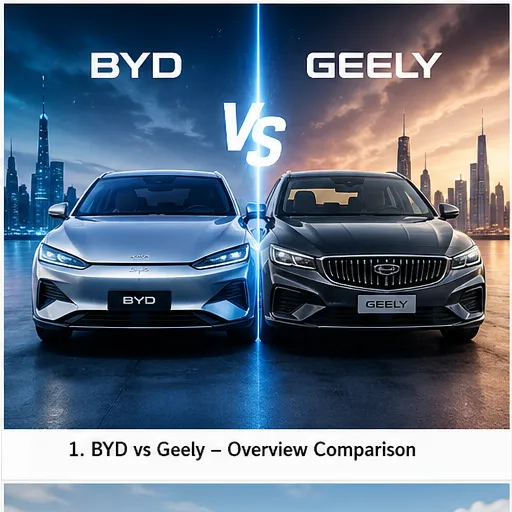
The short video above sets the stage for the BYD vs Geely comparison, highlighting how each brand approaches electric vehicles and global markets. The detailed analysis below expands on those themes — from corporate philosophy to real-world value.
Understanding the Background: Two Different Philosophies
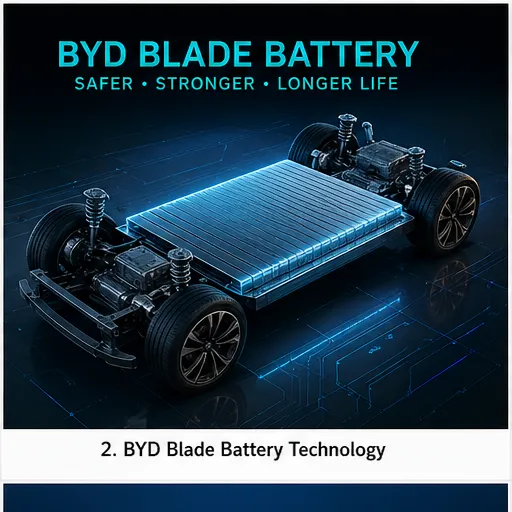
Before comparing these giants directly, it helps to understand their origins and trajectories. BYD (Build Your Dreams) started as a battery manufacturer in 1995 before expanding into automobiles in 2003. That battery heritage remains central to its DNA, especially in the electric vehicle revolution. BYD’s unique vertical integration — controlling battery production, cell design, and vehicle manufacturing — gives it competitive advantages few rivals can match, allowing it to offer aggressive EV pricing while maintaining healthy margins through its own Blade Battery technology.
Geely, conversely, has pursued a more acquisition-focused strategy. Founded in 1997 as a motorcycle manufacturer, it became an automaker in 2001, and its growth has been marked by strategic acquisitions and partnerships — most notably the purchase of Volvo’s car division in 2010, which brought Swedish engineering expertise into the fold. That integration created a hybrid advantage: Western quality at more competitive price points.
Handy Accessories for New EV Owners
Affiliate disclosure: As an Amazon Associate, Chinese Cars Asia earns from qualifying purchases. The links below may earn us a small commission at no extra cost to you.
4K Front & Rear Dash Cam
Whether you land on a BYD or a Geely, a dual-channel 4K dash cam with parking mode is one of the smartest first add-ons — useful evidence for insurance and round-the-clock protection for a new car.
🛒 Check Price on AmazonMagnetic Wireless Phone Mount
Both brands pack big touchscreens, but a strong magnetic mount with fast wireless charging keeps your own phone glanceable for navigation and calls without blocking the cabin display.
🛒 Check Price on AmazonElectric Vehicle Leadership: The Core Battleground
The global automotive industry’s future lies in electrification, and in this domain BYD holds an unmistakable advantage. The company has become the world’s largest EV manufacturer by sales volume, surpassing Tesla in recent years. This isn’t luck — it’s the result of its battery heritage and continuous innovation.
BYD’s Electric Vehicle Ecosystem
BYD’s EV portfolio spans multiple categories: the Qin DM-i series (plug-in hybrids), the Yuan Plus (compact SUV, sold as the Atto 3 in some markets), the Song family (practical daily drivers), and the Seagull (an ultra-affordable electric car). Each incorporates Blade Battery technology, which offers superior thermal stability, longevity, and cost efficiency. The Qin DM-i series in particular represents a revolutionary approach to hybrids: rather than prioritizing fuel efficiency alone, it maximizes electric range for daily commutes while the petrol engine serves as a backup for longer journeys, addressing the range anxiety that has slowed EV adoption in markets without robust charging infrastructure.
Geely’s Electric Push
Geely hasn’t neglected the EV market, but its approach differs fundamentally. Under the Geometry brand, it offers electric vehicles positioned toward the premium end, with the Geometry A and Geometry C targeting consumers who want refined driving experiences with electric powertrains. However, Geely’s EV strategy faces a significant challenge: it lacks the battery-manufacturing expertise BYD possesses, forcing reliance on external suppliers that increases costs and limits pricing flexibility. In price-sensitive markets like Europe and North America, that disadvantage becomes critical.
Market Positioning and Expansion Strategy
| Factor | BYD | Geely |
|---|---|---|
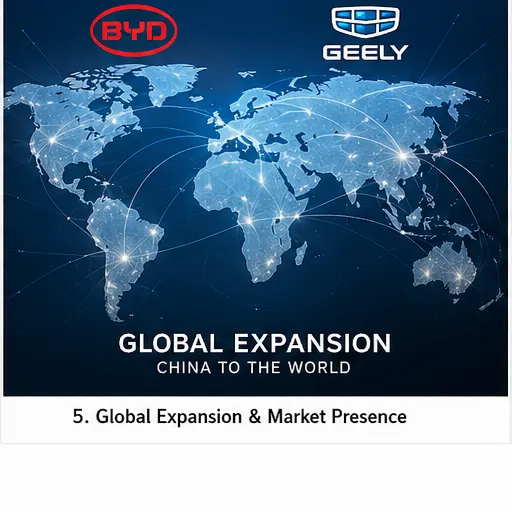
| Global Presence | 50+ countries, rapidly expanding | European focus, selective markets |
| Price Range | Budget to mid-premium ($10k–$60k) | Mid to premium ($25k–$70k) |
| Brand Perception | Innovative, technology-focused | Premium, Swedish-influenced |
| Production Capacity | Over 3 million vehicles annually | Approximately 1.2 million annually |
| R&D Investment | Heavily focused on batteries and EVs | Broader automotive innovation |
European Market Penetration
Europe represents the ultimate test for Chinese automakers, with stringent safety standards, sophisticated consumer expectations, and established brand loyalties. Here, Geely has gained an advantage through its Volvo connection: the synergy between Geely and Volvo (both under parent Li Shufu) has enabled smoother market entry and better brand credibility.
💡 Key Insight: Geely’s acquisition of Volvo wasn’t just about assets — it was about gaining credibility with European consumers who trust Swedish engineering traditions.
BYD, meanwhile, has taken a different route. Rather than acquiring European companies, it has built recognition through public-transport projects — electric buses and taxis have become increasingly visible in cities across Europe. This grassroots approach creates familiarity and demonstrates real-world reliability, and the Yuan Plus SUV (Atto 3) has begun challenging established SUV leaders in Europe and Australia.
American Market Challenges and Opportunities
The North American market presents distinct challenges for both. Trade barriers and U.S. trade scrutiny complicate direct entry for BYD’s passenger vehicles, though BYD continues to dominate bus manufacturing and has established operations in Canada. Geely faces fewer political obstacles but must overcome consumer skepticism about Chinese brands and Volvo’s diminished American recognition against entrenched premium players like BMW, Mercedes, and Audi. Both companies must invest significantly in service networks, dealership infrastructure, and marketing to gain meaningful traction.
Vehicle Quality and Reliability: A Closer Examination
BYD’s Quality Evolution
A decade ago, Chinese vehicles carried a stigma regarding quality and durability. BYD has systematically dismantled this perception through rigorous quality control and continuous improvement, and its vehicles now achieve competitive reliability ratings — the Qin DM-i series became one of China’s best-selling lines precisely because owners report strong reliability and satisfaction. Vertical integration aids quality control: when you manufacture your own batteries, you control the entire supply chain, reducing the parts-failure risks that sometimes plague competitors reliant on external suppliers.
Geely’s Quality Credentials
Geely benefits directly from Volvo’s engineering heritage, which has elevated its vehicles to higher quality standards than many Chinese competitors. The Emgrand series and Boyue models reflect this integration of Swedish engineering rigor with Chinese manufacturing efficiency. Quality, however, isn’t about heritage alone — it’s about execution, and both companies demonstrate solid quality in contemporary models, though BYD’s larger production volumes mean its quality metrics affect far more vehicles globally.
Pricing Strategy and Value Proposition
BYD: Value for Money
- Lowest prices in the EV segment
- Exceptional in-house battery technology
- Extended range at lower costs
- Diverse model range
- Strong warranty packages
BYD: Limitations
- Limited premium positioning
- Interior materials can feel economy-oriented
- Dealership network still developing
- Brand cachet lower than established marques
- Infotainment sophistication varies by model
Geely: Premium Appeal
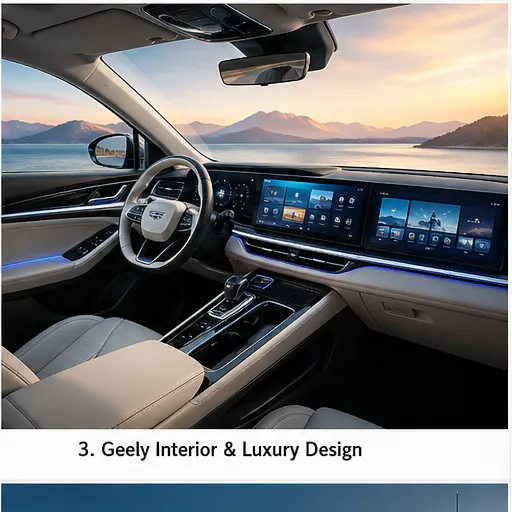
- Premium interior materials
- Advanced infotainment systems
- Swedish-influenced design aesthetics
- Stronger brand heritage
- Better resale-value potential
Geely: Limitations
- Higher purchase prices
- Limited EV cost advantages
- Smaller model selection
- Battery-supplier dependency
- Less aggressive pricing strategy
Technology and Innovation: Who Leads?
BYD’s Innovation Focus
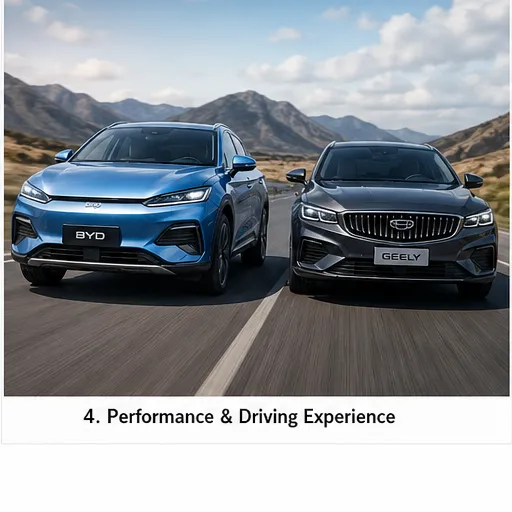
BYD’s research and development is laser-focused on battery technology and electric powertrains. Its Blade Battery is a genuine innovation, using a longer, thinner cell design that increases energy density while improving thermal stability — architectural innovation rather than incremental improvement. Beyond batteries, BYD has invested heavily in autonomous driving, connected-vehicle technology, and in-vehicle entertainment; the DILINK system in newer models reflects Chinese tech companies’ influence on automotive software — intuitive, cloud-connected, and constantly updated.
Geely’s Innovation Strategy
Geely pursues broader automotive innovation. Through partnerships with universities and tech companies, it develops autonomous-driving systems, advanced safety features, and connectivity technologies, and the Polestar brand (a collaboration between Geely and Volvo) showcases cutting-edge EV and autonomous-driving research. However, Geely’s innovation lacks the singular focus of BYD’s battery expertise — it competes across multiple technology domains at once, a more expensive but potentially more comprehensive approach.
Environmental Impact and Sustainability
Both companies are significantly reducing carbon emissions through electrification, but they approach sustainability differently. BYD has established battery-recycling operations to handle end-of-life materials, extending its vertical integration into environmental responsibility, and has committed to carbon-neutrality targets with substantial investment in renewable energy for its factories. Geely approaches sustainability through heritage: Volvo’s long history of environmental consciousness influences its policies, and the company has committed to focusing exclusively on electric vehicles by the 2030s.
Which Brand Suits Different Markets?
For European Consumers
If you’re shopping in Europe, Geely presents fewer hurdles — better dealer networks, established service infrastructure, and Volvo’s heritage create smoother ownership experiences. That said, BYD’s improving European presence offers compelling value, particularly in electric vehicles where its battery technology provides genuine advantages.
For American Consumers
The American market remains challenging for both brands. Trade barriers restrict BYD’s presence more severely, while Geely must overcome the skepticism consumers harbor toward Chinese brands despite Volvo ownership. Neither has yet cracked mainstream American consciousness the way Tesla, Ford, and GM have.
For Emerging Markets
In developing economies, BYD dominates through affordability and practicality. Its price points, battery reliability, and diverse product range make it the natural choice, while Geely’s premium positioning finds less traction in price-sensitive markets.
The Verdict: BYD vs Geely
After thorough analysis, there’s no single “better” brand — context determines the winner. BYD is superior if you prioritize:
- Electric vehicle technology and range
- Value for money and affordability
- Innovative in-house battery technology
- A diverse model selection
Geely is superior if you prioritize:
- Premium brand heritage and perception
- Interior luxury and quality materials
- Established dealership networks
- Swedish engineering integration
Looking Forward: The Future Landscape
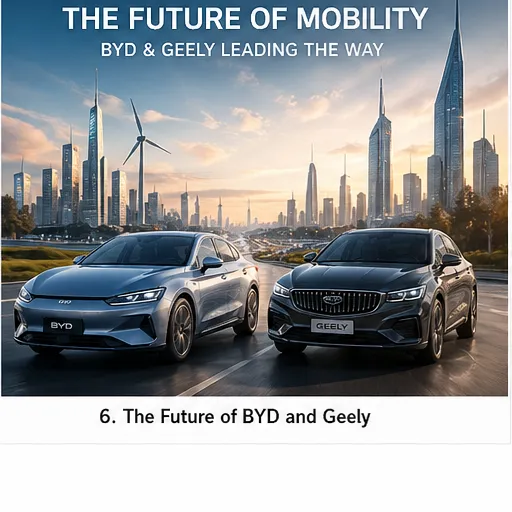
The next decade will prove decisive for both companies. BYD’s momentum in electric vehicles and battery technology provides a substantial advantage as global markets transition away from combustion engines — though BYD must expand premium offerings to challenge Tesla and traditional luxury brands. Geely’s challenge is different: it must leverage Volvo’s heritage to position its vehicles as quality alternatives to established European and Japanese brands while accelerating EV adoption. Its success depends on overcoming consumer skepticism about Chinese automotive capabilities — a task that becomes easier as BYD and other Chinese manufacturers continue building track records for reliability and innovation.
💡 Making Your Decision: Test drive vehicles from both manufacturers and evaluate specific models rather than entire brands. Inspect build quality, assess customer service, and weigh your own needs — budget, desired features, and market location — which should guide your choice more than brand reputation alone.
FAQ: BYD vs Geely
Which is better, BYD or Geely?
It depends on your priorities. BYD leads on electric-vehicle technology, battery innovation, range, and value for money, while Geely offers a more premium feel, refined interiors, and the credibility of its Volvo heritage. For EV value, choose BYD; for premium polish, choose Geely.
Is BYD bigger than Geely?
Yes. BYD produces over 3 million vehicles annually and is the world’s largest EV maker by sales volume, while Geely builds roughly 1.2 million vehicles a year. BYD’s scale comes largely from its dominance in electric and plug-in hybrid vehicles.
Does Geely own Volvo?
Yes. Geely’s parent group, led by Li Shufu, acquired Volvo Cars in 2010 and also co-owns the Polestar brand. This relationship gives Geely access to Swedish engineering expertise and stronger credibility in European markets.
Which brand is better for European buyers?
Geely often presents fewer hurdles in Europe thanks to Volvo’s heritage, established dealer networks, and service infrastructure. However, BYD’s growing European presence offers compelling value, especially in electric vehicles where its battery technology provides a genuine advantage.
Does BYD make its own batteries?
Yes. BYD designs and manufactures its own Blade Battery and is vertically integrated across cells, batteries, and vehicles. Geely, by contrast, relies more on external battery suppliers, which limits its pricing flexibility in cost-sensitive markets.
Final Thoughts
Both BYD and Geely have earned legitimate positions as serious automotive manufacturers. They’re no longer merely low-cost competitors; they’re innovators reshaping the industry. Whether you choose BYD or Geely, you’re selecting from brands that have demonstrated genuine commitment to quality, technology, and environmental responsibility. The Chinese automotive revolution is no longer a future prediction — it’s an unfolding present reality.