400V vs 800V EV Charging: What’s the Difference?
Electric cars are no longer judged only by range. For many buyers, charging speed has become just as important — which is why the discussion around 400V vs 800V EV charging matters. The difference is not just a number on a spec sheet: it affects how quickly a car recovers range, how much heat the charging system produces, how thick the cables need to be, and how convenient the EV feels in real-world use.
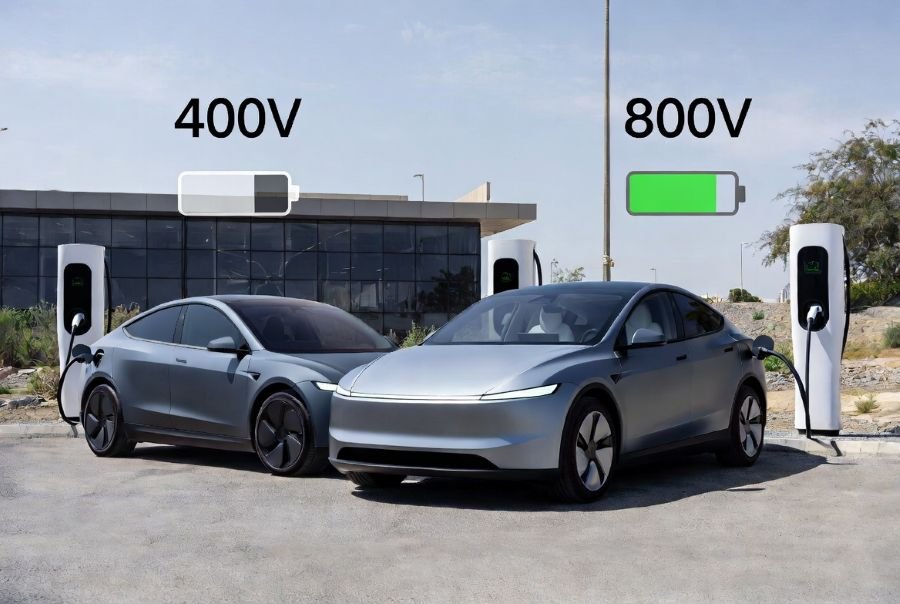
In simple terms, a 400V EV uses a high-voltage system operating around 400 volts, while an 800V EV operates closer to 800 volts. Higher voltage lets the vehicle move the same power with less current — and because heat losses rise with current, an 800V architecture can make high-power charging easier to manage. But that doesn’t automatically make every 800V EV better for every driver.
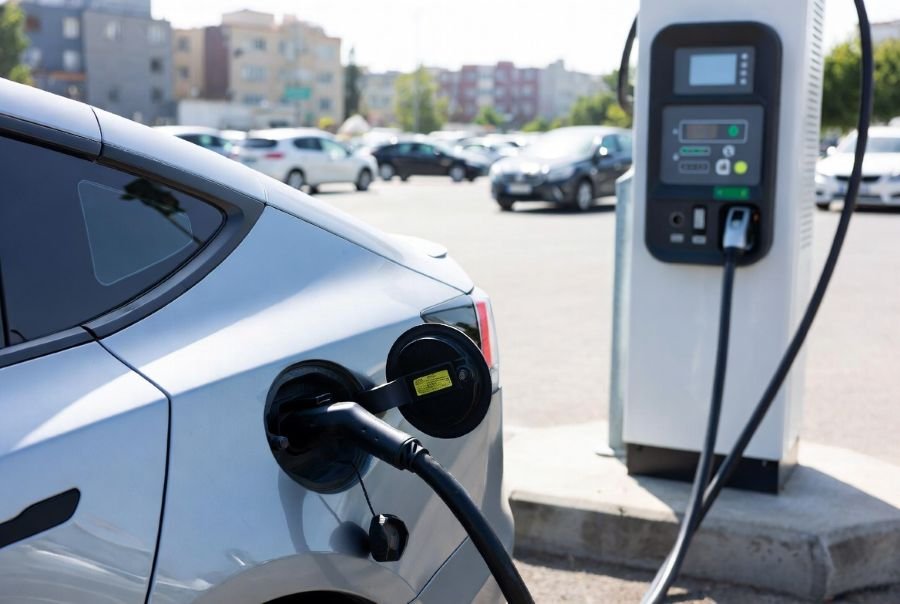
This detailed guide explains the real difference between 400V and 800V EV charging, why automakers are adopting 800V platforms, where 400V still makes sense, and whether 800V is truly the future of electric cars. To start, the short video below walks through the key ideas in plain language.
As the video makes clear, the 400V vs 800V question is less about a single winner and more about matching the right charging architecture to the way you actually drive — the theme we develop in detail below.
400V vs 800V EV Charging: The Simple Explanation
To understand 400V vs 800V EV charging, start with a basic electrical relationship: Power = Voltage × Current. In an EV, charging power is measured in kilowatts. A car can charge at high power by increasing voltage, increasing current, or both. The challenge is that higher current creates more heat, places more stress on cables and connectors, and demands more robust thermal management.
A 400V system can still charge quickly, and many excellent electric cars use it. However, once charging power rises beyond certain levels, current becomes a limiting factor. An 800V system can deliver similar or higher power while using less current — which is why 800V EVs are often associated with ultra-fast charging, lighter high-voltage wiring, and better efficiency under high load. If two EVs charge at the same power level, the 800V car generally needs roughly half the current of the 400V car, reducing heat and helping maintain a stable charging curve.
💡 Quick takeaway: 800V does not magically double every charging speed. It gives engineers more room to deliver high charging power with less current, which can reduce heat and help maintain faster charging under the right conditions. The real buyer question is whether faster public charging is worth a possible price premium for your lifestyle.
Essential Charging Accessories for EV Owners
Affiliate disclosure: As an Amazon Associate, Chinese Cars Asia earns from qualifying purchases. The links below may earn us a small commission at no extra cost to you.
Type 2 to Type 2 Charging Cable (22kW, 5m)
Whether your EV is 400V or 800V, everyday AC top-ups happen on the Type 2 standard. A TÜV-certified 32A cable covers home wallboxes and untethered public posts across UK and European networks.
🛒 Check Price on AmazonEV Charging Cable Storage Bag
A waterproof, fire-retardant bag keeps your charging cable clean and contained between stops — no grimy hands or a dirty boot after every charge. A small, inexpensive fix for a daily annoyance.
🛒 Check Price on AmazonWhat Is a 400V EV Charging Architecture?
A 400V architecture has been the standard design for many electric vehicles. It is proven, relatively cost-effective, and compatible with a large number of charging systems. Many popular electric cars — from affordable city EVs to mainstream family crossovers — use 400V systems and still provide excellent ownership experiences.
The main advantage of 400V is simplicity. Components such as inverters, onboard chargers, DC-DC converters, battery modules, contactors, and thermal systems are widely available. Automakers understand the engineering requirements, suppliers can produce parts at scale, and service networks are already familiar with the technology — all of which helps reduce cost, especially for budget EVs. A further point: home charging does not benefit much from 800V, because most home wallboxes use AC charging at far lower power than public DC fast chargers. For drivers who mostly charge at home, the difference between 400V and 800V can be almost invisible in daily life.
400V EV Charging Strengths
The best 400V EVs are practical, affordable, and easy to live with. They may not set records at ultra-fast charging stations, but they charge quickly enough for many owners. A well-designed 400V EV with an efficient battery, good thermal management, and a stable charging curve can be more useful than a poorly optimized higher-voltage EV. In the budget segment in particular, 400V often makes more financial sense — if an EV is mainly used for commuting, school runs, and occasional regional trips, paying extra for 800V hardware may not deliver enough real-world benefit.
What Is an 800V EV Charging Architecture?
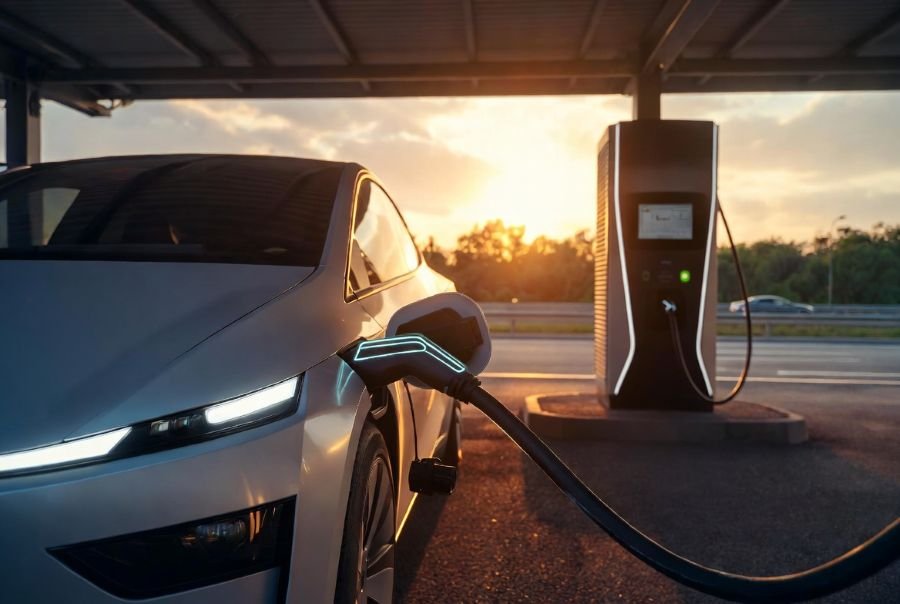
An 800V architecture uses a higher-voltage electrical system to support faster charging and more efficient power delivery. The technology first gained attention in premium performance EVs, but it is now spreading into more mainstream electric cars. Models from brands such as Porsche, Hyundai, Kia, and several Chinese automakers have helped make 800V a major talking point.
The appeal is clear: higher voltage can reduce current for the same power level, and lower current means less heat in cables, connectors, and power electronics. That makes it easier to support very high DC charging speeds, especially from around 10% to 80%, where manufacturers usually quote their fastest charging times. Porsche, for example, highlights 800V technology in the Taycan for fast charging up to around 320 kW in suitable versions, while Kia describes the EV6 as charging roughly 10% to 80% in about 18 minutes under suitable conditions. 800V can also help with power delivery during acceleration and repeated high-performance driving — though the benefits always depend on the full vehicle design, including battery chemistry, cooling, and charging software.
⚠️ Important Note: An 800V badge does not guarantee record-breaking charging everywhere. The charger must support high voltage and high power, the battery must be warm enough, and the car’s charging software must allow a strong charging curve.
400V vs 800V EV Charging Speed: Which Is Faster?
In ideal conditions, 800V EVs can charge faster than 400V EVs — especially at high-power DC chargers rated for 250 kW, 300 kW, 350 kW, or more. The higher voltage lets the car accept greater power without needing extremely high current, so many 800V EVs add range very quickly during the middle of a long journey.
But charging speed is not only about voltage; it also depends on the charging curve. A car may briefly hit a high peak and then drop, while another holds a lower peak for longer. The best EVs are not necessarily those with the biggest peak number — they are the ones that recover useful range quickly and consistently. A 400V EV may charge 10% to 80% in around 30 to 40 minutes depending on model, battery size, charger, and conditions, while a well-designed 800V EV can often cut that stop significantly, with some models advertising 10% to 80% in roughly 18 minutes under ideal conditions.
| Category | 400V EV Charging | 800V EV Charging |
|---|---|---|
| Typical Use | Mainstream, budget, family, and urban EVs. | Premium, performance, and newer fast-charging-focused models. |
| Fast Charging Potential | Good, but high power needs higher current and stronger cooling. | Excellent with compatible high-power chargers and good thermal management. |
| Heat Management | More current for the same power increases thermal challenge. | Lower current for similar power can reduce heat stress. |
| Cost | Generally more affordable and widely developed. | Can be more expensive due to advanced components and platform needs. |
| Best For | Daily drivers, home charging, value-focused buyers. | Frequent road-trippers, fast-charging users, performance buyers. |
Why 800V EV Charging Can Reduce Heat
Heat is one of the biggest enemies of fast charging. When large amounts of current move through cables and components, resistance creates heat — and if heat rises too much, the vehicle reduces charging power to protect the battery and electronics. This is one reason charging speeds are usually highest for only part of the session.
Because an 800V system can deliver high power with lower current, it may reduce some heat losses compared with a 400V system at the same power level. This helps the car maintain stronger charging performance, use thinner cables, and support repeated fast charging more effectively — which matters for drivers covering long distances in a single day. Even so, the battery still needs active thermal management: a cold battery may charge slowly even in an 800V EV, which is why many modern EVs precondition the battery when a fast charger is set as a navigation destination.
400V vs 800V EV Charging at Home
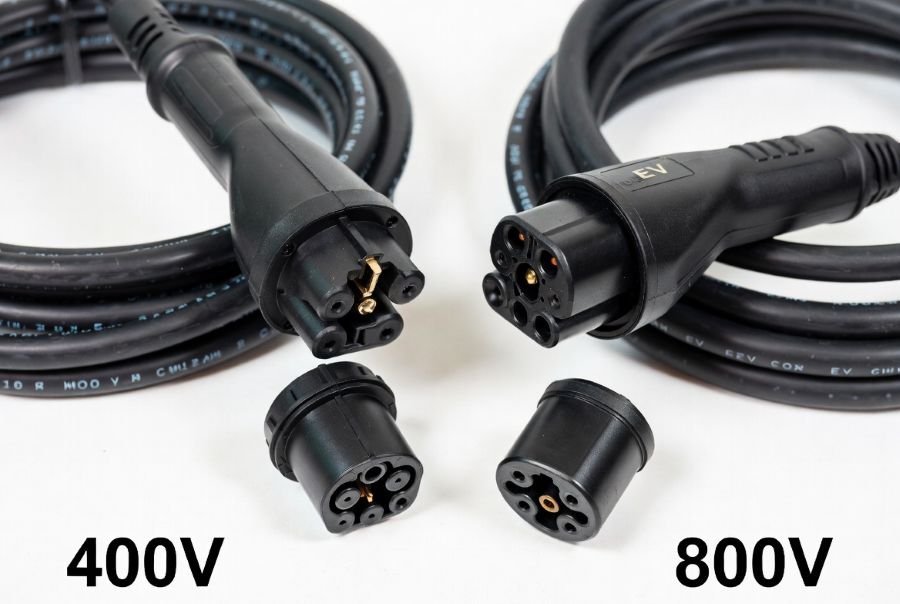
For home charging, the difference between 400V and 800V is usually small. Most homes use AC charging, and the speed depends mainly on the onboard charger and the wallbox power. A typical home charger provides 7 kW, 11 kW, or 22 kW depending on country, electrical supply, and vehicle capability — far below the maximum power of public DC fast chargers.
This means an 800V EV will not necessarily charge faster overnight than a 400V EV. If both cars have similar onboard AC charger ratings and battery sizes, their home charging times may be very close. The main advantage of 800V appears on high-power DC chargers, not in ordinary home charging. Buyers should therefore think about their lifestyle: if you have a home charger and usually drive short daily distances, a 400V EV can be perfectly suitable; if you often travel long distances and rely on public fast charging, 800V can save meaningful time.
Home Charging Buyer Tip
Before choosing between 400V and 800V EVs, check your actual charging pattern. If 80% of your charging happens at home, voltage architecture should not be your only deciding factor — battery efficiency, purchase price, warranty, comfort, and software may matter more.
400V vs 800V EV Charging on Road Trips
Road trips are where 800V technology becomes much more valuable. On a long journey, charging time directly affects travel time. If an EV can add hundreds of kilometres of range in under 20 minutes, the charging stop becomes closer to a coffee break than a major delay, making electric driving feel more natural to people used to petrol or diesel.
The experience, however, depends heavily on the charging network. An 800V EV needs a charger that can deliver high voltage and high power; if the only available charger is limited to lower power, the 800V advantage shrinks. In some regions, ultra-fast chargers are common along major highways; in others, they remain inconsistent. A 400V EV can still be a good road-trip car if it has a large battery, an efficient drivetrain, reliable navigation, and a stable charging curve — but when two cars have similar range and one charges much faster from 10% to 80%, the faster-charging car is usually more convenient for repeated highway travel.
Does 800V EV Charging Improve Efficiency?
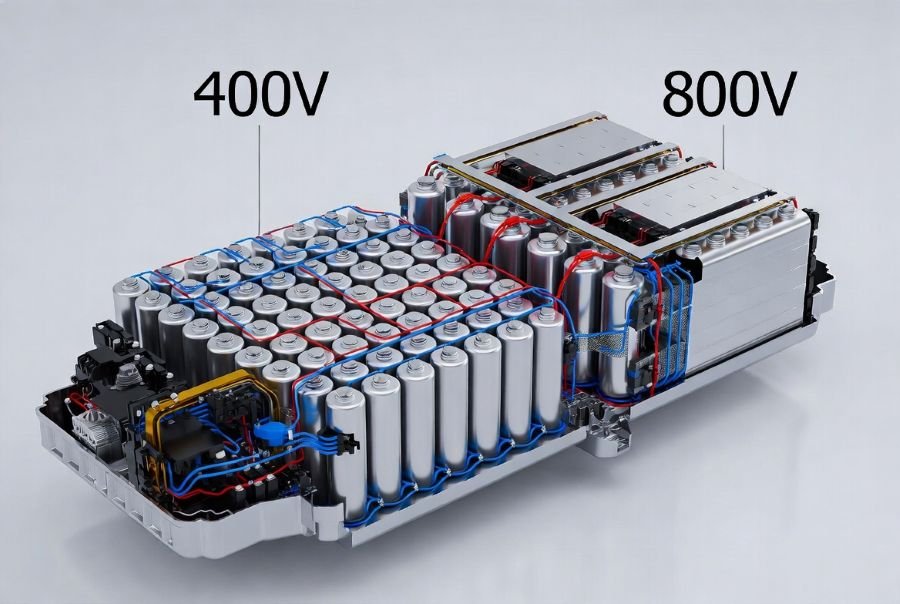
Higher voltage can improve efficiency in some parts of the electrical system, because lower current reduces resistive losses. This matters during fast charging, high-power acceleration, and sustained performance driving, and it may let engineers use smaller or lighter cables. However, total EV efficiency depends on many factors — aerodynamics, tyres, weight, motor design, inverter efficiency, battery chemistry, software, and climate control all play major roles. An efficient 400V EV can use less energy per kilometre than a heavy 800V performance EV.
In practical ownership, the most visible benefit of 800V is usually charging speed rather than dramatic energy savings. A buyer mainly interested in low electricity cost should compare real-world consumption figures, battery size, and home tariffs in addition to voltage.
400V vs 800V EV Charging Cost: Why 800V Can Be More Expensive
The biggest disadvantage of 800V technology is cost. A higher-voltage platform may require different battery layouts, advanced power electronics, stronger insulation, compatible components, and more sophisticated testing — plus extra work to ensure safety, durability, and long-term reliability under higher voltage. This is why 800V systems first appeared mostly in premium EVs, where buyers already pay for advanced technology.
As production scales and more suppliers develop compatible components, 800V will likely become common in mid-range and even some budget EVs. For now, though, 400V remains attractive for affordable electric cars. Buyers should avoid assuming 800V is always worth paying more for: if the price difference is large and you rarely use public fast chargers, the financial benefit may be weak; if you frequently travel long distances, the time savings may justify the cost.
💡 Pro Tip: Choose 400V if you mostly charge at home, want a lower purchase price, and rarely take very long EV road trips. Choose 800V if you often use public fast chargers and want shorter stops on highway journeys. But don’t decide on voltage alone — charging curve, battery size, software, efficiency, and charger access matter just as much.
Real-World Charging: Why Peak kW Numbers Can Mislead Buyers
EV advertisements often highlight peak charging power — 180 kW, 240 kW, 270 kW, or 320 kW — but peak power is not the same as average charging speed. Most EVs reach peak power only under specific conditions and only for part of the session; as the battery fills, the car gradually reduces power to protect battery health.
This is why the 10% to 80% charging time is usually more useful than peak power alone: it shows how quickly the car charges across the most common fast-charging window. Even then, cold weather, a busy charger, high battery temperature, a lack of preconditioning, or a charger with limited voltage can all reduce performance. An 800V EV with poor software or limited cooling may underperform, while a well-engineered 400V EV that charges consistently can be very satisfying. The best approach is to read independent charging tests, real-world owner reports, and official specifications together.
Compatibility: Can an 800V EV Use a 400V Charger?
Many 800V EVs can charge on 400V DC chargers, but the result depends on the vehicle’s onboard charging hardware. Some vehicles use a booster system or clever battery configuration to accept power from lower-voltage chargers; others charge at reduced speed when connected to infrastructure that cannot supply the voltage they prefer.
This is an important point for buyers. An 800V car is most impressive when connected to a compatible high-voltage, high-power charger; if your local network mainly consists of older or lower-power chargers, the real-world advantage may be smaller. Before buying an 800V EV, it is smart to check the chargers on your regular routes. For 400V EVs, compatibility is usually straightforward, since many existing DC chargers were designed around 400V-class vehicles — though as networks upgrade to 350 kW and higher, 800V vehicles will be better positioned to use that infrastructure fully.
400V vs 800V EV Charging and Battery Health
Some drivers worry that ultra-fast charging may harm the battery. The concern is understandable, since high power creates heat and batteries prefer controlled temperatures. Modern EVs manage this with battery management systems, cooling circuits, software limits, and charging curves designed to protect long-term durability.
An 800V system can help by reducing current-related heat at high power levels, but battery health still depends on chemistry, cooling, charging frequency, state of charge, and temperature. Regularly charging to 100% and leaving the car full for long periods may be less ideal than charging within a moderate range for daily use, and repeated fast charging in extreme heat is more stressful than slower home charging. For most owners, the best practice is simple: use home or workplace charging for routine needs, use DC fast charging when it saves time, and follow the manufacturer’s recommended daily charge limits. Whether the car is 400V or 800V, smart charging habits matter.
Which One Is Better for Budget EVs?
Budget EVs must balance cost, range, safety, features, and charging speed — and in this segment, 400V architecture still makes a lot of sense. It keeps costs under control and provides enough charging performance for drivers who mostly charge at home. Many affordable-EV buyers care more about monthly payments, warranty, battery durability, and real-world efficiency than ultra-fast DC charging.
That said, 800V technology will likely move into more affordable EVs over time. Chinese automakers in particular are pushing fast-charging development aggressively, and competition may bring high-voltage platforms to lower price points. As charging networks improve, 800V may become a stronger selling point even outside premium segments. Still, a budget EV should not be judged harshly simply because it uses 400V — if it offers good range, reliable charging, strong safety, and a fair price, it can be a better purchase than a pricier 800V EV that doesn’t match the buyer’s needs.
400V vs 800V EV Charging: Pros and Cons
400V EV Charging Pros
- Usually more affordable to build and buy
- Widely used and well understood by manufacturers
- Well suited to home charging and daily commuting
- Compatible with many existing DC fast chargers
- A strong choice for value-focused EV buyers
400V EV Charging Cons
- May not achieve the fastest ultra-rapid charging speeds
- Higher current is needed for very high power
- Long road trips may require longer charging stops
- Can feel less future-proof in premium EV comparisons
800V EV Charging Pros
- Can support much faster DC charging
- Uses lower current for similar power levels
- Can reduce heat stress in cables and power electronics
- Useful for long-distance driving and quick charging stops
- Strong future potential as charging networks improve
800V EV Charging Cons
- Can increase vehicle cost and technical complexity
- Requires compatible high-power chargers for best results
- Benefits are limited for drivers who mainly charge at home
- Peak charging claims depend heavily on ideal conditions
Which EVs Use 800V Charging?
Several well-known EVs use 800V or high-voltage charging architectures. The Porsche Taycan helped popularize the concept in the premium performance market. Hyundai and Kia then brought 800V capability to more mainstream models such as the IONIQ 5 and EV6. More recently, several Chinese electric vehicles have adopted advanced high-voltage platforms to compete on charging speed and technology.
This matters because 800V is becoming a competitive advantage. Automakers know buyers increasingly compare not only range but also charging time, and a car that charges quickly may need a smaller battery to feel practical — which could help reduce weight and cost in future designs. For more articles on EV technology, Chinese electric cars, and charging guides, visit the Chinese Cars Asia homepage.
External Technical References
For official examples of 800V EV technology, Porsche explains the Taycan’s 800V system and high-power charging capability on its official Taycan page, while Kia describes EV6 800V charging capability on its official EV6 page.
FAQ: 400V vs 800V EV Charging
Is 800V EV charging twice as fast as 400V?
Not automatically. An 800V system can support faster charging because it can deliver high power with less current, but real charging speed depends on the battery, charger, temperature, charging curve, and vehicle software.
Is 400V EV charging outdated?
No. 400V EV charging is still widely used and remains practical for many electric cars. It is especially suitable for affordable EVs and drivers who mostly charge at home.
Does 800V charging work at home?
Yes, an 800V EV can charge at home, but it usually will not charge much faster than a 400V EV on a typical AC wallbox. The main advantage of 800V appears during high-power DC fast charging.
Is 800V better for battery health?
800V can reduce current-related heat during high-power charging, but battery health depends on many factors including cooling, chemistry, temperature, charging habits, and battery management software.
Should I pay extra for an 800V EV?
Consider paying extra for 800V if you frequently use public fast chargers or take long road trips. If you mostly charge at home and drive locally, a good 400V EV may offer better value.
Final Verdict: 400V vs 800V EV Charging
In the 400V vs 800V EV charging debate, 800V is the more advanced and future-focused technology. It can enable faster DC charging, lower current, better heat management, and shorter road-trip stops. For performance EVs and frequent long-distance drivers, it is a major advantage.
However, 400V EVs are far from obsolete. They remain practical, affordable, widely compatible, and perfectly suitable for millions of drivers who mostly charge at home or travel moderate distances. A good 400V EV can still be a better real-world purchase than an expensive 800V EV if it matches your lifestyle and budget.
The best answer is therefore simple: choose 800V if fast public charging is a priority, but choose the best overall EV if your daily life doesn’t require ultra-rapid charging. Voltage is important — but value, efficiency, reliability, and charging access matter just as much.