Why Everyone Is Switching to Electric Cars
Electric vehicles have crossed a critical threshold into mainstream adoption. No longer niche machines for early adopters, EVs now make up a substantial and fast-growing share of new car sales worldwide, and the momentum is only building.
So what is actually driving the switch? In short: lower running costs, a noticeably better drive, mature charging infrastructure, advanced technology, and incentives that still sweeten the deal. This guide breaks down the real, rational reasons consumers are moving from petrol to electric.
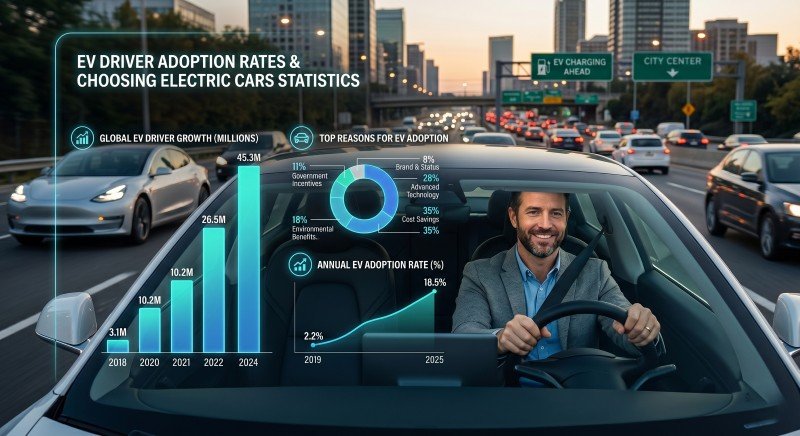
This is not marketing hype or adoption forced by government mandate. Real consumers are increasingly choosing EVs over petrol cars because the maths and the everyday experience now genuinely favour electric. Understanding the reasons behind that shift explains why this has become the inflection point at which electric truly goes mainstream. Before the detail, the short video below sums it up.
With that overview in mind, let’s start with the single most compelling reason most people make the switch: cost.
Reason 1: Running Costs Are Dramatically Lower
The most compelling reason to switch is simple: electric cars cost far less to run than equivalent petrol vehicles. The savings stack up across several categories, from fuel to routine maintenance, and the table below shows roughly how the annual picture compares for a typical driver.
| Cost Category (Annual) | Petrol Car | Electric Car | EV Saving |
|---|---|---|---|
| Fuel / electricity | £1,200–£1,500 | £300–£450 | ~£800–£1,150 |
| Oil & fluid service | £150–£200 | £0 | ~£150–£200 |
| Brakes (regen reduces wear) | £300–£400 | £80–£150 | ~£220–£250 |
| Transmission service | £200–£400 | £0 | ~£200–£400 |
| Filters & spark plugs | £100–£200 | £0 | ~£100–£200 |
Add it up and a typical driver can save well over a thousand pounds a year, which compounds into several thousand across a five-year ownership cycle, enough to offset much of an EV’s higher purchase price. The exact figures vary with mileage and electricity tariffs, but the direction of travel is clear and consistent: for anyone covering meaningful annual mileage, the running-cost case for electric is strong.
Two Safety Essentials for Every New EV
Switching to an EV is a great moment to refresh the basics every car should carry. These two inexpensive, universal items belong in any vehicle, electric or otherwise, and bring real peace of mind.
Every new car deserves a proper emergency kit with a warning triangle, hi-vis vest, torch, and basic tools. It is the single most sensible thing to keep in the boot, turning an unexpected roadside problem into a manageable one whatever you drive.
A compact first aid kit is mandatory in many countries and simply good sense everywhere. Tucked in the glovebox or door pocket, it costs little and ensures you are ready for minor injuries on any journey, an easy box to tick when setting up a new EV.
Reason 2: A Superior Driving Experience
Beyond the spreadsheet, EVs offer a fundamentally different drive, and it is one most petrol drivers instantly prefer once they try it. The appeal is not theoretical; it is something you feel within the first few minutes behind the wheel.
- Instant torque makes overtaking and pulling away feel effortless.
- Smooth and quiet running, with no engine noise or vibration, creates a serene cabin.
- Responsive handling thanks to a low centre of gravity from the floor-mounted battery.
- Regenerative braking enables relaxed one-pedal driving and reduces brake wear.
- No gear changes, just seamless, linear acceleration from a single-speed drivetrain.
- Advanced tech such as over-the-air updates and connected features baked in.
Once drivers have lived with this, returning to a petrol car often feels dated by comparison. The difference is visceral rather than abstract, which is precisely why so many EV owners say they will not go back.
Reason 3: Charging Infrastructure Has Matured
The old “range anxiety” objection has largely faded, because charging has reached a genuine critical mass. Networks have expanded enormously across Europe and North America, the fastest chargers now add a large chunk of range in fifteen to twenty minutes, and the vast majority of owners can simply plug in at home overnight.
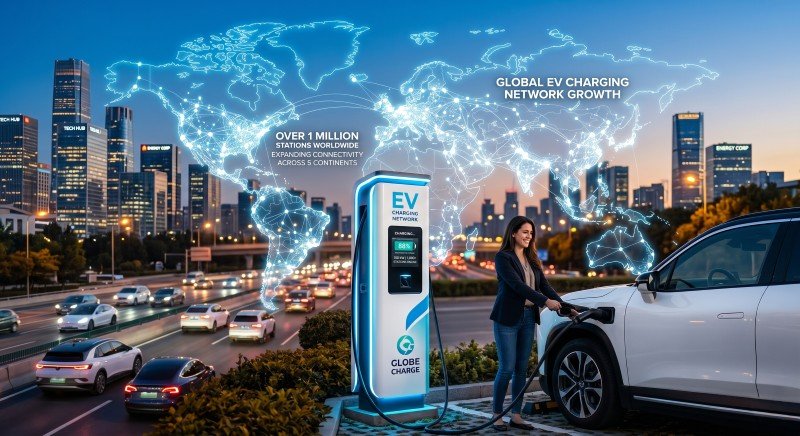
For the overwhelming majority of everyday driving, where daily distances are modest, home charging eliminates fuel-station visits entirely. Most drivers only ever need a public charger on longer road trips, and even then the combination of denser networks and slick payment apps makes the experience increasingly frictionless. The infrastructure is no longer the barrier it once was.
💡 Pro Tip: If you can fit a home charger, do the maths on an overnight electricity tariff. Charging while you sleep on a cheap rate is where the biggest running-cost savings come from, often turning a “full tank” into the price of a couple of coffees.
Reason 4: Environmental and Health Benefits
Economics lead the switch, but environmental and health factors matter too, and often in more personal ways than headlines suggest. The genuine environmental benefits are real: zero tailpipe emissions improve local air quality, grids are steadily greening, manufacturing emissions are typically offset within a year or two of driving, and battery recycling continues to improve. Just as important to many buyers is health: cutting exposure to the pollutants petrol cars emit is a direct way to protect themselves and their families, which makes the decision feel deeply personal rather than abstractly ideological.
Reason 5: Technology and Features
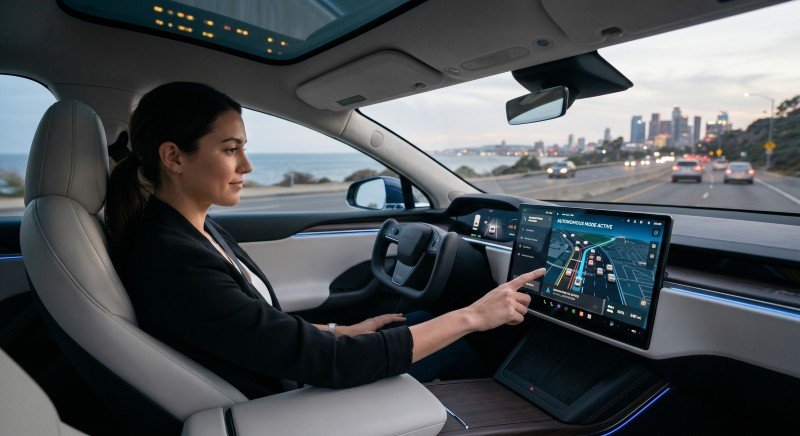
Modern EVs also pack technology that petrol cars will never offer. Over-the-air updates mean the car improves over time without a dealer visit, large touchscreens with wireless smartphone integration are standard, and driver-assistance features such as adaptive cruise, lane-keeping, and parking aids are increasingly common. Add real-time battery-health monitoring, vehicle-to-home capability that lets some cars power your house, and predictive maintenance alerts, and it is easy to see why tech-minded buyers view EVs as the future of mobility while petrol cars feel increasingly dated.
Reason 6: Incentives and a Maturing Market
While subsidies are tapering in many places, meaningful incentives still exist, from purchase grants and tax credits to VAT reductions and exemptions from annual road taxes. They vary widely by country and change frequently, so the exact figure matters less than the principle: in many markets, incentives bring an EV’s effective price down to parity with, or below, a comparable petrol car even before the running-cost savings begin.
Just as important, the market itself has matured. Buyers can now choose an electric version of almost any vehicle category, from compact city cars and practical hatchbacks to family SUVs, premium saloons, and even pickups and vans. That universal availability, combined with a growing used-EV market, removes one of the last practical barriers to switching.
⚠️ Important Note: Incentive schemes, grant amounts, and tax rules change often and differ greatly between countries and even regions. Always confirm the current incentives and eligibility in your own market before factoring them into a purchase decision, rather than relying on headline figures.
The Tipping Point: Why the Switch Is Accelerating
Several factors have converged to create a genuine tipping point. Price parity is increasingly within reach once incentives are counted, real-world range of 250–350 miles has eliminated anxiety for the vast majority of drivers, and the public charging network is now dense enough to make road trips practical. On top of that, years of data have proven EV reliability to be at least the equal of petrol cars, a healthy used market has opened the door to budget-conscious buyers, and EV ownership has simply become normal.
That last point matters more than it might seem. Once a critical mass of drivers experiences the benefits firsthand, social proof takes over: a neighbour buys an EV, loves it, recommends it, and the next person follows. That virtuous cycle is now self-reinforcing, which is why adoption is accelerating rather than plateauing.
⚠️ Honest Assessment: EVs are not perfect for everyone. Cold-weather range loss of 15–25%, an upfront price premium in some markets, and charging difficulties for flat-dwellers without off-street parking remain real issues. They affect a minority of use cases, but they are worth weighing honestly against your own circumstances.
Will Petrol Cars Disappear?
Not immediately. Petrol cars will persist in certain roles for some time: rural drivers with long commutes and limited charging, heavy towing duties better suited to hybrids, budget buyers in markets without incentives, and enthusiasts who simply love an engine. Over the next decade, however, their share of new sales is set to shrink steadily as the advantages of electric become harder to ignore. The transition will be gradual rather than abrupt, but its direction is no longer in serious doubt.
FAQ: Switching to Electric Cars
Are electric cars still more expensive overall?
Not for most drivers. While the purchase price can be higher, total cost of ownership over several years often favours EVs once you include far lower fuel and maintenance costs. For many buyers the higher upfront price is offset within three to four years.
What if I don’t have a driveway to charge at home?
Charging without a driveway is harder but not impossible. Workplace charging, public rapid chargers, and arrangements with building management all help. The ideal solution is access to a dedicated charger, but many flat-dwellers manage well with a mix of public and workplace charging.
Do electric cars last long enough to be worth it?
Yes. EV batteries typically carry 8 to 10-year warranties, and real-world data shows most retain around 90% of capacity well past 200,000 km. With far fewer moving parts than a petrol car, EVs often prove very durable over a long ownership period.
Should I wait for better battery technology?
Generally no. Today’s batteries are mature and reliable for daily use, and next-generation solid-state cells are still a few years from wide availability. Waiting usually means missing several years of running-cost savings for a benefit that is not yet on sale.
Who Is Switching, and Why?
It is tempting to picture the typical EV buyer as a wealthy tech enthusiast, but the data tells a more ordinary story. The average switcher today tends to be a practical, middle-aged consumer, often aged between 35 and 55, on a middle to upper-middle income, living in an urban or suburban area with charging access, and covering moderate annual mileage. The great majority are previous petrol-car owners making a considered move rather than first-time buyers or committed activists.
Their motivations are revealing too. Surveys of EV buyers consistently put rational, wallet-driven reasons at the top: lower fuel costs, reduced maintenance, and a better driving experience lead the list, with tax incentives and environmental concern following close behind. Emotional drivers such as status, tech enthusiasm, health, and supporting innovation play a secondary role. The key takeaway is that adoption is powered mainly by benefits people directly experience, which is precisely why it has spread into the mainstream rather than staying niche.
The Bottom Line: The Switch Is Rational, Not Ideological
The move to electric is not being driven by ideology or mandates so much as by practical, rational decision-making. When a technology becomes cheaper to run, better to drive, and more convenient to live with, people adopt it, and that is exactly what is happening with electric cars. Lower costs, a superior drive, mature charging, advanced technology, broad choice, and lingering incentives all point the same way.
For drivers still in a petrol car, the question is shifting. It is less “should I switch?” and more “why keep paying more for an experience that increasingly feels like the past?” The answer, for a rapidly growing number of people, is that there is no longer a good reason to wait.