Best Chinese-Owned Car Brands Available in the US (2026 Buying Guide)
If you have spent any time reading about the global rise of Chinese automakers, you have probably wondered a simple question: which Chinese-owned car brands can you actually walk into a dealership and buy in the United States? The honest answer surprises most shoppers. While headlines focus on BYD, NIO, and XPeng, none of those badges currently sell passenger cars directly to American buyers. Yet Chinese ownership is already parked in thousands of US driveways — just under names you would never guess.
This guide cuts through the confusion. We rank the best Chinese-owned car brands available in the US in 2026, explain exactly who owns what, list the models and prices you can buy today, and clarify the crucial difference between a car that is Chinese-owned and one that is merely Chinese-made. By the end, you will know precisely where Beijing’s capital meets the American road.
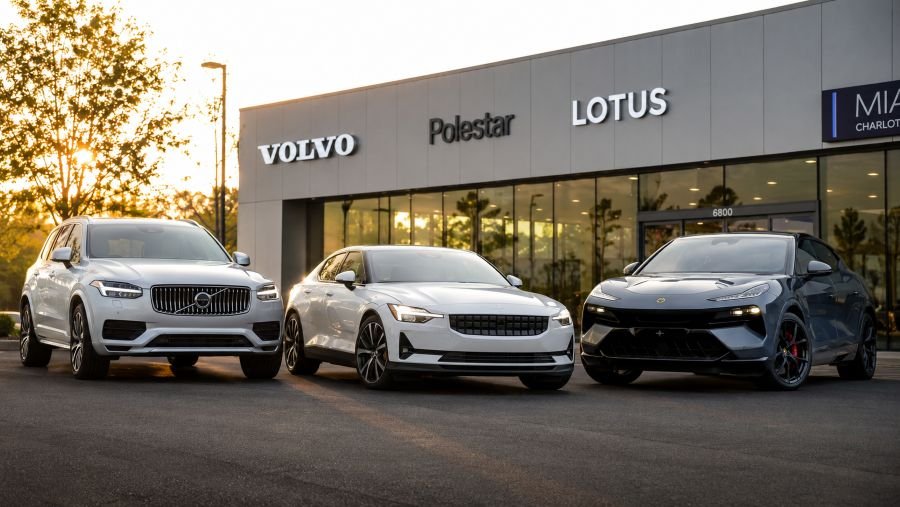
For years, the story of Chinese cars in America has been told as a story of absence — of brands waiting at the border, blocked by politics and tariffs. That framing is only half true. A second, quieter story has been unfolding for more than a decade: Chinese capital steadily acquiring some of the most respected names in European motoring and selling those cars, profitably and legally, across all fifty states. To understand which Chinese-owned brands you can buy today, you first need to follow the money rather than the badge.
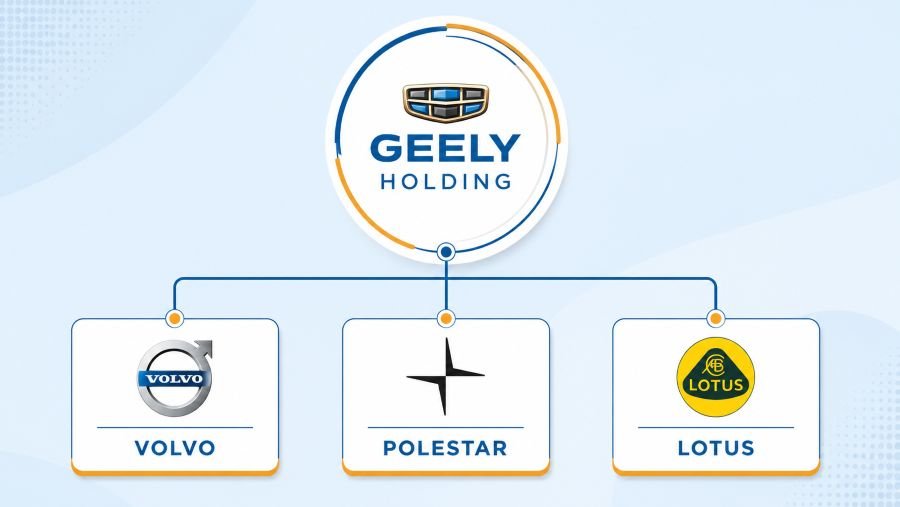
Before we break down each brand, here is a quick visual overview of the Chinese-owned car brands available in the US and how they connect back to a single Chinese parent company. The short video below summarizes who owns Volvo, Polestar, and Lotus, and why these are the only Chinese-owned cars you can buy from a US dealer in 2026.
With that overview in mind, let’s look closely at the distinction that explains the entire Chinese-owned car landscape in America — and then rank the three brands you can actually buy today.
Chinese-Owned vs. Chinese-Made: An Important Distinction
The single biggest source of confusion in this topic is the gap between ownership and manufacturing. They are not the same thing, and conflating them leads shoppers to the wrong conclusions. A Chinese-owned car is one whose parent company is controlled by Chinese investors, regardless of where it is built or what nationality the brand projects. A Chinese-made car, by contrast, is simply assembled in China but may be owned by an American, European, or Japanese company.
Consider two examples that sit on opposite sides of this line. The Lincoln Nautilus is built in China, yet Lincoln is owned by Ford, an American company — so it is Chinese-made but not Chinese-owned. Volvo, meanwhile, builds many of its cars in Sweden, Belgium, and South Carolina, yet its controlling shareholder is China’s Geely — making it Chinese-owned but largely not Chinese-made. This guide is concerned strictly with the first category: brands whose ownership traces back to China, and which you can buy through a normal US dealer network today.
Two Universal Add-Ons for Any New Car
Whichever badge you settle on — a family Volvo, a design-led Polestar, or a six-figure Lotus — a couple of inexpensive, brand-agnostic accessories make day-to-day ownership easier and help protect your investment. Both fit any vehicle regardless of where it is built.
If you are cross-shopping family SUVs like the seven-seat Volvo EX90 or XC90, a seat-back organizer with a built-in kick mat keeps the cabin tidy and shields premium seat backs from scuffs and muddy shoes. It is one of the cheapest ways to protect a new interior and add real day-to-day practicality.
Heavy EVs and SUVs are hard on tyres, and correct pressure protects range, handling, and tyre life alike. A solar-powered aftermarket TPMS with external sensors gives a clear real-time readout on any car, an easy upgrade for older trims or as a back-up to the factory system.
The One Name Behind Almost Every Answer: Geely
Here is the detail that ties everything together. Nearly every Chinese-owned brand available in the United States belongs to a single conglomerate: Zhejiang Geely Holding Group, usually shortened to Geely. Founded by entrepreneur Li Shufu, Geely has spent fifteen years assembling a portfolio of Western brands that now gives it something its rivals desperately want — factories, dealer networks, supply chains, and brand recognition already operating on American soil. Industry analysts have noted that Geely effectively “already sells cars in America,” a foothold that BYD and NIO can only envy.
1. Volvo — The Crown Jewel of Geely’s American Portfolio
If there is a single best Chinese-owned car brand available in the US, it is Volvo. Geely acquired the Swedish marque from Ford in 2010 and today owns roughly 79% of Volvo Cars. In the years since, Volvo has arguably become the strongest case study in how Chinese ownership can fund a Western brand’s revival without erasing its identity. The cars are still engineered around Scandinavian minimalism and class-leading safety, but the investment behind them — and a significant chunk of the platform technology — flows from China.
What makes Volvo especially relevant for American buyers is its physical presence here. Volvo operates a major assembly plant near Charleston, South Carolina, which builds both Volvo and Polestar models. That factory is the quiet engine of Geely’s entire US strategy, because it allows several Chinese-owned vehicles to be assembled domestically and sidestep the punishing tariffs applied to cars imported from China.
Volvo’s 2026 US Lineup at a Glance
Volvo’s 2026 range spans accessible electric crossovers to a flagship three-row SUV, with plenty of plug-in hybrid options in between. The brand has leaned hard into electrification while keeping prices broadly competitive with German luxury rivals. Highlights for the current model year include:
- Volvo EX30 — the brand’s smallest and most affordable EV, with a Single Motor variant starting around $38,950 and an EPA-estimated range of up to roughly 261 miles. A rugged EX30 Cross Country joins for 2026.
- Volvo EX40 & EC40 — compact electric crossovers that bridge the gap between the entry EX30 and the larger SUVs.
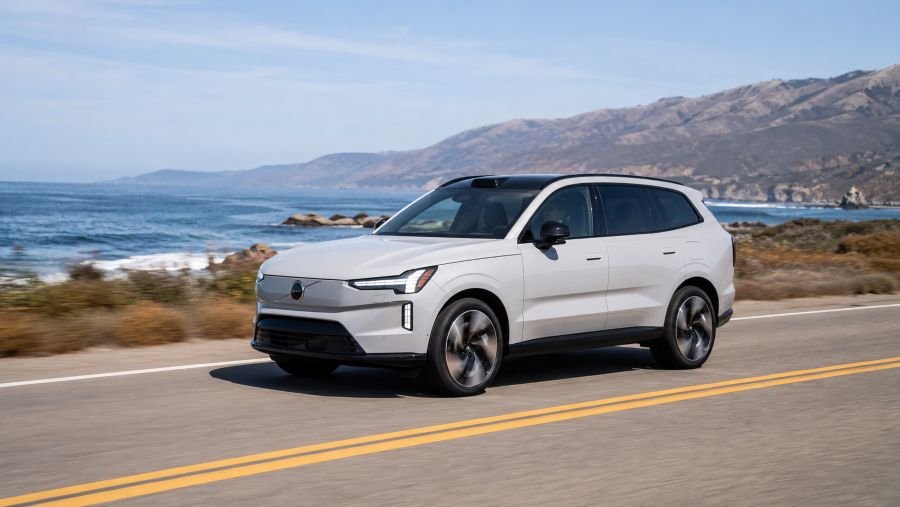
- Volvo EX90 — the seven-seat flagship, now with an 800-volt architecture, faster charging, and a top Twin Motor Performance trim producing 670 horsepower. Pricing starts around $78,090 for the new single-motor base model.
- Volvo XC60 & XC90 — perennial best-sellers offered with efficient plug-in hybrid powertrains for buyers not yet ready to go fully electric.
For most American shoppers, Volvo offers the cleanest entry point into Chinese-owned motoring: familiar dealers, strong resale, a deep service network, and the reassurance of a brand that has never compromised on safety. It is the default recommendation for anyone who wants the benefits of Geely’s investment without any of the unfamiliarity.
2. Polestar — Sweden’s Electric Performance Brand, China’s Money
Polestar began life as Volvo’s high-performance offshoot and has since grown into a standalone, Nasdaq-listed electric brand. Its ownership is the most tangled on this list, but the bottom line is clear: control rests firmly in China. After a 2024 restructuring, Geely Holding and founder Li Shufu’s investment vehicle hold a combined majority stake — around two-thirds of the company — while Volvo Cars retains a smaller strategic position of roughly 16 to 20 percent. Because Volvo itself is Geely-owned, Polestar is Chinese-owned through and through.
That backing matters because Polestar, like many young EV brands, has needed deep pockets to survive a brutal market. Geely’s support has funded its model expansion and, crucially, pushed it toward US manufacturing. Polestar has confirmed it will consolidate production of the Polestar 3 SUV at the Ridgeville, South Carolina plant — the same facility that builds Volvos — making it one of the few Chinese-owned EVs assembled on American soil.
What You Can Buy From Polestar Today
Polestar’s US lineup is compact but genuinely desirable, blending minimalist Scandinavian design with sharp performance. The Polestar 2 fastback remains the value pick, while the Polestar 3 is a premium electric SUV that shares its bones with the Volvo EX90. The standout, however, is the Polestar 4 — the brand’s first home-grown design rather than a Volvo derivative. Critics have praised its sleek styling, roomy cabin, and refined ride, and it is offered in three trims spanning roughly $60,000 to $75,000. Notably, the Polestar 4 sold in America is built in South Korea, a deliberate move to dodge tariffs on Chinese-built EVs.
3. Lotus — British Heritage, Chinese Ownership, Electric Future
The third pillar of Geely’s American portfolio is the most romantic. Lotus, the legendary British sports-car maker founded on Colin Chapman’s obsession with lightness, is now 51% controlled by Geely. Under Chinese ownership, Lotus has undergone one of the boldest reinventions in the industry, pivoting from tiny analog track toys to a lineup of muscular, technology-laden electric vehicles aimed squarely at the global luxury market.
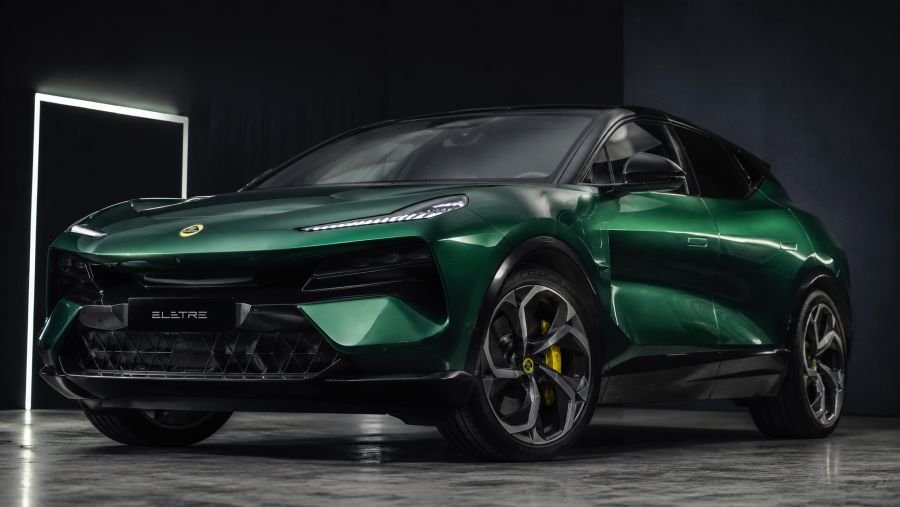
For American buyers, Lotus is the aspirational choice rather than the practical one. Its two electric flagships — the Eletre SUV, which went on sale in North America in early 2024, and the Emeya hyper-GT sedan — sit firmly in six-figure territory. For 2026, both are offered across a sprawling range of trims, headlined by “600” models with a 612-horsepower dual-motor setup and ferocious “900” variants pushing roughly 918 horsepower. The Emeya 900 can reportedly sprint from zero to 62 mph in under three seconds. These are not volume cars, but they prove that Chinese ownership can underwrite genuine performance credibility, not just budget transportation.
💡 Pro Tip: If federal EV incentives matter to your budget, ask the dealer exactly where your specific trim is assembled. A US-built Polestar 3 or a domestically assembled Volvo may qualify for benefits that an imported Volvo EX30 — built in China — does not. Final assembly location, not the badge, is what the rules care about.
Chinese-Owned Brands in the US: 2026 Comparison
To make the landscape easy to scan, here is how the three buyable Chinese-owned brands stack up across the factors most shoppers care about. Use it as a quick reference before you start cross-shopping at the dealership.
| Brand | Chinese Owner & Stake | Best For | Starting Price (Approx.) |
|---|---|---|---|
| Volvo | Geely Holding (~79%) | Safety, family SUVs, easy ownership | From ~$38,950 (EX30) |
| Polestar | Geely + Li Shufu (~66% combined) | Design-led electric performance | From ~$60,000 (Polestar 4) |
| Lotus | Geely (~51%) | Luxury & high-performance EVs | $100,000+ (Eletre) |
Brands That Are Coming — But Aren’t Here Yet
It is worth knowing which Chinese-owned names are circling the US market so you are not misled by speculation dressed up as availability. Geely owns several additional brands that have not yet reached American showrooms, and a handful of homegrown Chinese marques are testing the waters.
- Zeekr — Geely’s premium electric brand has been showcased at US tech events, and executives have hinted at a market entry within the next two to three years, but it is not yet on sale.
- Lynk & Co — another Geely marque, currently distributed in Europe through Volvo, with no confirmed US retail presence.
- smart — now a Geely–Mercedes joint venture, the rebooted electric smart range sells in Europe and China but has not returned to American dealers.
- BYD, NIO, XPeng, MG — fully Chinese-branded makers that dominate other regions yet remain locked out of the US passenger market by tariffs and policy.
The takeaway is straightforward: if a salesperson or online listing claims you can buy a brand-new BYD or Zeekr from a US dealer in 2026, treat it with serious skepticism. The only Chinese-owned new cars genuinely available through franchised dealers right now wear Volvo, Polestar, or Lotus badges.
⚠️ Important Note: Beware of “gray-market” import offers promising direct delivery of Chinese-branded EVs like BYD or NIO to the US. Vehicles not federally certified for American roads can be impossible to register, insure, or service, and may be subject to seizure. Stick to brands sold through official, franchised dealer networks.
How to Decide Which Chinese-Owned Brand Fits You
Choosing between Volvo, Polestar, and Lotus is less about national origin and more about lifestyle and budget — which is exactly how it should be. Start by being honest about how you will use the car. If you need a do-everything family vehicle with bulletproof safety scores and a dealer in almost every metro area, Volvo is the obvious answer and the one most owners will never regret. Its breadth of models, from the wallet-friendly EX30 to the flagship EX90, means there is a Volvo for nearly every budget tier.
If your priority is design and a distinctly electric driving character, Polestar rewards buyers who want something that feels more like a tech product than a traditional car. It carries more emotional appeal than Volvo and a sharper aesthetic, though its dealer footprint is thinner and its lineup narrower. Finally, if money is no object and you crave genuine performance pedigree, Lotus delivers supercar-grade thrills in an electric SUV or GT — a statement piece rather than a daily commuter.
Whichever you choose, you are buying into the same fundamental reality: a Western-styled, often Western-built car backed by Chinese capital and increasingly Chinese platform technology. For a growing number of American drivers, that combination has quietly become one of the smartest value propositions on the market.
FAQ: Chinese-Owned Car Brands in the US
Which Chinese-owned car brands can I actually buy in the US in 2026?
Three Chinese-owned brands are sold through established US dealer networks in 2026: Volvo, Polestar, and Lotus. All three sit under China’s Geely Holding, which owns roughly 79% of Volvo Cars, controls Lotus, and is the dominant shareholder in Polestar. Pure-Chinese marques such as BYD, NIO, and XPeng do not yet sell passenger cars directly to US buyers.
Is Volvo a Chinese-owned brand?
Yes. Volvo Cars is roughly 79% owned by China’s Geely Holding, which bought the brand from Ford in 2010. Volvo keeps its Swedish identity, engineering culture, and a US factory near Charleston, South Carolina, but its ultimate parent company is Chinese.
Why can’t I buy BYD or NIO in the United States?
US import tariffs on Chinese-built electric vehicles reach about 100%, on top of a 25% base tariff, plus data-security and trade concerns. That combination makes direct imports of Chinese-branded cars commercially unviable for now, so brands like BYD, NIO, and XPeng have delayed their official US launches.
Are Chinese-owned cars like Volvo and Polestar built in China?
Some are, but production is shifting. Volvo and Polestar build several US-market models at the Ridgeville, South Carolina plant, including the Polestar 3, while the Polestar 4 is built in South Korea to avoid tariffs. The Volvo EX30 is still imported, which affects its eligibility for federal incentives.
The Bottom Line
The best Chinese-owned car brands available in the US in 2026 are not the names you read about in trade-war headlines — they are the polished, established marques hiding in plain sight. Volvo, Polestar, and Lotus give American buyers three very different ways to drive Chinese-owned vehicles today, each carrying European design and engineering on the surface and Geely’s capital underneath. Volvo wins on practicality and value, Polestar on design and electric character, and Lotus on outright performance.
As tariffs continue to reshape global trade and Geely keeps expanding its US manufacturing footprint, expect this list to grow. Brands like Zeekr are waiting in the wings, and the line between “Chinese” and “Western” cars will only blur further. For now, though, if you want a Chinese-owned car you can buy, register, and service without a second thought, the path runs straight through Geely’s three crown jewels.