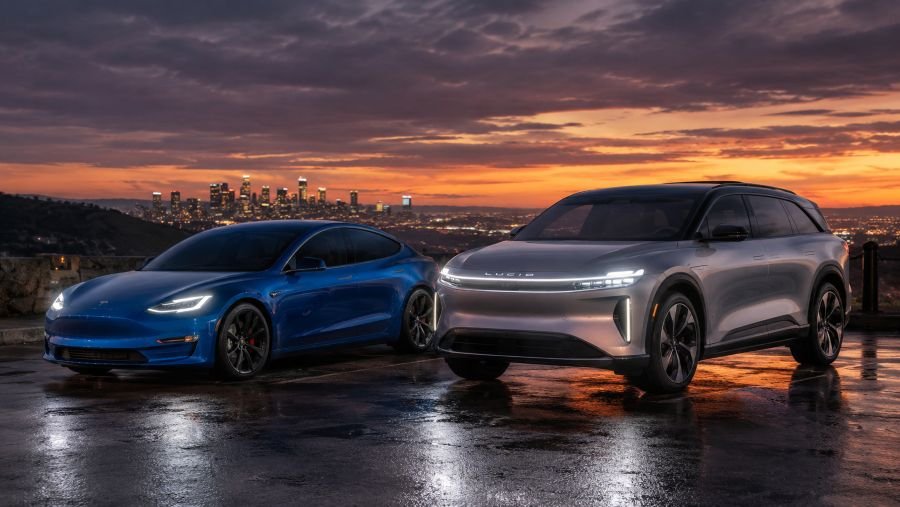
Zeekr vs Lucid Air & Gravity: Can Chinese Luxury Beat American EVs?
For years, premium electric performance was a two-horse race between Tesla and the German establishment. That era is over. Today the most compelling battle in luxury EVs pits China’s Zeekr, with its sleek 001 shooting brake and 7X SUV, against America’s Lucid and its record-setting Air sedan and new Gravity SUV. The headline question is irresistible: in a straight fight of range, power, charging and price, can Chinese luxury finally beat American engineering?
This Zeekr vs Lucid comparison cuts through the marketing to look at the numbers that matter. We will line up the Zeekr 001 and 7X against the Lucid Air and Gravity, weigh their genuine strengths, and confront the one detail that complicates every spec-sheet victory, namely where in the world you can actually buy each car.
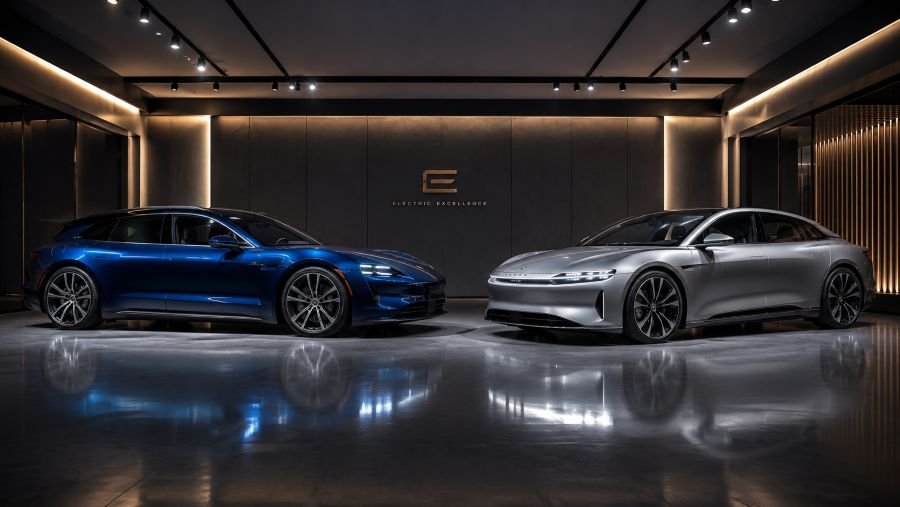
To understand why this matchup is so intriguing, it helps to appreciate how differently these two brands arrived at the same premium destination. Lucid was founded by engineers, many of them refugees from the early Tesla powertrain team, with a single-minded fixation on efficiency. Zeekr, by contrast, emerged from the vast resources of Chinese giant Geely, the same parent that owns Volvo, Polestar and Lotus. One company chases the perfect electron; the other leverages industrial scale that legacy automakers can only envy. The result is two distinct philosophies meeting head-on in the same price brackets.
Before we dive into the spec sheets, the short video below sums up the Zeekr vs Lucid showdown at a glance, walking through how the Zeekr 001 and 7X stack up against the Lucid Air and Gravity on the metrics buyers actually care about.
With that visual overview in mind, let us break down each category in detail, starting with the cars themselves and the very different design philosophies behind the Zeekr and Lucid badges.
The Contenders: Two Visions of Electric Luxury
Before we drill into the data, let us properly introduce the four cars on the table. This is not a like-for-like pairing of identical body styles, and that nuance shapes the entire comparison. Zeekr fields a low-slung performance estate and a family SUV, while Lucid counters with a flagship sedan and a three-row SUV. Where the segments overlap, the rivalry is fierce.
Zeekr’s Pitch: Design, Speed and Value
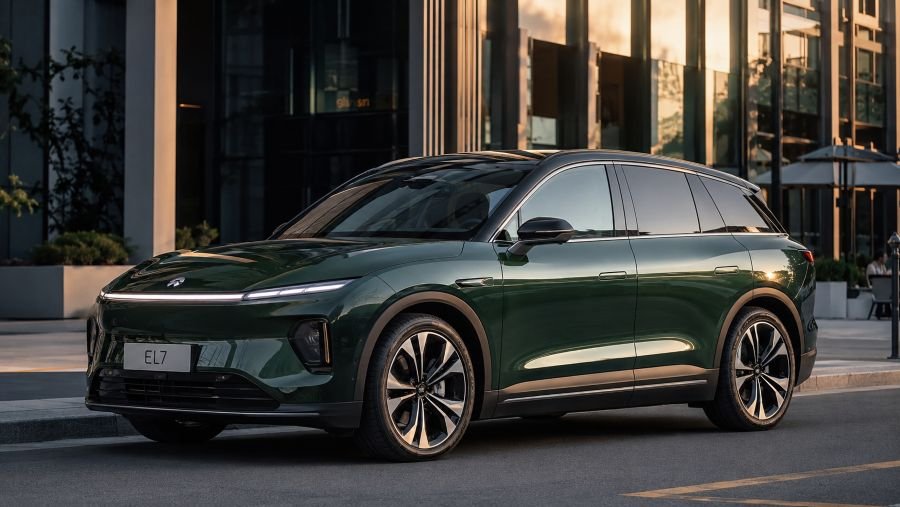
The Zeekr 001 is a striking shooting-brake that blends the silhouette of a sports coupe with the practicality of an estate. The updated 2026 version moved to a 900-volt architecture and, in its most potent all-wheel-drive form, produces a staggering 912 horsepower, launching from rest to 100 km/h in just 2.83 seconds. Alongside it sits the Zeekr 7X, a mid-size SUV pitched directly at the Tesla Model Y and praised by European reviewers for cabin quality that flirts with Audi and BMW territory. The 7X tops out at around 637 horsepower in dual-motor form, and its real trump card is a starting price that undercuts almost everything in its class.
Lucid’s Pitch: Range and Engineering Purity
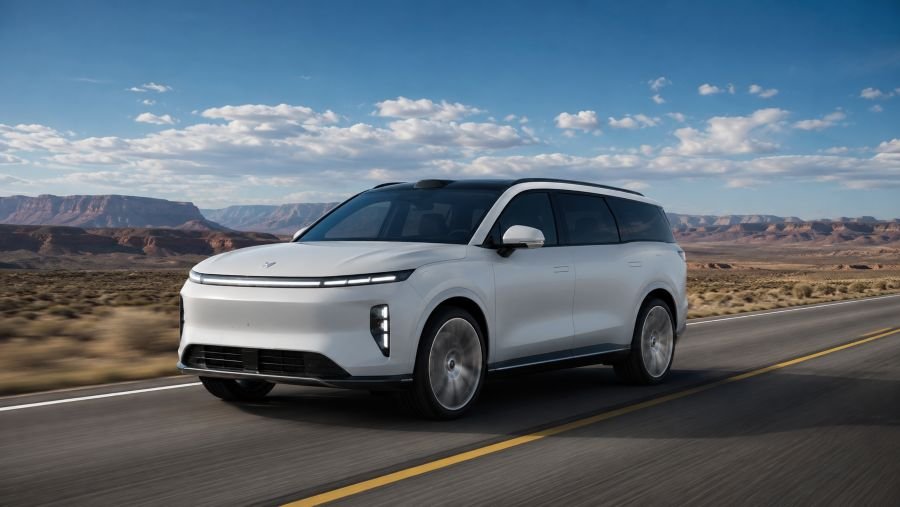
Lucid plays a different game entirely. The Air sedan holds the title of the longest-range electric car sold in America, with the Grand Touring rated at an extraordinary 512 EPA miles. That figure is not a lab fantasy padded by an optimistic test cycle; it is measured under the strict US EPA standard, the toughest mainstream rating in the world. The Gravity SUV brings the same efficiency obsession to a three-row body, delivering up to 450 EPA miles and up to 828 horsepower. Lucid’s argument is simple: nobody travels farther on a charge, and few charge faster.
Accessories Worth Adding to a Luxury EV
Whichever side of this rivalry wins your driveway, a high-value EV rewards a little protection. The two extras below suit either a Zeekr or a Lucid: one preserves the premium cabin that both brands invest so heavily in, while the other shields the paintwork on a car that holds a lot of value.
Both the Zeekr and the Lucid are sold on the strength of their premium cabins, and tailored leatherette covers guard that upholstery against wear, spills, and sun fade — protecting the resale value where so much of a luxury EV’s worth sits. Choose a set listed for your exact model and seat layout for the cleanest fit.
For owners without garage parking, a breathable, waterproof car cover shields paintwork from sun, sap, and grime — particularly worthwhile on a high-value sedan, shooting brake, or SUV like these. Choose a size band that matches your car’s body style and dimensions.
Range and Efficiency: Who Goes Farther?
Range is where this comparison gets genuinely tricky, and where honest reporting matters most. At first glance the Zeekr 001 and 7X look unbeatable, quoting up to roughly 700 to 800 km on a single charge. But those numbers come from China’s CLTC test cycle, which is famously generous. The Lucid figures use the US EPA cycle, which is far more conservative and far closer to real-world driving. Comparing a CLTC number directly to an EPA number is like comparing two thermometers using different scales.
When you normalize the figures, the picture clarifies. A CLTC rating is typically 30 to 40 percent higher than the EPA equivalent. That means a Zeekr 7X quoting around 705 km CLTC translates to something closer to 330 to 350 EPA-equivalent miles. The Lucid Gravity, meanwhile, posts a verified 450 EPA miles, and the Air Grand Touring an industry-leading 512. On a true apples-to-apples basis, Lucid still owns the range crown decisively. This is the single area where American engineering remains untouched.
💡 Pro Tip: Whenever you compare a Chinese EV to a Western one, always check which test cycle the range comes from. CLTC, NEDC, WLTP and EPA produce very different numbers for the exact same battery. As a rough guide, EPA is the most realistic, WLTP is moderately optimistic, and CLTC is the most generous of all.
Power and Performance: The Numbers Game
If range belongs to Lucid, raw acceleration is a far closer contest, and arguably a Zeekr win at the extremes. The flagship Zeekr 001 dual-motor hits 100 km/h in 2.83 seconds, a figure that embarrasses cars costing three times as much. Move up to the limited-production 001 FR and you enter genuine hypercar territory with quad motors and a sub-2.1-second sprint. Lucid is no slouch, of course: the Air Grand Touring reaches 60 mph in 3.0 seconds and the range-topping Sapphire summons 1,234 horsepower.
In the SUV class, the two brands are remarkably evenly matched. The Lucid Gravity Grand Touring produces 828 horsepower and sprints to 60 mph in 3.4 seconds. The Zeekr 7X Performance counters with 637 horsepower and a 3.8-second run to 100 km/h. Lucid edges ahead on outright muscle here, but the Zeekr delivers 90 percent of the thrill for a fraction of the outlay. For most buyers, the difference between a 3.4 and a 3.8 second SUV is academic; both are absurdly quick.
Charging Speed: Where Minutes Matter
Charging is the battleground where both brands genuinely lead the industry, and where the marketing gets loud. Zeekr’s updated 001 rides on a 900-volt platform and claims a 10 to 80 percent top-up in roughly 7 minutes under ideal conditions, an almost unbelievable figure made possible by ultra-high charging rates. Lucid counters with hard, independently observed data: the Gravity adds 200 miles of range in under 11 minutes at a 400 kW charger, while the Air manages 200 miles in about 12 minutes.
The distinction worth understanding is peak versus sustained. Zeekr’s headline number is a brief peak achieved in perfect lab conditions, whereas Lucid’s figures reflect a usable, repeatable charging curve. Both cars will have you back on the road faster than almost anything else on sale, so in practice this round is a tie that tilts slightly toward whichever charging network you can actually reach.
Price and Value: The Decisive Battlefield
Here is where the Zeekr vs Lucid argument becomes lopsided. Pricing is the Chinese brand’s nuclear option. The Zeekr 7X starts at roughly 32,000 to 38,000 US dollars in China, and the equivalent of about 60,000 to 79,000 in Australia and Europe even after import costs. The 001 sells for around 65,000 in its European markets. Lucid simply cannot match this. The Gravity Touring opens at 81,550 dollars and the Grand Touring approaches 99,000, while the Air Grand Touring lists at 114,900. The table below lays out the core matchup.
| Specification | Zeekr 001 (AWD) | Zeekr 7X (Perf.) | Lucid Air GT | Lucid Gravity GT |
|---|---|---|---|---|
| Body Style | Shooting brake | Mid-size SUV | Luxury sedan | 3-row SUV |
| Peak Power | 912 hp | 637 hp | 819 hp | 828 hp |
| 0-100 km/h (0-60 mph) | 2.83 s | 3.8 s | 3.0 s | 3.4 s |
| Quoted Range | ~700 km CLTC | ~705 km CLTC | 512 mi EPA | 450 mi EPA |
| Architecture | 900V | 800V | 900V+ | 926V |
| Starting Price (approx.) | ~$65,000 | ~$32,000+ | $114,900 | $94,900+ |
Read that bottom row again. The Zeekr 7X delivers SUV performance comparable to a Lucid Gravity for less than half the money in some markets. Even the flagship 001, with its 912-horsepower punch, costs little more than half what a Lucid Air Grand Touring commands. On a pure value-per-dollar basis, this is not a close fight. The Chinese contenders win it comfortably.
The Elephant in the Room: Can You Even Buy a Zeekr?
And yet a spec sheet means nothing if the car is not on sale near you. This is the wrinkle that turns a clean Zeekr victory into a far more complicated story. As of mid-2026, no Zeekr model is officially sold in the United States. Chinese-built EVs face a combined effective import duty of roughly 112 percent, layering a 100 percent tariff on top of standard duties, which makes direct sales commercially impossible. For an American shopper, the Zeekr is essentially a car that exists only in reviews and import-fantasy threads.
⚠️ Important Note: If you live in the US, this comparison is currently theoretical. You cannot legally buy a new Zeekr there today. Geely has indicated a possible Zeekr launch in the 2029 to 2030 window, potentially built at Volvo’s South Carolina plant to bypass tariffs, but nothing is confirmed. Lucid, by contrast, is American-built and available now.
The geography flips entirely outside America, however. In Australia, Europe and much of Asia, the Zeekr 7X and 001 are readily available and selling strongly, with the 7X climbing into the top five EVs in Australia within months of launch. Lucid’s footprint in those same markets is thin to nonexistent. So the honest answer to who wins depends heavily on where you stand. An Australian or European buyer can walk into a Zeekr showroom today; a Lucid is the harder car to find. For the American buyer, the reverse is true.
Interior, Technology and Build Quality
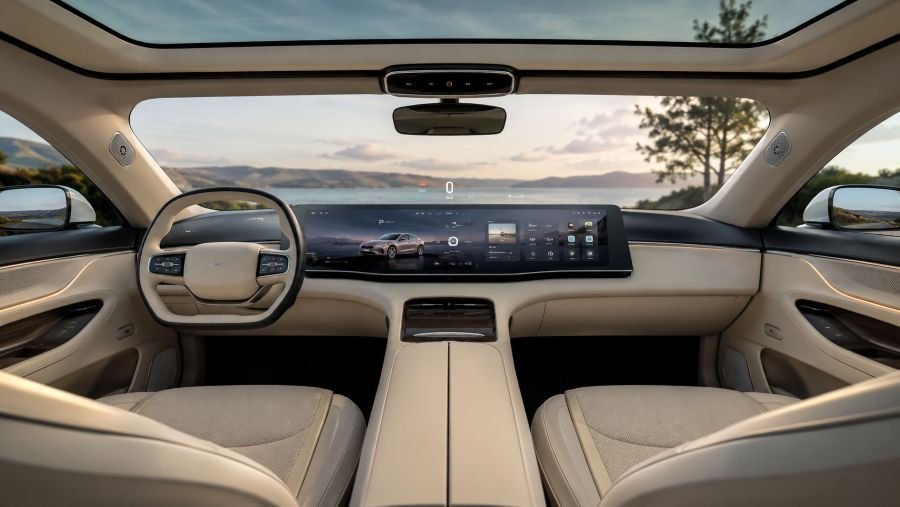
Inside, the two philosophies converge more than you might expect. Lucid’s cabins are minimalist and serene, anchored by a curved 34-inch display in the Gravity and a glass-canopy roof that floods the interior with light. Material quality is genuinely flagship-grade, with Dolby Atmos audio and a famously spacious rear bench in the Air. The criticism that follows Lucid is reliability: multiple recall campaigns and below-average dependability scores have dogged the young automaker, a reminder that engineering brilliance and manufacturing maturity are not the same thing.
Zeekr surprises Western reviewers precisely because the perception of Chinese interiors is so outdated. The 7X has been described as classier than a Tesla Model Y, with soft-touch materials and ambient lighting that recalls established German marques. Its dual NVIDIA computing chips power a sophisticated driver-assistance suite. The lingering questions for Zeekr are long-term software support and after-sales service in newer markets, the same growing pains every ambitious newcomer faces. Neither brand is flawless, but both have clearly closed the gap to the old luxury order.
Verdict: Does Chinese Luxury Beat American?
So, can Chinese luxury beat American? On the metrics that fill a brochure, the answer is increasingly yes. The Zeekr 001 and 7X match or exceed the Lucid Air and Gravity on acceleration, charging peaks and cabin ambiance, and they obliterate them on price. A decade ago this matchup would have been unthinkable; today it is a genuine contest, and that alone is a remarkable achievement for Zeekr.
But Lucid retains two decisive advantages. The first is real-world range, where its EPA-verified figures remain the global benchmark by a wide margin. The second is simple availability in its home market, where it builds and sells cars that the Zeekr cannot yet legally rival. The most accurate verdict, then, is this: on engineering value, Chinese luxury has already won; on proven range and market access, America still holds the line. For buyers in Europe, Australia and Asia, the Zeekr is the smarter money. For Americans, Lucid wins by default, at least until the tariffs and the trade calculus change.
FAQ: Zeekr vs Lucid Air & Gravity
Can you buy a Zeekr in the United States?
No. As of mid-2026 no Zeekr model is officially sold in the US. Chinese-built EVs face a combined effective import duty of roughly 112 percent, which makes direct sales uneconomic. Parent company Geely has signaled a possible US launch within a few years, potentially building at the Volvo plant in South Carolina to sidestep tariffs.
Does the Zeekr 001 have more range than the Lucid Air?
On paper the figures look close, but they use different test cycles. The Zeekr 001 quotes up to around 700 km on China’s optimistic CLTC cycle, while the Lucid Air Grand Touring is rated at 512 miles on the stricter US EPA cycle. Once adjusted to the same standard, the Lucid Air still leads on real-world range.
Is the Zeekr 7X cheaper than the Lucid Gravity?
Yes, by a wide margin. The Zeekr 7X starts around 32,000 to 38,000 US dollars in China and roughly the equivalent of 60,000 to 79,000 in Australia and Europe, while the Lucid Gravity Touring starts at about 81,550 dollars and the Grand Touring nears 99,000. Price is the Zeekr’s single strongest argument.
Which charges faster, Zeekr or Lucid?
Both are exceptional. The updated Zeekr 001 on its 900V platform claims a 10 to 80 percent charge in about 7 minutes under ideal conditions, while the Lucid Gravity adds 200 miles in under 11 minutes at a 400 kW charger. Zeekr’s peak figures are faster, but Lucid’s real-world numbers are independently verified.
Final Thoughts on the Zeekr vs Lucid Battle
The very existence of this comparison is the real headline. Not long ago, a Chinese brand challenging an American engineering darling on luxury and performance would have been dismissed out of hand. Now Zeekr forces the question seriously, and answers a good part of it. Lucid still defends the high ground of verified range and home-market availability, but the gap that once separated the two automotive worlds has narrowed to a sliver. Whichever side wins your driveway, the clear victor is the buyer, who has never had more electric talent to choose from.