Why Chinese Electric Cars Are Taking Over the World
In barely a decade, Chinese EV manufacturers have gone from regional players to global leaders. BYD is now among the world’s largest EV producers, and Chinese brands collectively command a remarkable share of global electric car sales, leaving established Western automakers playing catch-up.
So how did they do it? The short answer is a combination of superior battery technology, aggressive pricing, relentless innovation, and deep vertical integration. This guide unpacks the structural advantages behind the rise of BYD, NIO, XPeng, and their rivals.
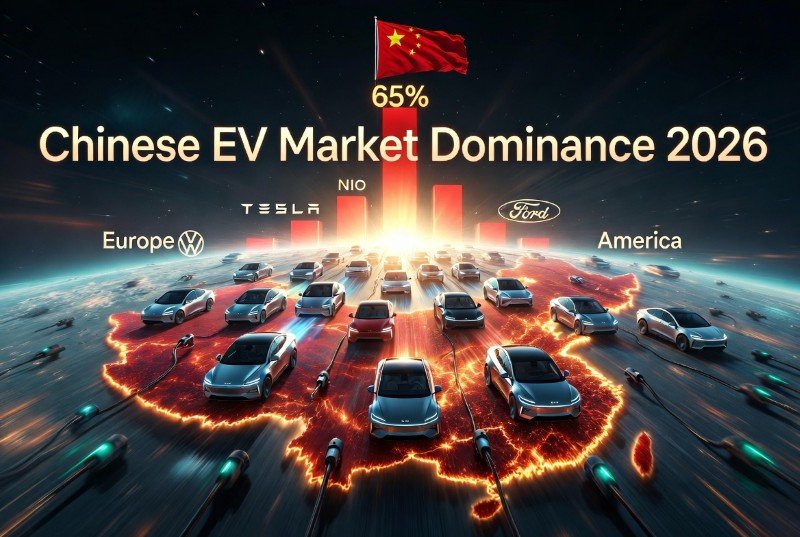
This is not a regional story or a passing fad; it is a genuine realignment of the global automotive industry. To understand why it is proving so durable, it helps to look past the headlines to the structural forces underneath. Before the detail, the short video below sets the scene.
With that overview in mind, let’s start by sizing up just how far Chinese EV makers have come.
The Chinese EV Revolution by the Numbers
Not long ago, China’s EV brands were minor regional players. Today they sit at the centre of the global market. BYD has become one of the world’s largest EV producers; NIO competes head-on with Tesla and BMW in the premium segment; XPeng leads on driver-assistance technology; and Li Auto has won over pragmatic buyers with extended-range models. Behind them, giants like SAIC and battery innovators such as GAC Aion are expanding exports rapidly.
The cumulative effect is striking. Chinese brands have moved from a small slice of the global EV market a few years ago to a commanding share today, a shift with little precedent in automotive history. Crucially, this growth spans regions and segments rather than being concentrated in any single market, which is what makes it a structural realignment rather than a temporary surge.
Useful Accessories for Your Chinese EV
If the rise of Chinese EVs has you considering one, a couple of inexpensive universal accessories make ownership easier from day one. Both suit any electric car, whichever brand you choose.
A backseat organiser with built-in kick mat protects the rear seatbacks from scuffs while keeping tablets, bottles, and travel kit neatly to hand. It is a cheap way to keep a new EV’s cabin tidy and protected, especially with children aboard.
Correct tyre pressure protects both range and safety, and an aftermarket TPMS with solar-charged sensors gives a live readout for every wheel. It is a smart, low-cost upgrade for any EV, helping you squeeze the most efficiency from the battery.
Five Reasons Chinese EVs Are Winning
The dominance is not the result of any single factor but of several reinforcing advantages working together. Five stand out above the rest.
1. Battery Technology Leadership
China effectively controls the EV battery supply chain, and that is the foundation of everything else. CATL is the world’s largest battery maker, supplying Western brands as well as domestic ones, while BYD’s lithium iron phosphate (LFP) chemistry offers a longer lifespan, better safety, and lower cost than the NMC packs many rivals use. Because Chinese firms own mining, refining, cell production, and assembly, they enjoy a substantial battery-cost advantage and iterate on new chemistries, from solid-state to sodium-ion, faster than almost anyone else. The net result is electric cars that simply cost less to build.
2. Aggressive, Volume-Driven Pricing
Chinese manufacturers deliberately use price to capture share, and the gap with Western rivals is large across every class.
| Vehicle Class | Chinese EV | Western EV | Difference |
|---|---|---|---|
| Budget compact (~300 km) | £15,000–£18,000 | £22,000–£28,000 | ~40–50% lower |
| Mid-range sedan (~400 km) | £22,000–£28,000 | £32,000–£42,000 | ~35–45% lower |
| Premium sedan (~500 km) | £32,000–£42,000 | £45,000–£65,000 | ~30–40% lower |
| Performance / premium SUV | £42,000–£55,000 | £60,000–£80,000 | ~25–35% lower |
The advantage compounds: lower prices win cost-conscious buyers, which builds volume, which in turn funds further reinvestment in technology and even keener pricing. It is a virtuous cycle that is difficult for higher-cost rivals to break.
3. Fast Technology Integration and OTA Updates
Chinese EVs ship with advanced technology as standard rather than as a costly extra. XPeng is a genuine leader in higher-level driver assistance, over-the-air updates keep adding features long after purchase, and AI-driven climate, predictive maintenance, and connectivity are increasingly common. Crucially, these brands move faster than incumbents, often reaching feature parity in two to three years where legacy makers take five to seven.
4. Manufacturing Efficiency and Scale
China’s manufacturing edge is real and measurable. Highly automated factories run at higher line speeds, labour costs are lower, and proximity to battery, semiconductor, and component suppliers shortens the whole chain. Flexible production allows rapid model changes without expensive retooling, and quality has standardised to the point where defect rates are lower than many sceptics expected. Per employee, Chinese makers simply build more cars.
5. Vertical Supply-Chain Control
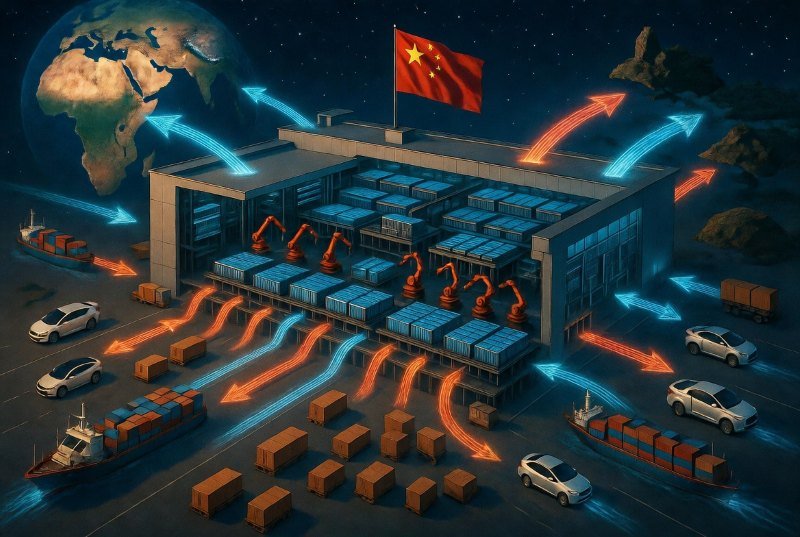
Perhaps the deepest advantage is ownership of the entire value chain. Chinese groups control mining and refining of raw materials, dominate global battery production, increasingly produce their own vehicle chips, and run end-to-end assembly. Every layer of integration removes a middleman’s markup, and controlling all of them together strips out a large share of total material cost, money that flows straight back into price and product.
💡 Pro Tip: When comparing a Chinese EV against a Western rival, look past the sticker price to total ownership cost, then check the local service network and warranty terms. The price gap is real, but service coverage is where the brands still differ most.
Where Chinese EVs Are Winning
The expansion is global, but its pace varies sharply by region, as the snapshot below shows.
| Region | Key Brands | Status |
|---|---|---|
| Europe (esp. UK) | BYD Seal, NIO | Growing fast, challenging Tesla |
| Australia | BYD, SAIC | Dominant in budget EV segment |
| Southeast Asia | BYD, Li Auto | Clear market leader |
| Latin America | BYD | Growing strongly |
| Middle East | NIO, BYD | Premium segment expanding |
North America remains the conspicuous exception. Trade barriers, tariffs, and Tesla’s entrenched position keep direct Chinese EV penetration low, mostly limited to indirect channels. Elsewhere, though, the trajectory points firmly upward.
Why the Western Response Came Late
Traditional manufacturers have scrambled to respond, with mixed results. Volkswagen’s ID. range produces capable cars that nonetheless sit well above equivalent Chinese models on price. BMW and Mercedes lean on premium positioning that confines them to higher-income buyers, while Ford and GM arrived later than the Chinese brands and remain a few years behind. Hyundai and Kia are arguably best placed, with competitive pricing, but still wrestle with higher supply-chain costs.
Underlying all of this is a deeper problem: Western firms are largely hardware companies trying to compete in a market that has become as much about software as steel. The Chinese challengers, by contrast, were software-first from the outset, and that difference in DNA is hard to retrofit quickly.
Quality and Reliability, Reassessed
Early doubts about Chinese EV quality have faded considerably. Several years of reliability data now show the major brands matching Western rivals, battery warranties of eight to ten years are routinely honoured, customer service is improving quickly, and over-the-air updates resolve many issues without a workshop visit. Genuine challenges remain, including sparser service centres in some regions, occasional lags in parts availability, imperfect software localisation, and a brand perception that still trails the underlying quality. On balance, though, the leading models now compete on reliability rather than apologise for it.
⚠️ Important Note: Quality varies by brand and model. Flagship products from the major makers now rival Western reliability, but some budget models and older vehicles are less consistent. Research the specific model, not just the brand, and confirm local warranty and service support before buying.
Tariffs, Trade and Geopolitics
The rise of Chinese EVs has inevitably triggered a political response. The United States has imposed steep tariffs on Chinese EV imports, the EU has pursued anti-dumping investigations, and several governments are funding domestic battery and vehicle manufacturing to reduce dependence. Some countries are also weighing restrictions on connected-car and autonomous-driving software. Yet the most telling move is the Chinese brands’ own: opening factories inside Europe to manufacture locally and sidestep tariffs altogether. Trade barriers will slow the expansion, but local production blunts their effect, so they are unlikely to reverse the underlying trend.
What It Means for Consumers
For buyers, intensifying Chinese competition is overwhelmingly good news. It pushes all EV prices down, accelerates the trickle-down of advanced features from premium to budget segments, and widens choice as previously underserved niches get filled. It even improves Western brands’ warranties and service as they respond to the pressure, and speeds up innovation across autonomous driving, next-generation batteries, and vehicle-to-home technology. The main downside is mild: a growing thicket of unfamiliar brand names that will take time, and some natural consolidation, to sort out.
FAQ: Chinese EV Dominance
Why are Chinese electric cars so cheap?
Chinese EVs are cheaper mainly because of vertical integration and battery leadership. Chinese firms control mining, refining, battery production, and assembly, removing middleman margins, while lower-cost LFP battery chemistry and efficient manufacturing cut prices well below most Western equivalents.
Are Chinese electric cars safe and reliable?
Yes for the major brands. Models like the BYD Seal and NIO sedans achieve strong independent crash ratings and show reliability comparable to Western rivals, backed by 8 to 10-year battery warranties. Service networks and parts availability are still catching up in some regions.
Which Chinese EV brand is best?
It depends on your priorities. BYD is the value and reliability leader, NIO targets the premium segment with battery-swap technology, and XPeng focuses on advanced driver-assistance and software. Always check the brand’s local service and warranty support before buying.
Can Western carmakers catch up with Chinese EVs?
Only partly. Western brands retain advantages in loyalty and service networks, but the price and feature gap is real and rooted in structural factors like supply-chain control and manufacturing efficiency. Tesla stays competitive on software, while traditional makers face sustained pressure.
The Tipping Point and What Comes Next
Several forces converged to turn steady growth into outright dominance. Battery costs fell far enough to make price parity realistic, real-world range matured to the point where anxiety faded for most drivers, and charging networks grew dense enough to make these cars practical everywhere outside a few protected markets. At the same time, years of reliability data quietly dismantled the old quality scepticism, and a healthy used market opened the door to budget-conscious buyers. Once a critical mass of drivers experienced the value firsthand, word of mouth did the rest, turning curiosity into mainstream demand.
Looking ahead, the trajectory points to consolidation rather than retreat. The strongest brands will keep gaining ground while weaker names merge or fade, local manufacturing will spread to soften tariffs and shorten supply lines, and the technology lead in software and batteries will likely widen before rivals close it. Western makers will not disappear, and some will adapt well, but the centre of gravity in the global EV industry has shifted, and it shows no sign of shifting back.
The Bottom Line: A Lasting Realignment
Chinese electric cars have fundamentally altered the competitive dynamics of the global car industry. Through battery leadership, aggressive pricing, vertical integration, and a rapid pace of innovation, Chinese manufacturers have captured a major share of the world EV market in just a few years, an achievement with little parallel in automotive history.
That dominance looks set to persist precisely because it rests on structural advantages rather than passing trends. Trade barriers may slow the advance in certain markets, but they will not reverse it, and local manufacturing is steadily neutralising the tariffs designed to hold it back. For consumers, the verdict is clear and positive: lower prices, better technology, and a level of competition that forces every manufacturer, East or West, to keep getting better.